English greetings carry subtle yet significant distinctions that native speakers navigate intuitively but often perplex language learners. The choice between "How are you?" and "How's it going?" extends beyond mere preference—it reflects cultural understanding, relationship dynamics, and situational awareness that can determine whether your communication feels natural or awkward.
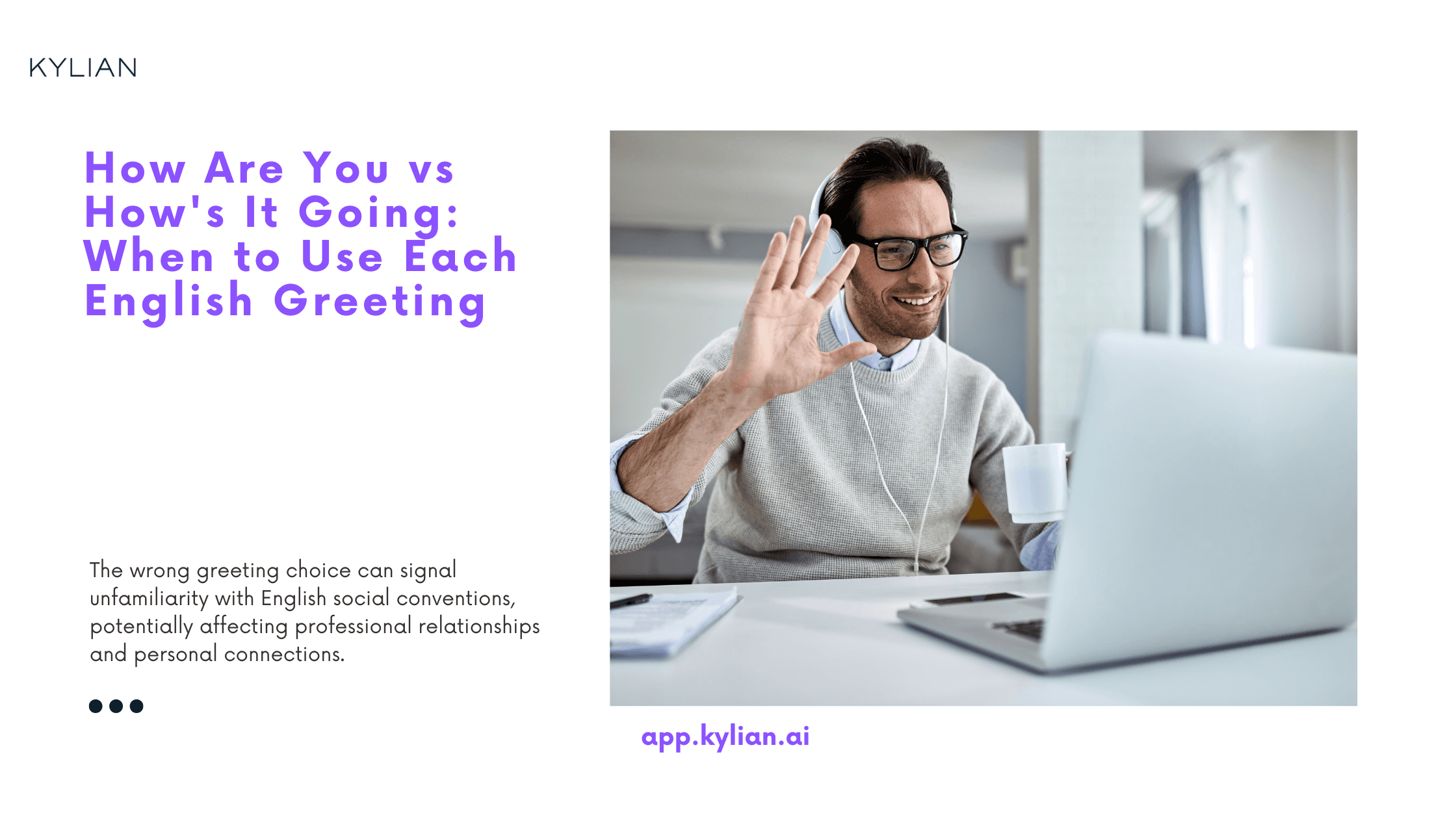
Understanding these nuances matters now more than ever. Remote work has amplified the importance of appropriate digital greetings, while globalized communication demands precision in cross-cultural interactions. The wrong greeting choice can signal unfamiliarity with English social conventions, potentially affecting professional relationships and personal connections.
The Fundamental Distinction: Formality Levels
The primary difference between these greetings lies in their formality spectrum. "How are you?" operates as the more formal option, carrying weight in professional settings, initial meetings, and interactions requiring respect or distance. This greeting implies a structured conversation where both parties understand the social protocol.
"How's it going?" functions as the casual alternative, signaling familiarity, relaxed atmosphere, and informal relationship dynamics. This phrase suggests comfort between speakers and anticipates a more conversational, less structured exchange.
The formality distinction extends beyond mere politeness—it communicates your perception of the relationship and sets expectations for the entire interaction. Choose incorrectly, and you risk creating awkwardness or appearing disconnected from social norms.
Contextual Usage: When Each Greeting Shines
Professional environments typically favor "How are you?" during client meetings, job interviews, networking events, and formal presentations. This greeting maintains appropriate boundaries while expressing genuine interest. Consider a scenario where you're meeting a potential business partner for the first time—"How are you?" establishes professionalism while opening conversational space.
Conversely, "How's it going?" thrives in casual environments: catching up with colleagues at lunch, greeting neighbors, reconnecting with old friends, or starting conversations in relaxed social settings. This greeting works particularly well when you genuinely want to know about someone's current situation without formal constraints.
The workplace presents interesting gray areas. Team meetings might call for "How's it going?" to foster collaboration, while board presentations demand "How are you?" to maintain executive-level decorum. Reading the room becomes crucial—observe how others initiate greetings and match the established tone.
Response Expectations and Conversational Flow
"How are you?" typically generates standard responses: "I'm fine, thank you," "I'm doing well," or "Good, and you?" These responses maintain the formal tone and often lead to reciprocal inquiries. The conversation follows predictable patterns, making it safe for uncertain situations.
"How's it going?" invites more varied responses: "Pretty good," "Can't complain," "Same old, same old," or even detailed updates about current projects or life events. This greeting opens doors to genuine conversation and encourages authentic sharing.
The response flexibility affects conversation length and depth. Formal greetings often conclude quickly, serving as social lubricant before transitioning to business matters. Casual greetings may evolve into extended discussions, depending on time constraints and relationship comfort levels.
Cultural and Regional Considerations
American English embraces both greetings readily, but regional preferences exist. East Coast business culture leans toward "How are you?" in professional settings, while West Coast environments often accept "How's it going?" more broadly. Southern regions may use either greeting but expect more detailed responses and follow-up questions.
British English speakers use "How are you?" more frequently across contexts, viewing "How's it going?" as distinctly American informal speech. Australian English readily adopts "How's it going?" alongside local variations like "How ya going?" Canadian usage mirrors American patterns but with slightly more formal tendencies.
International business contexts require careful consideration. When communicating with non-native English speakers, "How are you?" provides clearer, more universally understood language. "How's it going?" may confuse speakers unfamiliar with idiomatic expressions or casual American speech patterns.
Digital Communication Adaptations
Email greetings present unique challenges. "How are you?" works well in formal business emails, client correspondence, and initial contact messages. It demonstrates respect while maintaining professional boundaries in written communication.
"How's it going?" fits better in internal team emails, follow-up messages with familiar contacts, or casual business relationships. However, this greeting may appear too informal for certain industries or hierarchical structures.
Video conferencing has created hybrid situations where visual cues help determine appropriate greeting choices. Screen-sharing presentations might warrant "How are you?" while casual team check-ins welcome "How's it going?" The key lies in reading participant expectations and meeting purposes.
Social media and instant messaging heavily favor "How's it going?" due to their informal nature. Professional platforms like LinkedIn maintain preferences for "How are you?" in direct messages and networking outreach.
Psychological Impact and Relationship Building
The greeting choice influences psychological dynamics between speakers. "How are you?" creates subtle psychological distance, useful when establishing boundaries or maintaining professional relationships. This distance isn't negative—it provides comfortable space for individuals who prefer structured interactions.
"How's it going?" builds psychological closeness and signals approachability. This greeting suggests openness to genuine connection and willingness to engage authentically. However, forced casualness can backfire if the relationship doesn't support such familiarity.
Trust building occurs differently with each greeting. Formal greetings build trust through reliability and predictability—people know what to expect. Casual greetings build trust through authenticity and genuine interest, but require appropriate timing and relationship readiness.
Common Mistakes and Misapplications
Language learners frequently overuse "How are you?" in casual situations, creating unnecessary formality barriers. This mistake stems from textbook learning that emphasizes formal language without contextual guidance. The result feels robotic and disconnected from natural speech patterns.
Native speakers sometimes err by using "How's it going?" in overly formal situations, potentially appearing disrespectful or unprofessional. Job interviews, client presentations, and formal ceremonies require recognition of appropriate formality levels.
Another common error involves mismatching greeting formality with subsequent conversation style. Opening with formal "How are you?" then immediately switching to casual language creates cognitive dissonance and conversational awkwardness.
Advanced Variations and Alternatives
Beyond the basic forms, numerous variations exist for different situations. "How have you been?" works well for reconnecting after extended periods. "How are things?" offers middle ground between formal and casual approaches. "What's going on?" provides even more casual alternatives for close relationships.
Professional variations include "How is everything going?" for client relationships or "How are things progressing?" for project-related conversations. These alternatives maintain professionalism while showing specific interest in relevant matters.
Creative professionals might use "How's life treating you?" or "What's new and exciting?" to inject personality while maintaining conversational purpose. The key involves matching language creativity with audience expectations and relationship comfort levels.
The Evolution of Modern Greetings
Digital communication has accelerated greeting evolution, with shorter forms gaining acceptance. "How's it going?" often shortens to "How's it going" without the question mark in texts, or even "How goes it?" in certain circles.
Generational differences affect greeting preferences significantly. Younger speakers readily adopt casual forms across more contexts, while older generations maintain stronger formal-casual distinctions. Understanding your audience's generational expectations prevents miscommunication.
Remote work culture has blurred traditional formal-casual boundaries, creating situations where team meetings begin with casual greetings but maintain professional content. This hybrid approach requires sensitivity to company culture and individual preferences.
Practical Implementation Strategies
Developing greeting intuition requires conscious practice and observation. Start by noting how others initiate conversations in different contexts. Pay attention to responses and subsequent conversation flow to understand effectiveness.
Practice matching greeting formality to environmental cues. Office buildings, conference rooms, and business attire suggest "How are you?" territory. Coffee shops, casual meeting spaces, and relaxed dress codes favor "How's it going?" approaches.
Consider relationship history when choosing greetings. First meetings almost always benefit from formal approaches, while established relationships can handle casual greetings. Professional relationships may maintain formal greetings regardless of familiarity, depending on industry norms and company culture.
Learn Any Language with Kylian AI
Private language lessons are expensive. Paying between 15 and 50 euros per lesson isn’t realistic for most people—especially when dozens of sessions are needed to see real progress.
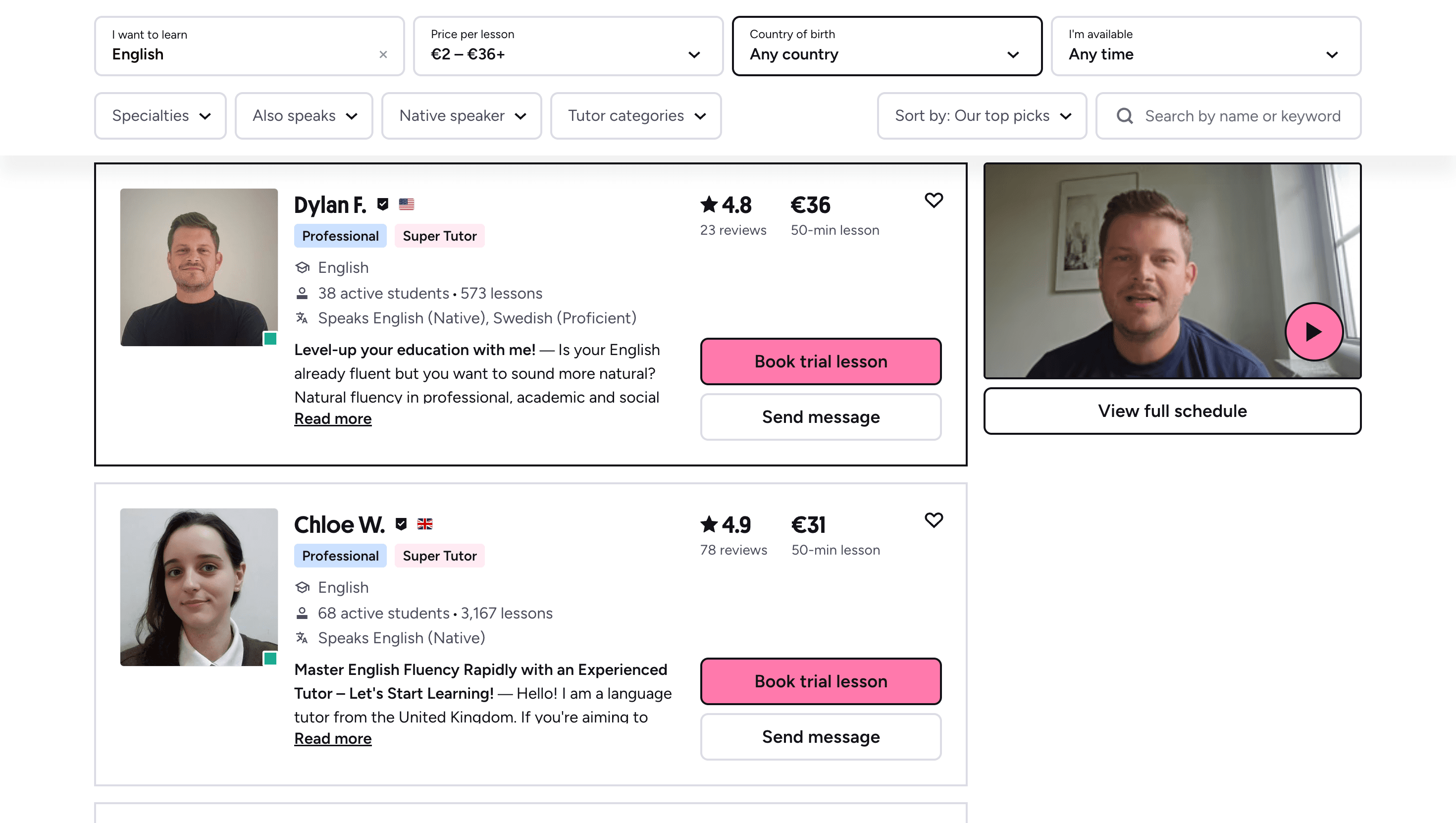
Many learners give up on language learning due to these high costs, missing out on valuable professional and personal opportunities.
That’s why we created Kylian: to make language learning accessible to everyone and help people master a foreign language without breaking the bank.
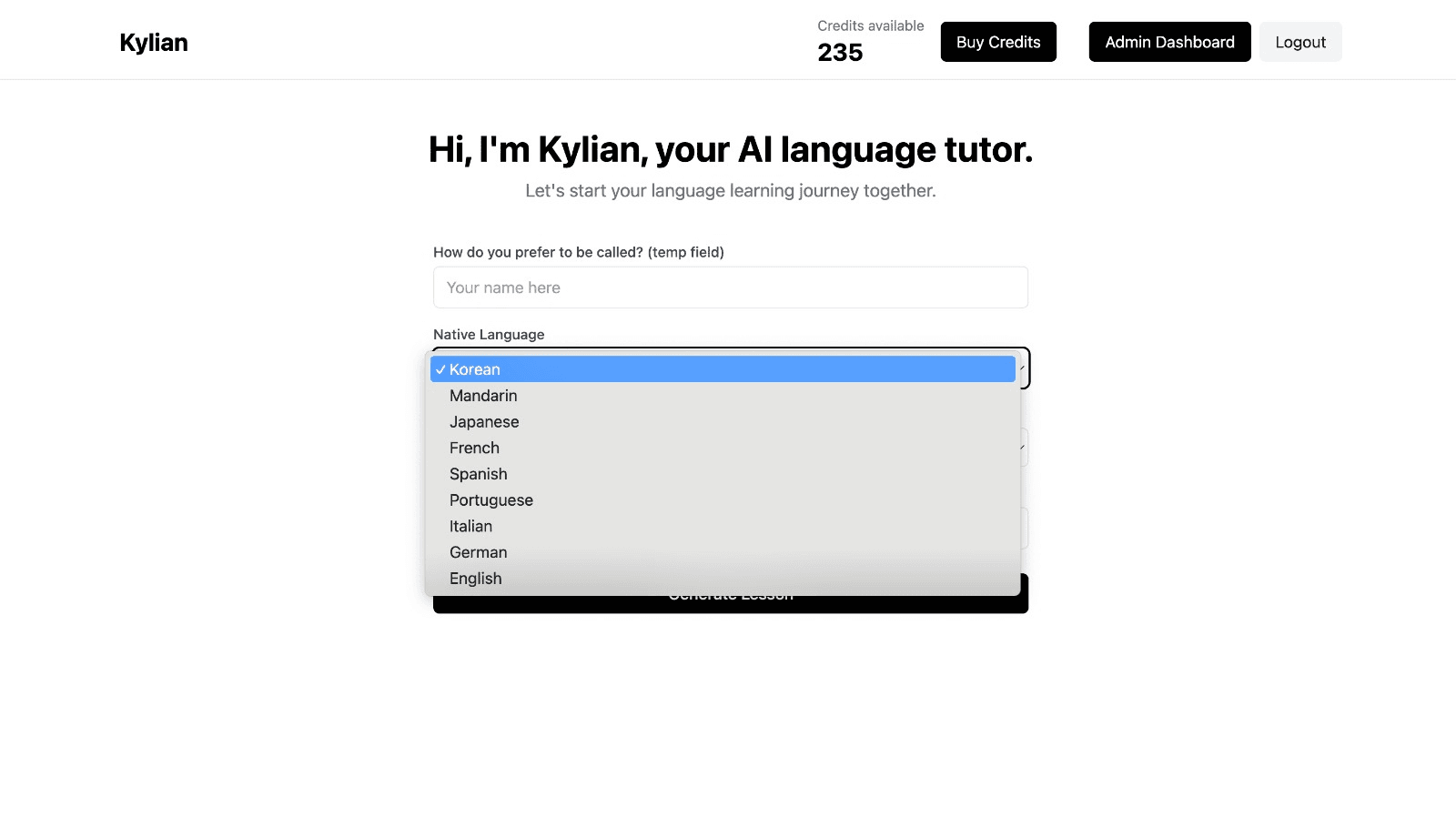
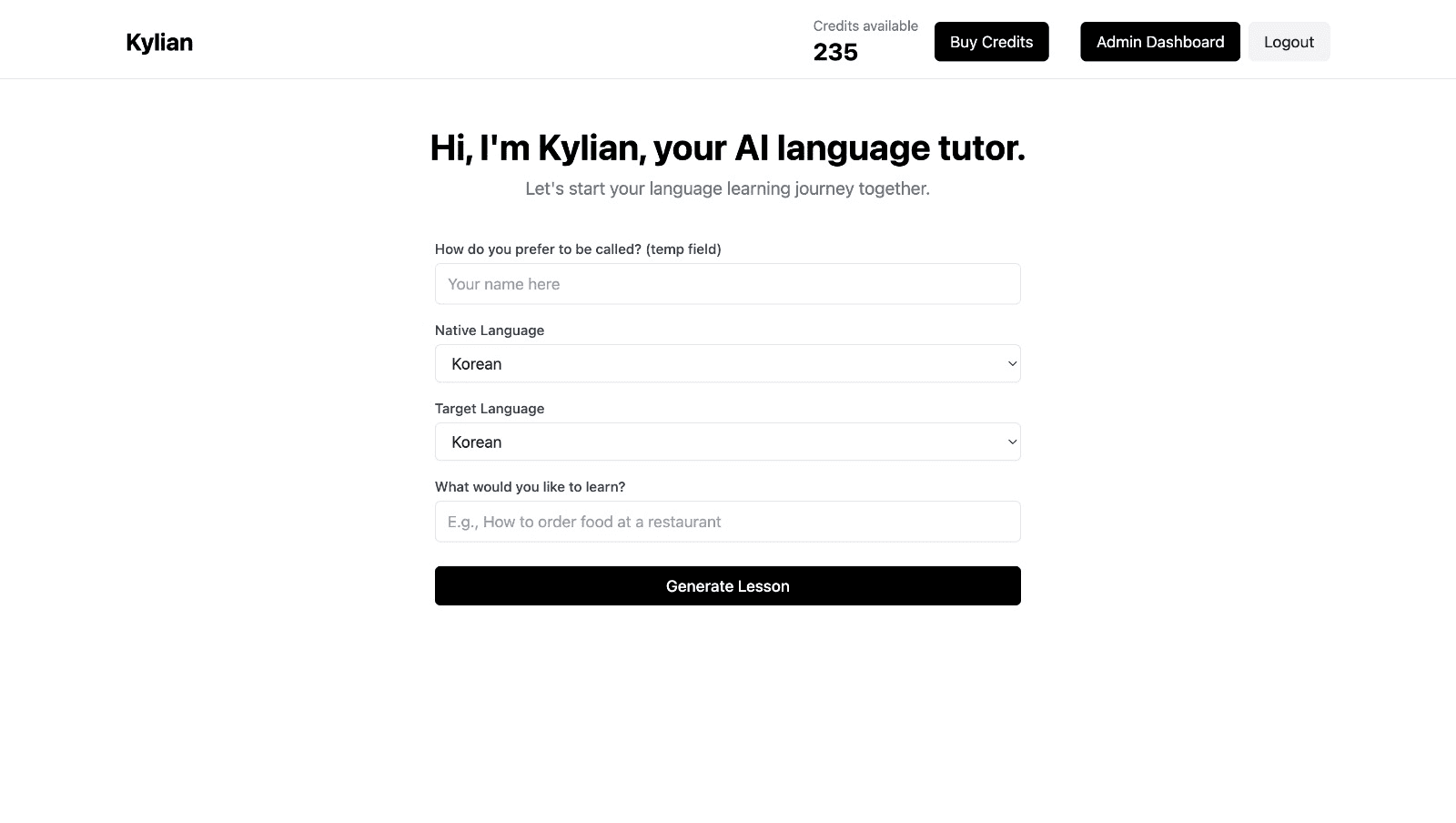
To get started, just tell Kylian which language you want to learn and what your native language is
Tired of teachers who don’t understand your specific struggles as a French speaker? Kylian’s advantage lies in its ability to teach any language using your native tongue as the foundation.
Unlike generic apps that offer the same content to everyone, Kylian explains concepts in your native language (French) and switches to the target language when necessary—perfectly adapting to your level and needs.
This personalization removes the frustration and confusion that are so common in traditional language learning.
Choose a specific topic you want to learn
Frustrated by language lessons that never cover exactly what you need? Kylian can teach you any aspect of a language—from pronunciation to advanced grammar—by focusing on your specific goals.
Avoid vague requests like “How can I improve my accent?” and be precise: “How do I pronounce the R like a native English speaker?” or “How do I conjugate the verb ‘to be’ in the present tense?”
With Kylian, you’ll never again pay for irrelevant content or feel embarrassed asking “too basic” questions to a teacher. Your learning plan is entirely personalized.
Once you’ve chosen your topic, just hit the “Generate a Lesson” button, and within seconds, you’ll get a lesson designed exclusively for you.
Join the room to begin your lesson
The session feels like a one-on-one language class with a human tutor—but without the high price or time constraints.
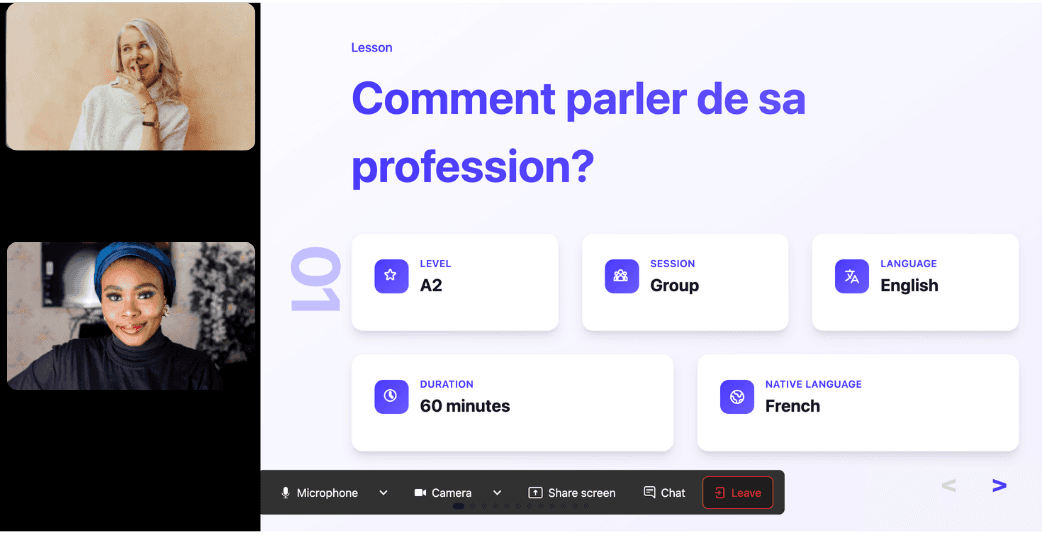
In a 25-minute lesson, Kylian teaches exactly what you need to know about your chosen topic: the nuances that textbooks never explain, key cultural differences between French and your target language, grammar rules, and much more.
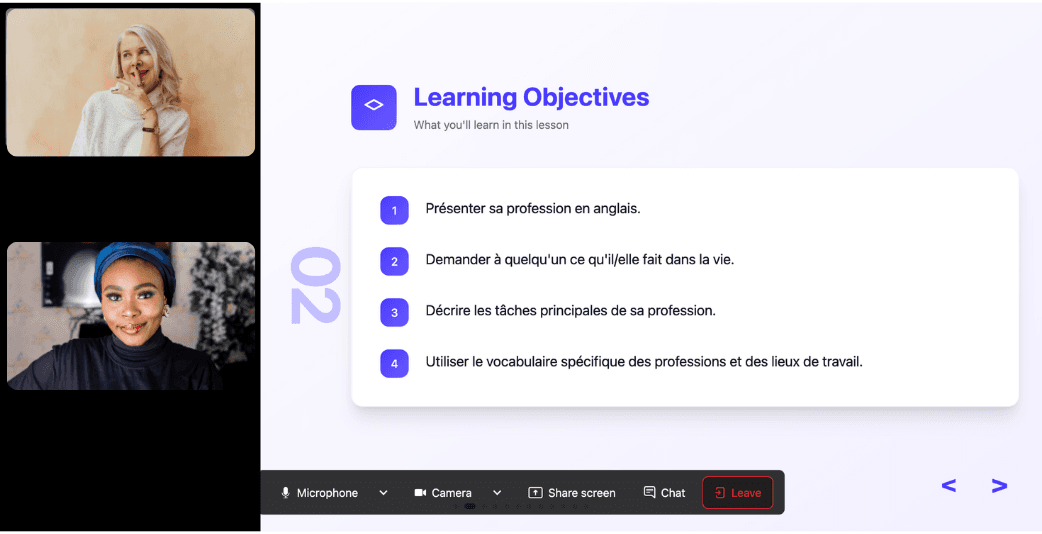
Ever felt frustrated trying to keep up with a native-speaking teacher, or embarrassed to ask for something to be repeated? With Kylian, that problem disappears. It switches intelligently between French and the target language depending on your level, helping you understand every concept at your own pace.
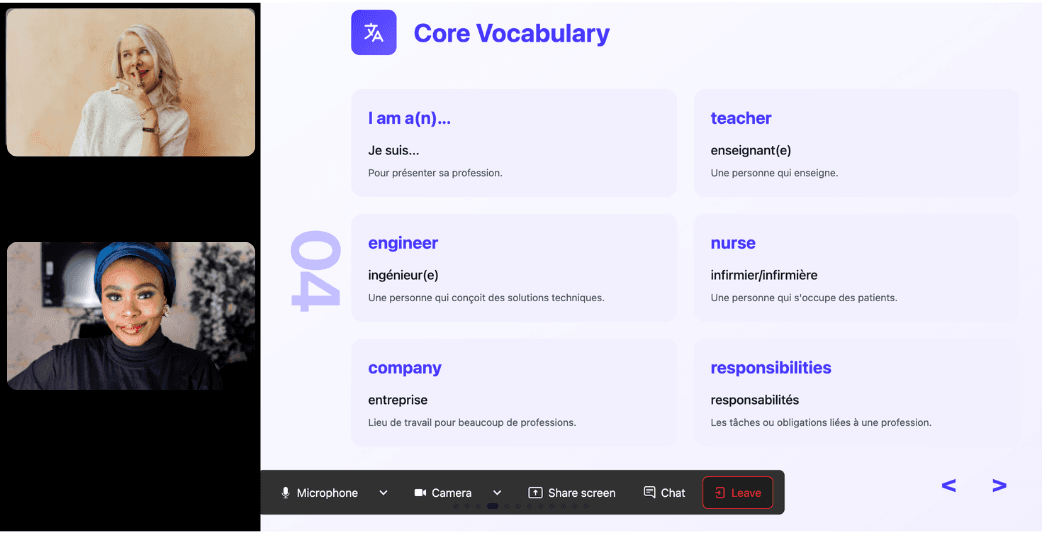
During the lesson, Kylian uses role-plays, real-life examples, and adapts to your learning style. Didn’t understand something? No problem—you can pause Kylian anytime to ask for clarification, without fear of being judged.
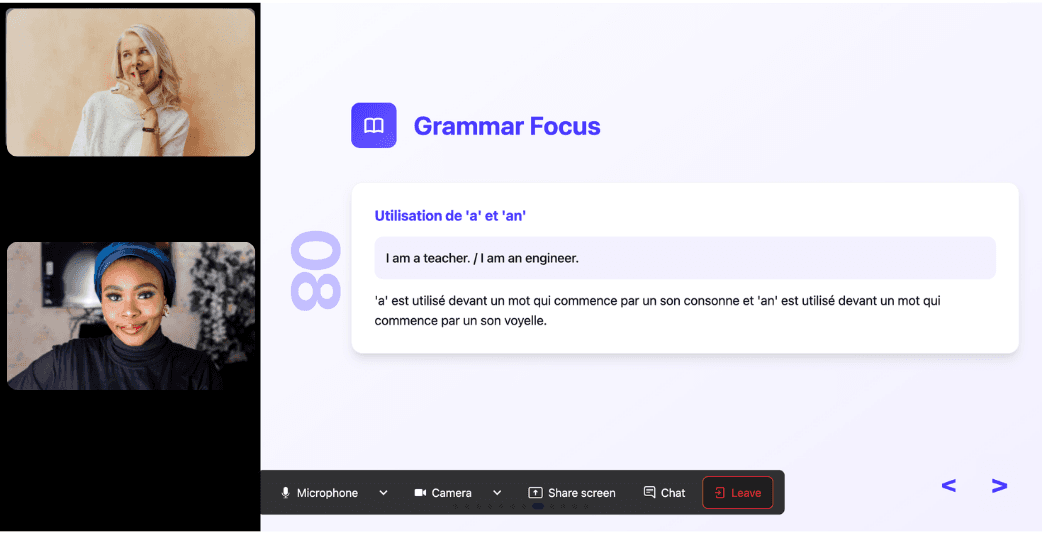
Ask all the questions you want, repeat sections if needed, and customize your learning experience in ways traditional teachers and generic apps simply can’t match.
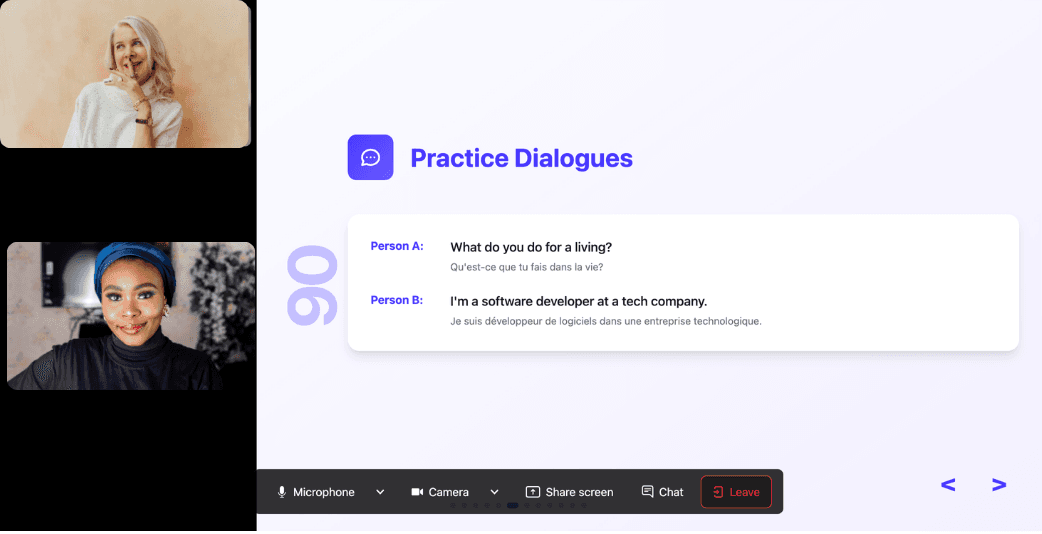
With 24/7 access at a fraction of the cost of private lessons, Kylian removes all the barriers that have kept you from mastering the language you’ve always wanted to learn.