

Miscommunication through inappropriate apologies can derail professional relationships, damage personal connections, and signal cultural insensitivity in Spanish-speaking environments. The distinction between "perdón," "disculpe," and "lo siento" extends far beyond simple translation—each carries specific social weight, formality levels, and contextual applications that native speakers intuitively understand but language learners often misuse.
In Spanish, "perdón" functions as a direct request for forgiveness, "disculpe" operates as a formal excuse or interruption, while "lo siento" expresses genuine emotional regret. These aren't interchangeable phrases but rather precise tools for navigating different social and professional situations with appropriate cultural sensitivity.
What's the Main Difference Between Perdón, Disculpe, and Lo Siento?
The fundamental distinction lies in their communicative intent and social positioning. "Perdón" directly solicits forgiveness for a specific wrongdoing, carrying an implicit acknowledgment of fault and responsibility. This word assumes the speaker has committed an action requiring absolution from the affected party.
"Disculpe" functions primarily as a social lubricant for interruptions, requests, or minor inconveniences where no actual harm occurred. Its formality makes it appropriate for professional settings and interactions with strangers or authority figures. The speaker seeks permission or acknowledges potential disruption rather than admitting guilt.
"Lo siento" conveys emotional empathy and regret, expressing genuine sorrow about a situation regardless of personal responsibility. This phrase focuses on the speaker's emotional response to circumstances rather than requesting specific action from the listener.
Consider a scenario where you accidentally bump into someone at a business conference. "Perdón" acknowledges your mistake and requests forgiveness, "disculpe" formally recognizes the disruption while maintaining professional distance, and "lo siento" expresses regret about the collision occurring. Each response positions you differently within the social interaction and signals varying levels of responsibility and emotional investment.
The temporal aspect also differs significantly. "Perdón" and "disculpe" typically address immediate situations requiring real-time resolution, while "lo siento" can reference past events, ongoing situations, or empathetic responses to others' misfortunes.
How and When to Use Perdón, Disculpe, and Lo Siento with Examples
Perdón demands strategic deployment when you've clearly transgressed social or professional boundaries and need explicit forgiveness. Use this when your actions directly caused inconvenience, embarrassment, or harm to another person. The word works best in informal settings with peers, friends, or family members where emotional directness is acceptable.
In professional environments, reserve "perdón" for situations where your mistake significantly impacted colleagues or clients. For instance, if you accidentally deleted important shared files, "Perdón por haber eliminado los documentos sin consultarlo" acknowledges your error and seeks forgiveness for the oversight.
Disculpe serves as the cornerstone of formal Spanish politeness, essential for navigating professional hierarchies and unfamiliar social situations. Deploy this when interrupting conversations, asking for assistance, or acknowledging minor disruptions without accepting full responsibility.
When approaching a supervisor's office, "Disculpe, ¿podría hablar con usted un momento?" demonstrates respect for their time while requesting attention. The formality signals professional boundaries and acknowledges their authority position. Similarly, when asking strangers for directions, "Disculpe, ¿sabe dónde está la estación de metro?" maintains appropriate social distance while seeking assistance.
Lo siento requires careful calibration as it expresses genuine emotional investment in situations. Use this when responding to others' misfortunes, expressing regret about circumstances beyond your control, or acknowledging situations where blame is irrelevant but empathy is crucial.
When learning about a colleague's family emergency, "Lo siento mucho por lo que está pasando su familia" conveys sincere concern without implying responsibility. This response demonstrates emotional intelligence and cultural sensitivity, particularly important in Hispanic business cultures that value personal relationships alongside professional competence.
Real-Life Scenarios Where Perdón, Disculpe, and Lo Siento Apply
Professional Meeting Interruption Scenario: During a quarterly review presentation, you realize your data analysis contains significant errors that invalidate your conclusions. The appropriate response combines multiple apology forms strategically. "Disculpe la interrupción, pero he detectado errores importantes en mis datos. Perdón por no haber verificado esta información anteriormente. Lo siento mucho por cualquier confusión que esto pueda causar." This sequence formally acknowledges the interruption, accepts responsibility for the oversight, and expresses regret about the broader impact.
Client Relationship Management Context: A software implementation you recommended fails to meet promised specifications, causing operational disruptions for a key client. The situation requires careful linguistic navigation to maintain the business relationship while addressing accountability. "Lo siento profundamente por las dificultades que está experimentando con el sistema. Perdón por no haber anticipado estos problemas técnicos durante la evaluación inicial" demonstrates empathy for their situation while accepting responsibility for the oversight.
Social Navigation at Networking Events: While networking at an industry conference, you accidentally interrupt a private conversation between two executives from competing companies. The situation demands immediate social repair without appearing presumptuous about your relationship with either party. "Disculpe, no me di cuenta de que estaban en una conversación privada" acknowledges the disruption formally while maintaining professional boundaries and avoiding assumptions about forgiveness or relationship dynamics.
Cross-Cultural Customer Service Challenge: Managing a customer complaint where language barriers contributed to service failures requires nuanced apology deployment. When the customer expresses frustration about miscommunication, responding with "Lo siento que hayamos tenido estas dificultades de comunicación. Disculpe si no fui lo suficientemente claro en nuestras conversaciones anteriores. Perdón por cualquier malentendido que haya causado inconvenientes" addresses the emotional impact, acknowledges communication gaps formally, and seeks forgiveness for specific inconveniences.
Common Mistakes to Avoid When Using Perdón, Disculpe, and Lo Siento
Formality Level Miscalculation represents the most frequent error among Spanish learners, particularly in professional environments where hierarchy and respect protocols carry significant weight. Using "perdón" with supervisors or clients can appear inappropriately casual and suggest disrespect for their position. Conversely, deploying "disculpe" with close friends or family members creates unnecessary emotional distance and can seem cold or rejecting.
The mistake often manifests when English speakers translate "sorry" directly without considering Spanish formality distinctions. In business contexts, addressing senior executives with "perdón" signals cultural insensitivity and poor judgment about professional relationships. These errors can damage career prospects and professional credibility in Hispanic business environments.
Emotional Intensity Mismatches occur when speakers choose apology forms that don't align with situational gravity or their genuine emotional state. Using "lo siento" for minor inconveniences like arriving five minutes late appears overly dramatic and insincere, while deploying "disculpe" for serious mistakes minimizes impact and suggests lack of accountability.
This mistake frequently surfaces when dealing with significant professional errors or personal conflicts. Responding to major project failures with casual "disculpe" communications can damage relationships and professional reputation. Similarly, over-emotional responses to minor situations can appear manipulative or unstable, particularly problematic in professional Spanish-speaking environments where emotional regulation is highly valued.
Alternative Expressions for Perdón, Disculpe, and Lo Siento
Instead of Perdón: "Pido disculpas" elevates formality while maintaining the forgiveness-seeking function, making it suitable for professional contexts where "perdón" might seem too casual. This phrase works effectively in written communications to clients or supervisors when acknowledging significant mistakes. "Me disculpo" offers another formal alternative that explicitly takes responsibility while requesting absolution, particularly effective in business correspondence where accountability documentation is important.
Instead of Disculpe: "Con permiso" functions perfectly for physical interruptions or when seeking passage through crowded spaces, maintaining politeness without implying wrongdoing. This phrase is essential for professional events, elevators, or formal gatherings where "disculpe" might seem unnecessarily apologetic. "¿Podría interrumpir un momento?" provides explicit permission-seeking for conversation interruptions, demonstrating respect for ongoing discussions while clearly communicating your intent.
Instead of Lo Siento: "Lamento mucho" conveys deeper emotional investment and formal sympathy, particularly appropriate for serious situations like bereavement, major setbacks, or significant personal losses. This expression signals greater emotional engagement than "lo siento" while maintaining professional appropriateness. "Qué pena" offers informal sympathy for disappointing situations, working well with colleagues or acquaintances when formal expressions might seem excessive but emotional acknowledgment is appropriate.
Strategic Communication Patterns in Professional Spanish Environments
Understanding apology deployment within broader Spanish business communication patterns significantly enhances professional effectiveness. Hispanic business cultures often prioritize relationship maintenance over direct confrontation, making appropriate apology selection crucial for long-term success.
Successful professionals in Spanish-speaking markets master the art of layered apologies, combining multiple forms strategically to address different aspects of complex situations. This approach demonstrates cultural sophistication and emotional intelligence while maintaining professional credibility.
The sequence typically follows emotional acknowledgment ("lo siento"), formal recognition ("disculpe"), and specific responsibility acceptance ("perdón"). This pattern addresses the listener's emotional state, maintains social protocols, and resolves specific accountability questions systematically.
Cultural Context and Regional Variations
Regional preferences significantly influence apology effectiveness across Spanish-speaking countries. Mexican business culture tends toward more formal approaches, making "disculpe" particularly important for professional advancement. Argentine contexts often prefer directness, making strategic "perdón" deployment more acceptable in business situations.
Colombian professional environments emphasize relationship harmony, making "lo siento" particularly valuable for maintaining team cohesion during challenging projects. These regional differences require careful attention for international business success or career advancement across different Hispanic markets.
Understanding these nuances prevents cultural missteps that could damage professional relationships or business opportunities. The investment in regional apology patterns pays dividends in trust-building and long-term business success.
Learn Any Language with Kylian AI
Private language lessons are expensive. Paying between 15 and 50 euros per lesson isn’t realistic for most people—especially when dozens of sessions are needed to see real progress.
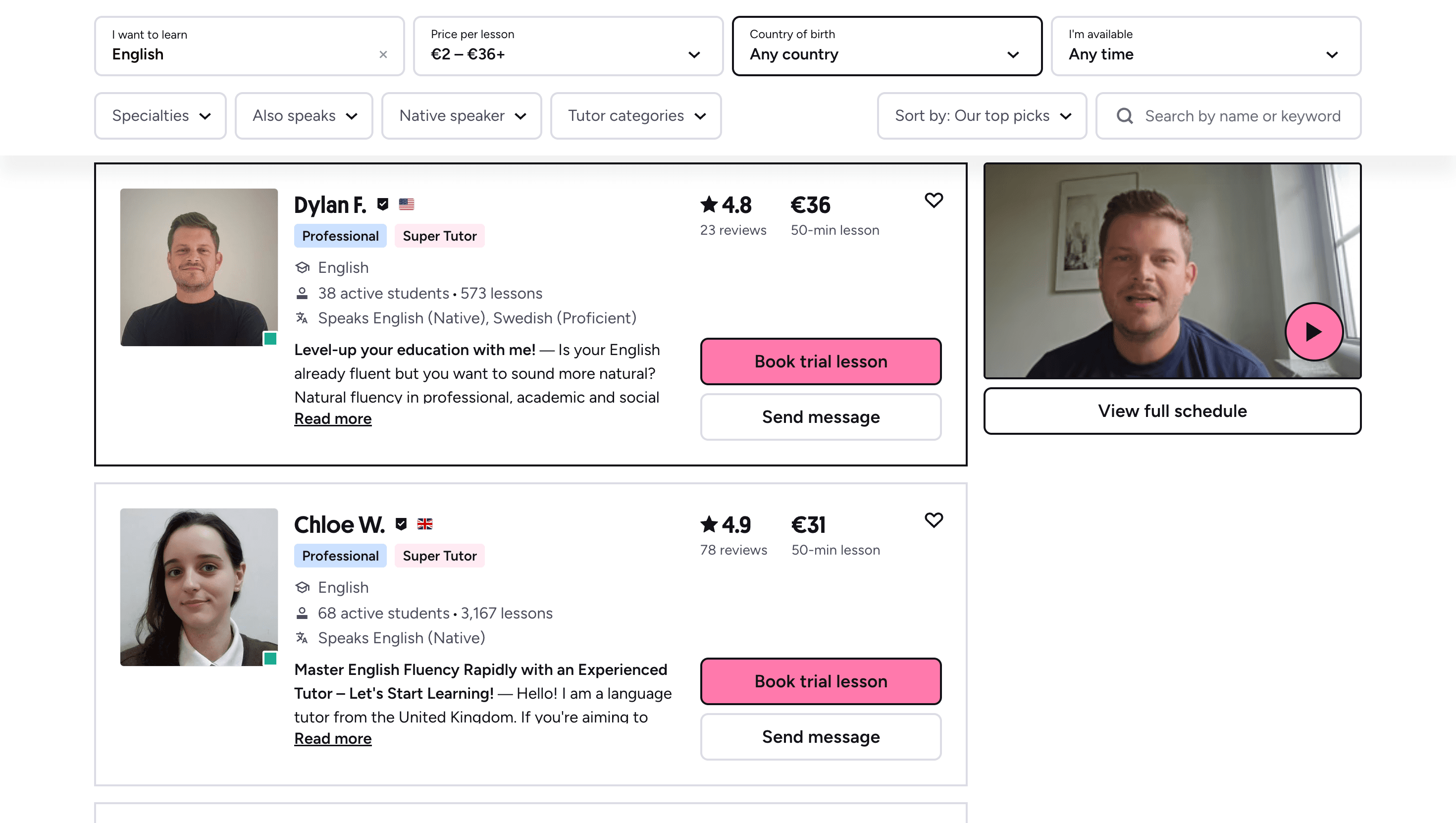
Many learners give up on language learning due to these high costs, missing out on valuable professional and personal opportunities.
That’s why we created Kylian: to make language learning accessible to everyone and help people master a foreign language without breaking the bank.
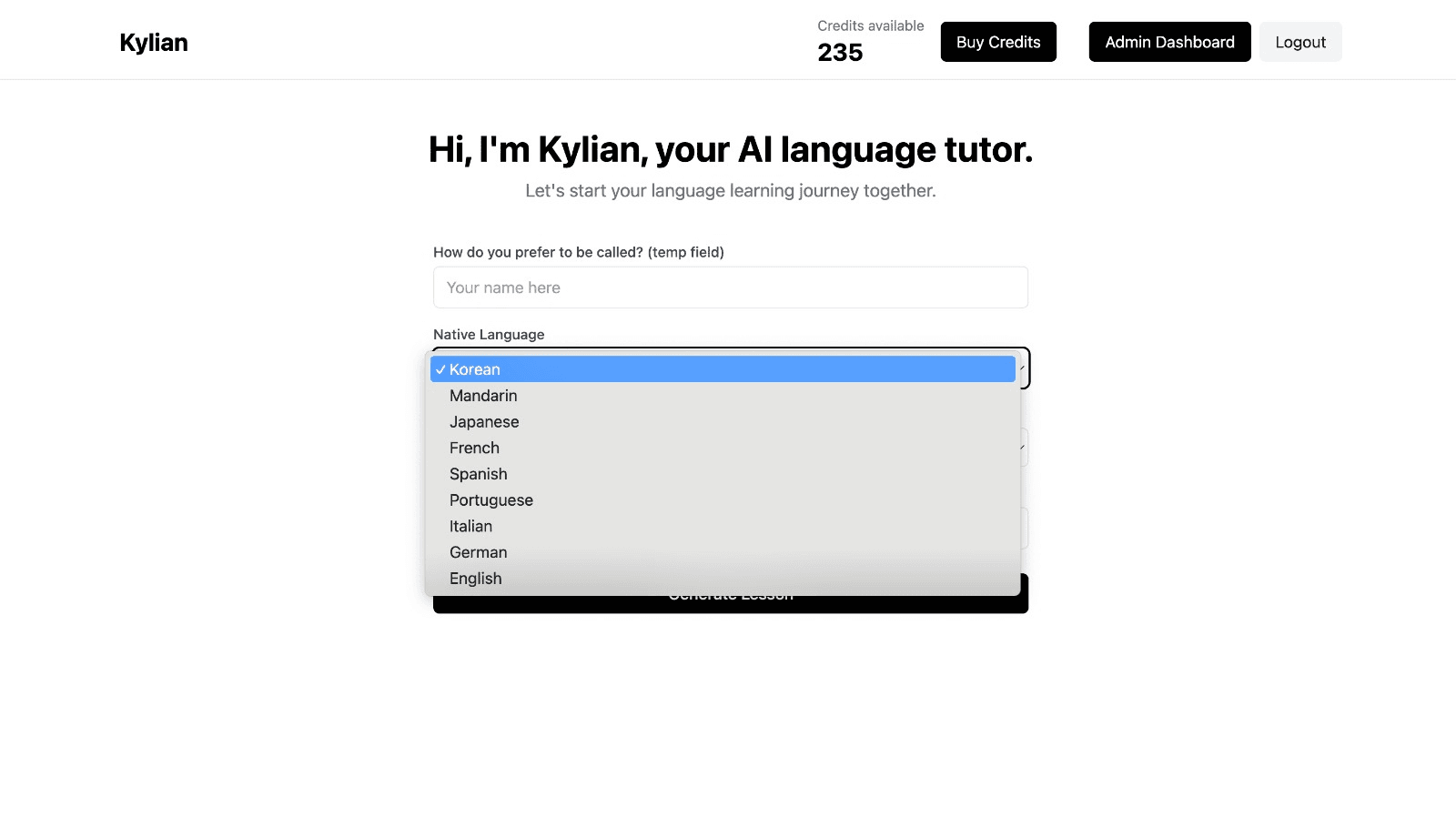
To get started, just tell Kylian which language you want to learn and what your native language is
Tired of teachers who don’t understand your specific struggles as a French speaker? Kylian’s advantage lies in its ability to teach any language using your native tongue as the foundation.
Unlike generic apps that offer the same content to everyone, Kylian explains concepts in your native language (French) and switches to the target language when necessary—perfectly adapting to your level and needs.
This personalization removes the frustration and confusion that are so common in traditional language learning.
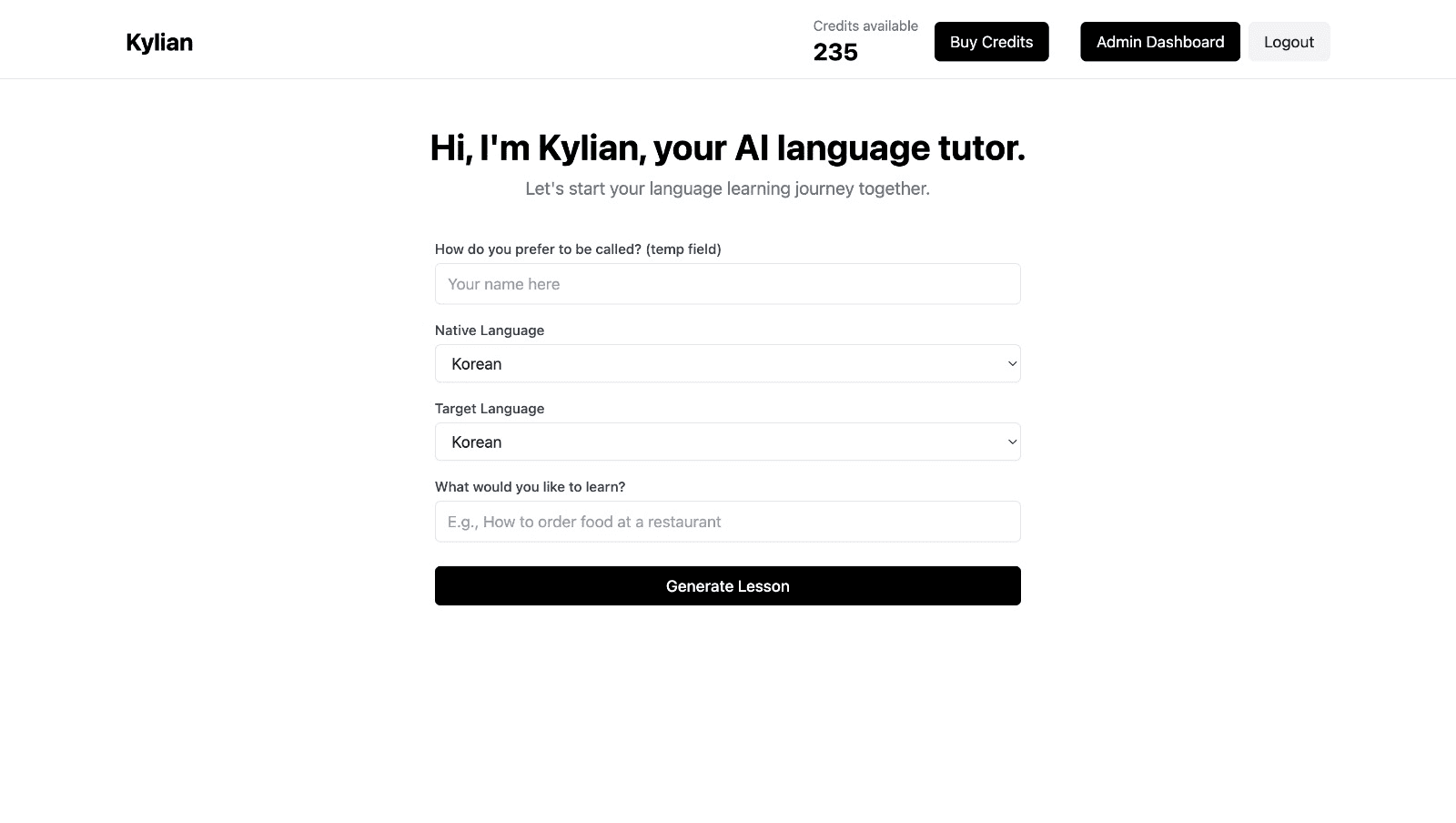
Choose a specific topic you want to learn
Frustrated by language lessons that never cover exactly what you need? Kylian can teach you any aspect of a language—from pronunciation to advanced grammar—by focusing on your specific goals.
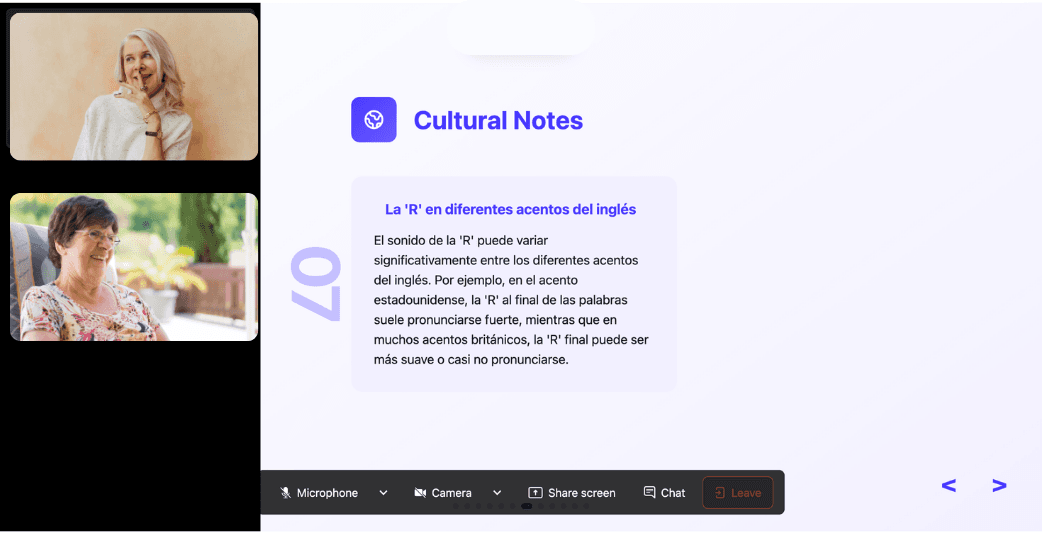
Avoid vague requests like “How can I improve my accent?” and be precise: “How do I pronounce the R like a native English speaker?” or “How do I conjugate the verb ‘to be’ in the present tense?”
With Kylian, you’ll never again pay for irrelevant content or feel embarrassed asking “too basic” questions to a teacher. Your learning plan is entirely personalized.
Once you’ve chosen your topic, just hit the “Generate a Lesson” button, and within seconds, you’ll get a lesson designed exclusively for you.
Join the room to begin your lesson
The session feels like a one-on-one language class with a human tutor—but without the high price or time constraints.
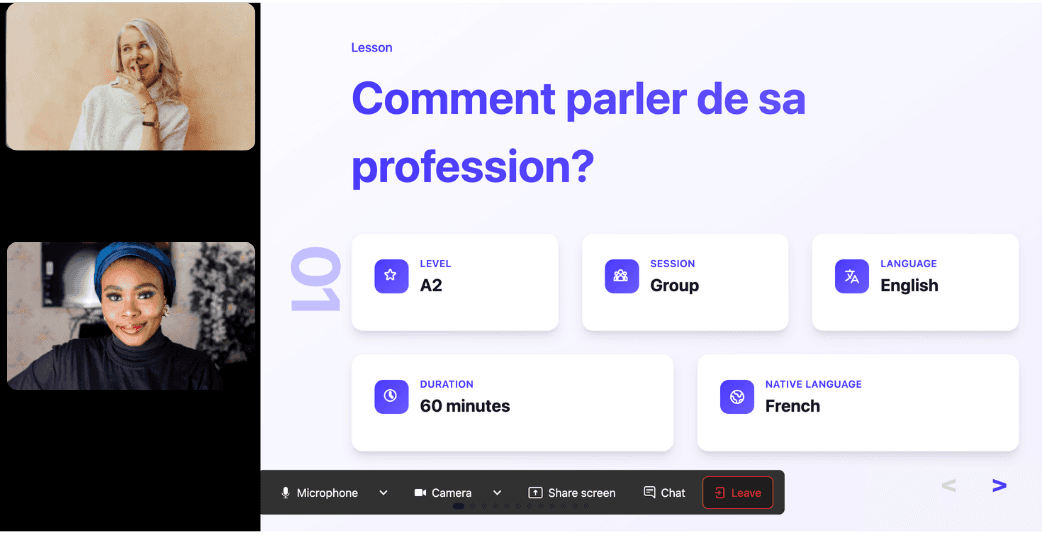
In a 25-minute lesson, Kylian teaches exactly what you need to know about your chosen topic: the nuances that textbooks never explain, key cultural differences between French and your target language, grammar rules, and much more.
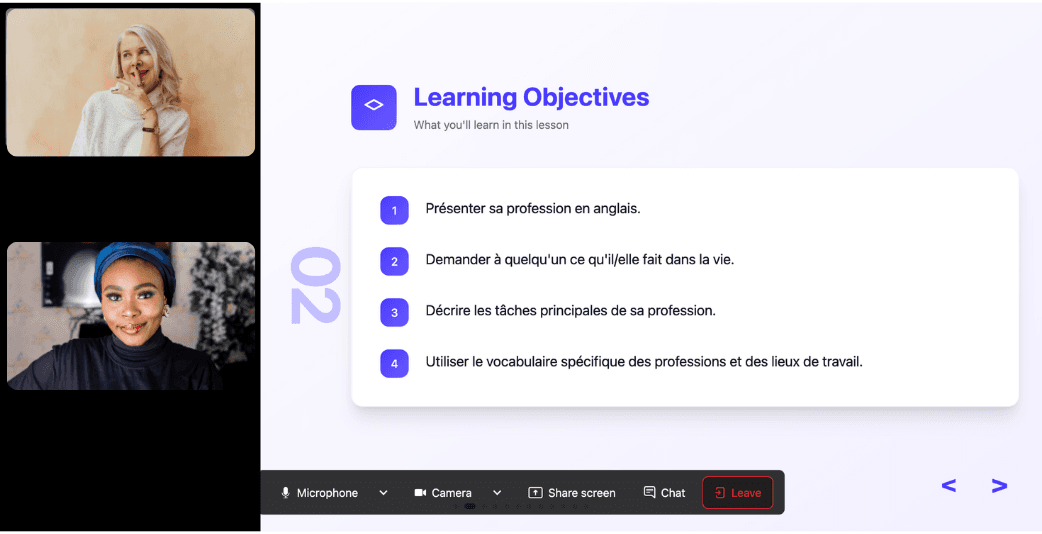
Ever felt frustrated trying to keep up with a native-speaking teacher, or embarrassed to ask for something to be repeated? With Kylian, that problem disappears. It switches intelligently between French and the target language depending on your level, helping you understand every concept at your own pace.
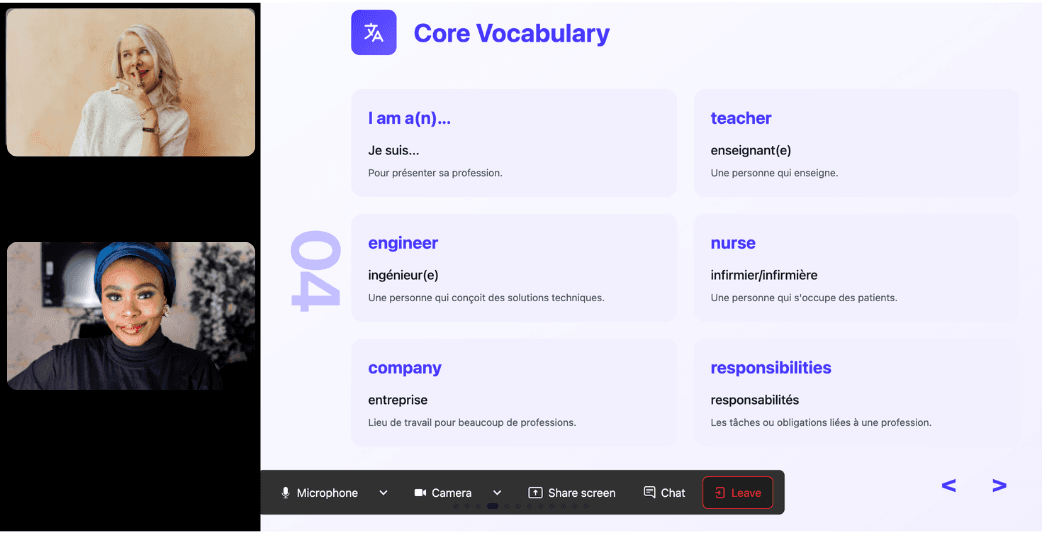
During the lesson, Kylian uses role-plays, real-life examples, and adapts to your learning style. Didn’t understand something? No problem—you can pause Kylian anytime to ask for clarification, without fear of being judged.
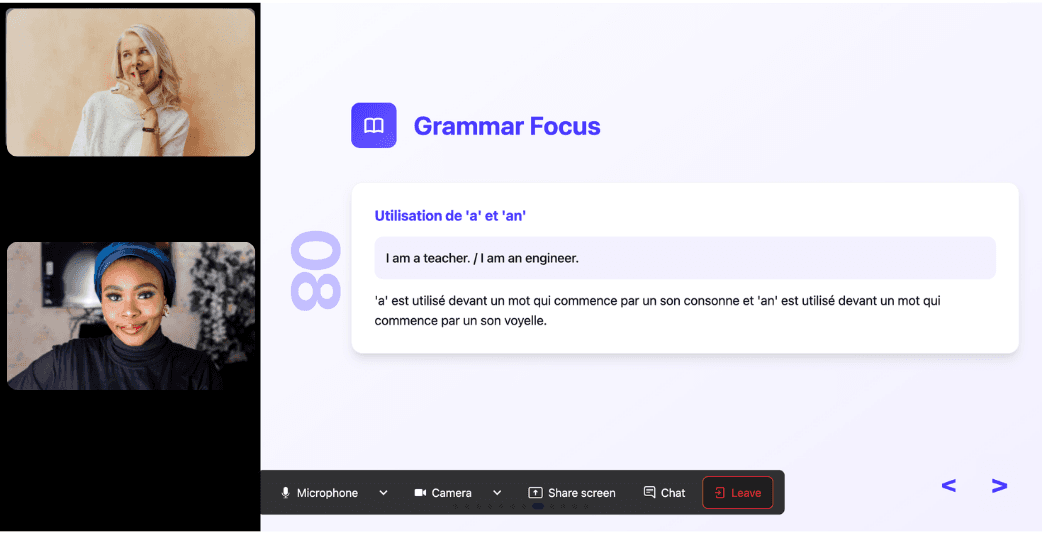
Ask all the questions you want, repeat sections if needed, and customize your learning experience in ways traditional teachers and generic apps simply can’t match.
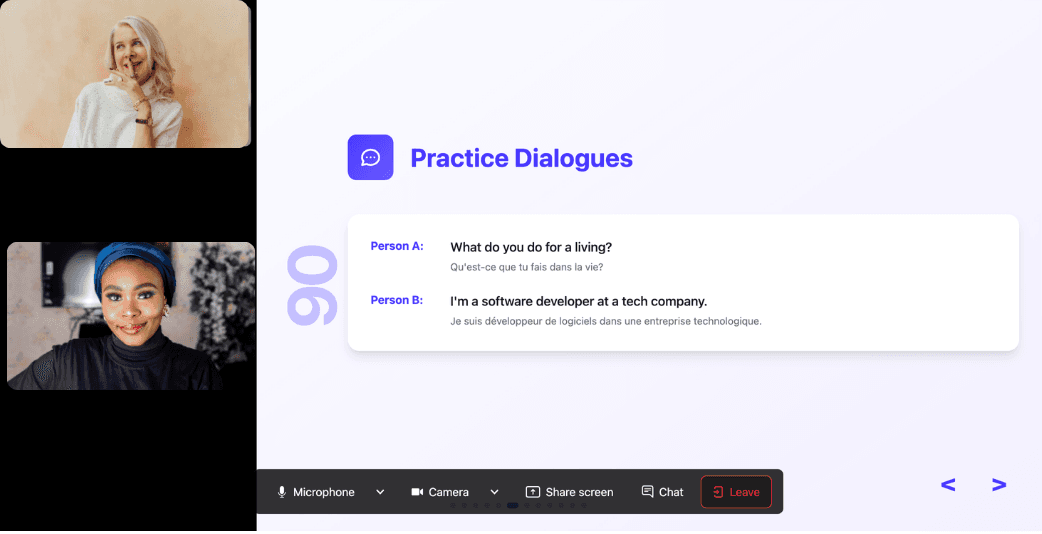
With 24/7 access at a fraction of the cost of private lessons, Kylian removes all the barriers that have kept you from mastering the language you’ve always wanted to learn.


![What is the Abbreviation for Yards? [English]](/_next/image?url=https%3A%2F%2Fcdn.sanity.io%2Fimages%2F147z5m2d%2Fproduction%2Fecad99112c7a8369f1fd21f3518b1cc7bfa777ec-2240x1260.png%3Frect%3D175%2C0%2C1890%2C1260%26w%3D600%26h%3D400&w=3840&q=75)

