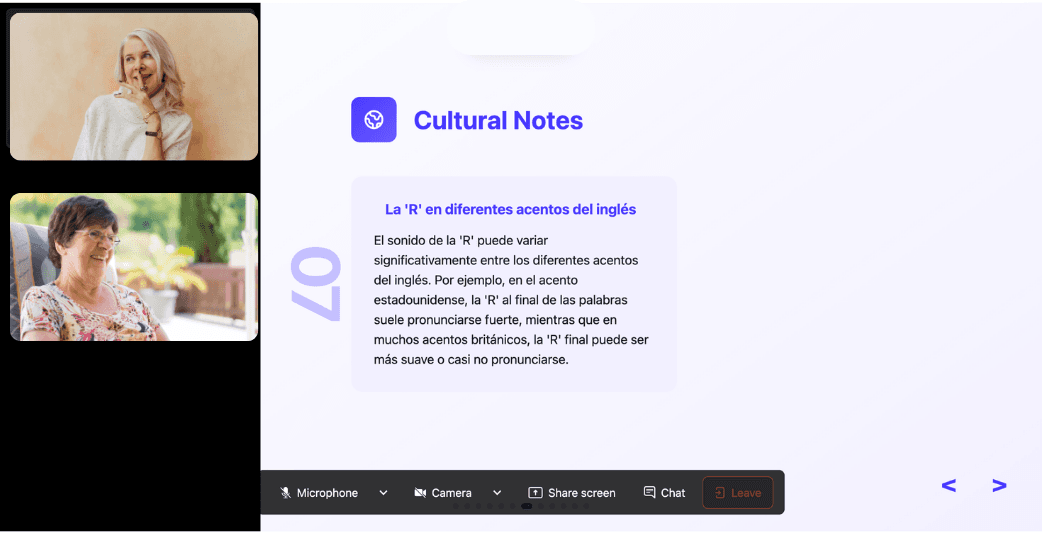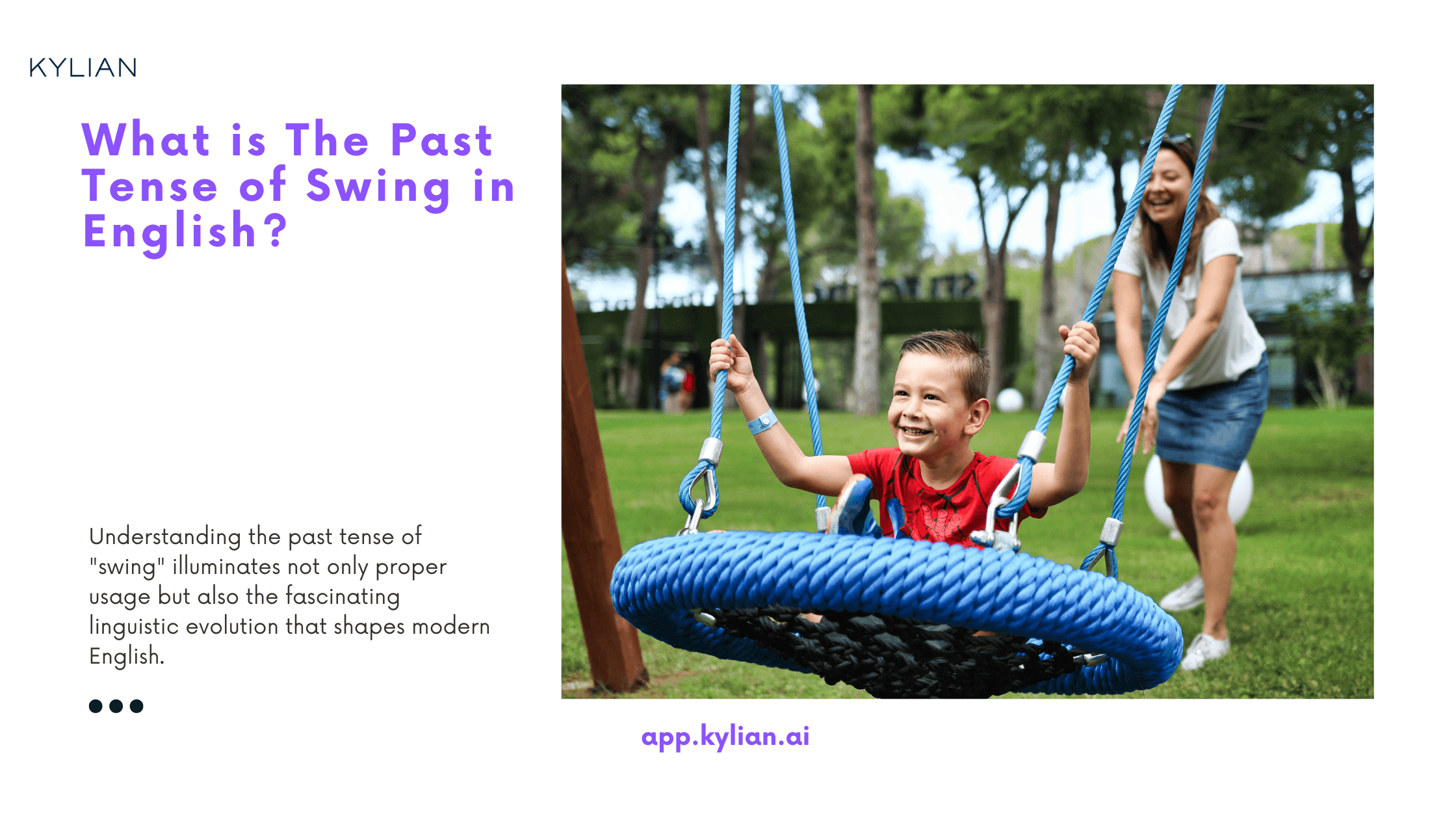
Mastering English verb forms represents a critical milestone for language learners, particularly when navigating irregular verbs like "swing." The distinction between regular and irregular verbs creates significant challenges even for intermediate learners, as irregular patterns defy standard conjugation rules. Understanding the past tense of "swing" illuminates not only proper usage but also the fascinating linguistic evolution that shapes modern English.
The Present and Past Forms of "Swing"
The verb "swing" belongs to a distinctive category of irregular verbs in English that undergo vowel changes rather than adding the standard "-ed" ending. Its principal forms are:
- Present tense: swing
- Past simple: swung
- Past participle: swung
- Present participle: swinging
These forms represent the essential building blocks for constructing grammatically sound sentences across various time contexts. The pattern "swing-swung-swung" follows an established vowel change pattern shared with verbs like "cling," "fling," and "sling," which we'll examine in greater detail below.
Is "Swang" Correct?
A common point of confusion emerges with the alternative past form "swang," which occasionally appears in both written and spoken English. However, from a prescriptive grammar perspective, "swung" remains the standard, accepted past tense form in modern English.
"Swang" represents what linguists call a regularization attempt – the unconscious human tendency to apply regular patterns to irregular forms. Though "swang" appears in certain dialects and historical contexts, contemporary standard English consistently uses "swung" as both the past simple and past participle form.
Consider the difference:
- Incorrect: Yesterday, she swang the bat three times.
- Correct: Yesterday, she swung the bat three times.
This distinction matters particularly in formal writing, academic contexts, and professional communications, where adherence to standard forms signals linguistic competence.
The Etymology of "Swing"
Understanding the evolution of "swing" provides valuable context for its modern irregular forms. The verb traces its origins to Old English "swingan," meaning "to rush, fling oneself," which developed from Proto-Germanic swenganan.
Through the natural process of language evolution, Middle English speakers gradually transformed the pronunciation and spelling to the modern form while maintaining its irregular conjugation pattern. This historical continuity explains why "swing" follows an irregular pattern rather than adopting the regular "-ed" ending that characterizes more recently introduced verbs.
The preservation of this irregular form throughout centuries of language development underscores its deep integration into English's core vocabulary.
Similar Verbs to "Swing"
"Swing" belongs to a family of irregular verbs sharing similar conjugation patterns. Identifying these patterns helps learners recognize broader trends rather than memorizing isolated examples:
- Cling: cling – clung – clung
- Fling: fling – flung – flung
- Sling: sling – slung – slung
- Sting: sting – stung – stung
- Wring: wring – wrung – wrung
All these verbs follow the pattern of changing the vowel 'i' in the present tense to 'u' in both past simple and past participle forms. This pattern forms a consistent subgroup within English's irregular verb system.
Understanding these related patterns transforms what might seem like arbitrary exceptions into recognizable systems, significantly easing the learning burden for non-native speakers.
How to Use "Swing" in Different Tenses
Present Simple
The present simple form "swing" describes habitual actions or general truths:
- The pendulum swings back and forth all day.
- Professional golfers swing their clubs with remarkable precision.
- The children swing on the playground every afternoon.
Past Simple
The past simple "swung" indicates a completed action at a specific point in the past:
- The batter swung at the pitch but missed completely.
- She swung the door open and rushed inside.
- The market swung unexpectedly after the economic announcement.
Present Perfect
The present perfect combines "have/has" with the past participle "swung" to connect past actions to the present:
- The political climate has swung toward progressive policies in recent years.
- He has swung between optimism and despair throughout the project.
- The pendulum has swung thirty times since we started counting.
Past Perfect
The past perfect pairs "had" with "swung" to indicate an action completed before another past event:
- By the time the coach arrived, the player had already swung at five pitches.
- She had swung the conversation toward personal topics before I could redirect it.
- The mood had swung dramatically by the time the results were announced.
Future Tenses
Future forms incorporate "will" or "going to" with the base form "swing":
- The championship will swing in our favor if we win tomorrow.
- She is going to swing by my office later today.
- The price index will have swung upward by next quarter.
Progressive Forms
Progressive tenses use forms of "be" with the present participle "swinging":
- He is swinging the axe with great force.
- They were swinging from branch to branch like acrobats.
- She has been swinging between different career options for months.
Common Expressions and Idioms with "Swing"
The versatility of "swing" extends beyond its literal meaning of pendular movement, incorporating numerous idiomatic expressions that enrich English communication:
- In full swing: At the height of activity or progress The festival was in full swing by midnight, with thousands of participants filling the streets.
- Swing into action: Begin working energetically The emergency response team swung into action immediately after the earthquake.
- Swing by/around: Visit briefly or casually I'll swing by your office after lunch to discuss the proposal.
- Swing the balance/tide: Change the outcome decisively Her testimony swung the balance in favor of the defendant.
- Swing between: Alternate between different states or opinions He swings between intense productivity and complete disinterest in his work.
- Take a swing at: Attempt something challenging After years of hesitation, she finally took a swing at writing her novel.
These expressions demonstrate how "swing" has expanded beyond its physical meaning to encompass concepts of change, transition, and movement in abstract contexts.
Common Mistakes with "Swing" and How to Avoid Them
Mistake 1: Using "Swinged" Instead of "Swung"
Perhaps the most common error involves applying regular verb conjugation rules to "swing":
- Incorrect: He swinged the bat with all his strength.
- Correct: He swung the bat with all his strength.
This mistake typically stems from overgeneralizing the regular pattern of adding "-ed" to form past tense. Conscious memorization of the correct form "swung" prevents this error.
Mistake 2: Confusing "Swang" and "Swung"
As mentioned earlier, "swang" occasionally appears as an alternative past form:
- Incorrect: The pendulum swang back and forth for hours.
- Correct: The pendulum swung back and forth for hours.
Standard English unequivocally prefers "swung" in both written and formal spoken contexts.
Mistake 3: Confusing Simple Past and Past Participle
Some learners mistakenly use different forms for the simple past and past participle:
- Incorrect: She swung the racket yesterday, but she has swang it many times before.
- Correct: She swung the racket yesterday, and she has swung it many times before.
Unlike many irregular verbs that have distinct forms (like "drive-drove-driven"), "swing" uses "swung" for both past simple and participle contexts.
Mistake 4: Incorrect Preposition Usage
Certain expressions with "swing" require specific prepositions:
- Incorrect: She swung from the door quickly.
- Correct: She swung through the door quickly.
- Incorrect: The mood swung to pessimism.
- Correct: The mood swung toward pessimism.
Learning these collocations as complete phrases rather than isolated words helps avoid preposition errors.
"Swing" in Different Contexts
The versatility of "swing" manifests in its application across diverse contexts, each with specific connotations:
Sports
In sports terminology, "swing" describes the arc-like motion of hitting implements:
- Golf: "His swing improved dramatically after working with the new coach."
- Baseball: "The batter took a powerful swing but missed the ball entirely."
- Tennis: "Her forehand swing generates remarkable power."
Music
In musical contexts, "swing" refers to a rhythmic style and genre:
- "The band played with an authentic swing rhythm that got everyone dancing."
- "Jazz swing dominated American popular music in the 1930s and 1940s."
Politics
Political discourse uses "swing" to describe shifting allegiances and momentum:
- "Several swing states determined the election outcome."
- "Public opinion swung dramatically after the scandal broke."
Physics
In physics, "swing" describes pendular motion and oscillation:
- "The scientists measured the swing of the pendulum with precision instruments."
- "The bridge's natural frequency caused it to swing dangerously in strong winds."
The Cognitive Challenge of Irregular Verbs
Irregular verbs like "swing" present unique cognitive challenges in language acquisition. Research in psycholinguistics reveals that our brains process regular and irregular verbs through different mechanisms:
- Regular verbs activate rule-based processing (add "-ed")
- Irregular verbs require memorization and retrieval from lexical memory
This dual-process model explains why even advanced learners occasionally default to "swinged" under cognitive pressure – the rule-based system competes with memory retrieval when accessing the correct form.
Studies show that high-frequency irregular verbs like "swing" become automatized more quickly than low-frequency irregulars, suggesting that repeated exposure and contextual usage accelerate mastery more effectively than isolated memorization.
Practical Learning Strategies for Mastering "Swing"
Research-based approaches can significantly enhance retention and accurate usage of irregular verbs like "swing":
Contextual Learning
Rather than memorizing isolated forms, encounter "swing" in meaningful contexts:
- Read authentic materials containing multiple forms of "swing"
- Write original sentences using different tenses
- Practice speaking with narrative exercises that require past forms
Pattern Recognition
Group "swing" with related verbs following the same pattern:
- Create flashcards organizing verbs by pattern (i → u)
- Practice transforming present to past in pattern-based drills
- Identify the pattern in authentic texts
Spaced Repetition
Leverage the psychological spacing effect for optimal retention:
- Review the forms of "swing" at increasing intervals
- Use digital spaced repetition systems to optimize review timing
- Incorporate "swing" into regular writing and speaking practice
Error Correction
Develop self-monitoring strategies:
- Record yourself using "swing" in various contexts
- Analyze written work specifically for irregular verb accuracy
- Request explicit feedback on usage of "swing" and similar verbs
Linguistic Evolution and the Future of "Swing"
Language constantly evolves, raising questions about the future of irregular verbs like "swing." Historical linguistics reveals competing forces at work:
- Regularization pressure: The tendency to simplify irregularities over time
- Frequency effects: High-frequency irregular verbs resist regularization
- Standardization: Educational and institutional forces preserve established forms
Given "swing's" relatively high frequency in everyday English, linguists predict its irregular pattern will persist for the foreseeable future, despite occasional appearances of regularized forms like "swinged" in casual speech.
This persistence underscores the importance of mastering the standard forms while recognizing the dynamic nature of language evolution.
Learn Any Language with Kylian AI
Private language lessons are expensive. Paying between 15 and 50 euros per lesson isn’t realistic for most people—especially when dozens of sessions are needed to see real progress.
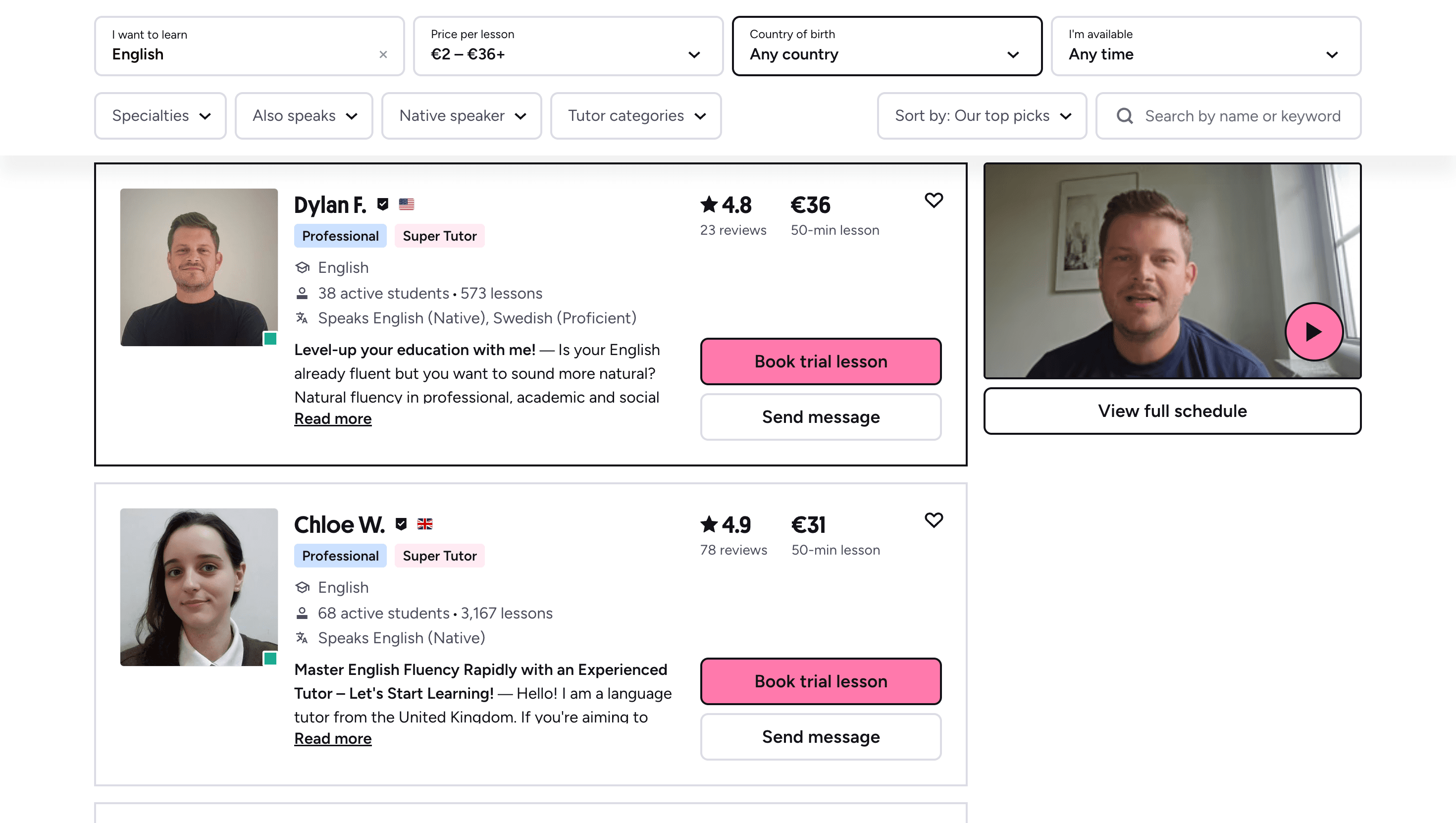
Many learners give up on language learning due to these high costs, missing out on valuable professional and personal opportunities.
That’s why we created Kylian: to make language learning accessible to everyone and help people master a foreign language without breaking the bank.
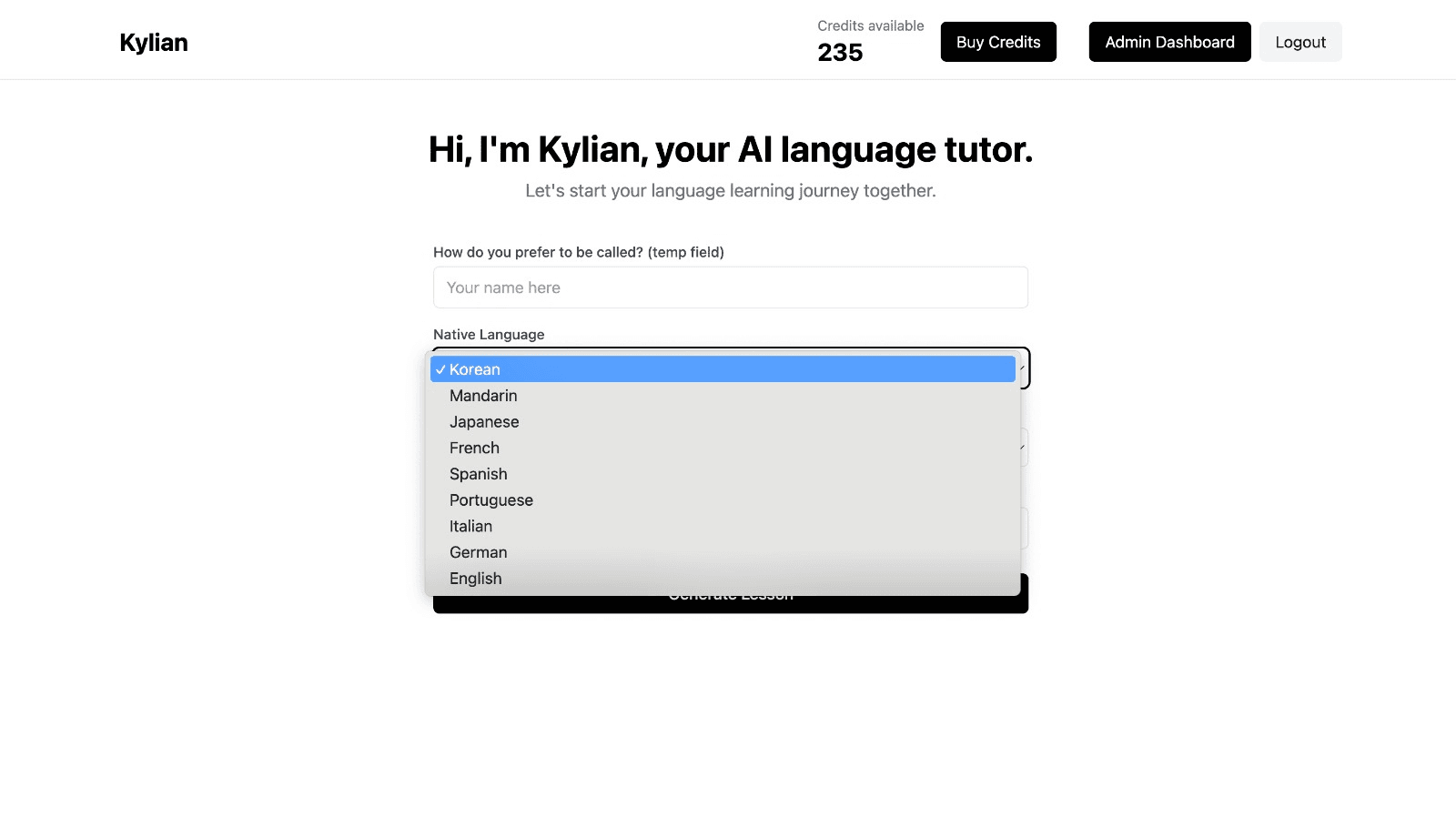
To get started, just tell Kylian which language you want to learn and what your native language is
Tired of teachers who don’t understand your specific struggles as a French speaker? Kylian’s advantage lies in its ability to teach any language using your native tongue as the foundation.
Unlike generic apps that offer the same content to everyone, Kylian explains concepts in your native language (French) and switches to the target language when necessary—perfectly adapting to your level and needs.
This personalization removes the frustration and confusion that are so common in traditional language learning.
Choose a specific topic you want to learn
Frustrated by language lessons that never cover exactly what you need? Kylian can teach you any aspect of a language—from pronunciation to advanced grammar—by focusing on your specific goals.
Avoid vague requests like “How can I improve my accent?” and be precise: “How do I pronounce the R like a native English speaker?” or “How do I conjugate the verb ‘to be’ in the present tense?”
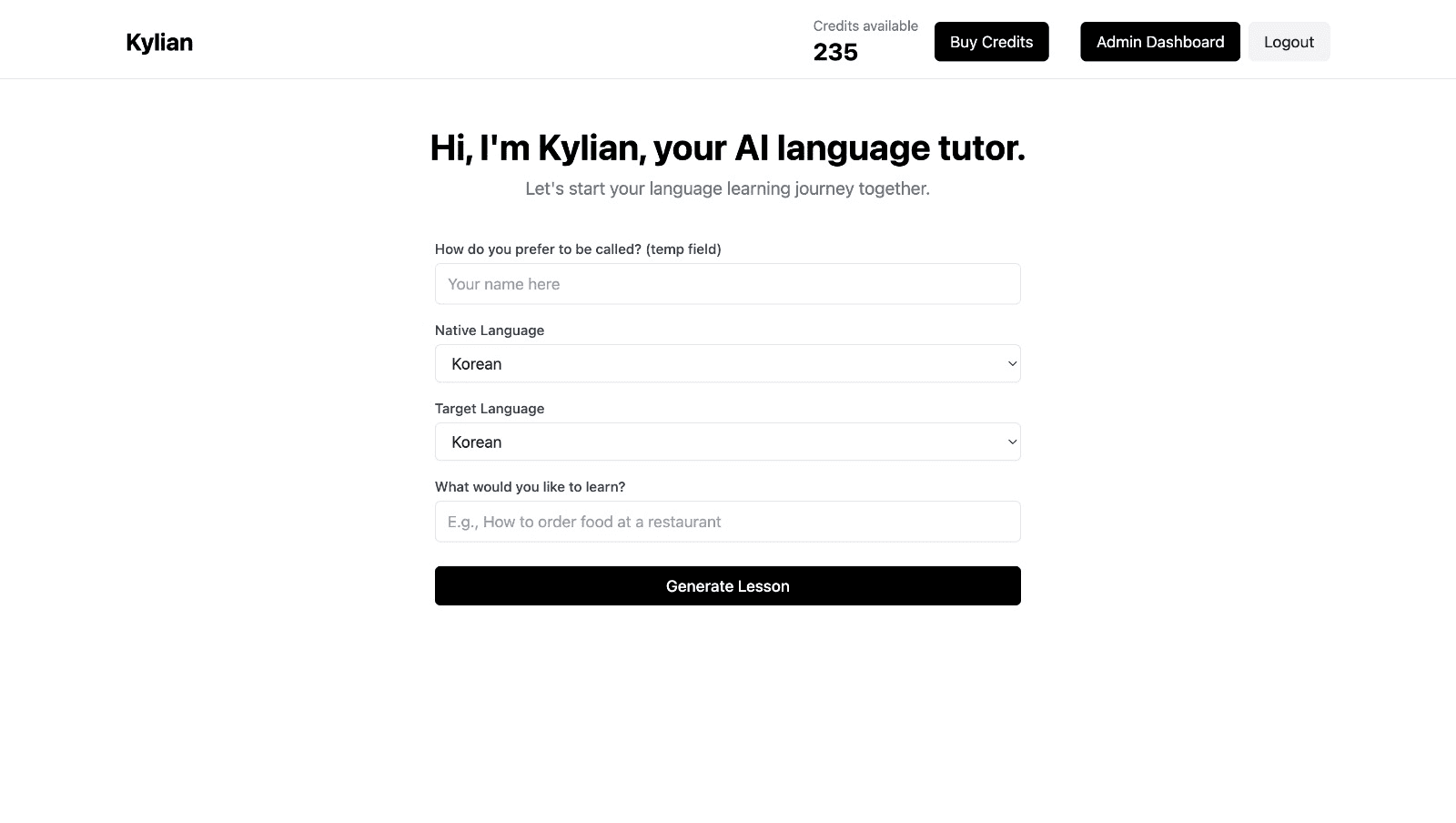
With Kylian, you’ll never again pay for irrelevant content or feel embarrassed asking “too basic” questions to a teacher. Your learning plan is entirely personalized.
Once you’ve chosen your topic, just hit the “Generate a Lesson” button, and within seconds, you’ll get a lesson designed exclusively for you.
Join the room to begin your lesson
The session feels like a one-on-one language class with a human tutor—but without the high price or time constraints.
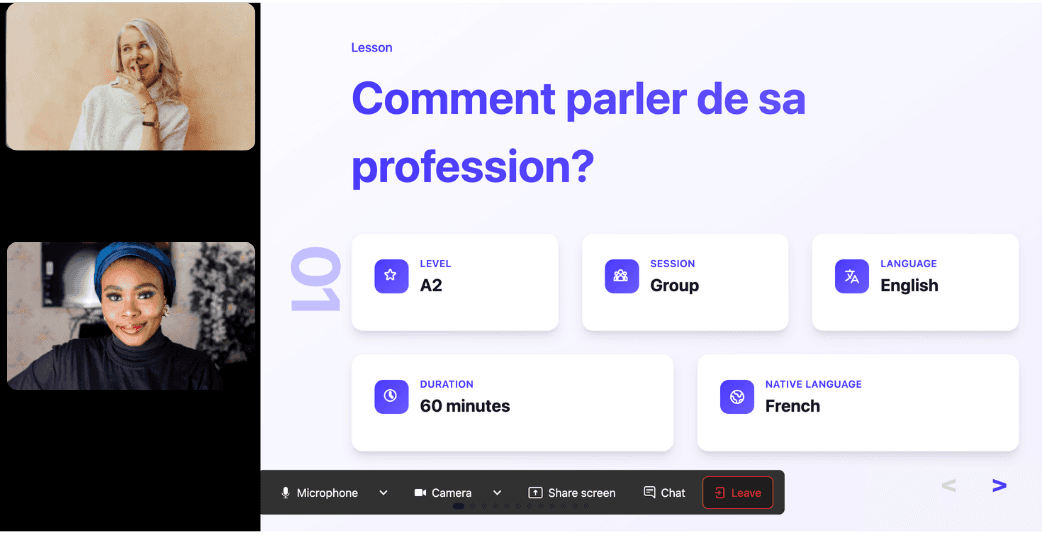
In a 25-minute lesson, Kylian teaches exactly what you need to know about your chosen topic: the nuances that textbooks never explain, key cultural differences between French and your target language, grammar rules, and much more.
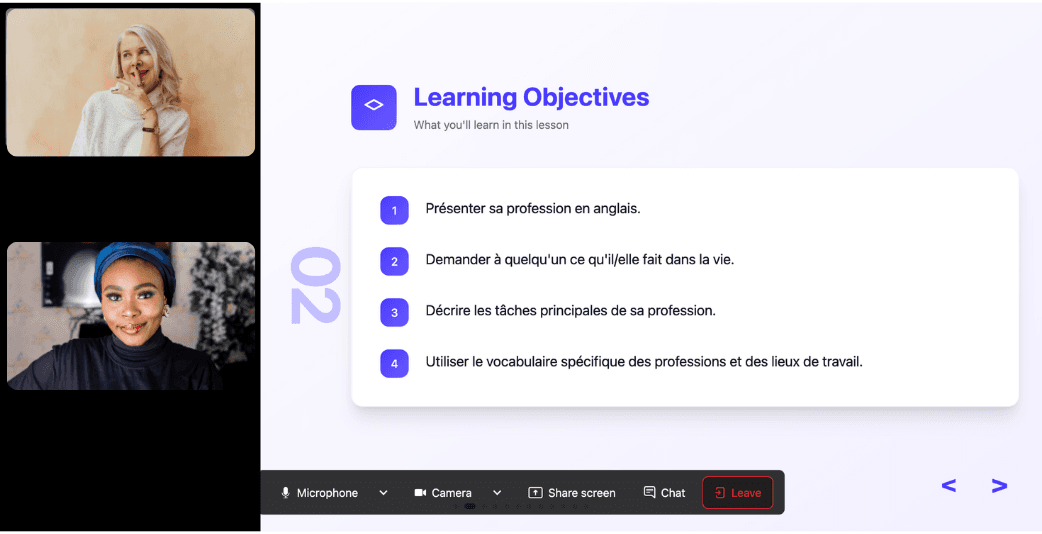
Ever felt frustrated trying to keep up with a native-speaking teacher, or embarrassed to ask for something to be repeated? With Kylian, that problem disappears. It switches intelligently between French and the target language depending on your level, helping you understand every concept at your own pace.
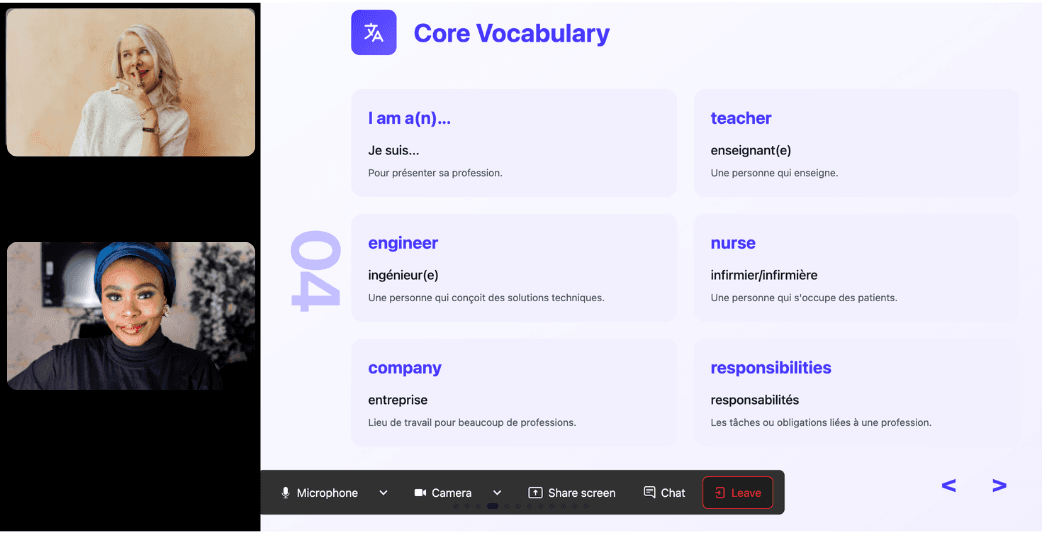
During the lesson, Kylian uses role-plays, real-life examples, and adapts to your learning style. Didn’t understand something? No problem—you can pause Kylian anytime to ask for clarification, without fear of being judged.
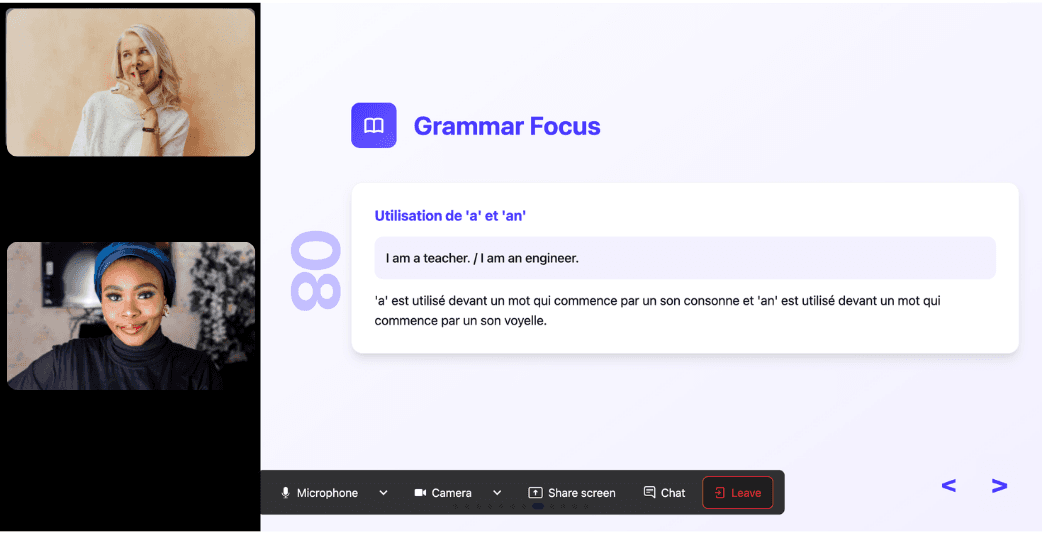
Ask all the questions you want, repeat sections if needed, and customize your learning experience in ways traditional teachers and generic apps simply can’t match.
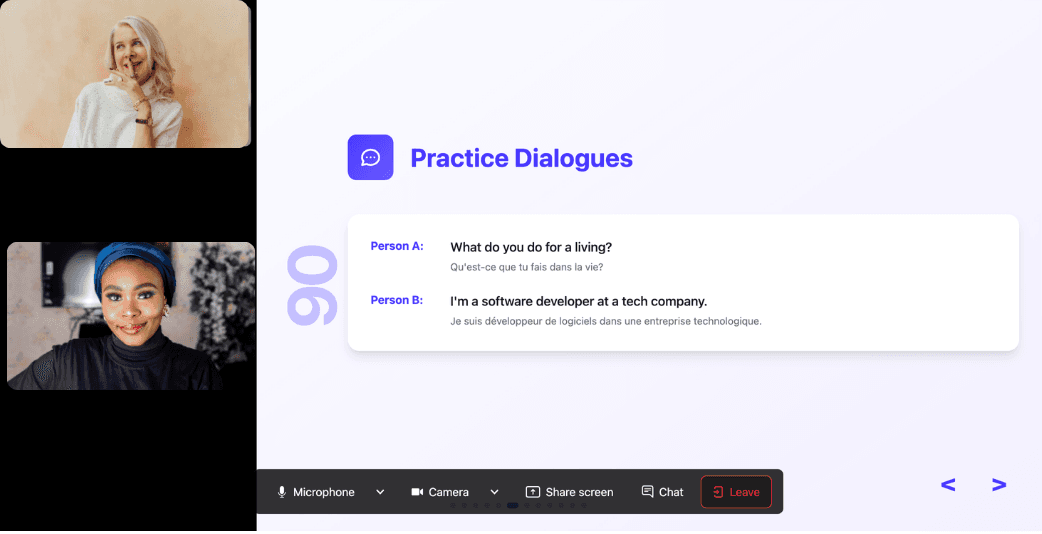
With 24/7 access at a fraction of the cost of private lessons, Kylian removes all the barriers that have kept you from mastering the language you’ve always wanted to learn.