The Korean alphabet represents one of the most scientifically designed writing systems in the world—logical, systematic, and surprisingly accessible to newcomers. With over 75 million speakers worldwide and growing international interest driven by Korean entertainment and culture, mastering Hangul (한글) offers a gateway to a rich linguistic tradition that continues to gain global relevance.
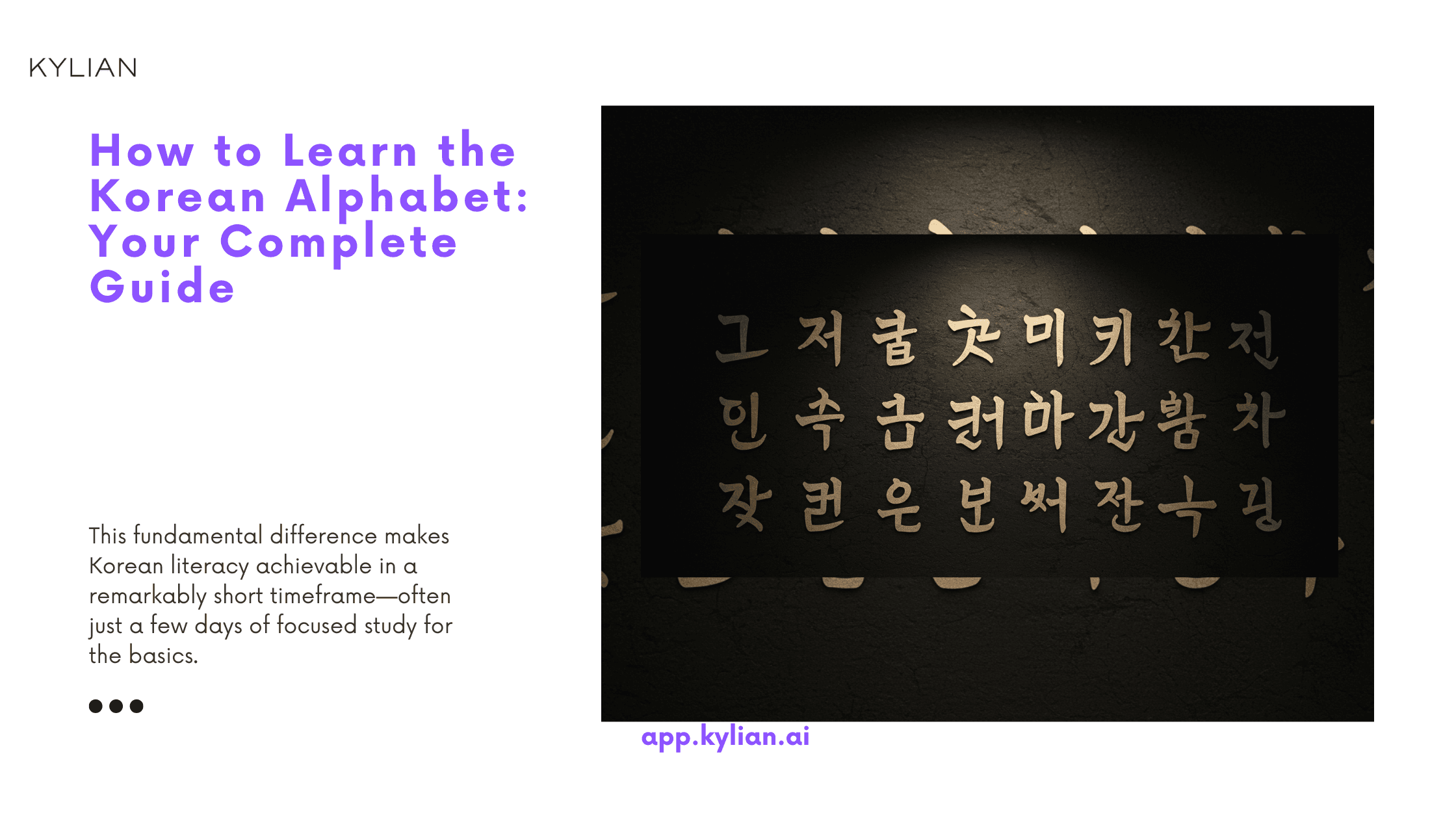
Hangul's elegant design makes it markedly different from other Asian writing systems. Unlike the thousands of characters needed for Chinese or Japanese kanji, Korean requires learning just 24 basic letters. This fundamental difference makes Korean literacy achievable in a remarkably short timeframe—often just a few days of focused study for the basics.
What is the Korean Alphabet?
The Korean alphabet, Hangul (한글), stands as a testament to innovative linguistic design. Created in 1443 and promulgated in 1446 under King Sejong the Great, this writing system was specifically developed to increase literacy among common people. Before Hangul, Koreans used classical Chinese characters (Hanja), which required years of education to master—a privilege primarily available to the elite.
King Sejong's landmark achievement democratized literacy by creating an alphabet where:
- The shapes of consonants mimic the position of the mouth when pronouncing them
- Vowels are based on philosophical concepts of heaven (a dot above), earth (a line below), and humanity (a line in the middle)
- Letters combine into syllable blocks, making words visually cohesive
The complete alphabet consists of 14 consonants and 10 vowels, though modern Korean uses additional compound letters:
Consonants:
- ㄱ – giyeok – [g/k]
- ㄴ – nieun – [n]
- ㄷ – digeut – [d/t]
- ㄹ – rieul – [r/l]
- ㅁ – mieum – [m]
- ㅂ – bieup – [b/p]
- ㅅ – siot – [s]
- ㅇ – ieung – [silent initially, ng finally]
- ㅈ – jieut – [j]
- ㅊ – chieut – [ch]
- ㅋ – kieuk – [k]
- ㅌ – tieut – [t]
- ㅍ – pieup – [p]
- ㅎ – hieut – [h]
Vowels:
- ㅏ – a – [a] as in "father"
- ㅑ – ya – [ya] as in "yard"
- ㅓ – eo – [eo] similar to "uh"
- ㅕ – yeo – [yeo] as in "yo"
- ㅗ – o – [o] as in "go"
- ㅛ – yo – [yo] as in "yogurt"
- ㅜ – u – [u] as in "loop"
- ㅠ – yu – [yu] as in "usage"
- ㅡ – eu – [eu] no exact English equivalent
- ㅣ – i – [i] as in "machine"
This systematic arrangement makes Hangul uniquely phonetic—once you've learned the alphabet, you can read virtually any Korean word with proper pronunciation, even if you don't understand its meaning.
The Historical Significance of Hangul
Hangul's creation represents one of history's most deliberate and scientific approaches to writing system development. When King Sejong commissioned the alphabet in the 15th century, his explicit goal was to create "proper sounds for teaching the people"—a reflection of his progressive concern for widespread literacy.
The alphabet initially faced resistance from elite scholars who preferred maintaining the Chinese writing system that reinforced their privileged status. Despite this opposition, Hangul eventually became the primary writing system, though Chinese characters remained in use alongside it until the mid-20th century.
Hangul's design remains virtually unchanged after nearly six centuries—a testament to the brilliance of its original conception. UNESCO recognized this achievement by establishing the King Sejong Literacy Prize and designating October 9th (Hangul Day) as a celebration of the alphabet's creation.
The system's accessibility has contributed to South Korea achieving a near-perfect literacy rate of 98%, demonstrating King Sejong's vision fulfilled across generations.
Why Learning the Korean Alphabet is Essential
Attempting to learn Korean through romanization (writing Korean sounds using the Latin alphabet) creates significant long-term obstacles. Here's why mastering Hangul directly provides substantial advantages:
Pronunciation Accuracy
Romanization systems often fail to capture Korean sounds accurately. Many Korean phonemes simply don't exist in English, making approximations through the Latin alphabet inherently flawed. Learning Hangul allows you to produce authentic Korean pronunciation from the beginning.
Recognition Efficiency
In Korea, most text appears in Hangul. Relying on romanization leaves you functionally illiterate in real-world situations. With Hangul mastery, you can immediately recognize words on signs, menus, and transportation systems—crucial for independent navigation.
Learning Acceleration
Studies show that learners who master Hangul early progress significantly faster in vocabulary acquisition and grammar understanding. The alphabet provides a structural framework that makes memorizing new words more efficient.
Cultural Integration
Hangul represents not just a writing system but a point of cultural pride. Koreans often express appreciation when foreigners make the effort to learn their alphabet, creating positive social interactions and demonstrating respect for the culture.
Effective Techniques for Learning the Korean Alphabet
Mastering Hangul requires a strategic approach that leverages its logical design. These proven techniques accelerate the learning process:
1. Focus on Shape-Sound Relationships
The genius of Hangul lies in how consonant shapes represent the position of the mouth, tongue, or throat when pronouncing each sound. For example:
- ㄱ (g/k) resembles the back of the tongue touching the soft palate
- ㄴ (n) shows the tongue touching the alveolar ridge
- ㅁ (m) represents the shape of closed lips
Understanding these visual relationships creates powerful memory associations that make learning substantially more efficient than rote memorization.
2. Learn in Logical Groups
Instead of attempting to memorize all 24 letters at once, group them by similarities:
Consonant Groups:
- Basic shapes: ㄱ, ㄴ, ㄷ, ㄹ, ㅁ, ㅂ, ㅅ, ㅇ
- Aspirated consonants (add a stroke): ㅋ, ㅌ, ㅍ, ㅊ
- Tensed consonants (double the letter): ㄲ, ㄸ, ㅃ, ㅆ, ㅉ
Vowel Groups:
- Vertical vowels: ㅏ, ㅓ, ㅣ
- Horizontal vowels: ㅗ, ㅜ, ㅡ
- Compound vowels: ㅑ, ㅕ, ㅛ, ㅠ
This approach leverages the systematic design of Hangul, making patterns more apparent and reducing the cognitive load of learning.
3. Practice Syllable Formation
Korean words are written in syllable blocks rather than as a linear sequence of letters. Each syllable follows specific structural rules:
- Initial consonant (always required, may use ㅇ as a silent placeholder)
- Medial vowel (always required)
- Final consonant (optional)
For example, the word for "hello" (안녕) breaks down into syllable blocks:
- 안 (an): ㅇ + ㅏ + ㄴ
- 녕 (nyeong): ㄴ + ㅕ + ㅇ
Practice forming different syllable combinations to develop familiarity with this block structure.
4. Utilize Spaced Repetition Systems
The science of memory retention clearly demonstrates that spaced repetition—reviewing information at increasingly longer intervals—optimizes long-term recall. Digital flashcard applications that implement this system can dramatically improve Hangul retention.
These apps track your performance and automatically adjust review scheduling based on your recall accuracy. Letters you struggle with appear more frequently, while those you've mastered appear at longer intervals.
5. Engage Multiple Learning Modalities
Research in cognitive psychology confirms that engaging multiple sensory pathways strengthens memory formation. When learning Hangul:
- Visual learning: Study the written forms
- Auditory learning: Listen to native pronunciation
- Kinesthetic learning: Practice writing by hand
- Verbal learning: Say sounds aloud while writing
This comprehensive engagement creates robust neural pathways that accelerate mastery and improve recall.
Common Challenges and Solutions
Learning Hangul presents specific challenges for English speakers. Addressing these obstacles directly improves efficiency:
Challenge: Similar-Looking Letters
Several Hangul letters appear visually similar to beginners:
- ㅏ (a) vs. ㅓ (eo)
- ㅂ (b/p) vs. ㅁ (m)
- ㅋ (k) vs. ㄱ (g/k)
Solution: Create distinctive mental associations for each letter. For example, visualize ㅏ (a) pointing right like the "a" in "right," while ㅓ (eo) points left like the "e" in "left."
Challenge: Sounds Without English Equivalents
Several Korean phonemes lack direct English counterparts:
- ㅡ (eu): A sound made with flat lips and raised tongue
- ㄹ (r/l): A sound between English "r" and "l"
- Double consonants (ㄲ, ㄸ, ㅃ, ㅆ, ㅉ): Tensed versions of basic consonants
Solution: Study mouth diagrams and mimic native speakers through video resources. Record yourself and compare your pronunciation to authentic examples.
Challenge: Syllable Block Formation
The transition from linear writing to syllable blocks can confuse beginners.
Solution: Practice with a syllable block builder tool that allows you to construct and visualize different combinations. Start with simple CV (consonant-vowel) patterns before attempting more complex CVC patterns.
Challenge: Handwriting Versus Typed Text
Handwritten Hangul can differ significantly from typed forms.
Solution: Practice with a handwriting workbook specifically designed for Korean. These typically include stroke order guides and practice grids.
Beyond the Basics: Developing Reading Fluency
Once you've learned the individual letters, developing reading fluency requires regular practice:
1. Start with Korean Children's Books
Korean children's books use simple vocabulary, large text, and supportive illustrations. These resources allow you to focus on decoding the writing system without struggling with complex vocabulary or grammar.
2. Practice with Frequency-Based Vocabulary Lists
After mastering the alphabet, learn vocabulary words organized by frequency of usage. The 500 most common Korean words cover approximately 75% of everyday conversation, providing maximum practical benefit for your effort.
3. Read Aloud Daily
Speaking while reading engages multiple cognitive processes simultaneously, strengthening neural connections. Set aside 10-15 minutes daily to read Korean text aloud, even if you don't fully understand the meaning yet.
4. Use Digital Tools with Audio Support
Several applications provide reading materials with synchronized audio, allowing you to hear correct pronunciation while seeing the written form. This multimodal approach accelerates the development of reading fluency.
North and South Korean Alphabet Variations
While both North and South Korea use Hangul, some significant differences have emerged since the division:
Terminology
- South Korea uses the term "Hangul" (한글)
- North Korea uses "Chosŏn'gŭl" (조선글)
Pronunciation Standards
North Korea maintains some traditional pronunciations that have evolved in South Korean standard speech. For instance, the syllable-final ㄹ is consistently pronounced as [l] in North Korea, while it may shift to [r] in certain contexts in South Korea.
Orthographic Reforms
South Korea implemented several spelling reforms throughout the 20th century, while North Korea maintained different standards. These differences primarily affect:
- Syllable-final consonant representations
- Loanword orthography
- Use of spaces between words (North Korea uses fewer spaces)
For most learners focusing on South Korean, these differences have minimal practical impact on initial learning. However, understanding these variations provides valuable context for the language's evolution.
Digital Tools and Resources for Learning Hangul
The digital revolution has created unprecedented access to Korean language resources:
Mobile Applications
Several highly-rated applications focus specifically on Hangul mastery:
- Drops: Offers gamified, visual learning of Korean characters
- Write It! Korean: Provides stroke-order practice with handwriting recognition
- Eggbun: Presents Hangul through conversational tutorials with a character guide
Online Courses
Structured courses provide comprehensive instruction with professional guidance:
- Korean From Zero: Offers a methodical approach to Hangul with clear explanations
- Talk To Me In Korean: Provides free lessons with supplementary workbooks
- KoreanClass101: Delivers audio and video lessons with cultural context
YouTube Channels
Visual demonstration significantly improves understanding:
- Korean Unnie: Offers friendly, accessible Hangul tutorials
- Professor Oh's Korean: Provides academic yet approachable explanations
- KoreanDigitalAcademy: Delivers systematic instruction from certified teachers
Language Exchange Platforms
Practice with native speakers accelerates learning:
- Tandem: Connects language learners for mutual practice
- HelloTalk: Offers text, voice, and video exchange with correction features
- Italki: Provides affordable tutoring with professional teachers
Practical Application: Your First Korean Words
After learning Hangul, applying your knowledge to basic vocabulary creates a sense of achievement. These essential expressions demonstrate immediate practical value:
- 안녕하세요 (annyeonghaseyo) – Hello
- 감사합니다 (gamsahamnida) – Thank you
- 네 (ne) – Yes
- 아니요 (aniyo) – No
- 이름 (ireum) – Name
- 저는 ___ 입니다 (jeoneun ___ imnida) – I am ___
Try reading these words by sounding out each syllable. Notice how the combinations of the basic letters you've learned create meaningful expressions.
How to Measure Your Progress
Tracking progress provides motivation and identifies areas needing improvement:
Self-Assessment Milestones
Set clear benchmarks to measure advancement:
- Level 1: Recognize and name all 24 basic letters
- Level 2: Read single syllables accurately
- Level 3: Read simple words without audio support
- Level 4: Read sentences with correct pronunciation
- Level 5: Read paragraphs with natural speed and intonation
Testing and Certification
For formal validation of your skills:
- The Test of Proficiency in Korean (TOPIK) includes reading sections at all levels
- The King Sejong Institute offers certificates for completion of their Hangul courses
Common Misconceptions About Learning Korean
Several myths discourage potential learners from attempting Korean:
Misconception: "Korean is one of the hardest languages for English speakers."
Reality: While achieving high-level mastery presents challenges, basic literacy in Korean is remarkably accessible due to Hangul's logical design. The Foreign Service Institute estimates that Korean takes about 2,200 hours to master, but reading can be learned in just a few days.
Misconception: "You need to learn thousands of characters like in Chinese."
Reality: Korean uses an alphabet with just 24 basic letters (40 including compounds), vastly simpler than the thousands of characters in Chinese or Japanese kanji.
Misconception: "Korean grammar is incomprehensibly different from English."
Reality: While Korean grammar differs significantly from English (using subject-object-verb order and extensive suffixes), its rules are remarkably consistent with few exceptions—often simpler than the numerous irregularities in English grammar.
The Cognitive Benefits of Learning Korean
Research in neuroscience demonstrates that learning a language with a different writing system offers unique cognitive advantages:
Enhanced Executive Function
Studies show that learning visually distinct writing systems strengthens the brain's executive control networks, improving attention, task-switching, and cognitive flexibility.
Strengthened Visual Processing
The spatial arrangement of Korean syllable blocks activates and develops visual-spatial processing abilities, enhancing pattern recognition across domains.
Improved Memory Function
The process of learning a new writing system creates new neural pathways, strengthening working memory and information retention capacities that transfer to other learning tasks.
Learn Any Language with Kylian AI
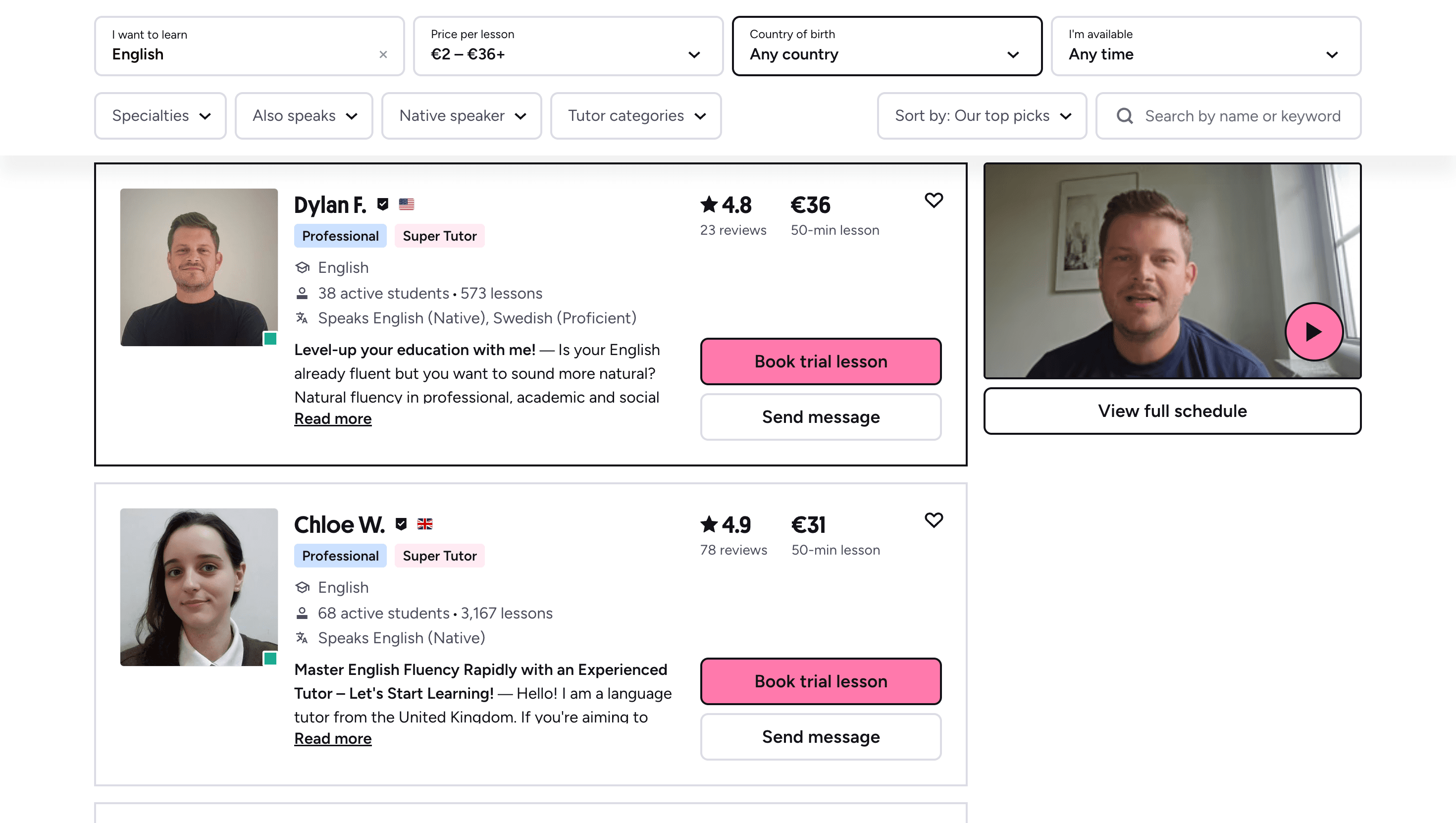
Private language lessons are expensive. Paying between 15 and 50 euros per lesson isn’t realistic for most people—especially when dozens of sessions are needed to see real progress.
Many learners give up on language learning due to these high costs, missing out on valuable professional and personal opportunities.
That’s why we created Kylian: to make language learning accessible to everyone and help people master a foreign language without breaking the bank.
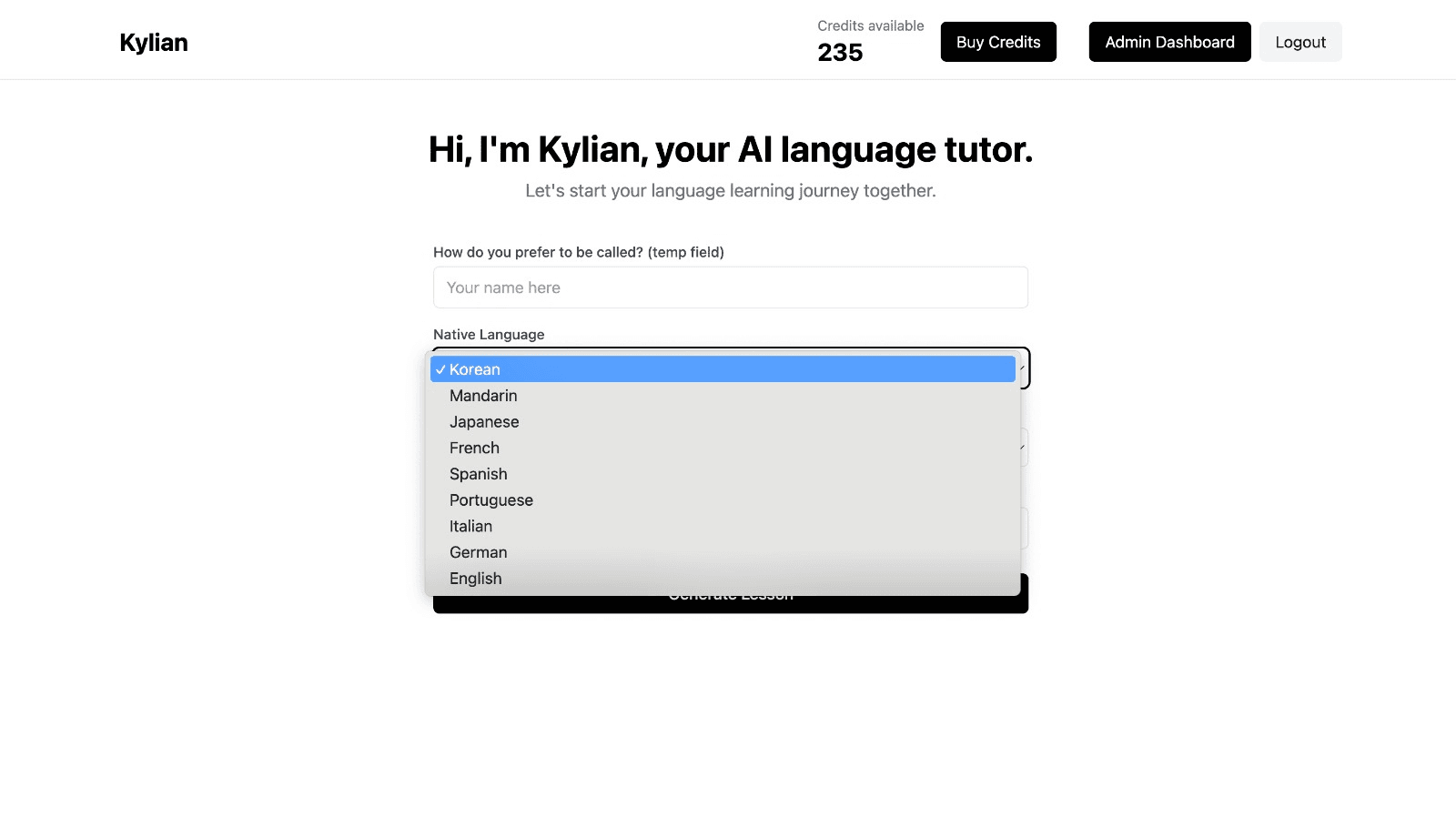
To get started, just tell Kylian which language you want to learn and what your native language is
Tired of teachers who don’t understand your specific struggles as a French speaker? Kylian’s advantage lies in its ability to teach any language using your native tongue as the foundation.
Unlike generic apps that offer the same content to everyone, Kylian explains concepts in your native language (French) and switches to the target language when necessary—perfectly adapting to your level and needs.
This personalization removes the frustration and confusion that are so common in traditional language learning.
Choose a specific topic you want to learn
Frustrated by language lessons that never cover exactly what you need? Kylian can teach you any aspect of a language—from pronunciation to advanced grammar—by focusing on your specific goals.
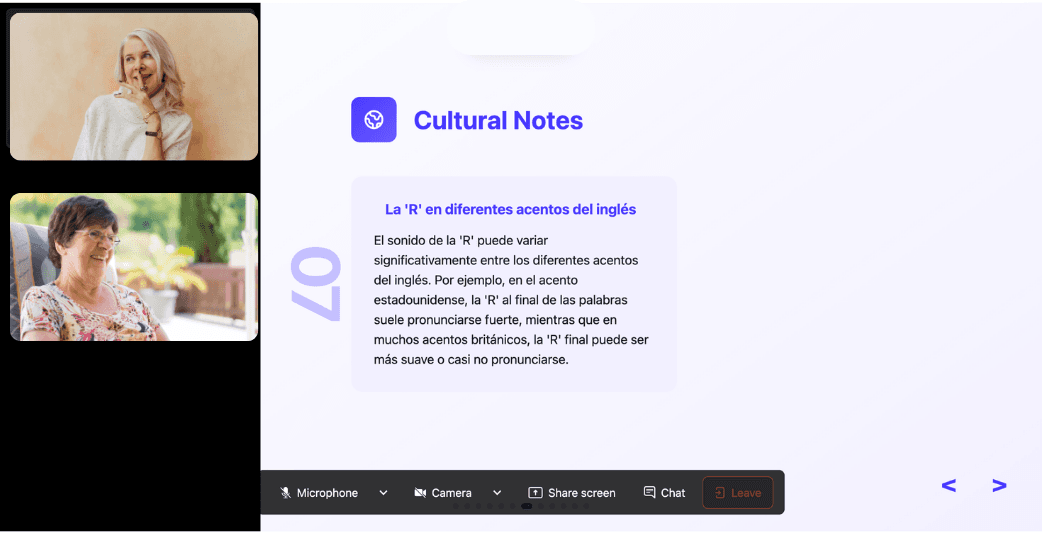
Avoid vague requests like “How can I improve my accent?” and be precise: “How do I pronounce the R like a native English speaker?” or “How do I conjugate the verb ‘to be’ in the present tense?”
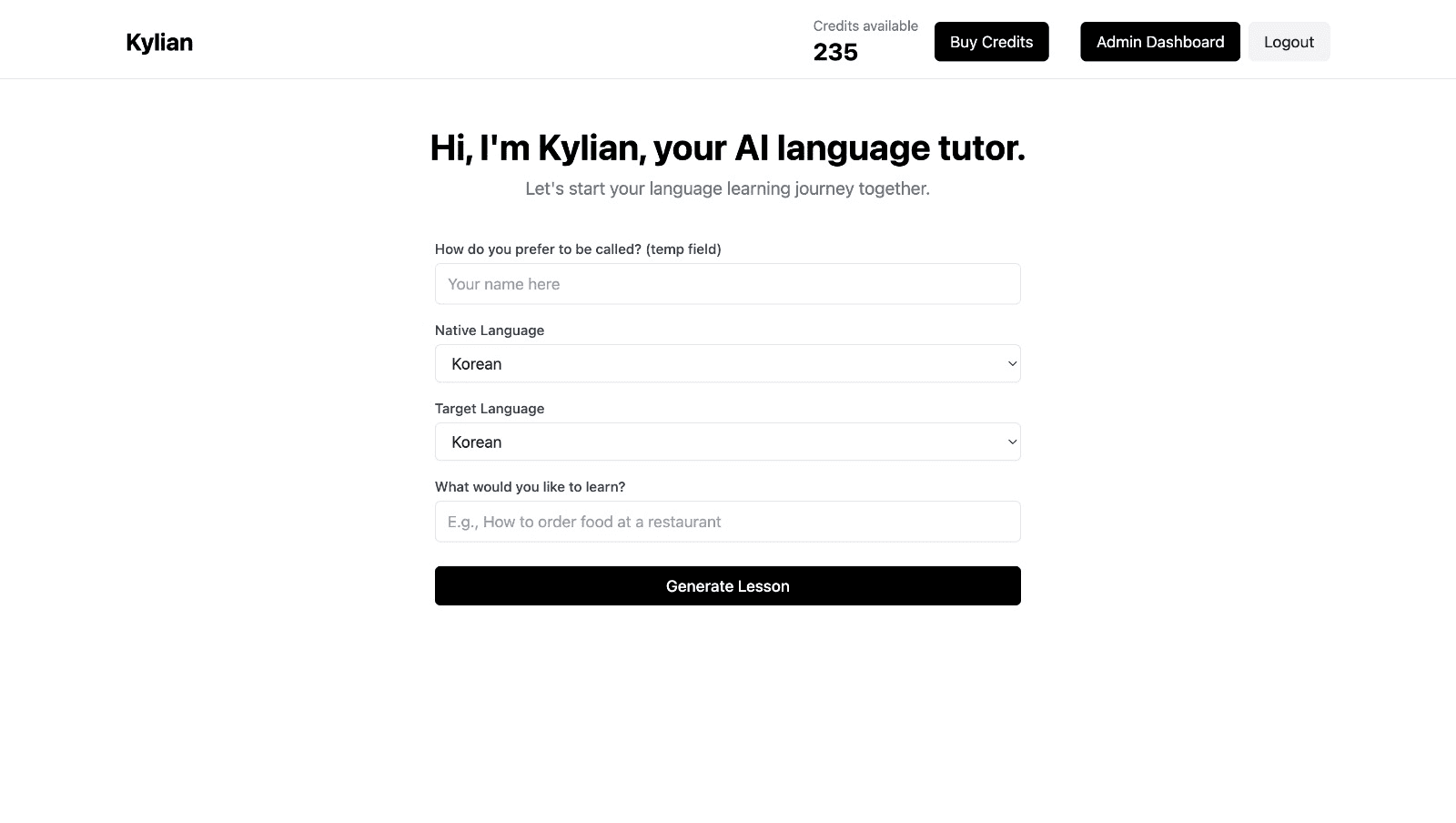
With Kylian, you’ll never again pay for irrelevant content or feel embarrassed asking “too basic” questions to a teacher. Your learning plan is entirely personalized.
Once you’ve chosen your topic, just hit the “Generate a Lesson” button, and within seconds, you’ll get a lesson designed exclusively for you.
Join the room to begin your lesson
The session feels like a one-on-one language class with a human tutor—but without the high price or time constraints.
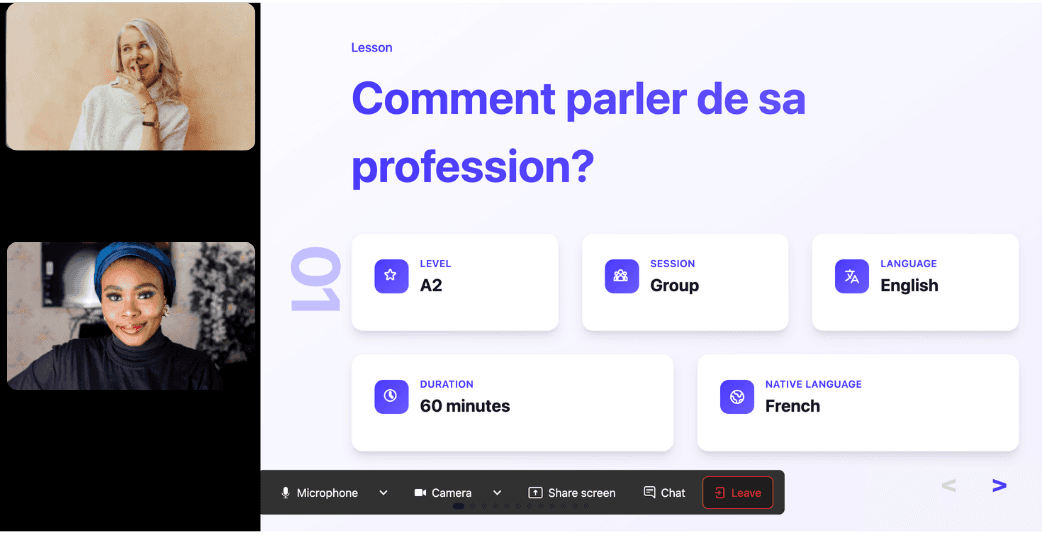
In a 25-minute lesson, Kylian teaches exactly what you need to know about your chosen topic: the nuances that textbooks never explain, key cultural differences between French and your target language, grammar rules, and much more.
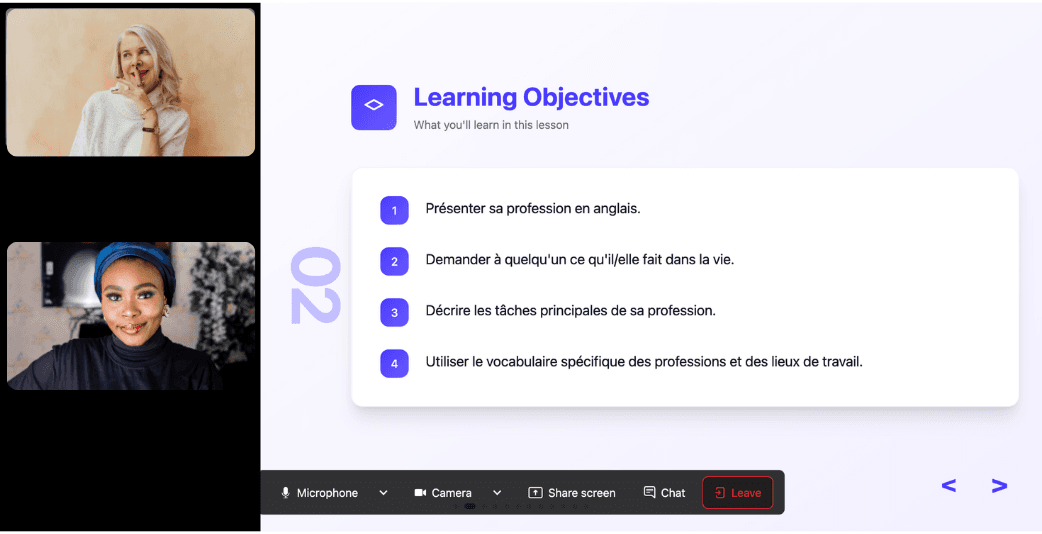
Ever felt frustrated trying to keep up with a native-speaking teacher, or embarrassed to ask for something to be repeated? With Kylian, that problem disappears. It switches intelligently between French and the target language depending on your level, helping you understand every concept at your own pace.
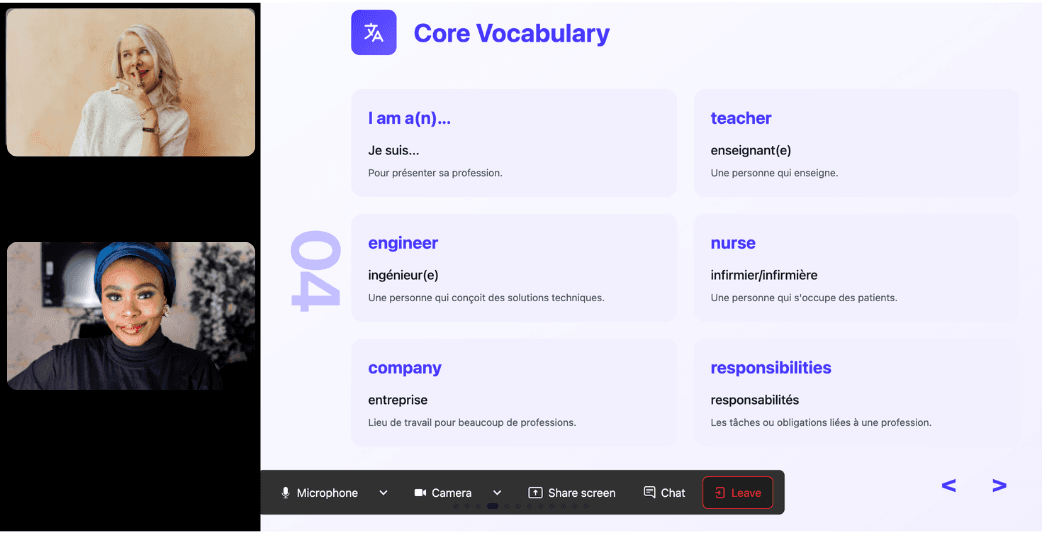
During the lesson, Kylian uses role-plays, real-life examples, and adapts to your learning style. Didn’t understand something? No problem—you can pause Kylian anytime to ask for clarification, without fear of being judged.
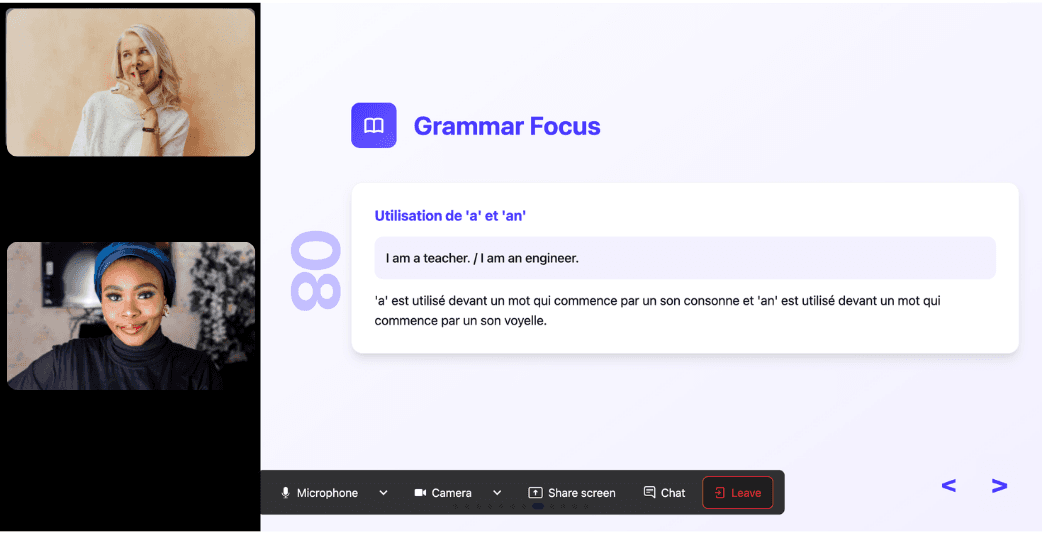
Ask all the questions you want, repeat sections if needed, and customize your learning experience in ways traditional teachers and generic apps simply can’t match.
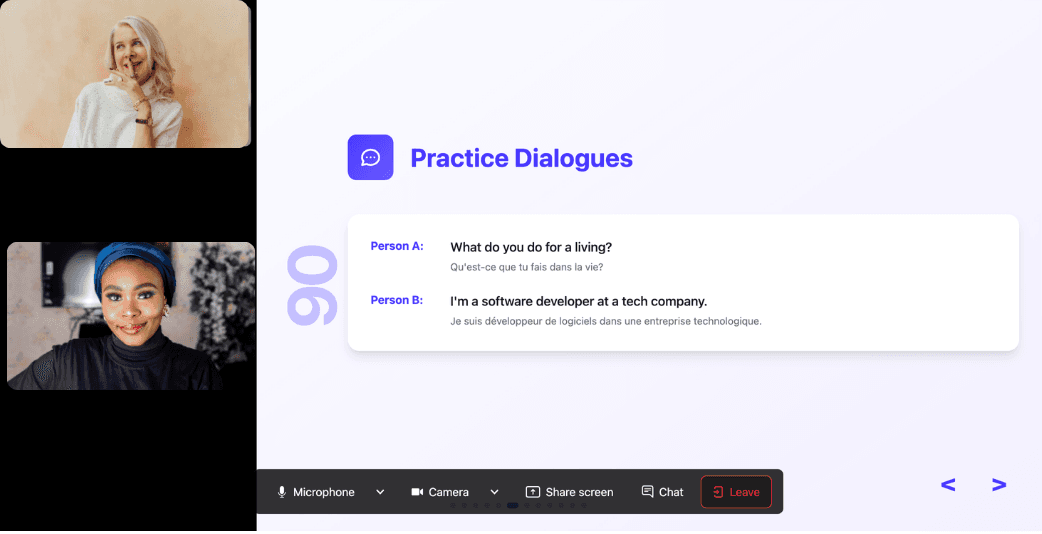
With 24/7 access at a fraction of the cost of private lessons, Kylian removes all the barriers that have kept you from mastering the language you’ve always wanted to learn.