Learning new vocabulary is an essential cornerstone of language acquisition. Each word you master becomes a building block toward fluent communication. While the journey of vocabulary development requires persistence, implementing strategic memorization techniques can significantly accelerate your progress.
The acquisition of new words presents both challenges and rewards. The satisfaction of expressing yourself precisely in English hinges on having access to the right vocabulary at the right moment. Let's explore proven methods to efficiently commit new English words to memory.
Why Effective Vocabulary Memorization Matters
Before diving into techniques, it's worth understanding the cognitive mechanisms behind successful vocabulary retention. Research in neuroscience shows that memories form stronger neural connections when:
- The information connects to existing knowledge
- You encounter the word in varied contexts
- You actively recall rather than passively review
- The learning process engages multiple senses
The following techniques leverage these principles to optimize your vocabulary acquisition process.
1. Strategic Use of Digital Flashcards
Digital flashcards remain one of the most effective tools for vocabulary building—when used correctly. The key is moderation and context.
Flashcard applications provide spaced repetition algorithms that present words at optimal intervals for memory formation. However, flashcards work best when they serve as reinforcement rather than your primary learning method.
When creating flashcards:
- Include example sentences that demonstrate natural usage
- Add visual cues when possible
- Group cards by theme or context rather than random collections
- Use both recognition (English → definition) and production (definition → English) cards
Recommended applications include:
- Anki (highly customizable with downloadable decks)
- Quizlet (user-friendly interface with ready-made sets)
- Memrise (incorporates gamification elements)
- Brainscape (uses confidence-based repetition)
Remember to create your own personalized card sets whenever possible. The act of creating cards manually enhances initial encoding, making the words easier to recall later.
2. Context-Based Learning Through Sentence Mining
Context provides crucial information about how words function in authentic communication. Sentence mining—collecting and studying complete sentences rather than isolated words—has proven particularly effective for intermediate and advanced learners.
When you encounter a new word in reading or listening:
- Record the entire sentence where it appeared
- Analyze how the word connects to surrounding text
- Create flashcards with the sentence on one side and the target word's definition on the other
- Practice using the word in your own original sentences
This approach helps you understand not just definitions but collocation patterns—which words naturally appear together in English. For example, learning that we "make a mistake" rather than "do a mistake" comes naturally when you see the phrases in context.
Free resources for sentence mining include:
- Tatoeba (a database of example sentences in multiple languages)
- YouGlish (shows videos of native speakers using specific words)
- Linguee (parallel texts showing word usage in different contexts)
3. The "Use It or Lose It" Principle
Cognitive science confirms that active recall strengthens memory pathways. The moment you encounter a new word, find ways to immediately incorporate it into your communication.
Practical application strategies include:
- Write a short paragraph using the new word
- Record yourself speaking sentences with the new vocabulary
- Use the word in conversations with language exchange partners
- Post comments on English forums or social media using target vocabulary
- Explain the word's meaning aloud to yourself (teaching reinforces learning)
For example, if you've just learned the word "meticulous," you might write: "My colleague is extremely meticulous about documentation. Her attention to detail helps prevent errors in our reports."
Even if opportunities for immediate conversation aren't available, speaking aloud to yourself provides similar benefits. The physical act of articulation creates motor memory that reinforces cognitive connections.
4. Optimal Dictionary Usage Strategies
The way you look up unfamiliar words significantly impacts retention. Research suggests that monolingual dictionaries (English-to-English) ultimately lead to better vocabulary development than bilingual dictionaries.
Follow this progressive approach for maximum effectiveness:
- First, try to infer meaning from context clues
- If uncertain, check a visual source like Google Images (especially effective for concrete nouns)
- Consult a learner's dictionary specifically designed for English language students (Oxford, Cambridge, or Merriam-Webster learner's editions use simpler language in definitions)
- Only resort to translation dictionaries when the concept is particularly abstract or culturally specific
When using dictionaries, pay attention to:
- Example sentences showing natural usage
- Pronunciation guides and stress patterns
- Common collocations and phrases
- Register information (formal/informal/slang)
Digital dictionaries with audio pronunciation features provide additional sensory input that enhances memory formation.
5. The Handwriting Advantage
Despite our digital age, cognitive research consistently shows that physically writing words by hand creates stronger memory traces than typing. A 2021 study in Frontiers in Psychology demonstrated that handwriting activates regions of the brain associated with learning more effectively than keyboard input.
To leverage this effect:
- Keep a dedicated vocabulary notebook
- Write each new word along with its definition, pronunciation notes, and example sentences
- Use color-coding for different parts of speech or difficulty levels
- Review your notebook regularly, covering definitions and testing recall
The physical act of writing engages motor memory and forces slower processing, allowing your brain more time to encode the information. For maximum benefit, practice writing both the word and a complete sentence containing it.
6. The Personal Vocabulary Journal Method
Beyond simple word lists, a structured vocabulary journal creates personalized context for new words. The ideal vocabulary journal entry includes:
- The target word and its pronunciation
- Word class (noun, verb, adjective, etc.)
- Definition in simple English
- Original sentence where you encountered it
- Your own example sentence
- Synonyms and antonyms
- Common collocations
- Visual cue (sketch or symbol)
Start with tracking five new words per study session. Review your journal entries weekly, testing yourself on recall and usage. This system creates multiple memory hooks for each word while providing a valuable reference resource.
A digital alternative is creating a vocabulary collection in note-taking apps like Notion or Evernote, which allow for multimedia additions and easy searching.
7. Grammar Integration Through Form Manipulation
Learning vocabulary in isolation from grammar reduces retention and usability. Practice manipulating new words through different grammatical forms:
For nouns:
- Singular and plural forms (person → people)
- Possessive forms (child's toy, children's toys)
For verbs:
- Different tenses (speak, spoke, spoken)
- Continuous forms (running, jumping)
- Passive constructions (was built, is being considered)
For adjectives:
- Comparative and superlative forms (tall, taller, tallest)
- Adverbial forms (quick → quickly)
This practice helps you recognize words in various contexts and use them more flexibly in your own communication. Create tables in your vocabulary journal to track these transformations for complex words.
8. Mnemonic Techniques for Challenging Words
The human brain excels at remembering unusual, vivid, or emotional information. Mnemonic devices leverage this tendency by creating memorable associations for difficult vocabulary.
Effective mnemonic approaches include:
- Keyword method: Link the pronunciation to a similar-sounding word in your native language, then create a visual image connecting them. For example, to remember "ubiquitous" (meaning "found everywhere"), a Spanish speaker might think of "ubicación" (location) and imagine locations appearing everywhere.
- Story method: Create brief narratives incorporating multiple target words. The narrative structure provides additional context for recall.
- Word part analysis: Break complex words into meaningful prefixes, roots, and suffixes. Understanding that "un-predict-able" contains parts meaning "not" + "say before" + "capable of" makes the word more logical and memorable.
- Visual association: Create mental images representing the word's meaning. The more bizarre or exaggerated, the better for memory purposes.
Mnemonic techniques are particularly valuable for abstract words or terms without clear visual referents.
9. Multi-Sensory Learning Approaches
Research in educational psychology confirms that engaging multiple senses creates stronger memory pathways. Diversifying your vocabulary learning methods activates different brain regions, enhancing overall retention.
Try these multi-sensory approaches:
- Create physical flashcards with color-coding
- Record vocabulary lists and listen during commutes
- Draw simple sketches representing word meanings
- Use post-it notes around your living space for passive exposure
- Create hand gestures associated with specific words
- Use vocabulary learning apps with sound effects and visuals
For example, when learning fruit names, handling actual fruit while saying the words engages touch, sight, and sound simultaneously. This multi-sensory approach creates redundant memory pathways, making recall more reliable.
Even simple approaches like saying words aloud while writing them engages both auditory and kinesthetic learning channels.
10. Extensive Reading as Vocabulary Reinforcement
Once you've mastered basic vocabulary, extensive reading becomes the most natural method for expanding your lexicon. Through context clues, you can often deduce meanings without constantly referring to dictionaries.
Start with materials slightly beyond your current level—what linguists call "i+1" content, where comprehension requires some effort but remains achievable.
Effective reading resources by level:
- Beginners: Graded readers, simple news sites (NewsInLevels, Breaking News English)
- Intermediate: Young adult fiction, special interest magazines
- Advanced: Novels, newspapers, academic articles
The power of extensive reading comes from multiple exposures to vocabulary in varied contexts. Research indicates you typically need 10-12 meaningful encounters with a word before it becomes part of your active vocabulary.
When reading, resist the urge to look up every unknown word immediately. Instead, mark unfamiliar terms and continue reading. Only look up words that:
- Appear multiple times
- Seem crucial for understanding the main idea
- Generate genuine curiosity
This approach maintains reading flow while prioritizing high-value vocabulary.
11. Spaced Repetition Science for Optimal Review
Memory research has identified the "forgetting curve"—our tendency to rapidly forget new information unless it's systematically reviewed. Spaced repetition counters this tendency by scheduling reviews at increasing intervals.
The optimal review schedule follows this pattern:
- First review: 24 hours after initial learning
- Second review: 3 days later
- Third review: 1 week later
- Fourth review: 2 weeks later
- Fifth review: 1 month later
Most digital flashcard systems automate this process, but you can implement manual spaced repetition by:
- Dating vocabulary journal entries
- Creating a review calendar
- Using the Cornell note-taking system with a review column
Research shows that spaced repetition is 90% more efficient than massed practice (cramming), making it essential for long-term vocabulary retention.
12. Word Network Mapping for Semantic Memory
Our brains naturally organize information in connected networks. Word mapping leverages this tendency by creating visual representations of relationships between vocabulary items.
To create a word network map:
- Write a central word in the middle of a page
- Add related words around it (synonyms, antonyms, collocations)
- Draw lines showing connections between terms
- Add definitions, example sentences, or images as needed
This technique builds what linguists call "semantic memory"—understanding words not as isolated units but as parts of interconnected networks of meaning.
For example, a map centered on "communication" might include branches for verbs (speak, write, express), adjectives (articulate, incoherent), related nouns (conversation, message), and common phrases (get your point across, miscommunication).
Digital tools like MindMeister or Coggle provide templates for creating these maps, though hand-drawn versions offer the additional benefits of physical writing.
Learn Any Language with Kylian AI
Private language lessons are expensive. Paying between 15 and 50 euros per lesson isn’t realistic for most people—especially when dozens of sessions are needed to see real progress.
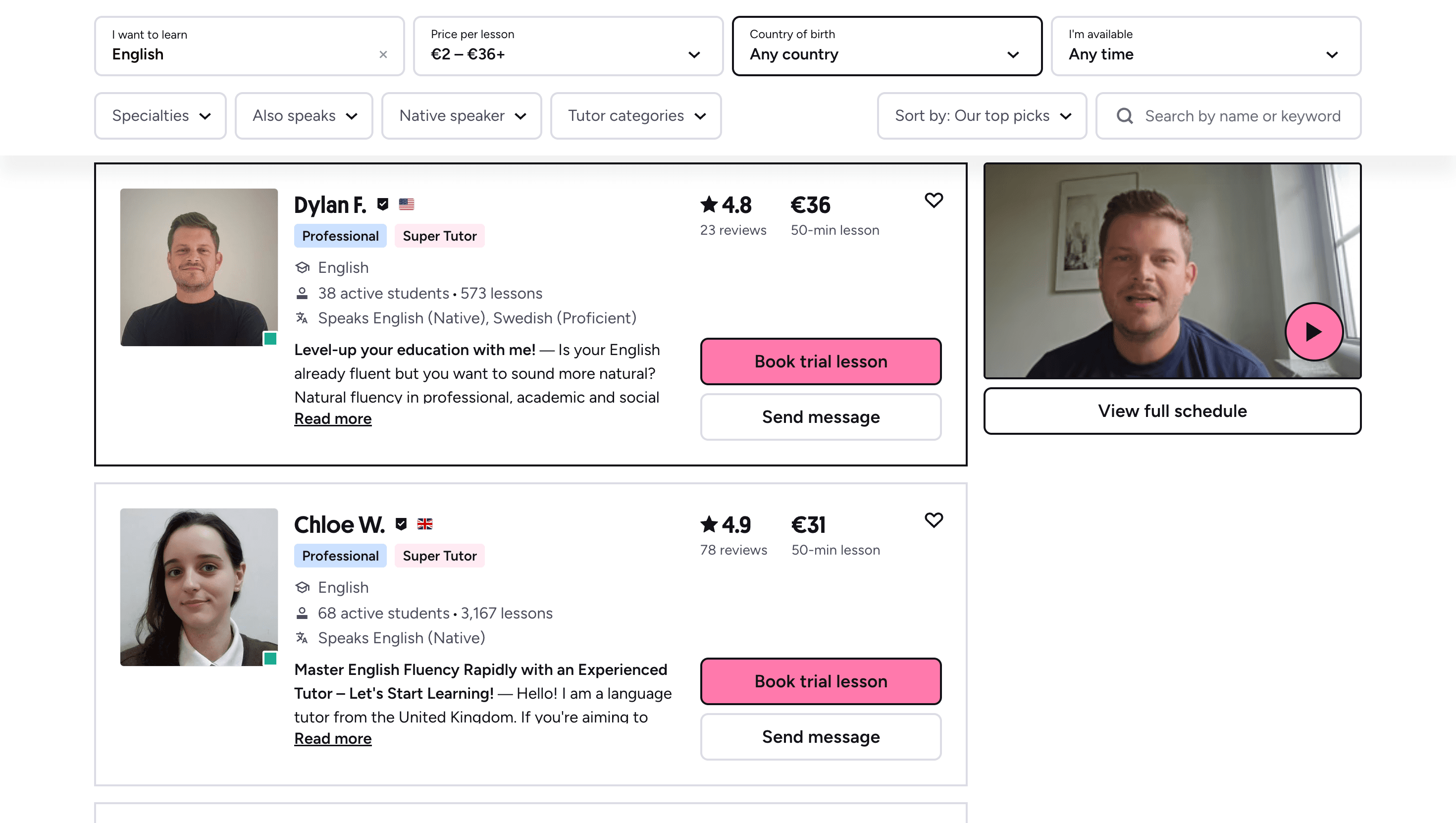
Many learners give up on language learning due to these high costs, missing out on valuable professional and personal opportunities.
That’s why we created Kylian: to make language learning accessible to everyone and help people master a foreign language without breaking the bank.
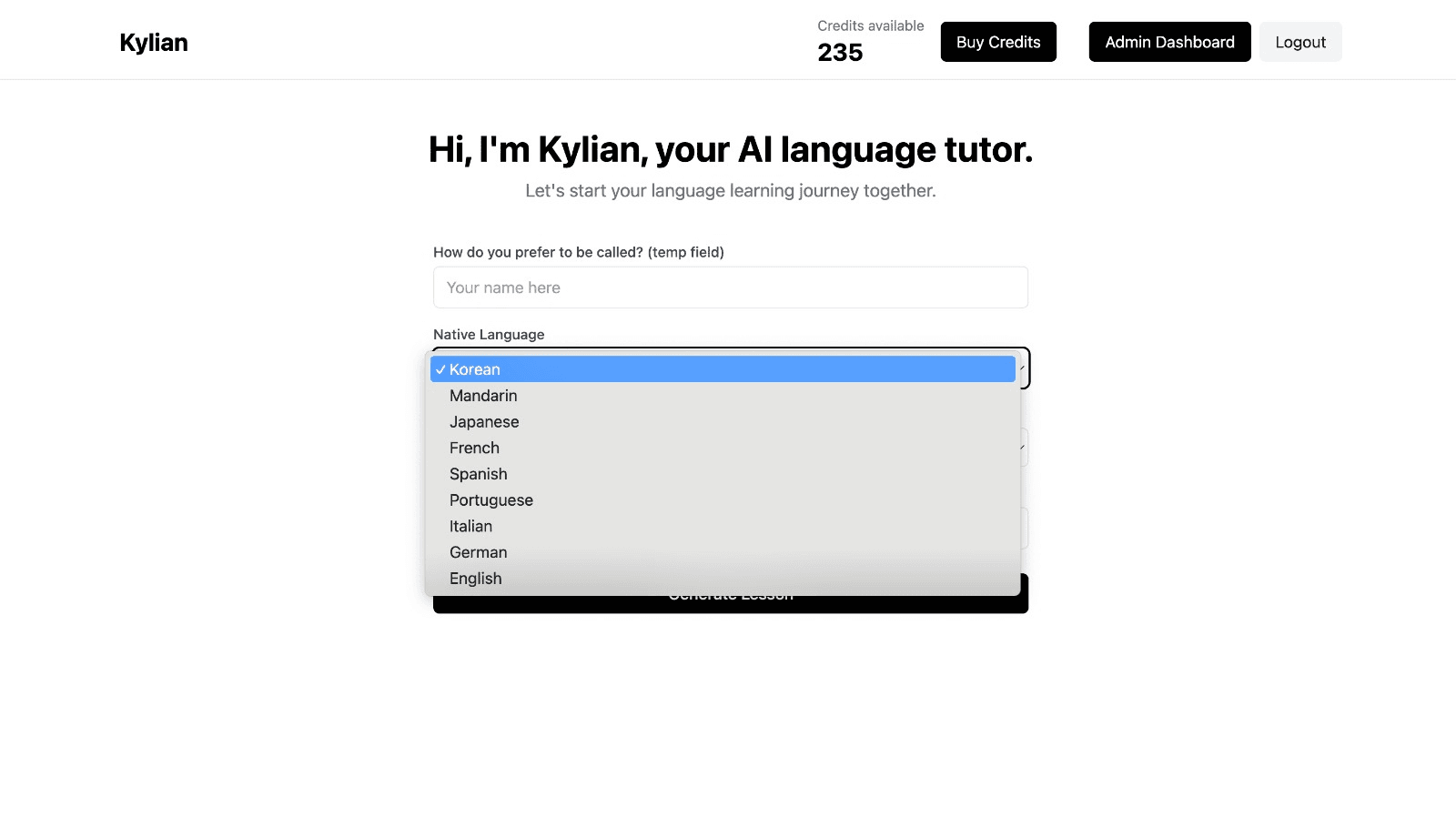
To get started, just tell Kylian which language you want to learn and what your native language is
Tired of teachers who don’t understand your specific struggles as a French speaker? Kylian’s advantage lies in its ability to teach any language using your native tongue as the foundation.
Unlike generic apps that offer the same content to everyone, Kylian explains concepts in your native language (French) and switches to the target language when necessary—perfectly adapting to your level and needs.
This personalization removes the frustration and confusion that are so common in traditional language learning.
Choose a specific topic you want to learn
Frustrated by language lessons that never cover exactly what you need? Kylian can teach you any aspect of a language—from pronunciation to advanced grammar—by focusing on your specific goals.
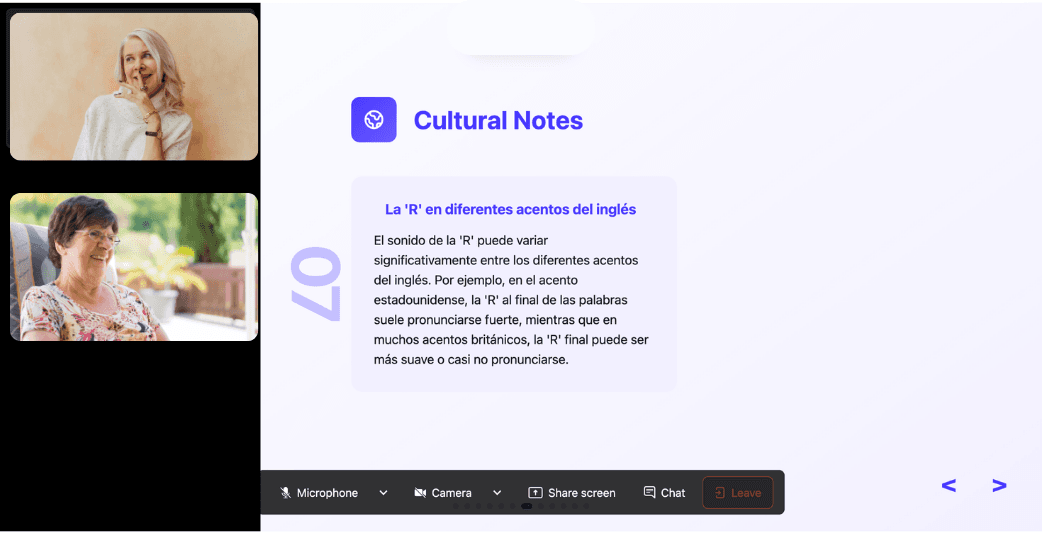
Avoid vague requests like “How can I improve my accent?” and be precise: “How do I pronounce the R like a native English speaker?” or “How do I conjugate the verb ‘to be’ in the present tense?”
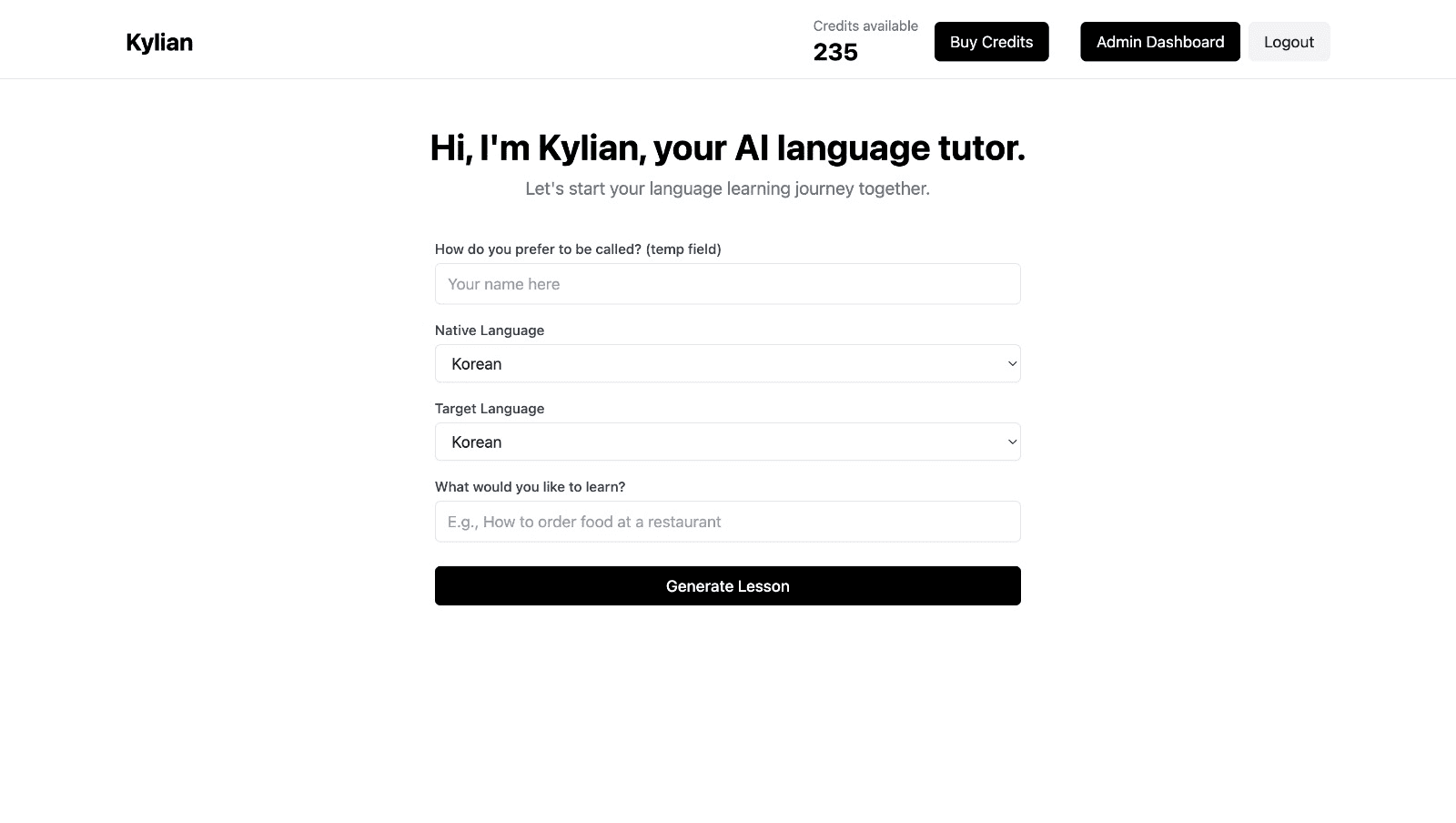
With Kylian, you’ll never again pay for irrelevant content or feel embarrassed asking “too basic” questions to a teacher. Your learning plan is entirely personalized.
Once you’ve chosen your topic, just hit the “Generate a Lesson” button, and within seconds, you’ll get a lesson designed exclusively for you.
Join the room to begin your lesson
The session feels like a one-on-one language class with a human tutor—but without the high price or time constraints.
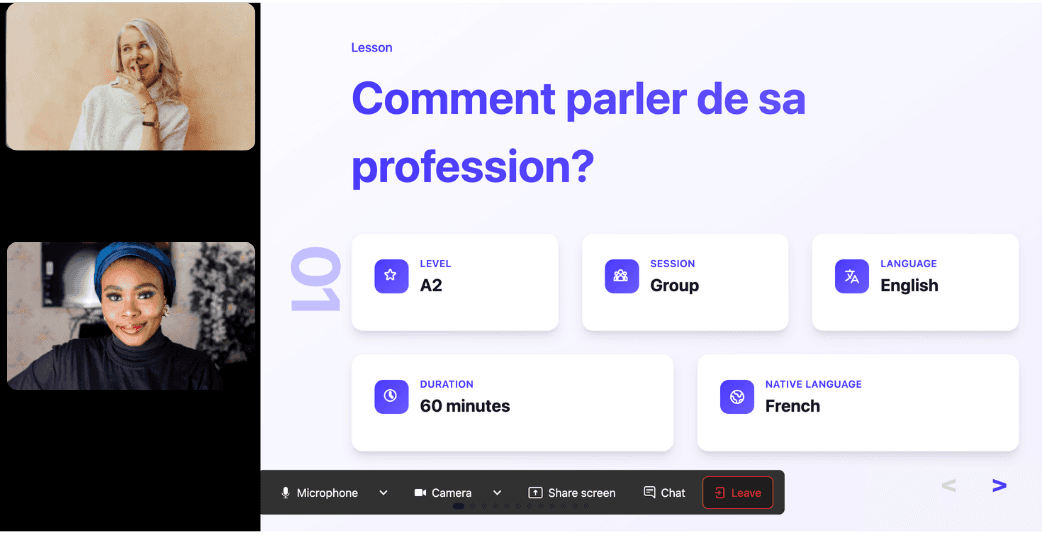
In a 25-minute lesson, Kylian teaches exactly what you need to know about your chosen topic: the nuances that textbooks never explain, key cultural differences between French and your target language, grammar rules, and much more.
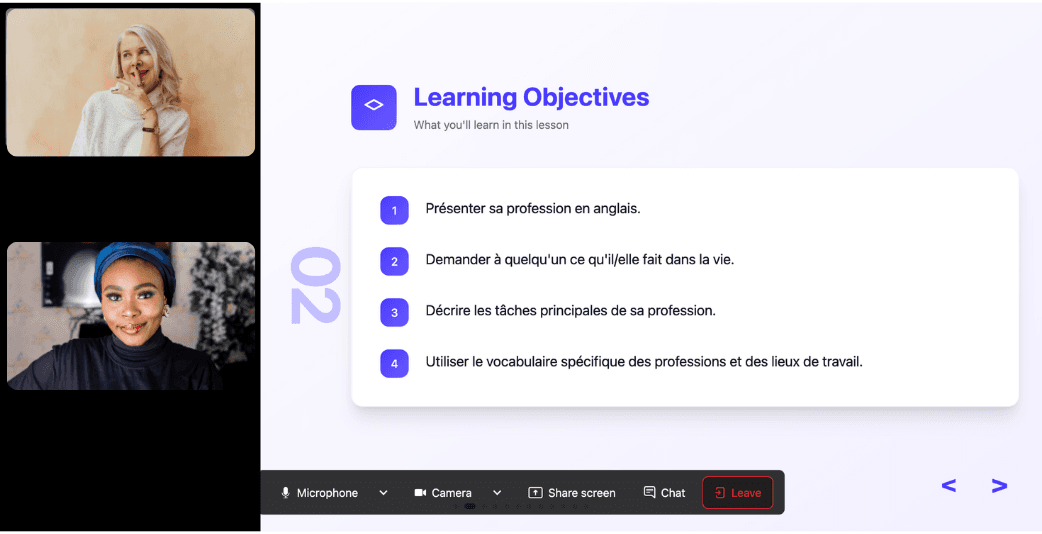
Ever felt frustrated trying to keep up with a native-speaking teacher, or embarrassed to ask for something to be repeated? With Kylian, that problem disappears. It switches intelligently between French and the target language depending on your level, helping you understand every concept at your own pace.
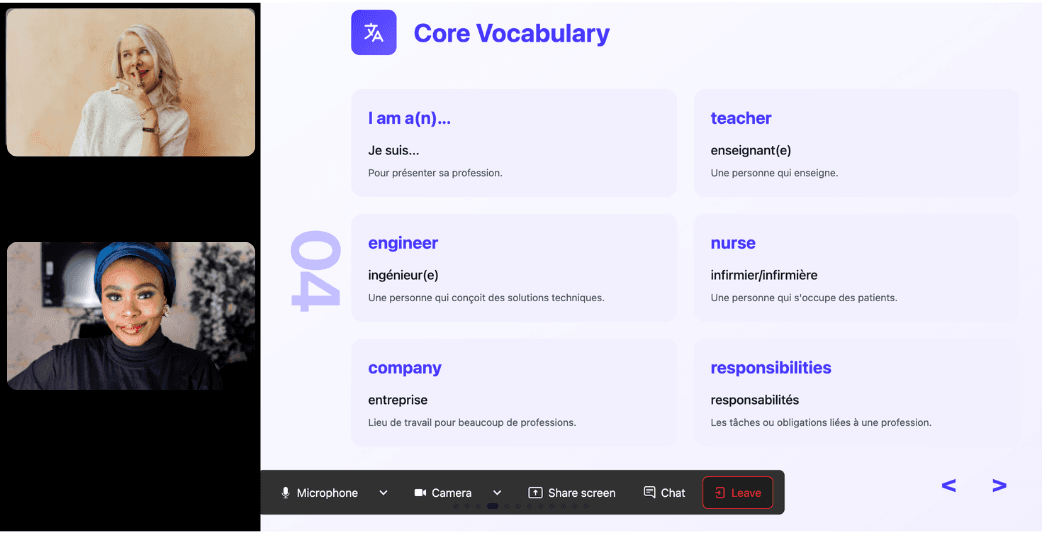
During the lesson, Kylian uses role-plays, real-life examples, and adapts to your learning style. Didn’t understand something? No problem—you can pause Kylian anytime to ask for clarification, without fear of being judged.
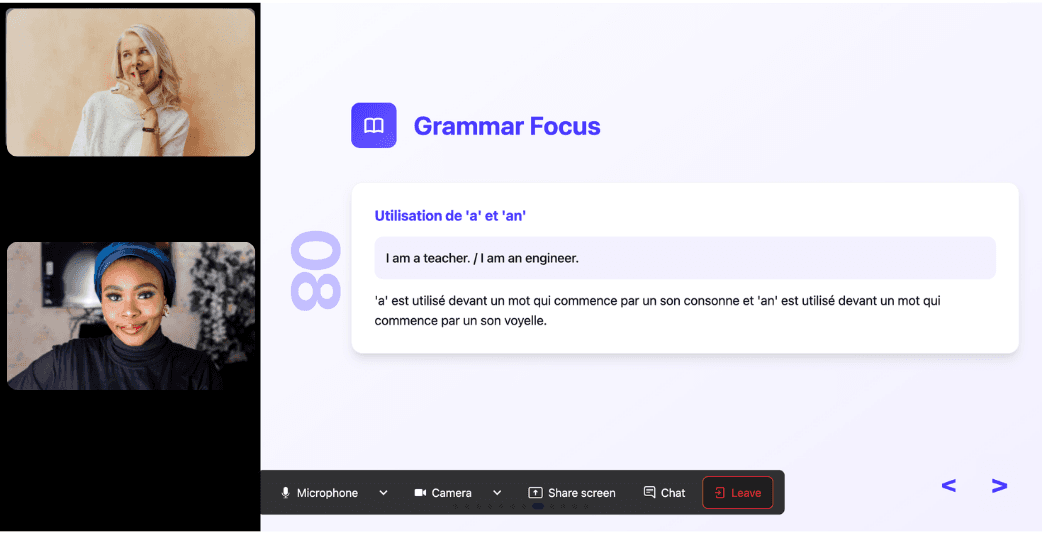
Ask all the questions you want, repeat sections if needed, and customize your learning experience in ways traditional teachers and generic apps simply can’t match.
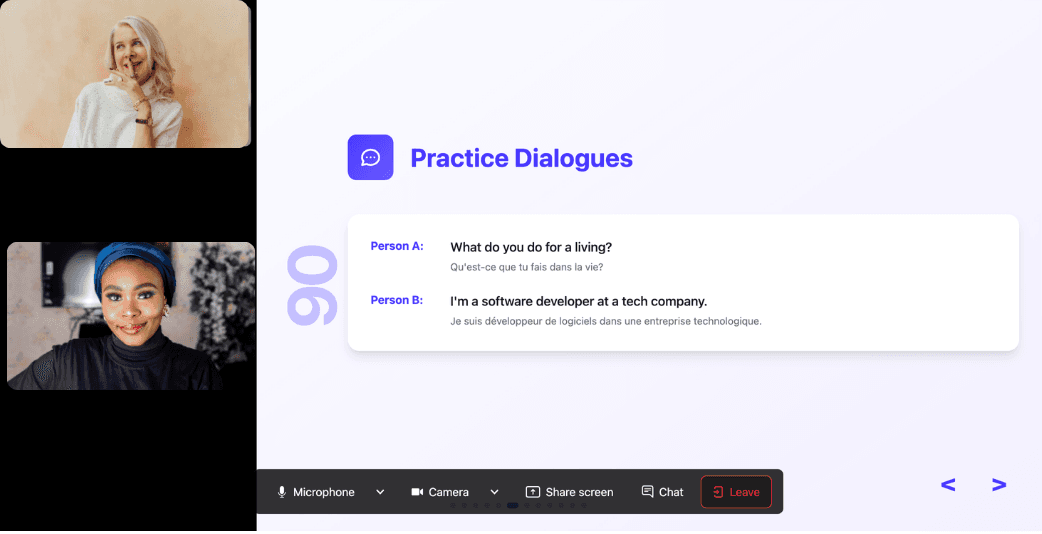
With 24/7 access at a fraction of the cost of private lessons, Kylian removes all the barriers that have kept you from mastering the language you’ve always wanted to learn.