Swedish stands as a gateway to Scandinavian culture, opening doors to unprecedented opportunities for both personal and professional growth. As the most widely spoken North Germanic language, Swedish serves as a linguistic bridge connecting over 10 million speakers across Sweden and parts of Finland.
What makes Swedish particularly appealing for English speakers is its Germanic roots—sharing vocabulary patterns, grammatical structures, and cultural references that create a surprisingly accessible learning path. Yet despite these advantages, mastering Swedish requires strategic approach and consistent practice.
This comprehensive guide outlines ten evidence-based strategies that transform Swedish language acquisition from intimidating to achievable. Whether your motivation stems from career advancement, cultural immersion, or intellectual curiosity, these methods will establish a solid foundation for Swedish language proficiency.
Why Learn Swedish? The Strategic Advantages
Before diving into methodologies, understanding the tangible benefits of Swedish proficiency provides crucial motivation:
- Germanic language accessibility: Swedish shares linguistic roots with English, offering numerous cognates and similar grammatical patterns
- Gateway to Scandinavian languages: Swedish proficiency significantly enhances comprehension of Norwegian and Danish with minimal additional effort
- Economic opportunity: Sweden's robust economy (consistently ranking among Europe's strongest) creates demand for multilingual professionals
- Educational advantages: Sweden offers tuition-free university education to EU citizens, with many programs conducted in English but requiring basic Swedish for daily life
- Cultural richness: Access to Swedish literature, film, and music in their original form reveals nuances lost in translation
With these benefits in mind, let's explore the strategic pathway to Swedish fluency.
How to Learn Swedish: 10 Proven Strategies
1. Define Specific, Measurable Learning Objectives
Vague aspirations like "learn Swedish" lack the specificity needed for effective learning. Instead, establish concrete objectives with measurable metrics:
- "Hold a 5-minute conversation about daily activities within three months"
- "Understand 80% of a Swedish news broadcast within six months"
- "Successfully order food and navigate transportation during my Stockholm trip next summer"
These specific goals create accountability and clear benchmarks for progress assessment. Research consistently demonstrates that specific, time-bound objectives increase language learning persistence by up to 74% compared to general intentions.
2. Implement a Consistent Learning Schedule
Cognitive science confirms that distributed practice—regular, shorter study sessions—produces superior language acquisition compared to marathon cramming sessions. Design a sustainable schedule that accommodates your lifestyle:
- Daily micro-sessions: Even 15-20 minutes of focused practice yields significant results when maintained consistently
- Context-based learning: Attach Swedish practice to existing habits (during commutes, morning coffee, before bed)
- Balanced modality exposure: Alternate between listening, speaking, reading and writing for comprehensive development
Track your consistency using language learning apps or simple habit-tracking methods to maintain momentum through inevitable motivation fluctuations.
3. Master Swedish Pronunciation Fundamentals
The Swedish sound system represents both a challenge and opportunity for English speakers. Its musicality derives from distinctive features:
- Nine vowel sounds: Including the three not found in English: å, ä, and ö
- Dual emphasis patterns: Primary and secondary stress in words like "kursbok" creates Swedish's characteristic rhythm
- Syllable length variation: Stressed syllables receive extended pronunciation, creating the language's melodic quality
Begin by systematically studying these phonetic elements through resources like Forvo or Swedish pronunciation guides on YouTube. Record yourself speaking and compare with native pronunciations, focusing on the most challenging sounds:
- Sj-sound: As heard in "sjö" (lake)
- Tj-sound: As in "tjugo" (twenty)
- Prosody patterns: The distinctive melodic rise and fall of Swedish sentences
Early mastery of pronunciation prevents the fossilization of errors that become difficult to correct later.
4. Build Strategic Vocabulary Using Frequency Principles
Rather than random word memorization, apply the Pareto principle to vocabulary acquisition—20% of Swedish words account for approximately 80% of daily conversation. Focus initially on:
- Functional transition words: och (and), men (but), eftersom (because)
- Common greeting patterns: Hej! (Hello!), Hur mår du? (How are you?), Trevligt att träffas (Nice to meet you)
- Survival phrases: Var finns...? (Where is...?), Jag förstår inte (I don't understand), Kan du hjälpa mig? (Can you help me?)
Effective tools for strategic vocabulary building include:
- Spaced repetition systems: Applications like Anki optimize review timing based on recall difficulty
- Contextual learning: Learn words in useful phrases rather than isolation
- Thematic organization: Group vocabulary by situations (restaurant, transportation, shopping) rather than random lists
This targeted approach builds functional communication ability more rapidly than traditional vocabulary methods.
5. Leverage Swedish Music for Immersive Learning
Sweden's disproportionate impact on global music creates an exceptional language learning opportunity. Swedish music offers:
- Melodic reinforcement of pronunciation patterns
- Cultural context for language usage
- Emotional connection that enhances memory
Create a strategic Swedish music learning system:
- Select artists with clear pronunciation (Melissa Horn, Lars Winnerbäck)
- Use services like Spotify to create a dedicated Swedish playlist
- Follow along with lyrics (sites like Lyrics Translate provide parallel translations)
- Identify patterns in common expressions and vocabulary
Contemporary Swedish artists worth exploring:
- Veronica Maggio for pop with clear pronunciation
- Håkan Hellström for distinctive Swedish intonation patterns
- Laleh for accessible vocabulary and meaningful lyrics
- First Aid Kit for Swedish artists who perform in both English and Swedish
6. Develop Reading Fluency Through Graduated Materials
Reading provides crucial vocabulary expansion and grammatical pattern recognition. Create a progressive reading ladder:
Beginner level:
- Children's books like "Pettson och Findus" series
- Graded readers specifically designed for language learners
- Dual-language books with parallel Swedish-English text
Intermediate level:
- Young adult novels with straightforward plots
- Swedish newspapers with simplified language (8Sidor)
- Short stories by accessible authors like Astrid Lindgren
Advanced level:
- Contemporary Swedish fiction (Stieg Larsson, Fredrik Backman)
- Newspaper opinion pieces discussing complex issues
- Swedish poetry and classic literature
Complement reading with vocabulary tracking—maintain a digital or physical notebook of new words, reviewing systematically to reinforce retention.
7. Immerse Through Swedish Media Consumption
Swedish television and film offer authentic language exposure in engaging contexts. Sweden produces exceptional crime dramas, comedies and documentaries that serve as excellent learning resources:
Recommended Swedish TV series:
- "Bron/Broen" (The Bridge) - crime drama with clear dialogue
- "Bonus Family" (Bonusfamiljen) - contemporary family dynamics
- "Young Royals" - teen drama with accessible language
Viewing strategies for language acquisition:
- Begin with Swedish subtitles to connect spoken and written forms
- Progress to watching without subtitles for short segments
- Use active viewing—pause to repeat phrases or note unfamiliar vocabulary
- Watch the same episode multiple times, focusing on different elements
Streaming services like SVT Play (Sweden's public broadcaster) offer free programming, though some content may require VPN access from outside Sweden.
8. Optimize Learning With Digital Tools and Applications
Technology transforms Swedish language acquisition through personalized, data-driven approaches:
Essential digital resources:
- Comprehensive courses: Babbel offers structured Swedish curriculum
- Adaptive flashcards: Memrise uses spaced repetition for vocabulary retention
- Pronunciation feedback: Google Translate's speech recognition provides basic pronunciation assessment
- Grammar references: Swedish For All delivers clear explanations of grammatical concepts
Integration strategy:
- Identify specific weaknesses through assessment tools
- Select applications targeting those particular skills
- Establish regular usage patterns tied to specific daily activities
- Track progress through built-in metrics and adjust accordingly
Digital tools work best as supplements to other learning methods rather than standalone solutions.
9. Embrace Productive Failure in Speaking Practice
Language acquisition research consistently demonstrates that willingness to make mistakes correlates strongly with ultimate proficiency. Develop a strategic approach to speaking practice:
- Shadowing technique: Repeat after native speakers, mimicking intonation and rhythm
- Self-talk routines: Narrate daily activities in Swedish during private moments
- Targeted phrase mastery: Perfect pronunciation of 25 common expressions rather than attempting unlimited vocabulary
- Conversation exchanges: Find language partners through platforms like Tandem or HelloTalk
Focus initial speaking efforts on high-frequency situations like introductions, basic needs, and simple opinions before progressing to complex topics.
10. Engage With Native Speakers Through Structured Conversation
Regular interaction with native Swedish speakers provides feedback impossible to obtain through self-study. Optimize these interactions through:
- Online tutoring: Professional teachers provide structured guidance and error correction
- Language exchange partnerships: Reciprocal learning with Swedish speakers learning your language
- Community groups: Swedish cultural organizations frequently welcome language learners
- Virtual immersion: Swedish-language Discord servers and online communities
Schedule at least weekly conversation practice, preparing specific topics and questions in advance to maximize learning value.
Additional Strategy: Cultural Integration for Contextual Understanding
Language exists within cultural frameworks that give words their full meaning. Integrate Swedish cultural understanding into your language journey:
- Cultural concepts: Learn untranslatable Swedish terms like "lagom" (just the right amount) and "fika" (coffee break with deeper social meaning)
- Historical context: Understanding Sweden's social development explains linguistic patterns
- Social norms: Swedish communication style tends toward understatement and precision
- Seasonal traditions: Familiarize yourself with celebrations like Midsommar and Lucia that feature prominently in conversation
This cultural knowledge transforms mechanical language learning into meaningful communication capability.
The Swedish Language: Fundamental Structure
Understanding Swedish's linguistic architecture accelerates learning by revealing patterns rather than requiring memorization of seemingly arbitrary rules:
Key structural elements:
- Two grammatical genders: Common (en) and neuter (ett), rather than masculine/feminine distinctions
- Definite article suffixes: The definite article attaches to the end of nouns (hus → huset)
- V2 word order: The verb must appear in second position in main clauses
- Compound word formation: Swedish frequently combines words (like German) to form new concepts
This structural understanding allows you to generate correct sentences rather than simply memorizing phrases.
How Long Does Swedish Proficiency Take?
Language acquisition timelines vary based on multiple factors:
- Language background: English speakers typically progress faster due to linguistic similarities
- Study intensity: Daily practice accelerates progress exponentially compared to weekly sessions
- Immersion level: Environmental exposure dramatically impacts acquisition speed
- Learning methodology: Strategic approaches outperform random exposure
According to the Foreign Service Institute, Swedish requires approximately 575-600 hours of study to reach general proficiency (B2 level) for English speakers—significantly less than languages like Mandarin (2200 hours) or Arabic (1800 hours).
With consistent daily practice of one hour, basic conversational ability emerges within 3-6 months, while functional fluency typically requires 12-18 months of dedicated study.
Swedish Dialects: Regional Variations
While Standard Swedish (Rikssvenska) serves as the common form, regional dialects add richness and complexity:
- Norrland: Northern dialects featuring distinct vowel pronunciation
- Skånska: Southern Swedish with Danish influence
- Göteborgska: Western Swedish known for distinctive intonation patterns
- Finland Swedish: The variant spoken by Swedish-speaking Finns
As a learner, focus initially on Standard Swedish, gradually developing comprehension of major dialectal variations through media exposure from different regions.
Learn Any Language with Kylian AI
Private language lessons are expensive. Paying between 15 and 50 euros per lesson isn’t realistic for most people—especially when dozens of sessions are needed to see real progress.
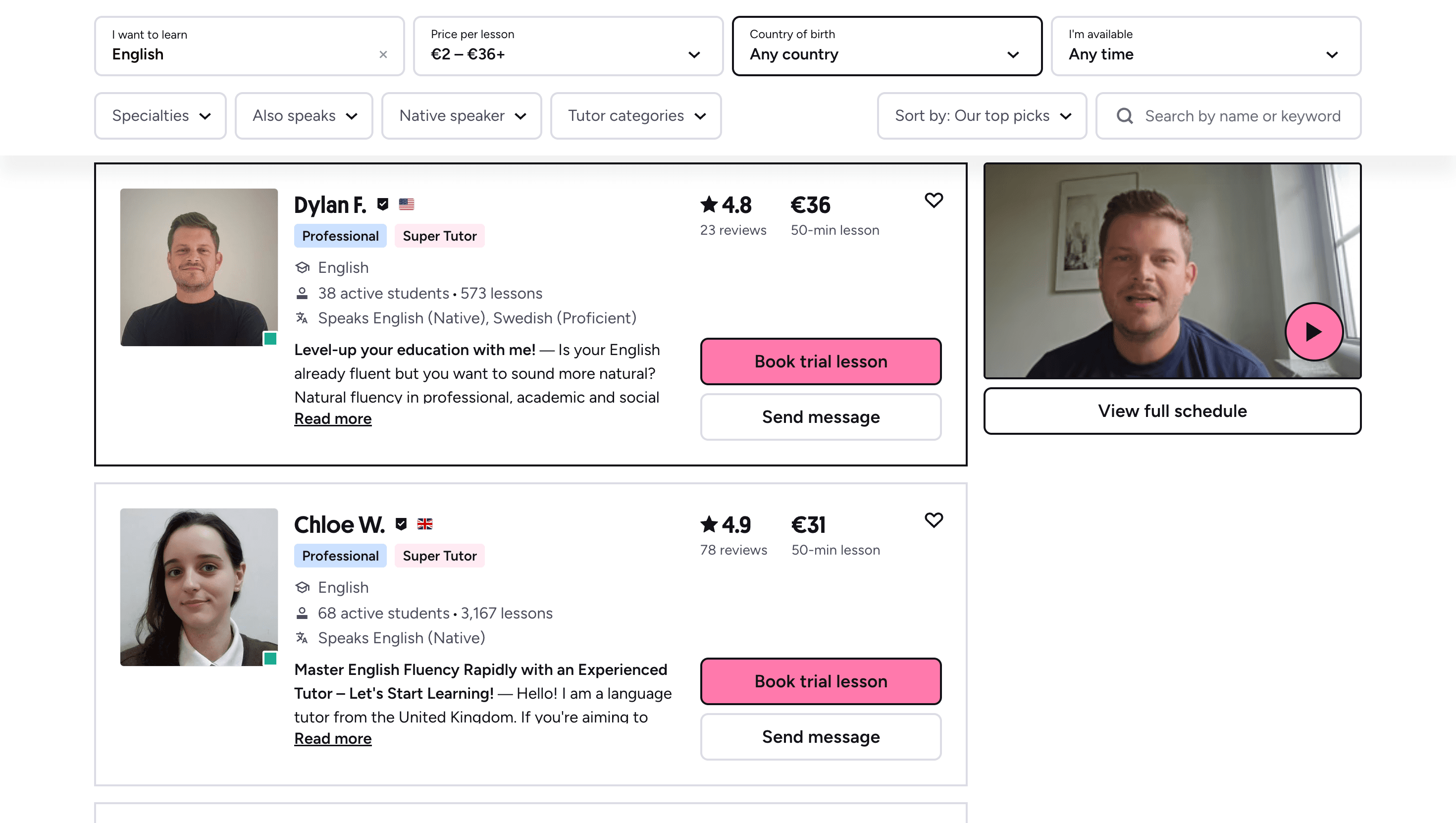
Many learners give up on language learning due to these high costs, missing out on valuable professional and personal opportunities.
That’s why we created Kylian: to make language learning accessible to everyone and help people master a foreign language without breaking the bank.
To get started, just tell Kylian which language you want to learn and what your native language is
Tired of teachers who don’t understand your specific struggles as a French speaker? Kylian’s advantage lies in its ability to teach any language using your native tongue as the foundation.
Unlike generic apps that offer the same content to everyone, Kylian explains concepts in your native language (French) and switches to the target language when necessary—perfectly adapting to your level and needs.
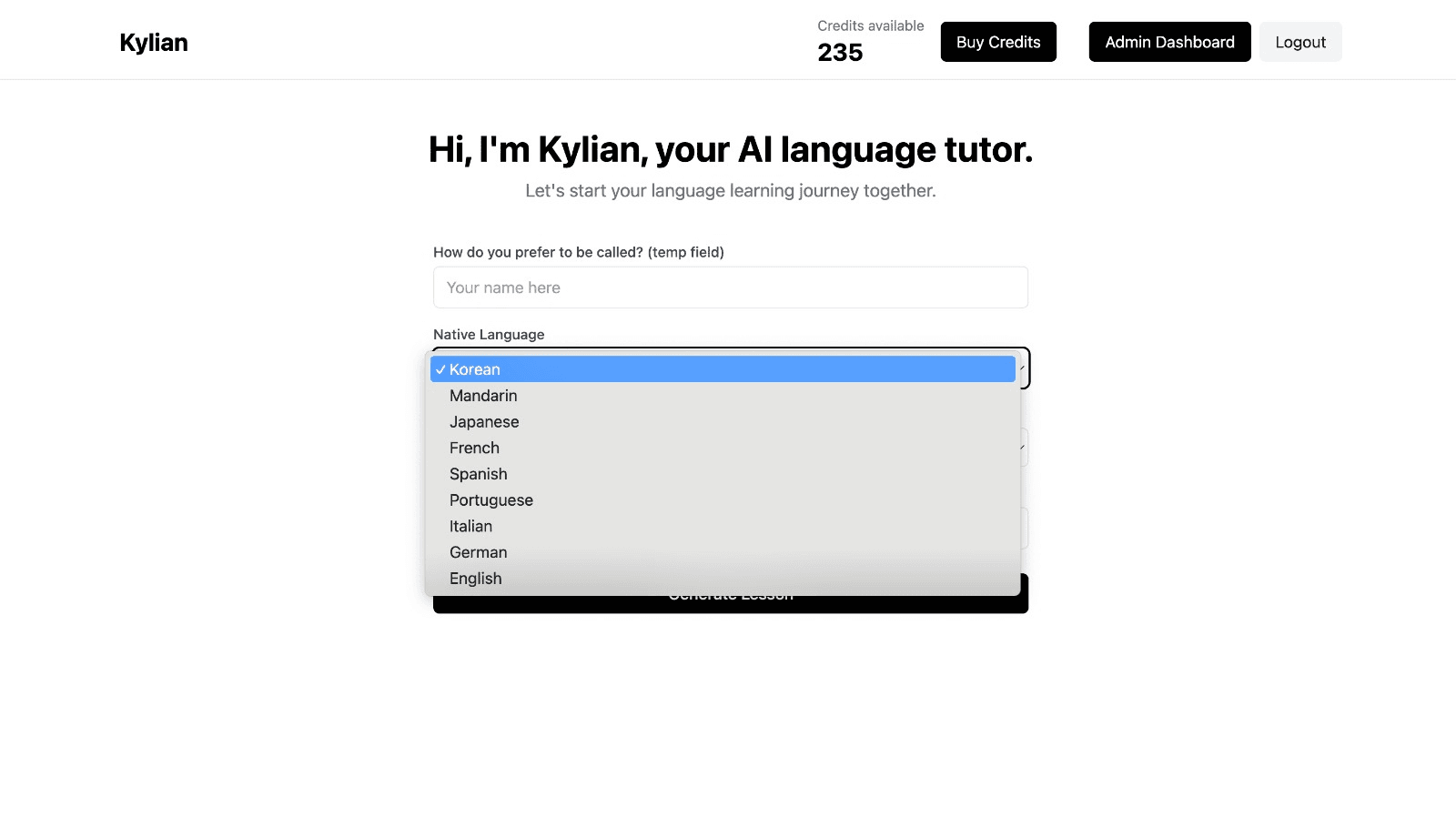
This personalization removes the frustration and confusion that are so common in traditional language learning.
Choose a specific topic you want to learn
Frustrated by language lessons that never cover exactly what you need? Kylian can teach you any aspect of a language—from pronunciation to advanced grammar—by focusing on your specific goals.
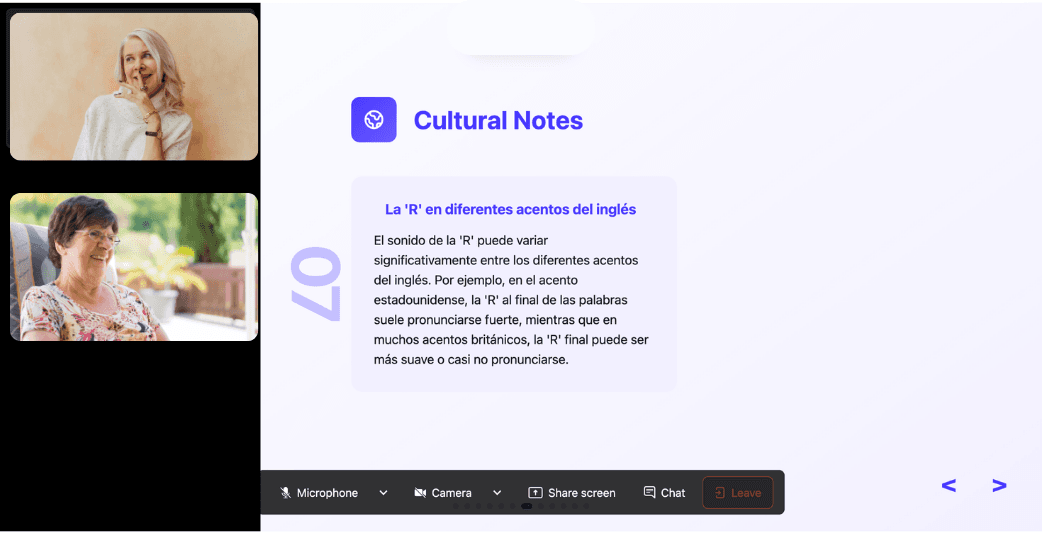
Avoid vague requests like “How can I improve my accent?” and be precise: “How do I pronounce the R like a native English speaker?” or “How do I conjugate the verb ‘to be’ in the present tense?”
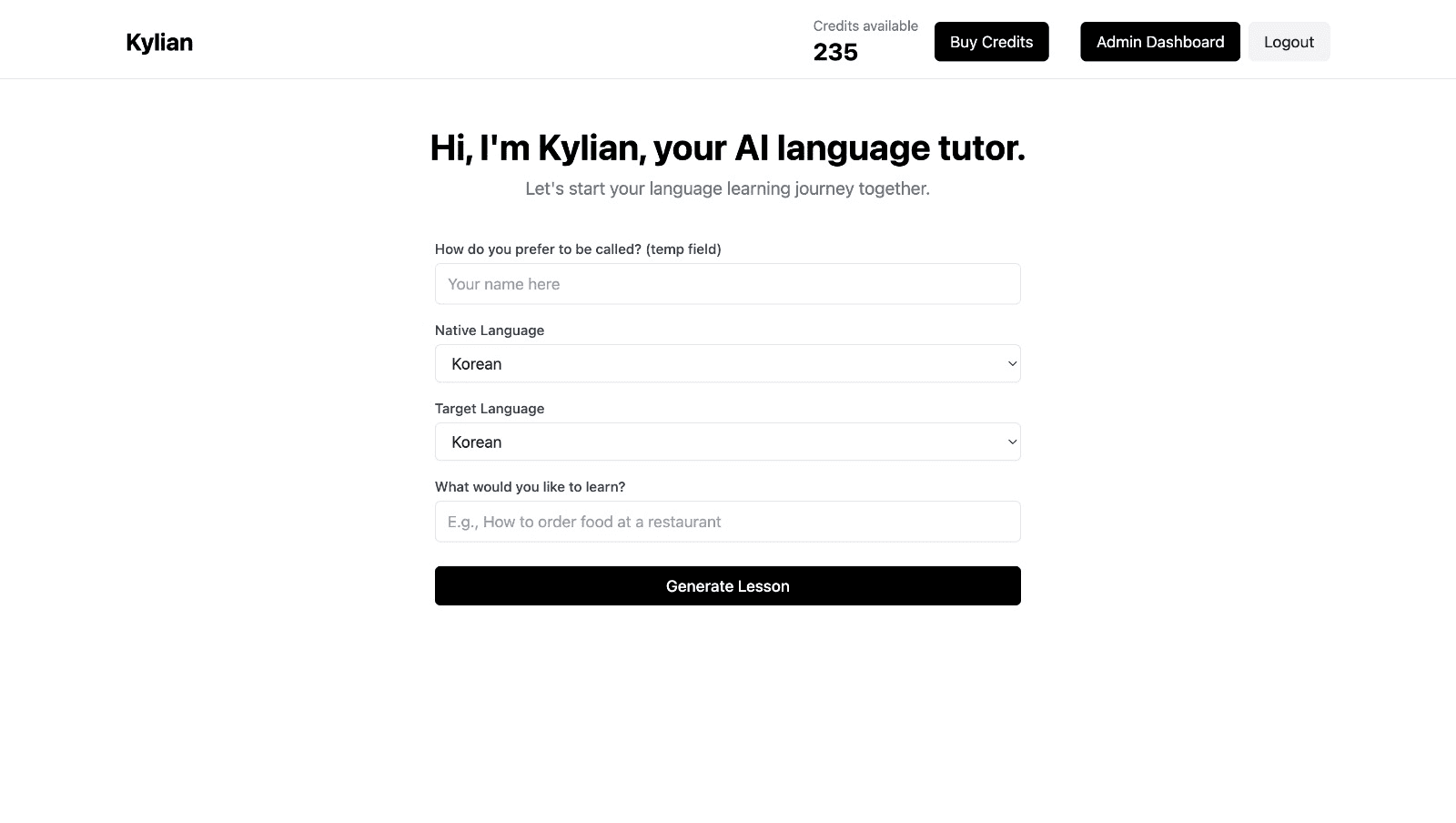
With Kylian, you’ll never again pay for irrelevant content or feel embarrassed asking “too basic” questions to a teacher. Your learning plan is entirely personalized.
Once you’ve chosen your topic, just hit the “Generate a Lesson” button, and within seconds, you’ll get a lesson designed exclusively for you.
Join the room to begin your lesson
The session feels like a one-on-one language class with a human tutor—but without the high price or time constraints.
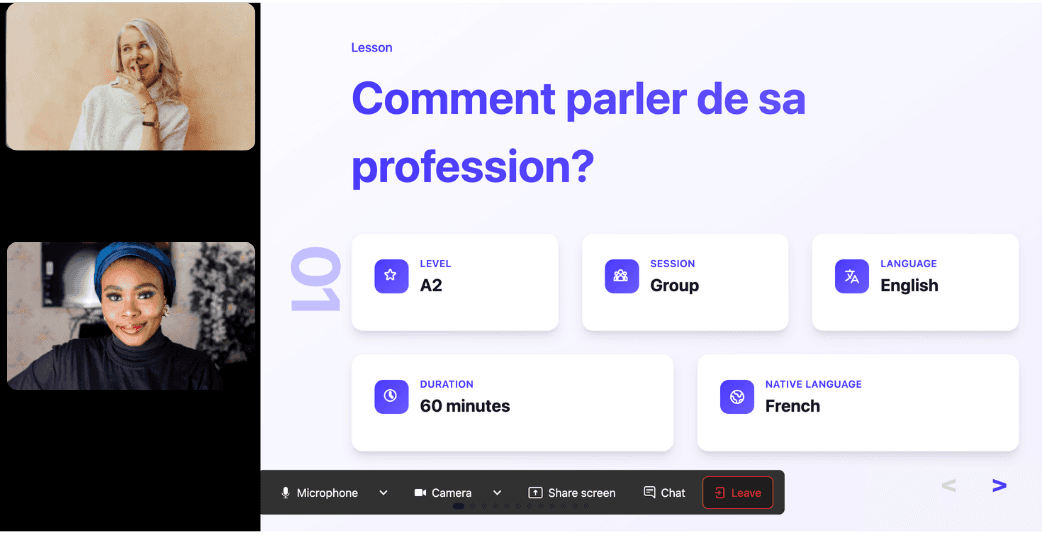
In a 25-minute lesson, Kylian teaches exactly what you need to know about your chosen topic: the nuances that textbooks never explain, key cultural differences between French and your target language, grammar rules, and much more.
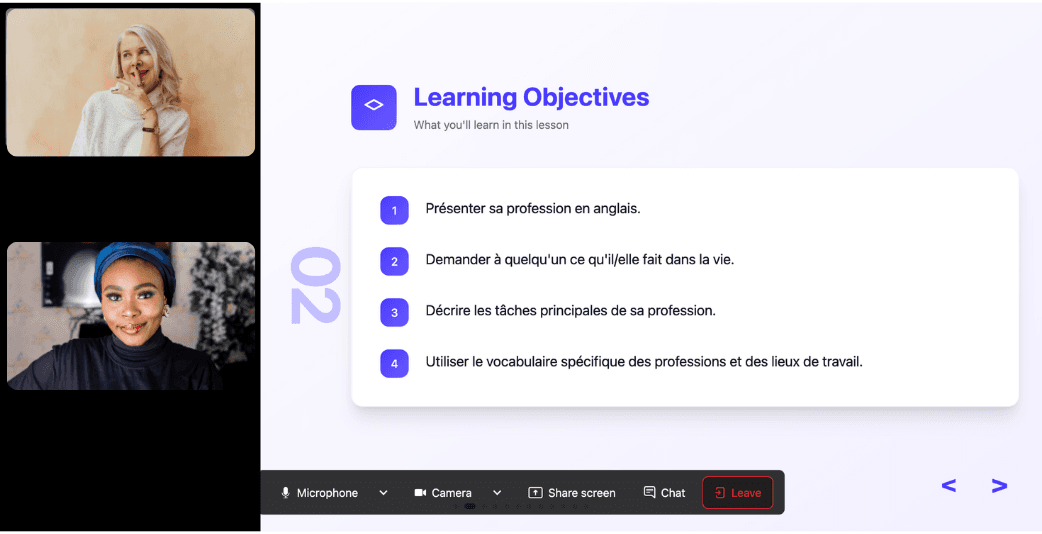
Ever felt frustrated trying to keep up with a native-speaking teacher, or embarrassed to ask for something to be repeated? With Kylian, that problem disappears. It switches intelligently between French and the target language depending on your level, helping you understand every concept at your own pace.
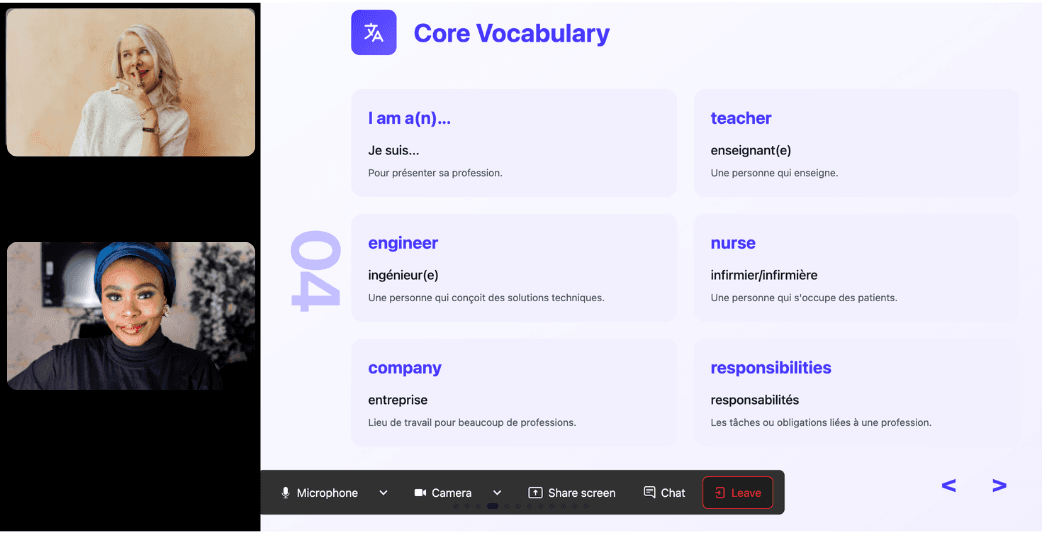
During the lesson, Kylian uses role-plays, real-life examples, and adapts to your learning style. Didn’t understand something? No problem—you can pause Kylian anytime to ask for clarification, without fear of being judged.
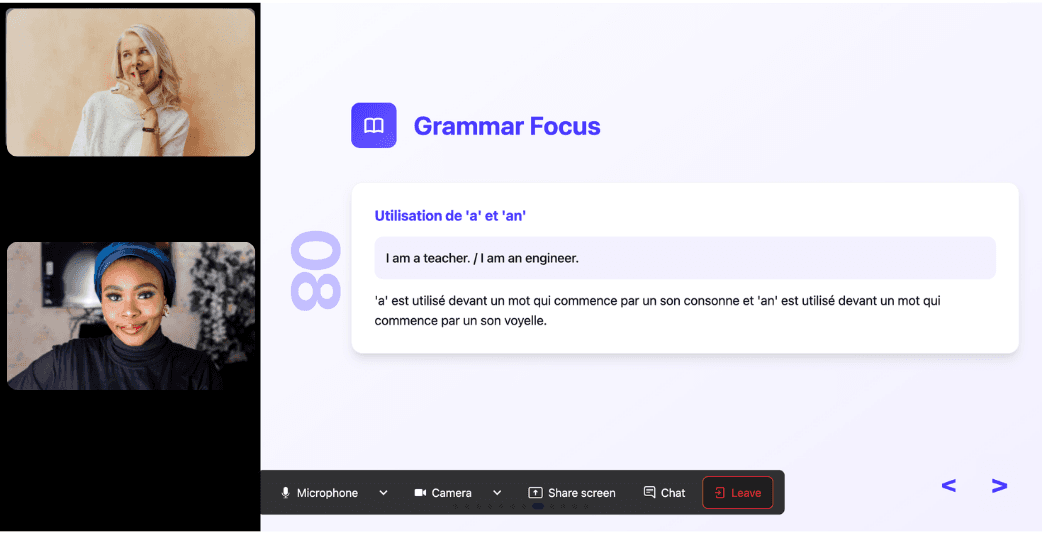
Ask all the questions you want, repeat sections if needed, and customize your learning experience in ways traditional teachers and generic apps simply can’t match.
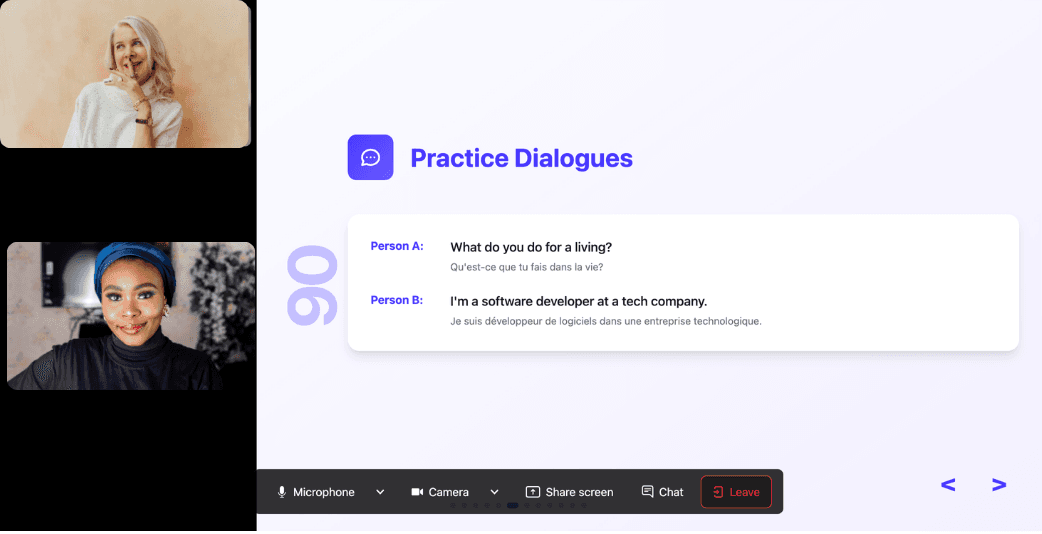
With 24/7 access at a fraction of the cost of private lessons, Kylian removes all the barriers that have kept you from mastering the language you’ve always wanted to learn.