So you hear American English speakers say "fo sho" but struggle to grasp its meaning and proper usage? This expression represents more than casual slang—it's a linguistic marker that signals cultural fluency and authentic communication in American English. "Fo sho" serves as an emphatic affirmation meaning "for sure," "definitely," or "absolutely," but its significance extends far beyond simple agreement.
Understanding "fo sho" matters because it bridges the gap between textbook English and the language Americans actually speak. This expression appears across diverse contexts, from casual conversations to professional networking, and mastering its usage demonstrates sophisticated understanding of American communication patterns.
In What Context Is "Fo Sho" Used?
The expression "fo sho" operates across three distinct communicative functions, each serving specific social and linguistic purposes that reveal deeper insights into American conversational dynamics.
Strong Affirmation and Agreement
"Fo sho" primarily functions as an intensified form of agreement that carries more emotional weight than standard affirmative responses. This usage typically emerges when speakers want to express wholehearted support or enthusiastic confirmation. The expression signals not just agreement, but active endorsement of the statement or proposition.
Consider this example: "Are you coming to the basketball game tonight?" "Fo sho, I wouldn't miss it!" (English: "Definitely, I wouldn't miss it!") This response communicates both confirmation and enthusiasm, distinguishing it from a simple "yes."
Social Bonding and Cultural Identity
The second contextual application involves establishing social connection and demonstrating cultural awareness. Native speakers often employ "fo sho" to signal in-group membership and create rapport with their audience. This usage transcends mere agreement, functioning as a social lubricant that builds relationships.
An example demonstrates this function: "That new restaurant downtown serves incredible tacos, fo sho." (English: "That new restaurant downtown serves incredible tacos, definitely.") Here, the speaker isn't just confirming information—they're inviting shared experience and cultural understanding.
Casual Emphasis and Reinforcement
The third contextual usage involves adding casual emphasis to statements without the formal weight of traditional intensifiers. This application allows speakers to strengthen their points while maintaining conversational accessibility and avoiding pretentious language choices.
For instance: "The traffic on Highway 101 is terrible, fo sho." (English: "The traffic on Highway 101 is terrible, definitely.") This usage reinforces the speaker's observation while keeping the tone appropriately informal for casual conversation.
How to Use "Fo Sho" Like a Native Speaker with Examples
Mastering "fo sho" requires understanding its grammatical positioning and syntactic flexibility within American English sentence structures. The expression functions as an adverbial intensifier, but its placement varies significantly based on communicative intent and emphasis patterns.
Sentence-Final Position for Maximum Impact
Native speakers frequently position "fo sho" at sentence endings to create emphatic closure and ensure the intensification registers clearly with listeners. This placement maximizes the expression's impact while maintaining natural speech rhythm.
Example: "I'm going to ace that presentation tomorrow, fo sho." (English: "I'm going to ace that presentation tomorrow, definitely.") The final positioning reinforces confidence and determination.
Standalone Response for Direct Affirmation
When used as a complete response, "fo sho" carries conversational weight equivalent to full sentences while maintaining brevity and punch. This grammatical independence allows speakers to provide emphatic confirmation without elaborate explanations.
Example conversation: Person A: "Did you finish the quarterly report?" Person B: "Fo sho." (English: "Definitely.")
This standalone usage demonstrates linguistic efficiency while conveying complete meaning.
Mid-Sentence Integration for Flow
Advanced speakers integrate "fo sho" within sentence structures to maintain conversational flow while adding emphasis. This positioning requires careful attention to rhythm and stress patterns to avoid disrupting natural speech cadence.
Example: "That movie was, fo sho, the best thing I've seen all year." (English: "That movie was, definitely, the best thing I've seen all year.") The mid-sentence placement creates emphasis without interrupting the statement's logical progression.
Question Tag Variations
Native speakers sometimes append "fo sho" to statements functioning as question tags, seeking confirmation while expressing confidence in their assertions. This usage combines affirmation with subtle validation-seeking behavior.
Example: "We should leave early to avoid traffic, fo sho?" (English: "We should leave early to avoid traffic, right?") This construction invites agreement while expressing the speaker's conviction.
Four Alternative Expressions to "Fo Sho" for Natural Communication
Expanding your vocabulary beyond "fo sho" enables more nuanced expression and prevents overreliance on single phrases. These alternatives serve similar functions while offering different levels of formality and cultural resonance.
"No doubt" for Professional Contexts
"No doubt" provides emphatic agreement suitable for professional environments where "fo sho" might appear too casual. This alternative maintains the same certainty level while adapting to formal communication expectations.
Example: "The client presentation went exceptionally well, no doubt." (English: Same meaning) This usage works effectively in business meetings and professional discussions.
"Absolutely" for Universal Acceptance
"Absolutely" functions across all formality levels and cultural contexts, making it the most versatile alternative. This expression provides strong affirmation without cultural or generational limitations.
Example: "The new marketing strategy will increase our reach, absolutely." (English: Same meaning) This choice works in academic, professional, and casual settings equally well.
"You bet" for Enthusiastic Agreement
"You bet" combines affirmation with enthusiasm, particularly effective in service contexts and friendly interactions. This alternative adds warmth and personality to confirmations while maintaining approachability.
Example: "Can you help me with this project?" "You bet!" (English: "Definitely!") This response conveys both willingness and positive attitude.
"Without question" for Formal Emphasis
"Without question" provides the highest level of formality while maintaining strong emphatic force. This alternative suits academic writing, formal presentations, and situations requiring authoritative confirmation.
Example: "The research findings support our hypothesis, without question." (English: Same meaning) This usage establishes credibility and scholarly precision.
Using "Fo Sho" in Formal and Informal Scenarios
Understanding contextual appropriateness prevents communication missteps and ensures effective message delivery across diverse social and professional situations.
Informal Scenario: Social Media Engagement
Social platforms provide ideal environments for "fo sho" usage, where casual communication norms encourage authentic expression. Users employ this slang to build community connections and demonstrate cultural fluency.
Example interaction: "Just posted my workout progress—consistency is key!" Response: "That transformation is inspiring, fo sho! Keep pushing forward." (English: "That transformation is inspiring, definitely! Keep pushing forward.") This usage builds supportive community while maintaining conversational authenticity.
Informal Scenario: Friend Group Planning
Casual planning conversations among friends represent prime opportunities for natural "fo sho" integration. These contexts value authenticity and relationship-building over formal precision.
Example: "Should we try that new brunch spot this weekend?" "Fo sho, I've been wanting to check out their menu." (English: "Definitely, I've been wanting to check out their menu.") This response shows enthusiasm while strengthening social bonds.
Formal Scenario: Networking Events (Modified Approach)
Professional networking requires careful adaptation of casual expressions. While direct "fo sho" usage might appear inappropriate, understanding its meaning helps interpret others' communication and adapt your responses accordingly.
Modified example: "Your presentation on market trends was incredibly insightful." Response: "I appreciate that feedback—the data certainly supports those conclusions." (Rather than: "Fo sho, the numbers don't lie.") This demonstrates professional adaptation while maintaining confidence.
Business Context: Team Collaboration
Workplace dynamics occasionally permit casual language, particularly in creative industries or established team relationships. However, strategic deployment prevents perception issues while building rapport.
Appropriate example: During informal team brainstorming: "This campaign concept could really resonate with our target demographic, fo sho." (English: "This campaign concept could really resonate with our target demographic, definitely.") This usage works when team culture supports casual communication and relationships are well-established.
Common Mistakes to Avoid When Using "Fo Sho"
Preventing typical errors ensures authentic usage and avoids communication breakdowns that can undermine credibility or create misunderstandings.
Overuse Leading to Communication Fatigue
Excessive repetition of "fo sho" creates monotonous speech patterns and reduces the expression's impact through familiarity. Native speakers vary their intensifiers to maintain conversational interest and demonstrate vocabulary breadth.
Problematic example: "The weather is nice today, fo sho. This coffee is good, fo sho. We should meet again soon, fo sho." (English: Multiple uses of "definitely" in rapid succession) This pattern sounds unnatural and suggests limited vocabulary.
Improved approach: "The weather is nice today, fo sho. This coffee tastes amazing. We should definitely meet again soon." This variation maintains emphasis while demonstrating linguistic flexibility.
Inappropriate Formal Context Usage
Deploying "fo sho" in formal situations where standard English is expected can damage professional credibility and create negative impressions. Understanding contextual boundaries prevents career-limiting communication errors.
Inappropriate example: During job interview: "I can handle this position's responsibilities, fo sho." (English: "I can handle this position's responsibilities, definitely.") This usage appears unprofessional and suggests poor judgment.
Correct approach: "I'm confident in my ability to handle this position's responsibilities effectively." This demonstrates professionalism while conveying the same certainty level.
Cultural Origins and Evolution of "Fo Sho"
Understanding the historical development of "fo sho" provides crucial context for appropriate usage and cultural sensitivity. This expression emerged from African American Vernacular English (AAVE), specifically within hip-hop culture during the 1990s, before gaining mainstream adoption across diverse American communities.
The phonetic transformation from "for sure" to "fo sho" reflects systematic sound changes characteristic of AAVE, including consonant cluster reduction and vowel modifications. This linguistic evolution demonstrates how marginalized communities create innovative expression forms that eventually influence mainstream language patterns.
Snoop Dogg's popularization of the term through music and media appearances during the late 1990s and early 2000s accelerated its cultural spread beyond hip-hop communities. This mainstream adoption illustrates how popular culture serves as a vehicle for linguistic innovation and cross-cultural communication.
Contemporary usage has evolved beyond its original cultural boundaries while maintaining connections to its roots. Modern speakers across ethnic and socioeconomic lines employ "fo sho" while often remaining unaware of its specific origins and cultural significance within African American communities.
Regional Variations and Usage Patterns
Geographic distribution of "fo sho" reveals interesting patterns about American linguistic diversity and cultural transmission. West Coast usage, particularly in California, maintains stronger connections to the original hip-hop context and demonstrates more sophisticated deployment across various social situations.
Southern American English speakers have adapted "fo sho" differently, often integrating it with existing regional intensifiers and creating hybrid expressions that reflect local linguistic preferences. These adaptations show how slang expressions evolve when they encounter established regional dialects.
Urban versus rural usage patterns also demonstrate significant variation. Metropolitan areas show higher frequency usage and more contextual sophistication, while rural communities may employ the expression more sporadically and with less cultural awareness of its origins.
Generational differences create additional complexity, with Millennials and Generation Z speakers showing more natural integration compared to older generations who may use it more self-consciously or avoid it entirely due to perceived inappropriateness.
Digital Communication and "Fo Sho" Usage
Online environments have created new contexts for "fo sho" deployment, with social media platforms encouraging casual expression and authentic communication. Text messaging abbreviations like "fs" have emerged as efficient alternatives while maintaining the same semantic meaning.
Gaming communities frequently employ "fo sho" during collaborative play and community interactions, where casual communication norms support slang usage and help build team cohesion. These digital spaces often blur traditional formality boundaries and encourage creative language experimentation.
Professional social networks like LinkedIn present interesting challenges for "fo sho" usage, where casual authenticity must balance with career considerations and professional image management. Successful users navigate these tensions by understanding audience expectations and platform norms.
Email communication generally restricts "fo sho" usage to very casual relationships and specific industry contexts where informal communication is culturally accepted and professionally appropriate.
Learn Any Language with Kylian AI
Private language lessons are expensive. Paying between 15 and 50 euros per lesson isn’t realistic for most people—especially when dozens of sessions are needed to see real progress.
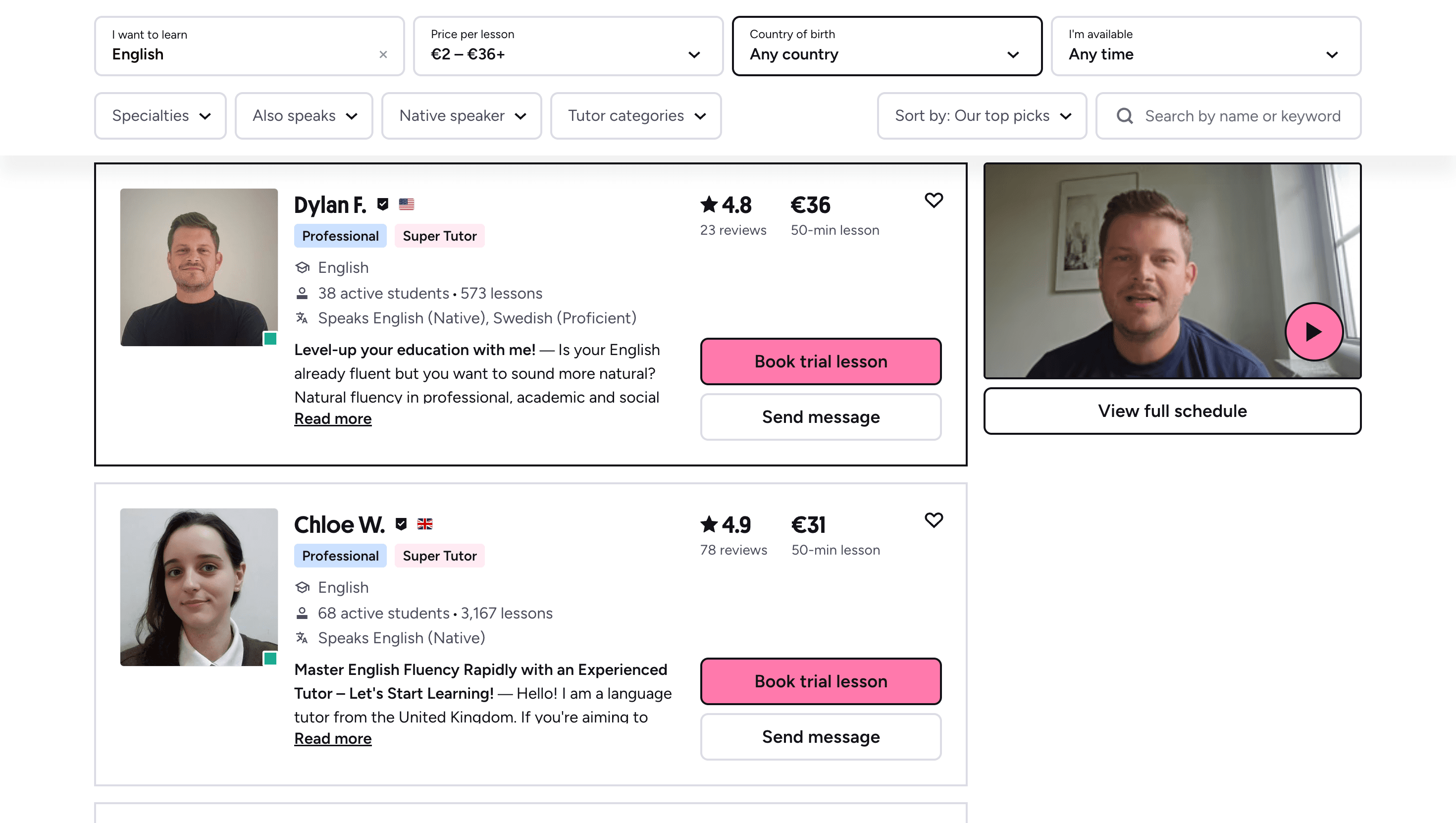
Many learners give up on language learning due to these high costs, missing out on valuable professional and personal opportunities.
That’s why we created Kylian: to make language learning accessible to everyone and help people master a foreign language without breaking the bank.
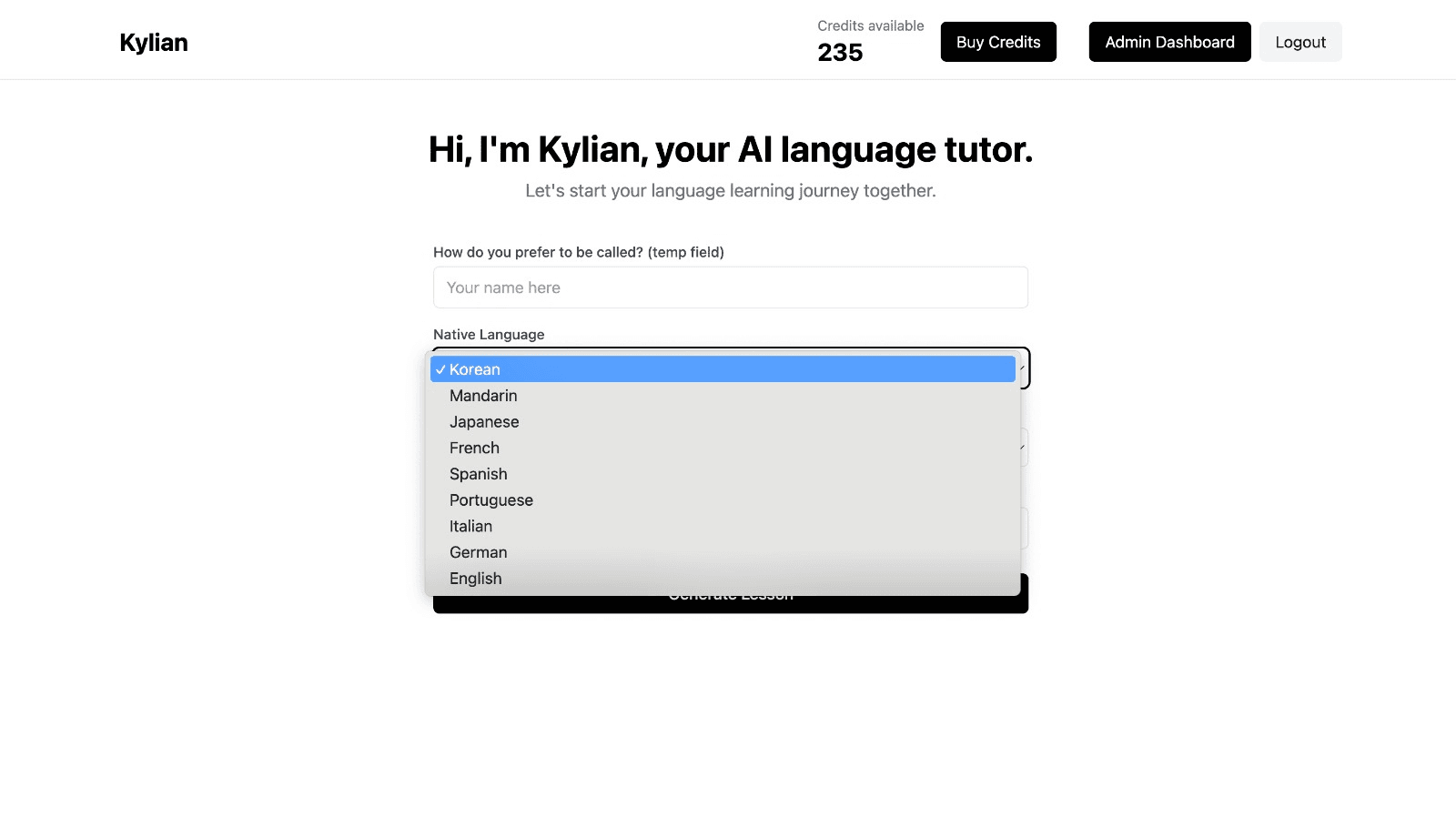
To get started, just tell Kylian which language you want to learn and what your native language is
Tired of teachers who don’t understand your specific struggles as a French speaker? Kylian’s advantage lies in its ability to teach any language using your native tongue as the foundation.
Unlike generic apps that offer the same content to everyone, Kylian explains concepts in your native language (French) and switches to the target language when necessary—perfectly adapting to your level and needs.
This personalization removes the frustration and confusion that are so common in traditional language learning.
Choose a specific topic you want to learn
Frustrated by language lessons that never cover exactly what you need? Kylian can teach you any aspect of a language—from pronunciation to advanced grammar—by focusing on your specific goals.
Avoid vague requests like “How can I improve my accent?” and be precise: “How do I pronounce the R like a native English speaker?” or “How do I conjugate the verb ‘to be’ in the present tense?”
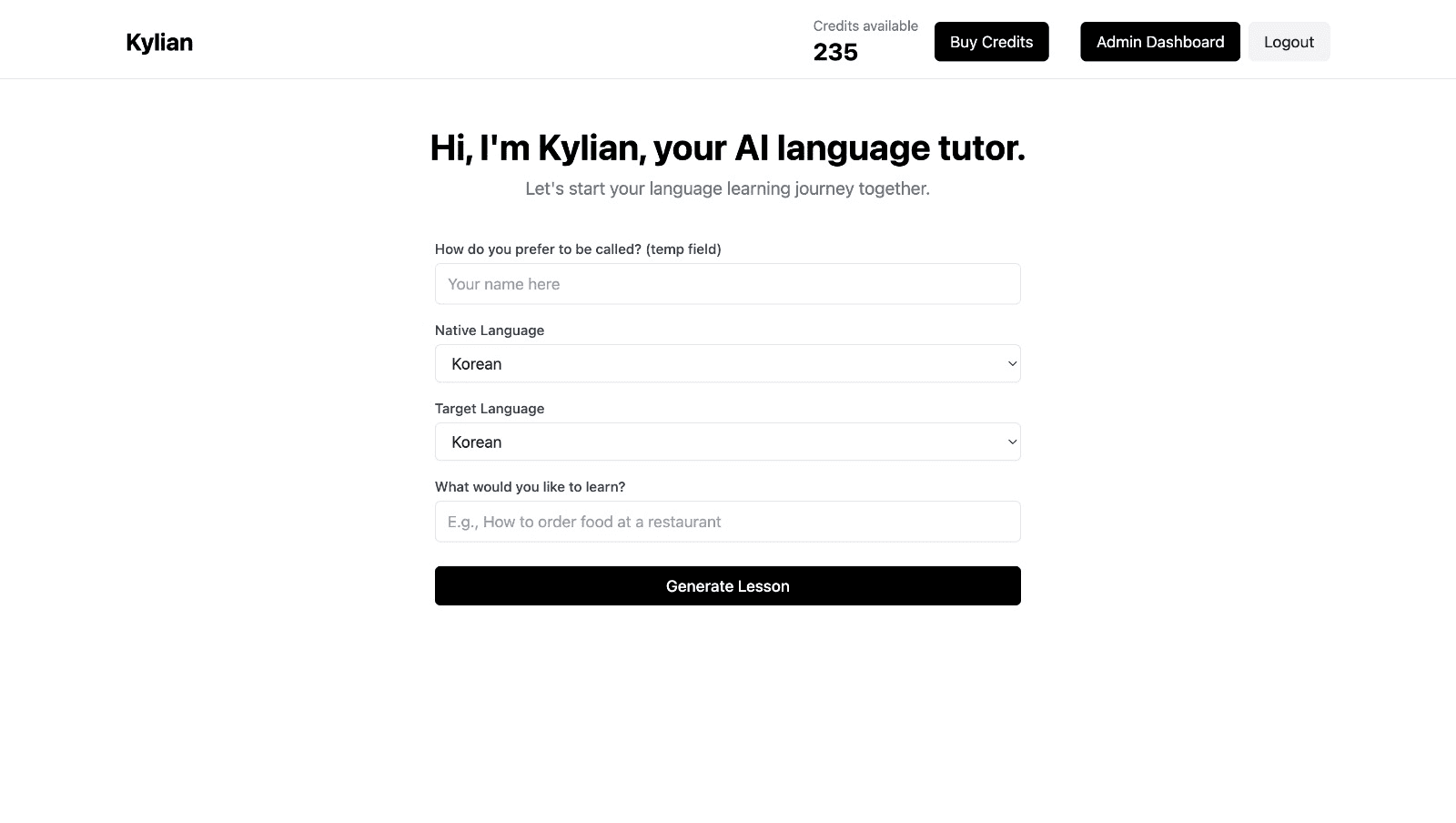
With Kylian, you’ll never again pay for irrelevant content or feel embarrassed asking “too basic” questions to a teacher. Your learning plan is entirely personalized.
Once you’ve chosen your topic, just hit the “Generate a Lesson” button, and within seconds, you’ll get a lesson designed exclusively for you.
Join the room to begin your lesson
The session feels like a one-on-one language class with a human tutor—but without the high price or time constraints.
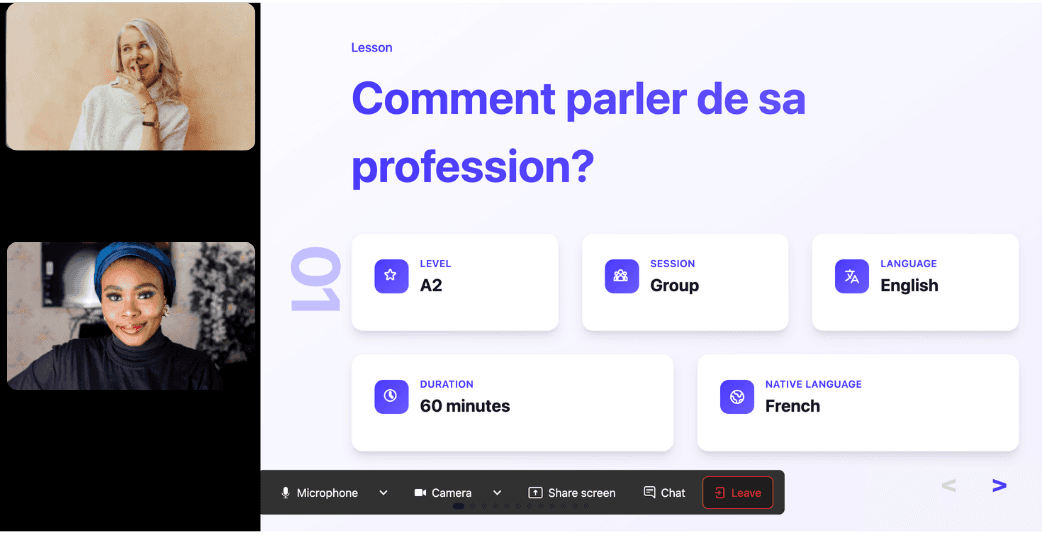
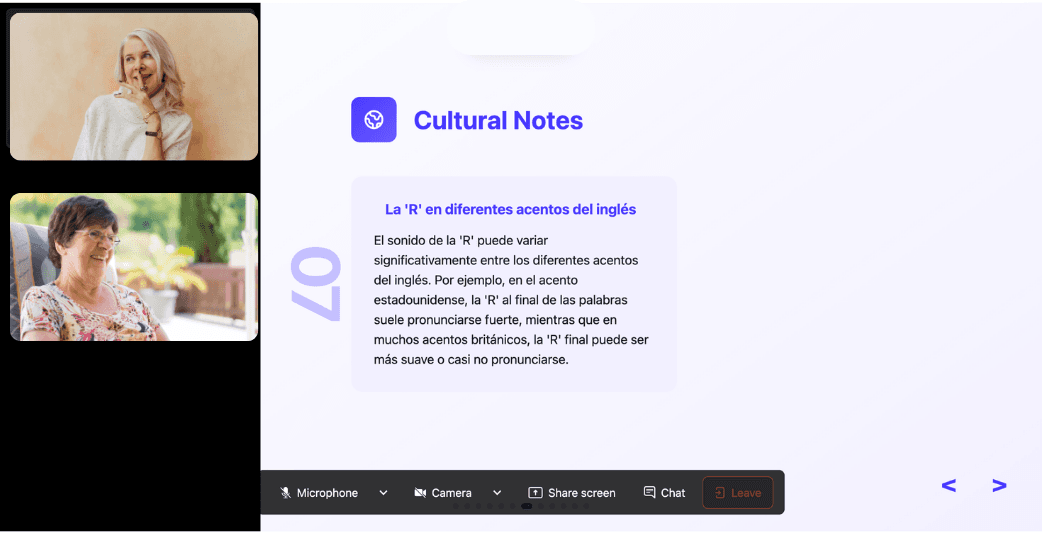
In a 25-minute lesson, Kylian teaches exactly what you need to know about your chosen topic: the nuances that textbooks never explain, key cultural differences between French and your target language, grammar rules, and much more.
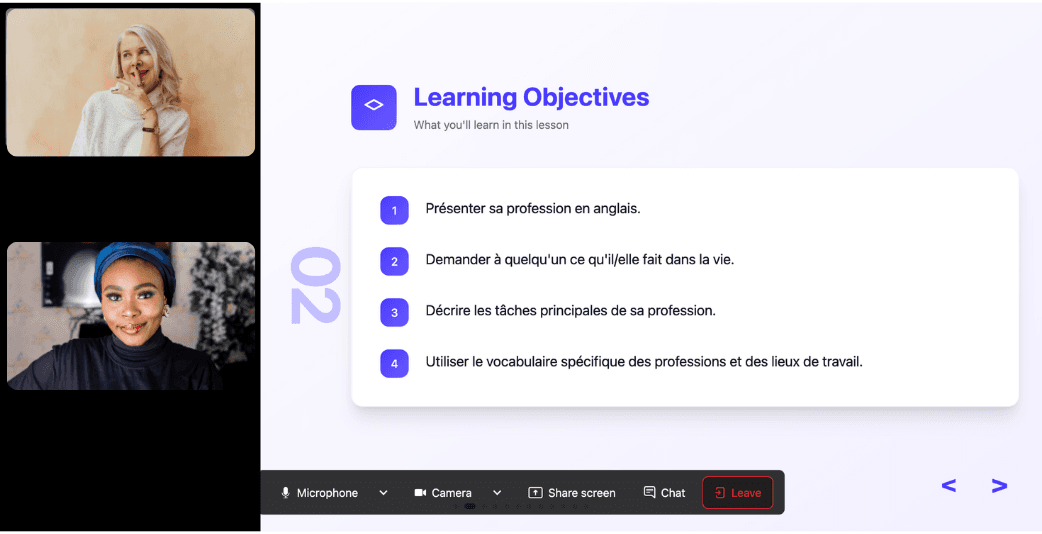
Ever felt frustrated trying to keep up with a native-speaking teacher, or embarrassed to ask for something to be repeated? With Kylian, that problem disappears. It switches intelligently between French and the target language depending on your level, helping you understand every concept at your own pace.
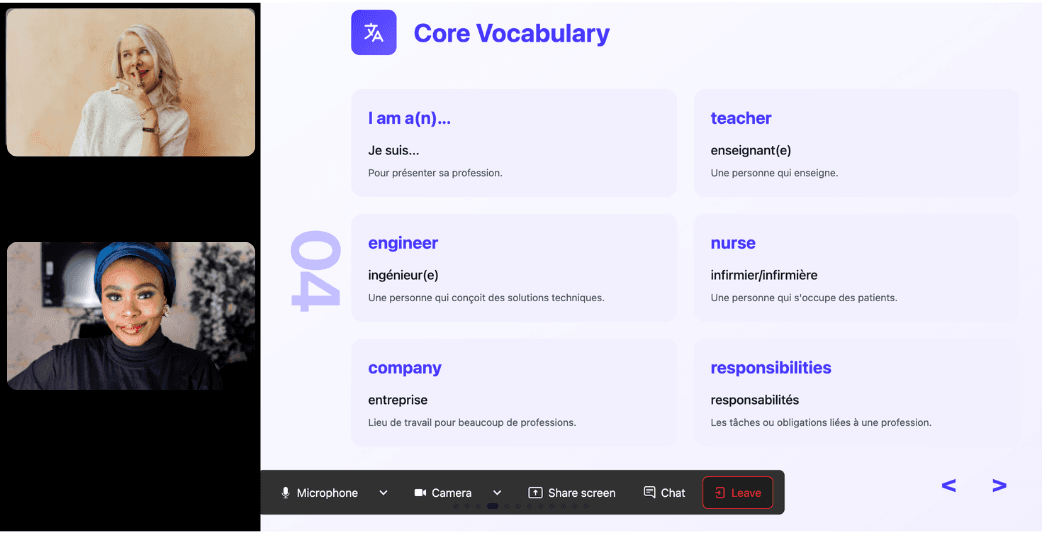
During the lesson, Kylian uses role-plays, real-life examples, and adapts to your learning style. Didn’t understand something? No problem—you can pause Kylian anytime to ask for clarification, without fear of being judged.
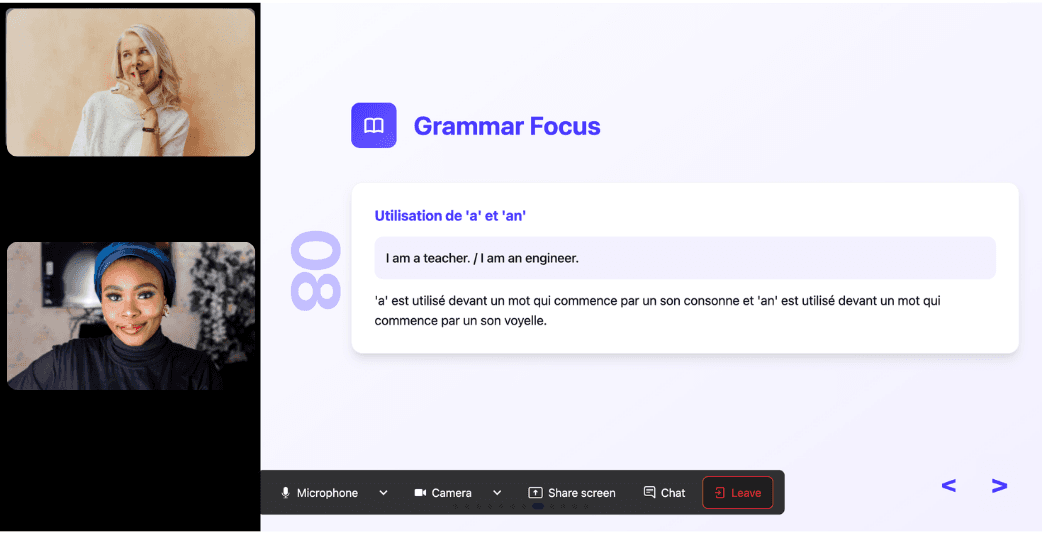
Ask all the questions you want, repeat sections if needed, and customize your learning experience in ways traditional teachers and generic apps simply can’t match.
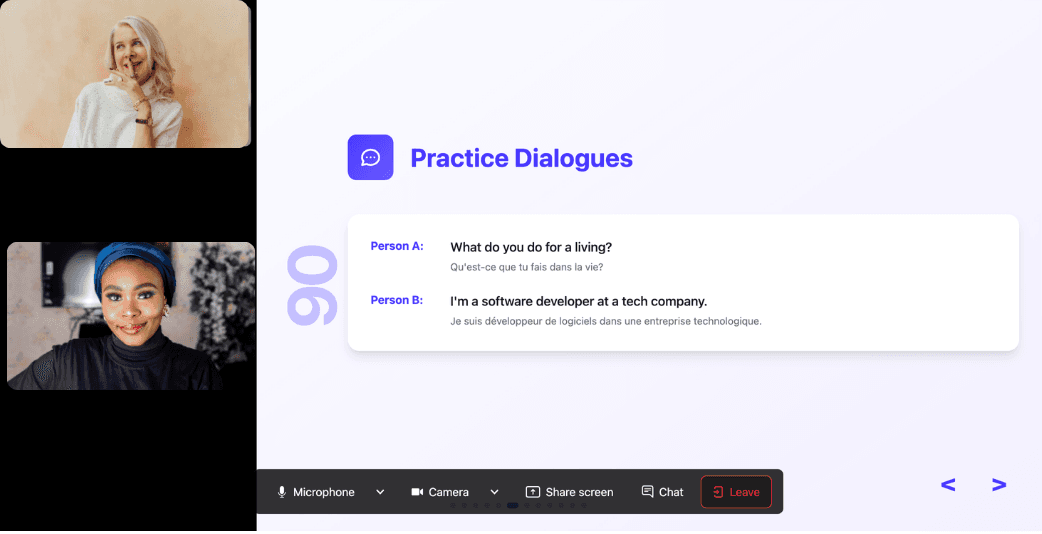
With 24/7 access at a fraction of the cost of private lessons, Kylian removes all the barriers that have kept you from mastering the language you’ve always wanted to learn.