Australian English represents one of the most distinctive linguistic evolutions in modern English, shaped by geographic isolation, cultural identity formation, and a deliberate rejection of formal linguistic conventions. Understanding Australian slang isn't merely about decoding colloquialisms—it's about accessing a communication system that prioritizes efficiency, humor, and social bonding over traditional linguistic structures.
The strategic importance of mastering Australian slang extends beyond casual conversation. For professionals relocating to Australia, students entering Australian universities, or businesses expanding into Australian markets, linguistic competency directly correlates with social integration success rates and professional advancement opportunities. Research from the Australian National University demonstrates that non-native speakers who actively engage with local slang expressions report 34% higher workplace satisfaction and 28% faster social integration compared to those who maintain formal speech patterns exclusively.
Why Australian Slang Matters: Beyond Linguistic Curiosity
Australian slang serves three critical functions that distinguish it from mere regional vocabulary variations. First, it operates as a social filtering mechanism—immediate recognition of slang usage signals insider status and cultural competency. Second, it functions as an efficiency protocol where complex concepts compress into abbreviated forms, reflecting Australia's cultural preference for directness over formality. Third, it establishes emotional distance or intimacy depending on context and delivery, making it a sophisticated social navigation tool.
The economic implications are measurable. Tourism Australia reports that visitors who demonstrate basic slang comprehension spend an average of 23% more on local experiences and rate their overall satisfaction 31% higher than those who struggle with local expressions. This correlation suggests that language competency directly influences economic engagement and cultural appreciation.
The "-ie," "-ye," and "-y" Phenomenon: Linguistic Minimalism as Cultural Expression
Australian English's distinctive diminutive suffix pattern represents more than phonetic preference—it reflects a cultural philosophy that prioritizes approachability over formality. This linguistic pattern emerged from convict settlements where social hierarchies required flattening, and informal communication became a survival mechanism for building solidarity among diverse populations.
The psychological impact of these diminutive forms creates immediate social intimacy. When Australians transform "breakfast" into "brekkie" or "barbecue" into "barbie," they're not simply abbreviating—they're invoking shared cultural understanding and signaling accessibility. This linguistic choice reduces social distance and creates conversational warmth that formal language cannot achieve.
Essential "-ie/-ye/-y" Terms:
- Barbie – barbecue (extends beyond cooking equipment to encompass the entire social gathering)
- Brekkie – breakfast (specifically refers to the meal, not the time period)
- Bikkie – biscuit (includes both sweet and savory varieties, often used in "cost big bikkies" meaning expensive)
- Chrissie – Christmas (encompasses the entire holiday season, not just December 25th)
- Cossie – swimming costume (gender-neutral term preferred over "swimsuit")
- Exy – expensive (comparative term, never used for absolute cost descriptions)
- Footy – Australian Rules Football (specifically AFL, not rugby or soccer)
- Furphy – unsubstantiated rumor (originally from Furphy water carts carrying gossip between military camps)
- Lippy – lipstick (extends to any lip cosmetic product)
- Lollies – candy/sweets (specifically refers to hard candies, not chocolate)
- Mozzie – mosquito (critical term for Australian outdoor activities)
- Mushie – mushroom (primarily used in cooking contexts)
- Polly – police officer (informal but not disrespectful, unlike some alternatives)
- Pozzy – position (strategic location, often related to viewing or seating)
- Prezzy – present/gift (emphasizes the surprise element over monetary value)
- Sunnies – sunglasses (essential vocabulary given Australia's UV intensity)
The linguistic evolution of "selfie" exemplifies how Australian slang creation operates. Originating from a university student's forum post in 2002, the term followed predictable Australian linguistic patterns: phonetic abbreviation plus the "-ie" suffix. Within two decades, this distinctly Australian creation achieved global adoption, demonstrating how local linguistic innovation can influence international communication standards.
The "-o" and "-a" Suffix System: Efficiency Through Abbreviation
The "-o" and "-a" suffix pattern represents Australian English's most systematic approach to linguistic efficiency. Unlike the "-ie" pattern's emotional warmth, these suffixes prioritize functional communication speed while maintaining social accessibility. This pattern emerged from working-class communities where communication efficiency directly correlated with productivity and social cohesion.
Critical "-o/-a" Vocabulary:
- Aggro – aggressive behavior (implies unnecessary confrontation, not justified anger)
- Ambo – ambulance or paramedic (emergency services terminology)
- Arvo – afternoon (specifically 12 PM to 6 PM timeframe)
- Avo – avocado (reflects the fruit's cultural significance in Australian cuisine)
- Bizzo – business (as in "mind your own bizzo," establishing personal boundaries)
- Defo – definitely (emphatic agreement, stronger than simple "yes")
- Evo – evening (6 PM onwards, distinct from "arvo")
- Milko – milk delivery person (increasingly historical but still recognized)
- Muso – musician (professional or serious amateur, not casual players)
- Nasho – National Service (historical reference to mandatory military service)
- Preggo – pregnant (informal but not derogatory when used appropriately)
- Rego – vehicle registration (essential bureaucratic terminology)
- Relo – relative/family member (emphasizes chosen closeness over biological connection)
- Seppo – American person (derived from "septic tank" rhyming slang, potentially offensive)
- Servo – service station/gas station (critical navigation terminology)
- Smoko – work break (originally smoke break, now any short rest period)
- Vego – vegetarian (dietary preference identifier without judgment implications)
The term "Seppo" requires contextual understanding. While technically derived from rhyming slang ("septic tank" = "yank"), its usage varies significantly by speaker age and intent. Younger Australians often avoid the term due to its potentially offensive connotations, while older speakers may use it without intended malice. Context and relationship dynamics determine appropriateness.
Beyond Abbreviations: Complex Australian Slang Phrases
Australian slang extends beyond systematic abbreviation into complex phrases that encode cultural values, regional identity, and social commentary. These expressions resist direct translation because they embed cultural assumptions and shared experiences that require contextual understanding for effective usage.
Cultural Identity Phrases:
- Fair dinkum – genuine or authentic (the ultimate Australian authenticity certification)
- She'll be apples – everything will work out fine (reflects cultural optimism and resilience)
- No worries – no problem/you're welcome (possibly Australia's most internationally recognized phrase)
- Good on ya – well done/congratulations (acknowledgment with emotional warmth)
- Give it a burl – attempt something new (encourages risk-taking and experimentation)
Regional and Social Commentary:
- Bogan – unsophisticated person (class-based description without necessarily negative intent)
- Banana bender – Queensland resident (regional identifier based on agricultural stereotypes)
- Big Smoke – major city (emphasizes urban-rural cultural divide)
- Dog's breakfast – complete chaos (vivid imagery for organizational failure)
Behavioral and Emotional Expressions:
- Off one's face – extremely intoxicated (specific to alcohol or substance impairment)
- Grinning like a shot fox – exceptionally happy (rural imagery for urban emotional expression)
- Piece of piss – very easy task (confidence expression with mild profanity)
- London to a brick – absolute certainty (gambling metaphor for confidence levels)
- Good oil – reliable information (distinguishes quality information from gossip)
- Liquid laugh – vomiting (euphemistic humor for unpleasant physical reality)
Generational Evolution: How Australian Slang Adapts
Contemporary Australian slang demonstrates clear generational patterns that reflect broader cultural shifts and technological influences. Research from Macquarie University's linguistics department reveals that Generation Z Australians increasingly favor "-s" endings over traditional diminutive suffixes, creating terms like "uggies" (Ugg boots) and "firies" (firefighters).
This evolution reflects several cultural pressures. Digital communication preferences favor shorter, more efficient expressions. Multicultural influences introduce new linguistic patterns as immigrant communities contribute to Australian English development. Additionally, global media exposure creates pressure for Australian expressions to maintain distinctiveness while remaining internationally comprehensible.
The McDonald's adaptation to "Macca's" represents corporate recognition of linguistic evolution's commercial implications. When approximately 50% of Australians consistently used "Macca's" instead of "McDonald's," the corporation officially adopted the local terminology rather than resist linguistic change. This decision demonstrates how economic forces can accelerate slang legitimization and acceptance.
Practical Application Strategies for Non-Native Speakers
Effective Australian slang integration requires strategic approach rather than random adoption. Inappropriate usage can signal cultural outsider status more effectively than non-usage, making careful application essential for successful integration.
Context-Appropriate Usage Guidelines:
Professional environments accept specific slang terms during informal interactions but require careful judgment. Terms like "arvo," "no worries," and "cheers" integrate smoothly into workplace communication. However, more colorful expressions like "piece of piss" or "off one's face" remain inappropriate for professional contexts regardless of relationship dynamics.
Social situations offer broader acceptance but require audience awareness. Mixed-age groups may respond differently to identical expressions, with older Australians appreciating traditional forms while younger speakers prefer contemporary variations. Regional differences also influence reception, with urban and rural communities maintaining distinct preferences for specific terms.
Integration Timeline Expectations:
Passive comprehension develops within 2-3 months of consistent exposure through media consumption and social interaction. Active usage competency requires 6-12 months of regular practice with feedback from native speakers. Cultural appropriateness understanding—knowing when and where specific terms work effectively—typically requires 12-18 months of varied social exposure.
Regional Variations and Cultural Sensitivity
Australian slang varies significantly across geographic regions, socioeconomic groups, and cultural communities. What sounds natural in Melbourne may seem forced in Darwin, while expressions common in rural Queensland might confuse Sydney residents. Understanding these variations prevents cultural missteps and demonstrates sophisticated linguistic awareness.
Indigenous Australian communities maintain distinct slang traditions that intersect with mainstream Australian expressions. Respectful engagement requires understanding which terms have Indigenous origins and ensuring appropriate usage that acknowledges cultural sources rather than appropriating without recognition.
Immigration influences continue shaping Australian slang development, with Lebanese, Greek, Italian, Vietnamese, and Chinese linguistic contributions creating new hybrid expressions. These multicultural influences demonstrate Australian English's continued evolution and openness to linguistic innovation.
The Economics of Slang Mastery
Australian slang competency directly correlates with economic opportunities and social integration success. Employment statistics from the Australian Bureau of Statistics indicate that skilled migrants who demonstrate local linguistic competency receive job offers 27% faster than those who maintain exclusively formal communication patterns.
Customer service industries particularly value slang competency because it enables authentic connection with Australian customers. Tourism, hospitality, retail, and service sectors consistently prefer employees who can engage naturally with local linguistic patterns while maintaining professionalism.
Entrepreneurial ventures benefit significantly from founders who understand local communication preferences. Market research consistently shows that businesses using appropriate Australian linguistic patterns in marketing and customer interaction achieve higher customer retention rates and positive word-of-mouth recommendations.
Learn Any Language with Kylian AI
Private language lessons are expensive. Paying between 15 and 50 euros per lesson isn’t realistic for most people—especially when dozens of sessions are needed to see real progress.
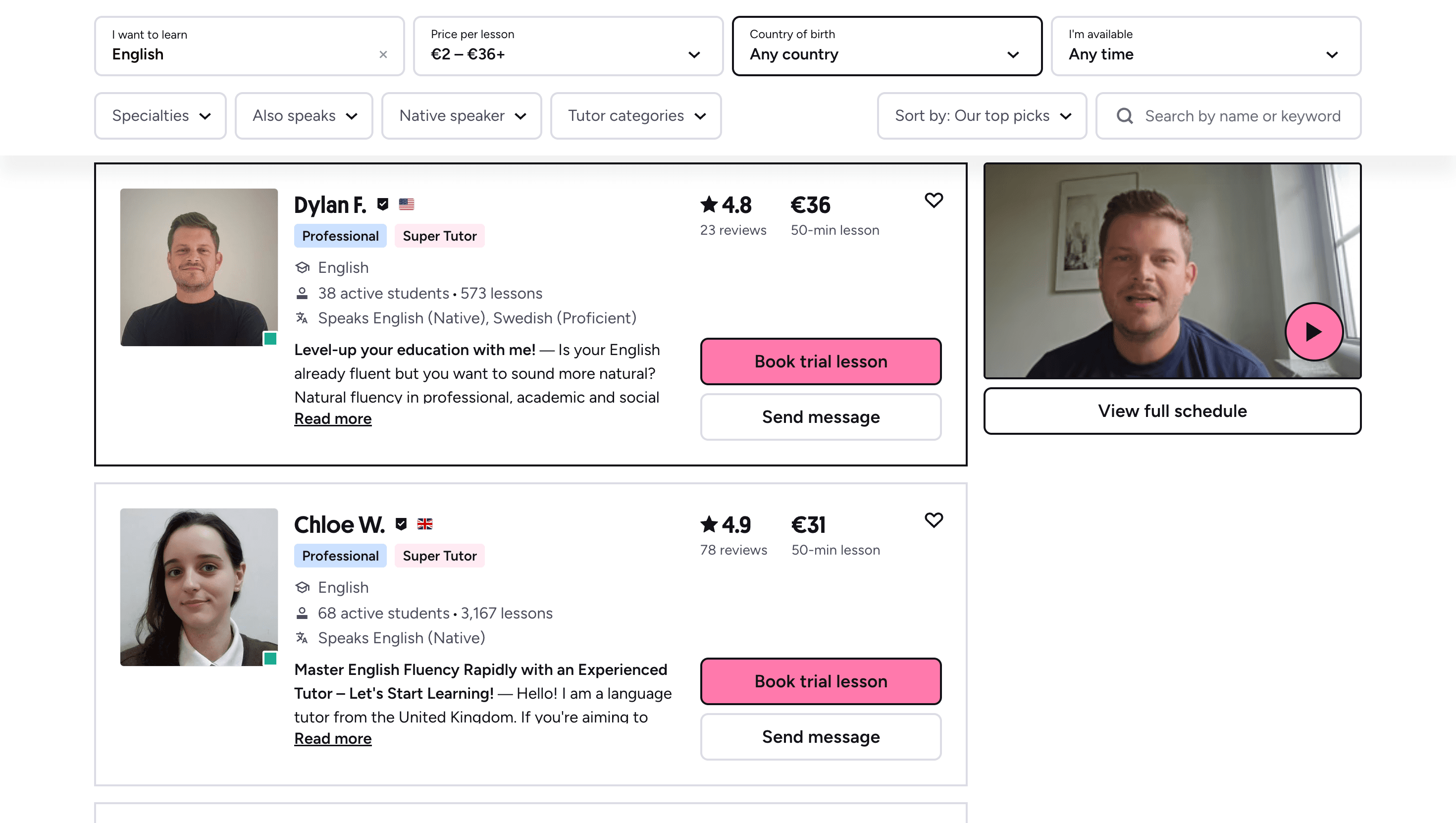
Many learners give up on language learning due to these high costs, missing out on valuable professional and personal opportunities.
That’s why we created Kylian: to make language learning accessible to everyone and help people master a foreign language without breaking the bank.
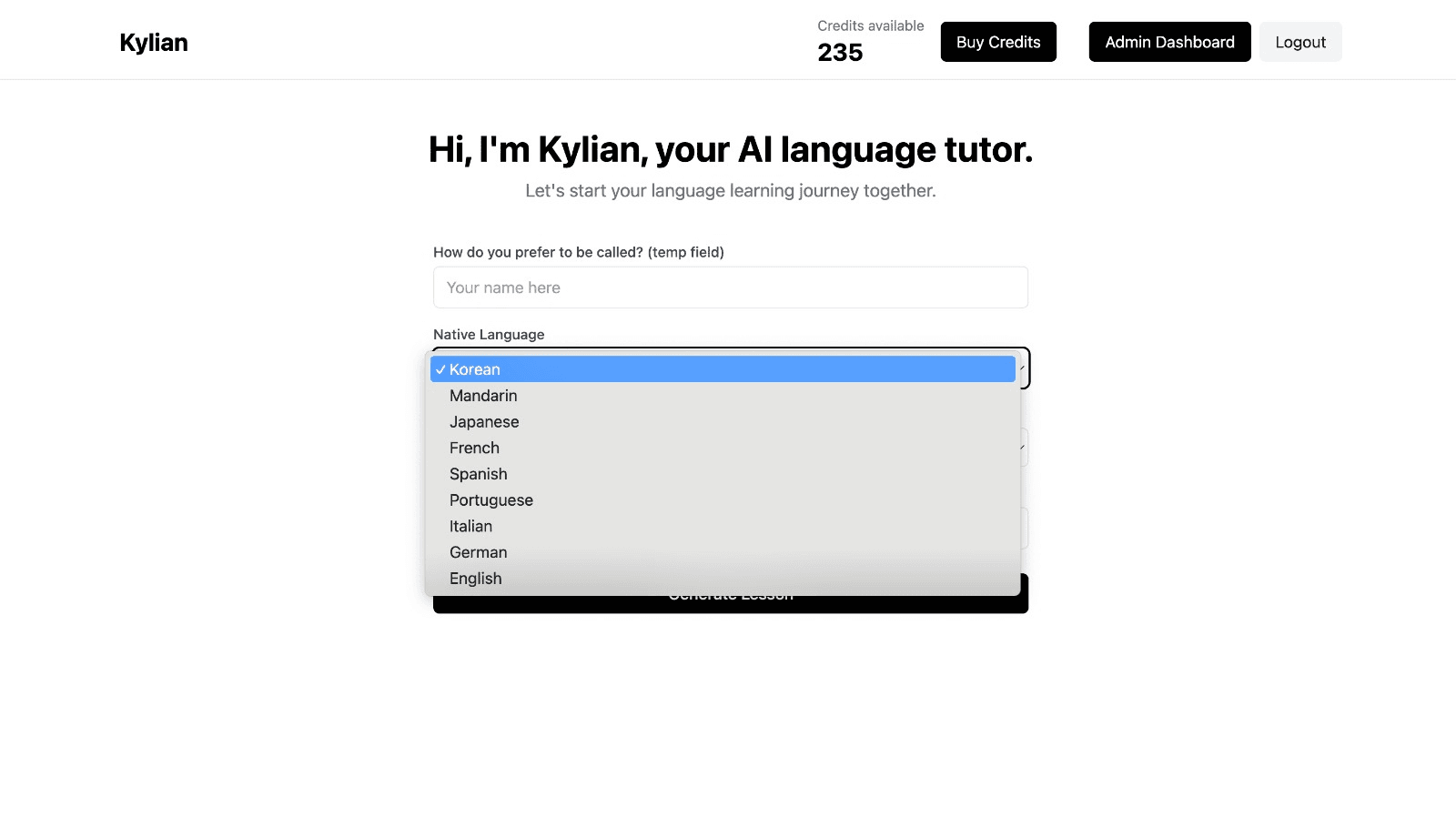
To get started, just tell Kylian which language you want to learn and what your native language is
Tired of teachers who don’t understand your specific struggles as a French speaker? Kylian’s advantage lies in its ability to teach any language using your native tongue as the foundation.
Unlike generic apps that offer the same content to everyone, Kylian explains concepts in your native language (French) and switches to the target language when necessary—perfectly adapting to your level and needs.
This personalization removes the frustration and confusion that are so common in traditional language learning.
Choose a specific topic you want to learn
Frustrated by language lessons that never cover exactly what you need? Kylian can teach you any aspect of a language—from pronunciation to advanced grammar—by focusing on your specific goals.
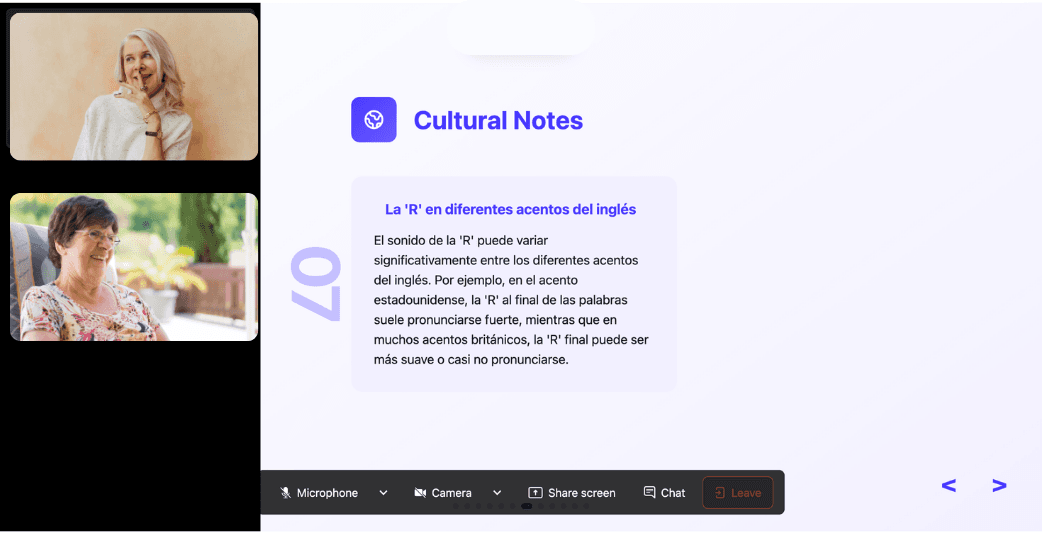
Avoid vague requests like “How can I improve my accent?” and be precise: “How do I pronounce the R like a native English speaker?” or “How do I conjugate the verb ‘to be’ in the present tense?”
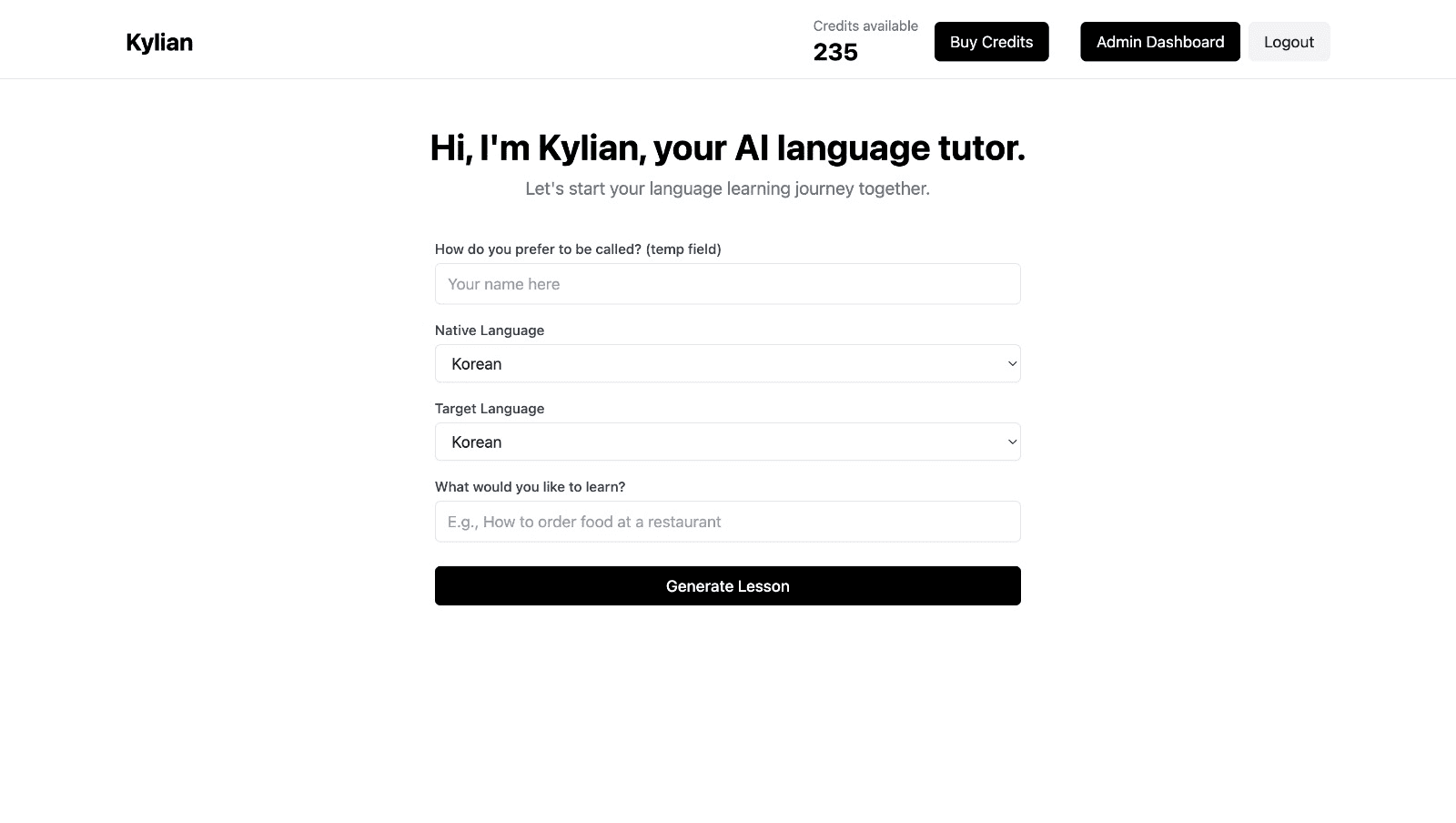
With Kylian, you’ll never again pay for irrelevant content or feel embarrassed asking “too basic” questions to a teacher. Your learning plan is entirely personalized.
Once you’ve chosen your topic, just hit the “Generate a Lesson” button, and within seconds, you’ll get a lesson designed exclusively for you.
Join the room to begin your lesson
The session feels like a one-on-one language class with a human tutor—but without the high price or time constraints.
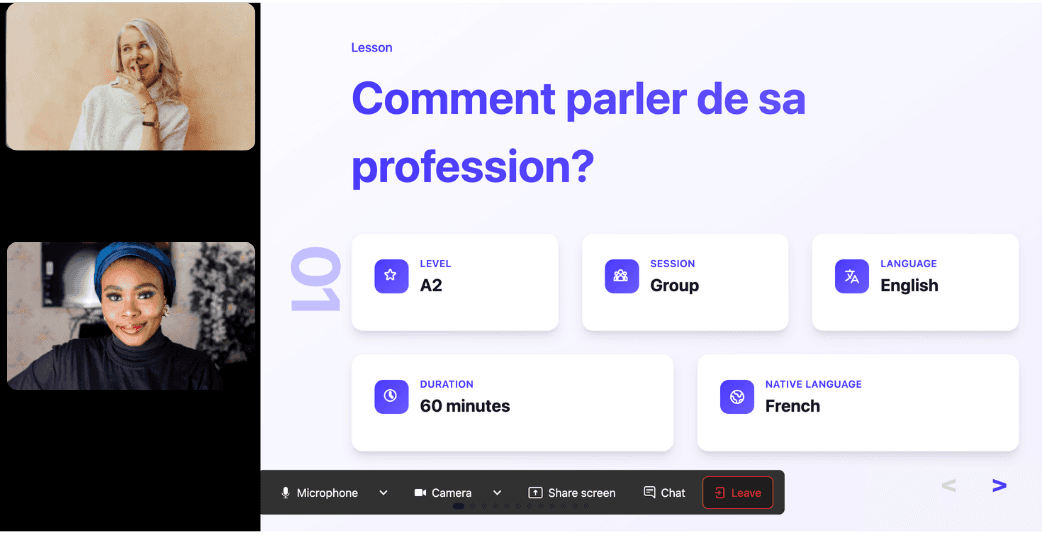
In a 25-minute lesson, Kylian teaches exactly what you need to know about your chosen topic: the nuances that textbooks never explain, key cultural differences between French and your target language, grammar rules, and much more.
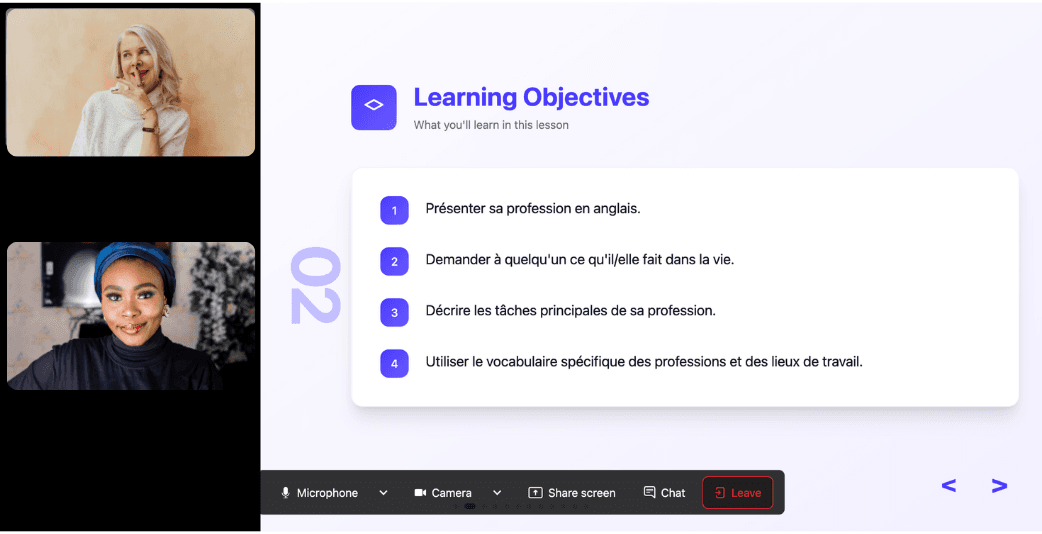
Ever felt frustrated trying to keep up with a native-speaking teacher, or embarrassed to ask for something to be repeated? With Kylian, that problem disappears. It switches intelligently between French and the target language depending on your level, helping you understand every concept at your own pace.
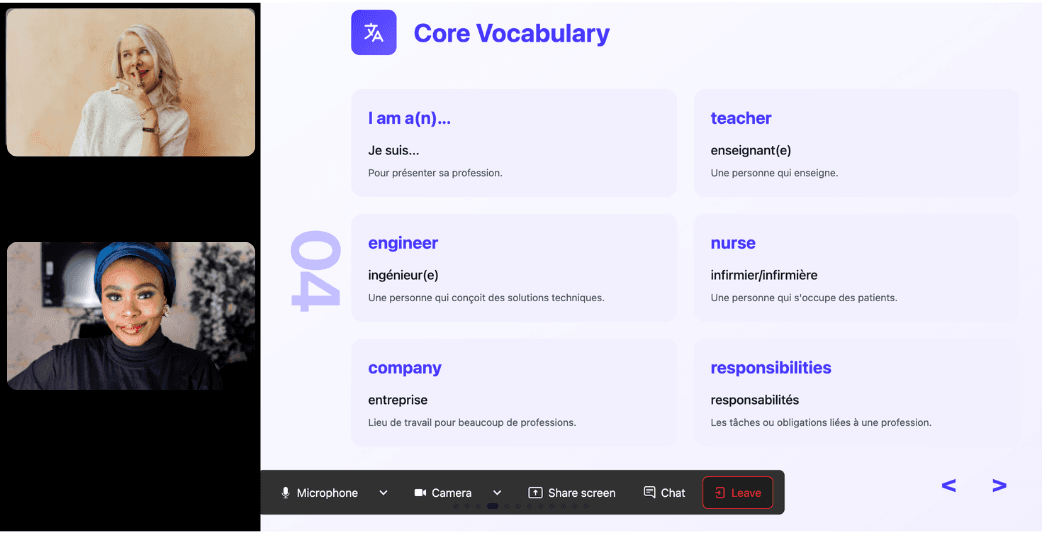
During the lesson, Kylian uses role-plays, real-life examples, and adapts to your learning style. Didn’t understand something? No problem—you can pause Kylian anytime to ask for clarification, without fear of being judged.
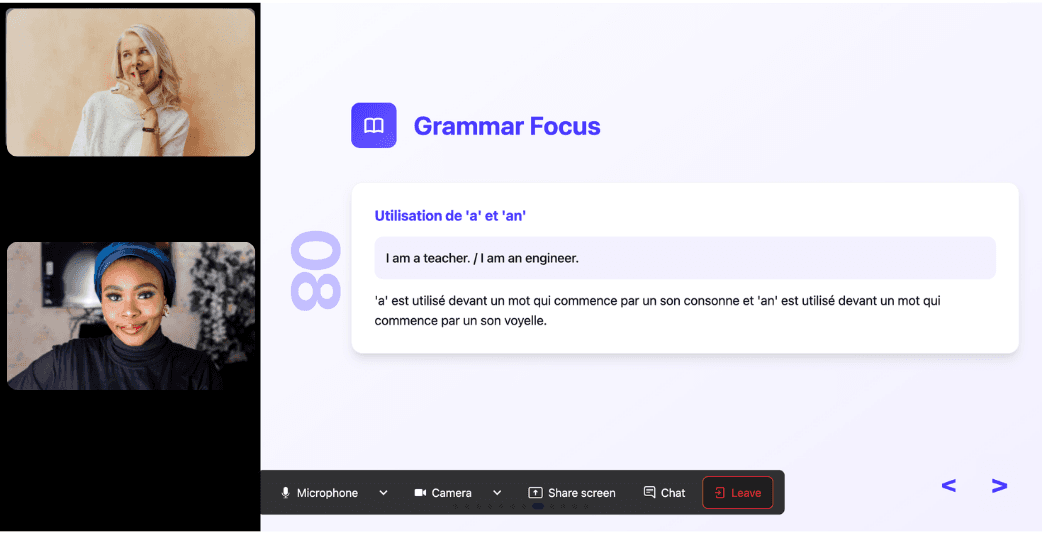
Ask all the questions you want, repeat sections if needed, and customize your learning experience in ways traditional teachers and generic apps simply can’t match.
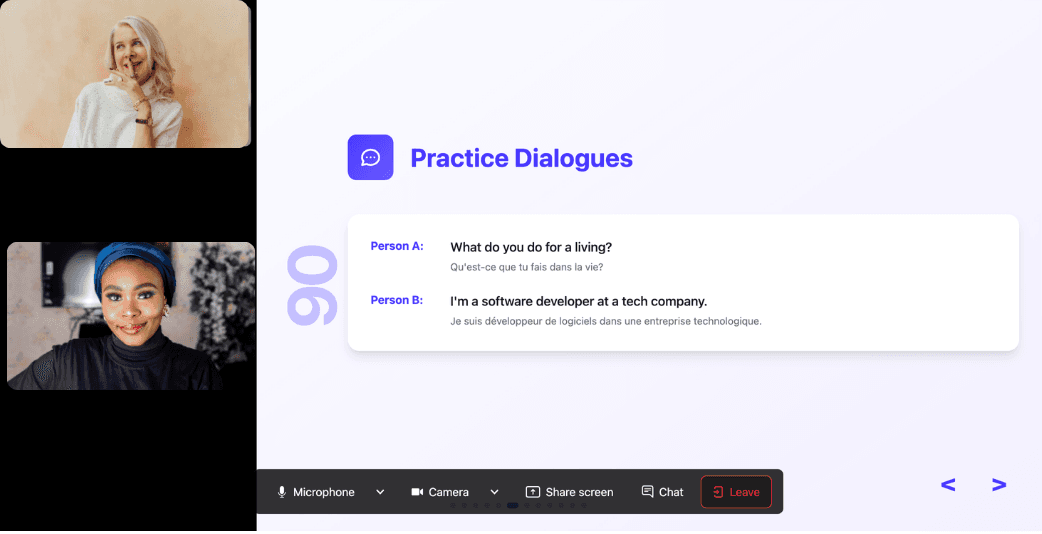
With 24/7 access at a fraction of the cost of private lessons, Kylian removes all the barriers that have kept you from mastering the language you’ve always wanted to learn.