

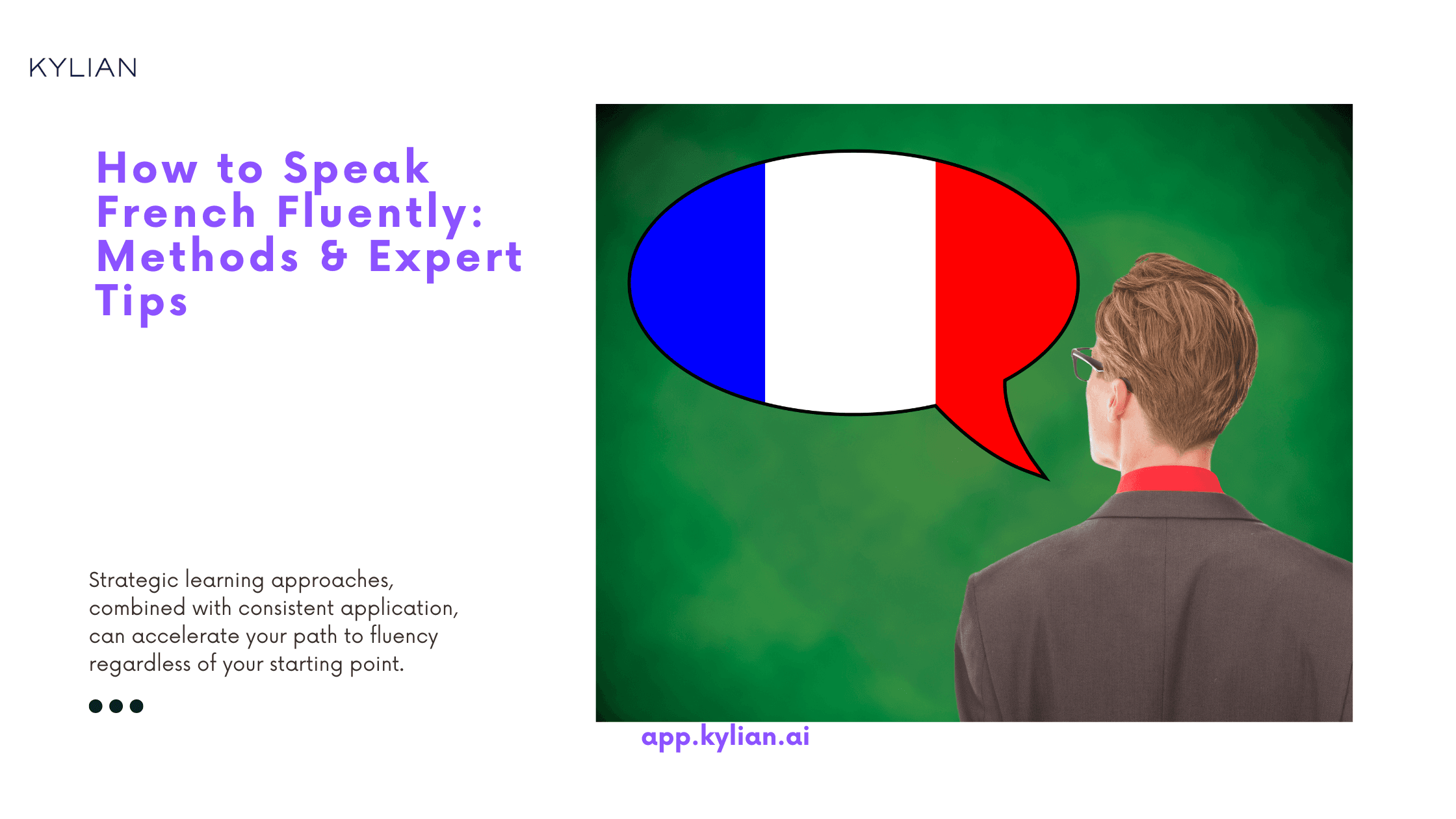
French fluency represents more than linguistic competence—it unlocks access to 280 million speakers across five continents and positions you within a global economic network worth $2.8 trillion. Yet most learners abandon their French studies within six months, citing complexity and time constraints.
The distinction between successful French speakers and those who quit lies not in natural talent but in methodology. Strategic learning approaches, combined with consistent application, can accelerate your path to fluency regardless of your starting point.
Educational Methods for French Fluency
Private Tutoring: The Accelerated Path
One-on-one instruction delivers measurable advantages over group settings. Research from the Educational Testing Service demonstrates that individualized instruction produces learning gains 2.3 times greater than traditional classroom methods.
Core Benefits:
- Immediate error correction prevents fossilization of mistakes
- Customized curriculum targeting your specific weaknesses
- Flexible scheduling accommodating professional commitments
- Real-time conversation practice with instant feedback
Strategic Considerations: Private tutoring requires significant financial investment, typically ranging from $25-75 per hour depending on instructor qualifications. The constraint lies in instructor availability—qualified tutors often maintain full schedules, limiting session frequency.
Platform-based tutoring services address these limitations by connecting learners with instructors across time zones. This model provides 24/7 availability while maintaining competitive pricing through global instructor networks. However, quality varies significantly between platforms, requiring careful instructor selection based on teaching credentials and student reviews.
The effectiveness of private tutoring hinges on session frequency and duration. Language acquisition research indicates that 3-4 hours of weekly instruction produces optimal retention rates while preventing cognitive overload.
Structured Classroom Learning
Traditional classroom environments provide social learning dynamics that enhance motivation and retention. The peer interaction element creates accountability mechanisms often absent in self-study approaches.
Advantages:
- Structured curriculum progression ensures comprehensive coverage
- Group discussions develop conversational confidence
- Professional instruction with systematic error correction
- Social learning environment increases engagement
Limitations: Classroom pace accommodates the average learner, potentially frustrating advanced students or overwhelming beginners. The group dynamic limits individual attention—in a typical 90-minute class with 12 students, each participant receives approximately 7.5 minutes of direct instructor interaction.
Schedule rigidity presents another constraint. Missing sessions creates knowledge gaps that compound over time, yet makeup options remain limited. Cost-per-hour often exceeds private tutoring when calculated against actual individual attention received.
The methodology employed by the institution significantly impacts outcomes. Communicative Language Teaching approaches, emphasizing practical application over grammatical theory, produce superior speaking results compared to traditional grammar-translation methods.
Digital Learning Platforms
Technology-enabled learning transforms dead time into productive study sessions. Mobile applications and web-based platforms provide unprecedented flexibility and engagement through gamification elements.
Strengths:
- Accessibility: Study anywhere with internet connectivity
- Cost-effectiveness: Many platforms offer free or low-cost options
- Gamification increases motivation through progress tracking
- Adaptive algorithms customize difficulty based on performance
Critical Limitations: Digital platforms excel at vocabulary acquisition and grammar recognition but fail to develop speaking and writing proficiency. The absence of human interaction prevents authentic conversation practice—the cornerstone of fluency development.
Most applications focus on discrete skill development rather than integrated language use. While useful for foundational knowledge, they cannot replace human-mediated instruction for advanced proficiency.
The gamification element, while initially motivating, often prioritizes streak maintenance over meaningful learning. This creates a false sense of progress that doesn't translate to real-world communication ability.
Intensive Immersion Programs
Immersion programs replicate natural language acquisition conditions by eliminating native language use. These intensive environments force rapid adaptation and breakthrough plateaus that traditional methods cannot overcome.
French immersion programs in Quebec, France, and Belgium report average proficiency gains equivalent to two years of traditional classroom instruction within 4-6 weeks. However, success requires significant time commitment and financial resources.
The psychological pressure of immersion accelerates learning but can overwhelm unprepared students. Optimal preparation includes intermediate-level proficiency before beginning immersion programs.
Strategic Framework for French Fluency
Immediate Speaking Implementation
The delayed gratification approach—studying grammar and vocabulary before attempting speech—contradicts neurological research on language acquisition. The brain develops speaking pathways through use, not preparation.
Polyglot Benny Lewis's documentation of 50+ language acquisitions reveals that speaking from day one reduces fluency timeline by 40-60%. This approach leverages neuroplasticity more effectively than traditional study-then-speak methodologies.
Implementation Strategy: Begin with simple present tense constructions expressing immediate needs: "Je veux" (I want), "J'ai besoin de" (I need), "Où est" (Where is). These high-frequency patterns provide immediate utility while building confidence.
Record yourself daily reading French texts aloud. Compare recordings weekly to track pronunciation improvement and identify persistent errors requiring focused attention.
Grammar as Foundation, Not Obstacle
French grammar complexity intimidates many learners, yet systematic understanding accelerates rather than impedes progress. The subjunctive mood, articles, and verb conjugations follow logical patterns that, once internalized, dramatically expand expressive capability.
Rather than memorizing conjugation tables, learn grammar through contextual application. The phrase "Il faut que je parte" (I have to leave) teaches subjunctive usage more effectively than abstract explanations.
Priority Grammar Elements:
- Present, passé composé, and imparfait tenses cover 80% of conversational needs
- Direct and indirect object pronouns eliminate redundancy
- Subjunctive mood for expressing necessity, emotion, and doubt
- Conditional tense for politeness and hypothetical situations
Focus on high-frequency verbs: être, avoir, faire, aller, and pouvoir appear in 60% of French conversations. Master these completely before progressing to irregular verbs.
Strategic Vocabulary Development
Vocabulary acquisition requires systematic prioritization. The 2,000 most common French words comprise 80% of spoken language, yet most textbooks scatter attention across thousands of low-frequency terms.
Frequency-Based Learning: Target cognates first—words sharing Latin or Germanic roots with English. Examples include "hôpital" (hospital), "université" (university), and "information" (information). These provide immediate recognition benefits.
Focus on word families rather than isolated terms. Learning "vendre" (to sell) simultaneously introduces "vendeur" (seller), "vente" (sale), and "vendable" (sellable), quadrupling vocabulary efficiency.
Use spaced repetition systems for long-term retention. Research from Hermann Ebbinghaus demonstrates that reviewing vocabulary at increasing intervals (1 day, 3 days, 1 week, 2 weeks, 1 month) achieves 90% retention rates compared to 20% for massed practice.
Pronunciation Mastery
French pronunciation follows consistent rules once patterns are recognized. The nasal vowels /ã/, /ɛ̃/, and /ɔ̃/ distinguish French from other Romance languages but follow predictable spelling patterns.
Systematic Approach: Record yourself reading poetry aloud. French poetry emphasizes syllable stress and liaison patterns essential for natural speech rhythm. Compare your recordings with native speaker renditions to identify discrepancies.
Focus on liaison rules—the connection between word-final consonants and following vowels. "Les amis" /le.za.mi/ rather than /le a.mi/ marks advanced proficiency and native-like fluency.
Practice minimal pairs: words differing by single sounds like "rue" /ry/ and "roue" /ru/. These distinctions prevent communication breakdowns and demonstrate pronunciation precision.
Authentic Audio Exposure
Passive listening provides subconscious language pattern recognition that complements active study. However, random audio exposure produces minimal results—strategic selection based on proficiency level and content type maximizes benefits.
Progressive Audio Strategy: Begin with news broadcasts featuring clear pronunciation and formal register. France Inter and Radio France International provide standardized pronunciation models.
Progress to podcasts addressing personal interests. "Les Regardeurs" (film criticism) or "Transfert" (personal stories) maintain engagement while developing listening skills.
Integrate French music strategically. While enjoyable, music's altered pronunciation and poetic language can reinforce incorrect patterns. Use music for motivation rather than pronunciation modeling.
Native Speaker Interaction
Conversation with native speakers provides authentic feedback unavailable through other methods. However, casual exchanges often lack the structured correction necessary for improvement.
Optimization Strategies: Language exchange partnerships offer reciprocal benefits but require careful management. Establish clear correction protocols—interrupt for major errors but note minor mistakes for end-of-conversation review.
Online conversation platforms connect learners with native speakers globally. Italki, Tandem, and HelloTalk facilitate structured exchanges with built-in correction tools.
Prepare conversation topics in advance. Discussing familiar subjects allows focus on language mechanics rather than content generation, accelerating fluency development.
Environmental Immersion Techniques
Physical relocation to French-speaking regions provides optimal immersion but alternative approaches create similar conditions without geographical constraints.
Digital Immersion: Change device languages to French. This forces daily interaction with French vocabulary in practical contexts—navigating phones, computers, and applications.
Consume French media exclusively for designated periods. Netflix's French content library includes original productions with natural dialogue patterns unavailable in dubbed materials.
Think in French during routine activities. Internal monologue practice develops automatic language processing without external pressure.
The Compound Learning Effect
Combining multiple methodologies creates exponential rather than additive benefits. Private tutoring plus immersion techniques plus structured grammar study produces results exceeding the sum of individual approaches.
Integration Framework: Morning vocabulary review (15 minutes) + midday audio exposure (30 minutes) + evening conversation practice (45 minutes) creates consistent daily engagement totaling 90 minutes—manageable yet comprehensive.
Weekly intensive sessions (2-3 hours) focusing on challenging grammar concepts prevent plateau formation while daily practice maintains momentum.
Monthly proficiency assessments using standardized tests (DELF/DALF practice materials) provide objective progress measurement and identify areas requiring additional attention.
Advanced Fluency Strategies
Cultural Context Integration
Language and culture intertwine inseparably. Understanding French cultural references, humor patterns, and social conventions elevates communication from functional to sophisticated.
French conversation relies heavily on cultural allusions—references to literature, history, and current events that assume shared knowledge. Developing this cultural literacy requires systematic exposure to French media, literature, and social commentary.
Cultural Immersion Techniques: Read French newspapers daily, focusing on editorial sections that reveal cultural perspectives and values. Le Monde, Le Figaro, and Libération represent different political viewpoints, providing comprehensive cultural exposure.
Watch French films without subtitles, beginning with classics like "Les Parapluies de Cherbourg" and progressing to contemporary productions. Cinema provides cultural context while developing listening comprehension.
Error Analysis and Correction
Systematic error tracking accelerates improvement by identifying recurring mistakes for targeted correction. Most learners repeat the same errors indefinitely without conscious recognition.
Error Documentation System: Maintain a correction log noting recurring mistakes in specific categories: pronunciation, grammar, vocabulary misuse, and cultural inappropriateness. Review weekly to identify patterns requiring focused attention.
Record conversation sessions (with permission) for subsequent analysis. Reviewing your own speech patterns reveals unconscious errors invisible during real-time conversation.
Timeline Expectations and Realistic Goals
The Foreign Service Institute categorizes French as Category I for English speakers, requiring approximately 600-750 classroom hours for proficiency. However, this timeframe assumes traditional classroom instruction—optimized approaches can reduce this significantly.
Realistic Milestones:
- 3 months: Basic conversational ability with present tense mastery
- 6 months: Past and future tense integration with expanding vocabulary
- 12 months: Complex grammatical structures with cultural context understanding
- 18-24 months: Advanced proficiency approaching native-like fluency
Individual factors significantly influence these timelines: previous language learning experience, time availability, natural aptitude, and learning methodology quality all impact progression rates.
Learn Any Language with Kylian AI
Private language lessons are expensive. Paying between 15 and 50 euros per lesson isn’t realistic for most people—especially when dozens of sessions are needed to see real progress.
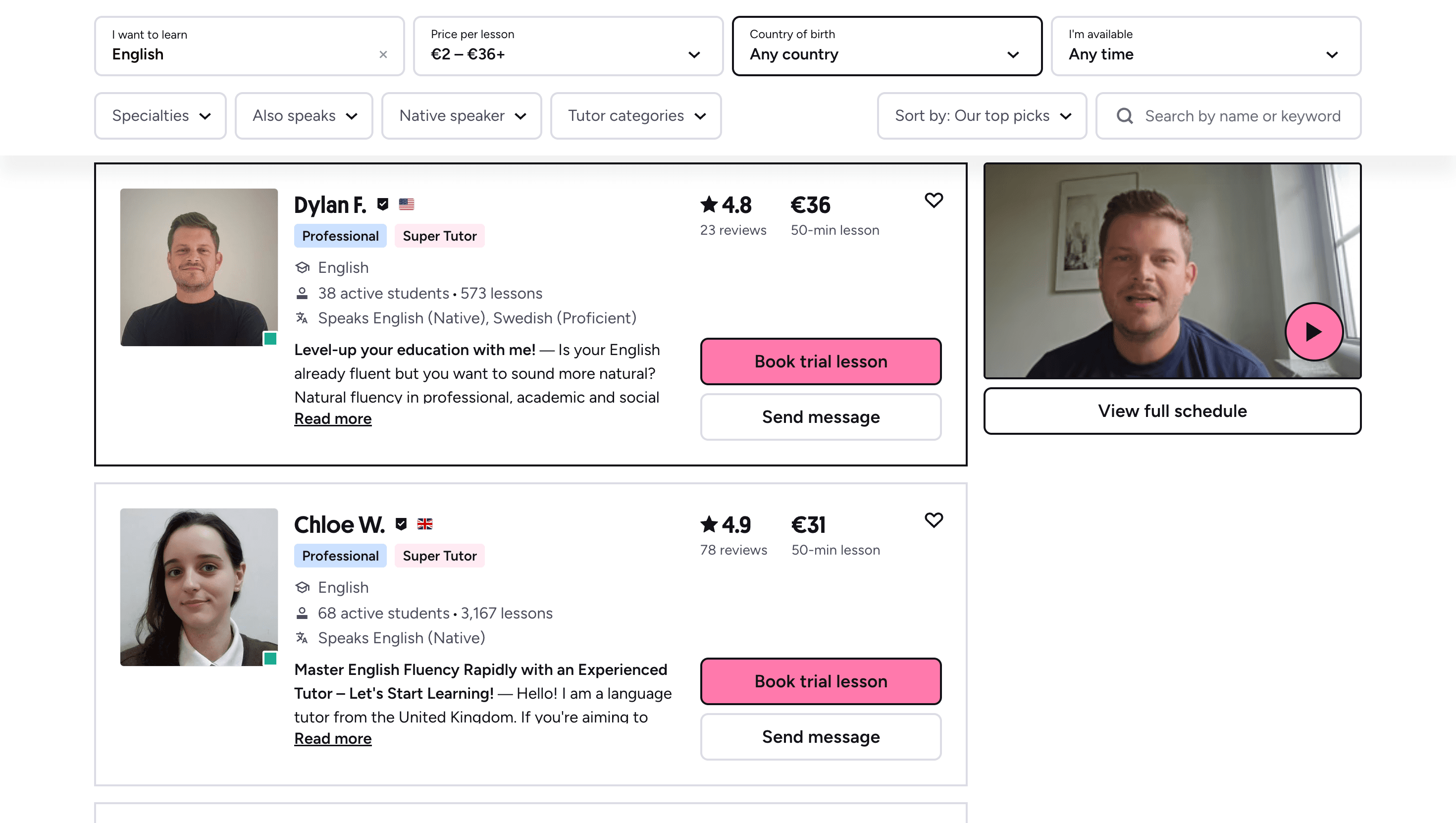
Many learners give up on language learning due to these high costs, missing out on valuable professional and personal opportunities.
That’s why we created Kylian: to make language learning accessible to everyone and help people master a foreign language without breaking the bank.
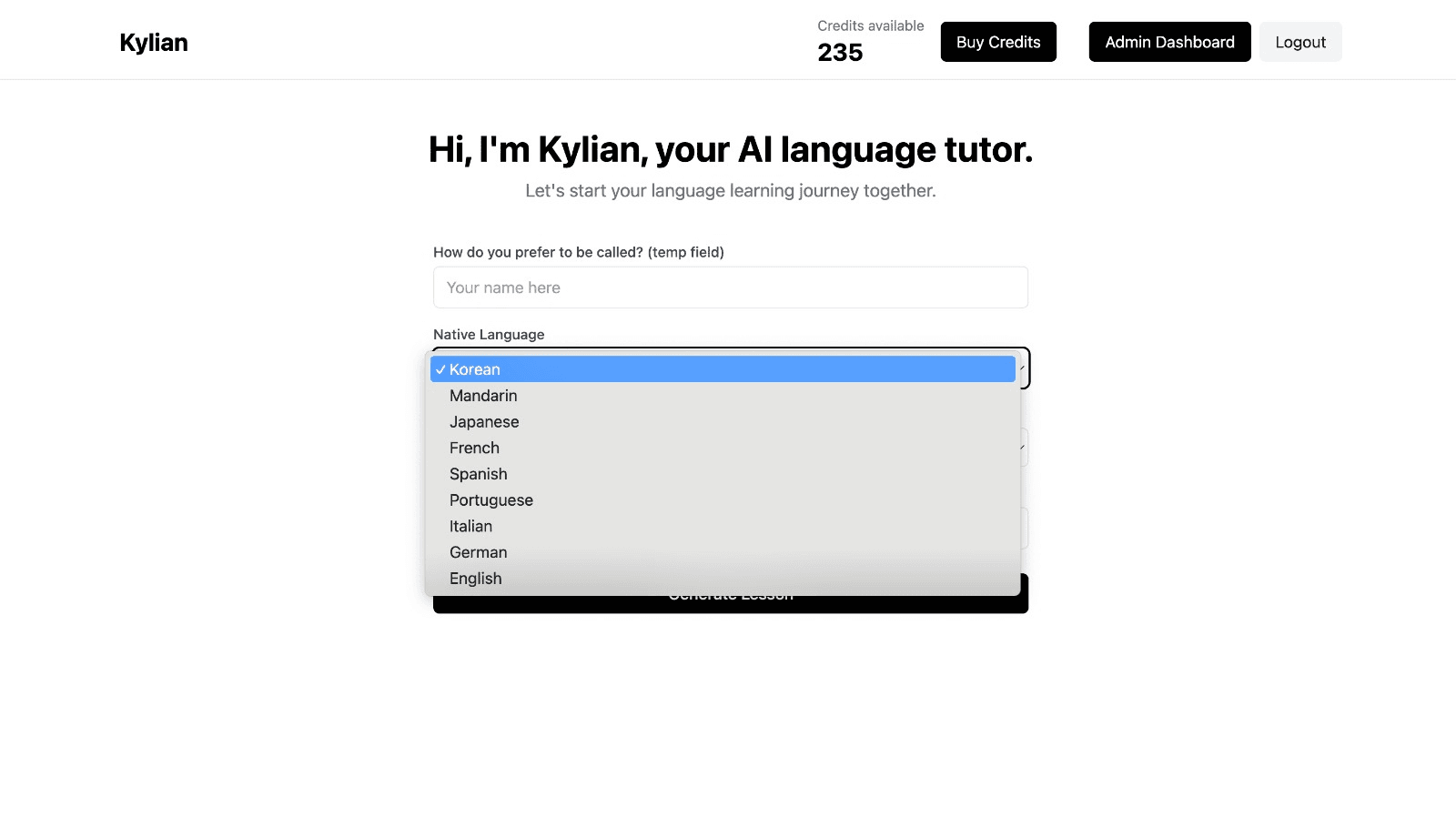
To get started, just tell Kylian which language you want to learn and what your native language is
Tired of teachers who don’t understand your specific struggles as a French speaker? Kylian’s advantage lies in its ability to teach any language using your native tongue as the foundation.
Unlike generic apps that offer the same content to everyone, Kylian explains concepts in your native language (French) and switches to the target language when necessary—perfectly adapting to your level and needs.
This personalization removes the frustration and confusion that are so common in traditional language learning.
Choose a specific topic you want to learn
Frustrated by language lessons that never cover exactly what you need? Kylian can teach you any aspect of a language—from pronunciation to advanced grammar—by focusing on your specific goals.
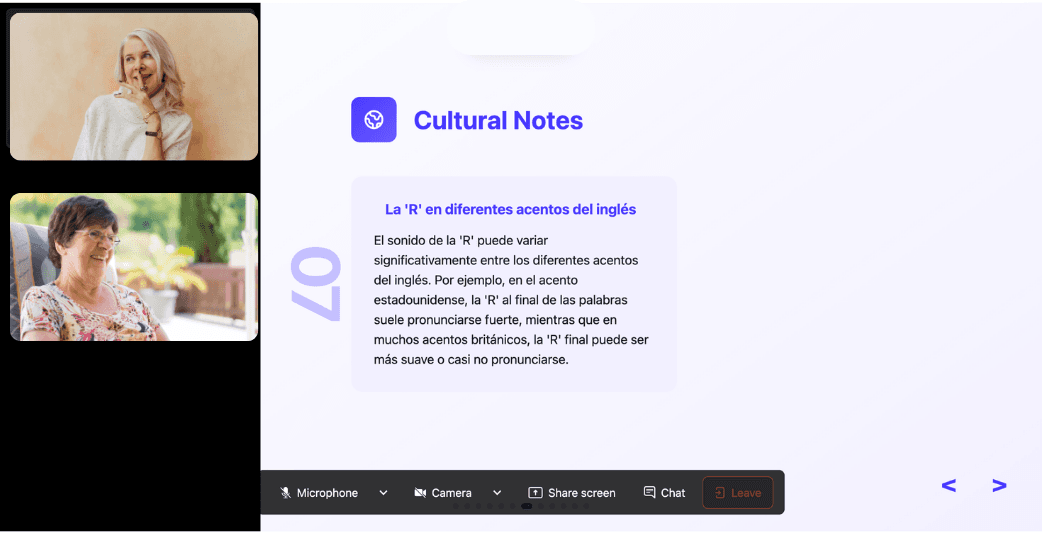
Avoid vague requests like “How can I improve my accent?” and be precise: “How do I pronounce the R like a native English speaker?” or “How do I conjugate the verb ‘to be’ in the present tense?”
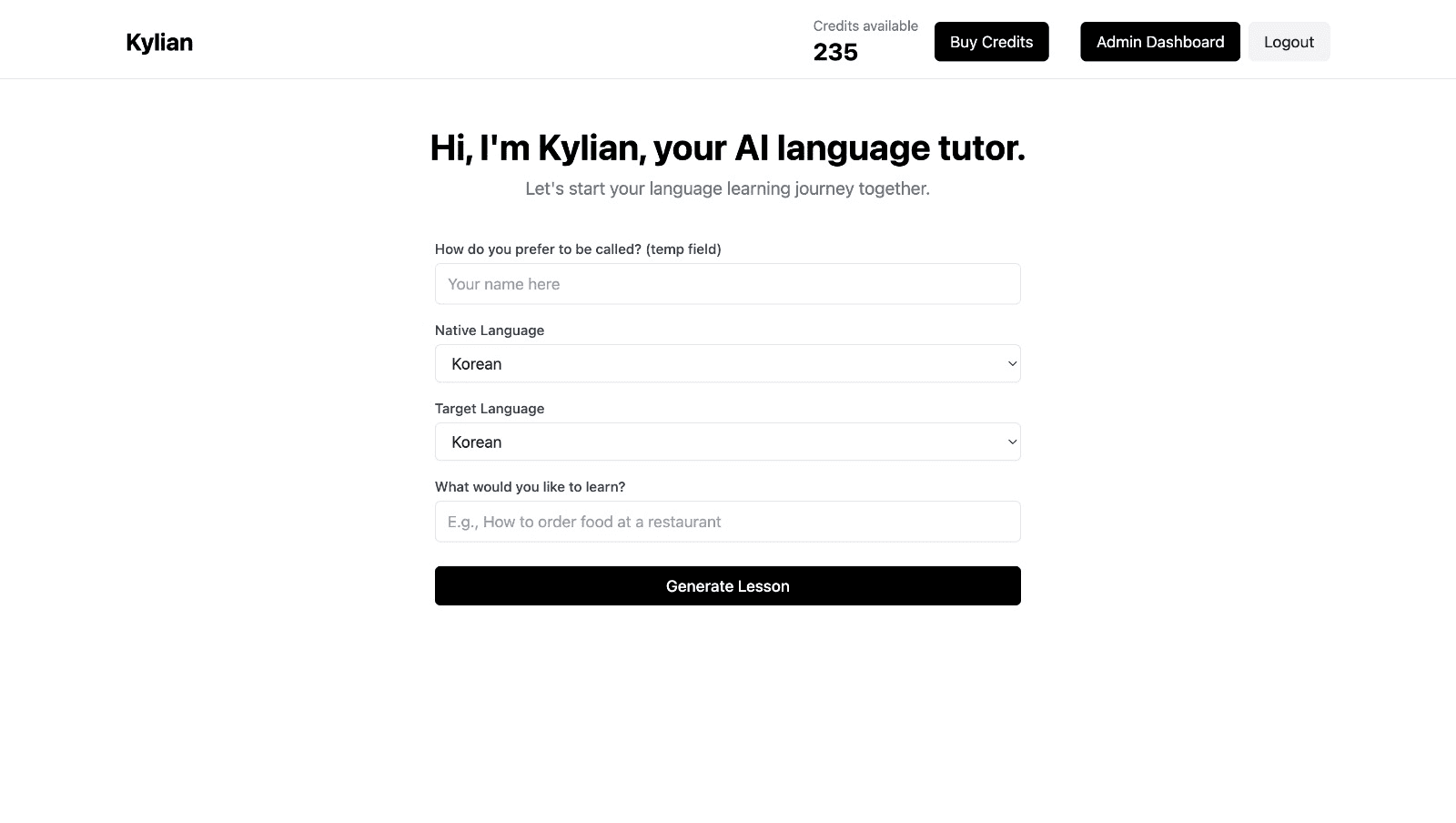
With Kylian, you’ll never again pay for irrelevant content or feel embarrassed asking “too basic” questions to a teacher. Your learning plan is entirely personalized.
Once you’ve chosen your topic, just hit the “Generate a Lesson” button, and within seconds, you’ll get a lesson designed exclusively for you.
Join the room to begin your lesson
The session feels like a one-on-one language class with a human tutor—but without the high price or time constraints.
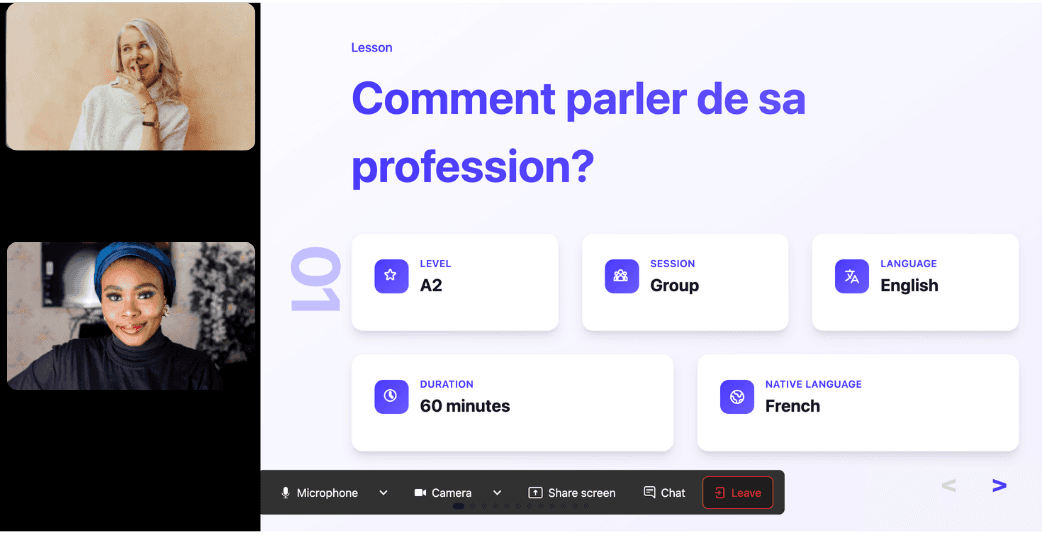
In a 25-minute lesson, Kylian teaches exactly what you need to know about your chosen topic: the nuances that textbooks never explain, key cultural differences between French and your target language, grammar rules, and much more.
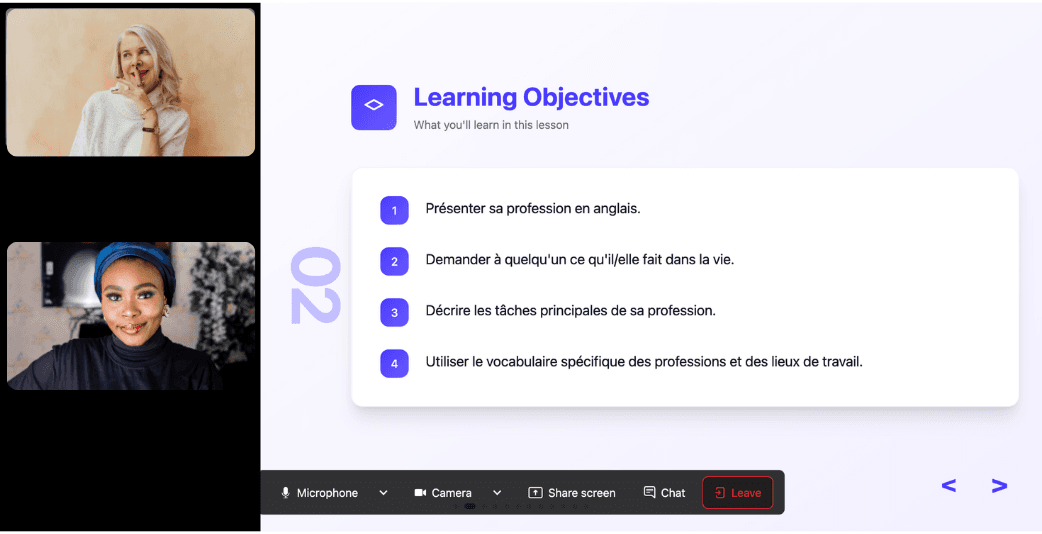
Ever felt frustrated trying to keep up with a native-speaking teacher, or embarrassed to ask for something to be repeated? With Kylian, that problem disappears. It switches intelligently between French and the target language depending on your level, helping you understand every concept at your own pace.
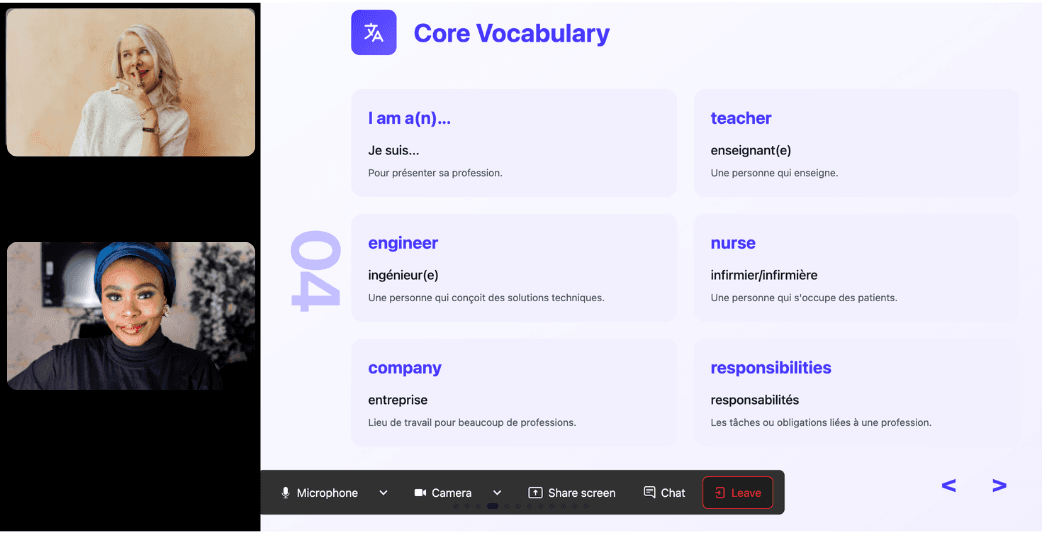
During the lesson, Kylian uses role-plays, real-life examples, and adapts to your learning style. Didn’t understand something? No problem—you can pause Kylian anytime to ask for clarification, without fear of being judged.
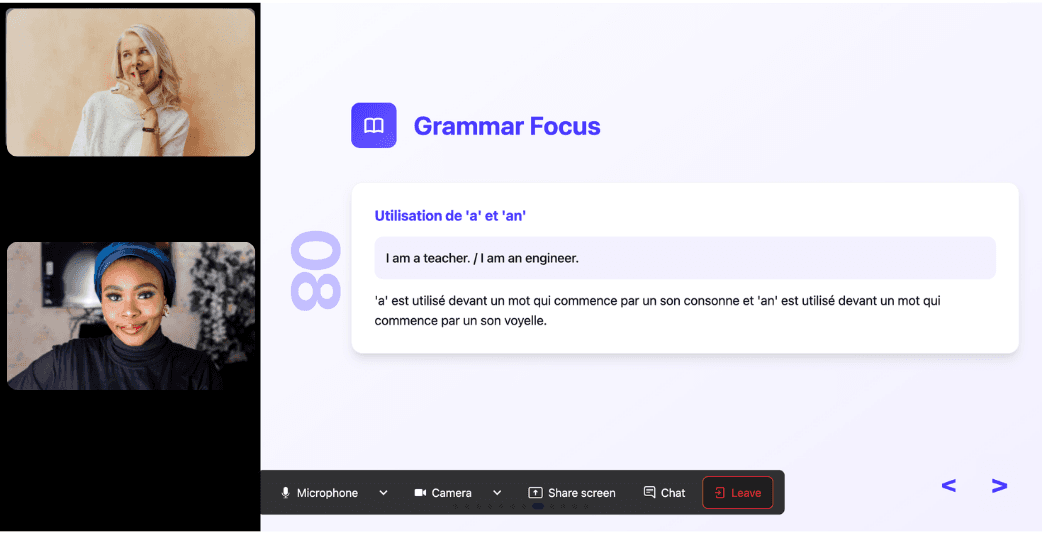
Ask all the questions you want, repeat sections if needed, and customize your learning experience in ways traditional teachers and generic apps simply can’t match.
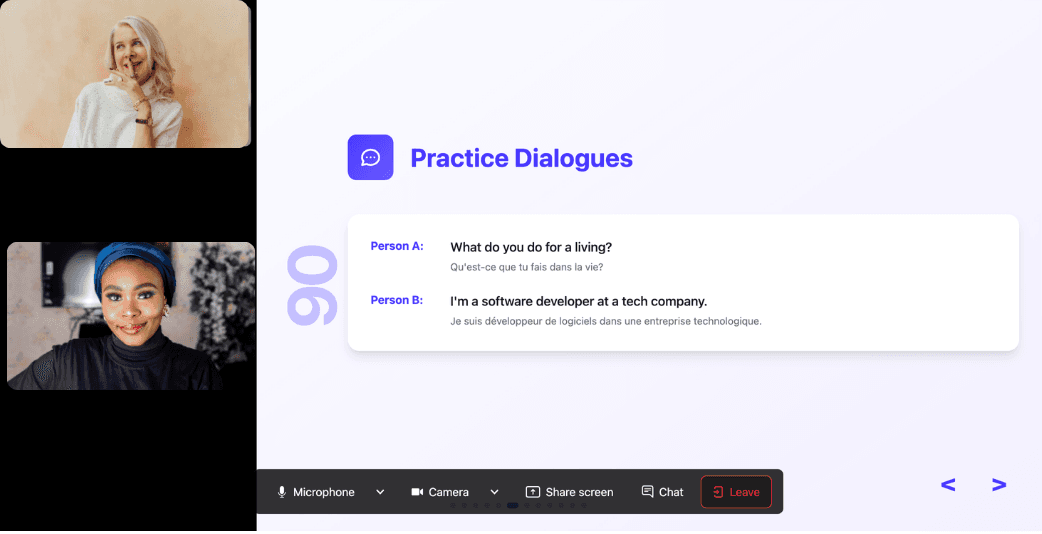
With 24/7 access at a fraction of the cost of private lessons, Kylian removes all the barriers that have kept you from mastering the language you’ve always wanted to learn.


![Anyday or Any Day: Complete Grammar Guide [English]](/_next/image?url=https%3A%2F%2Fcdn.sanity.io%2Fimages%2F147z5m2d%2Fproduction%2Fdde5dbe1004c413e93cd65c010230a8ac6e22f37-2240x1260.png%3Frect%3D175%2C0%2C1890%2C1260%26w%3D600%26h%3D400&w=3840&q=75)


