![Work Out vs Workout: The Definitive Grammar Guide [English]](/_next/image?url=https%3A%2F%2Fcdn.sanity.io%2Fimages%2F147z5m2d%2Fproduction%2F80a7a8428fc52bee680b928a04dc36086a34decc-2240x1260.png&w=3840&q=75)
The distinction between "work out" and "workout" represents more than a simple spelling preference—it reflects fundamental grammatical principles that native speakers intuitively understand but rarely articulate. This confusion costs professionals credibility in written communication and creates unnecessary friction in digital content consumption.
Data from Google Trends shows consistent monthly searches exceeding 50,000 queries for "work out vs workout," indicating persistent confusion among English users worldwide. The stakes matter because incorrect usage signals linguistic carelessness in professional contexts where precision drives trust.
The Core Grammatical Distinction
The difference between "work out" and "workout" stems from part-of-speech functionality. "Work out" functions as a phrasal verb—two separate words that combine to create meaning beyond their individual definitions. "Workout" serves as a noun—a single word describing a thing or concept.
This distinction follows established English patterns where phrasal verbs maintain separation while their noun counterparts merge into compound words. Consider parallel examples: "break down" (verb) versus "breakdown" (noun), or "set up" (verb) versus "setup" (noun). The pattern holds consistent across hundreds of similar word pairs.
Professional writers recognize this pattern because it affects readability and comprehension. When readers encounter "workout" used as a verb, cognitive processing slows as the brain reconciles unexpected grammatical structure. This micro-delay accumulates across documents, reducing overall communication effectiveness.
When to Use "Work Out" (Phrasal Verb)
"Work out" functions as a phrasal verb in multiple contexts, each carrying distinct semantic weight. The exercise context dominates usage, but limiting understanding to fitness applications misses crucial communicative opportunities.
Exercise and Physical Activity Context
In fitness contexts, "work out" describes the action of exercising. The phrasal verb requires two words because "work" and "out" maintain separate semantic contributions. "Work" implies effort and labor, while "out" suggests completion or thoroughness.
Correct usage patterns include:
- "I work out every morning before breakfast."
- "She works out at the gym three times weekly."
- "They worked out together during their lunch break."
The tense flexibility of phrasal verbs allows natural conjugation: work out, works out, worked out, working out, will work out. This flexibility supports dynamic communication across temporal contexts.
Problem-Solving Applications
"Work out" extends beyond physical exercise to describe problem-solving processes. This usage predates fitness applications, emerging from 19th-century industrial contexts where workers "worked out" manufacturing challenges.
Professional applications include:
- "The engineering team worked out the design flaws before production."
- "We need to work out the budget discrepancies by Friday."
- "The negotiators worked out a compromise acceptable to both parties."
This problem-solving sense carries implications of process and effort. Unlike simple "solve," which suggests immediate resolution, "work out" implies iterative refinement and collaborative effort.
Mathematical and Calculation Contexts
Mathematical usage of "work out" emphasizes process over result. Students don't simply "solve" complex equations—they "work out" solutions through systematic steps.
Examples demonstrate process emphasis:
- "Work out the equation step by step to avoid errors."
- "The accountant worked out the tax implications carefully."
- "Can you work out the percentage increase from last quarter?"
This usage reinforces the phrasal verb's emphasis on methodology and systematic approach.
Relationship and Situation Resolution
"Work out" describes relationship dynamics and situational resolutions, often implying uncertainty about outcomes. The phrasal verb suggests process without guaranteeing success.
Contextual applications include:
- "Their marriage didn't work out despite years of counseling."
- "The business partnership worked out better than expected."
- "Let's see how this arrangement works out over the next few months."
This usage acknowledges complexity and unpredictability in human situations, where effort doesn't guarantee specific outcomes.
When to Use "Workout" (Noun)
"Workout" as a noun describes the thing itself—the exercise session, training routine, or physical activity event. The compound noun structure signals completeness and specificity.
Describing Exercise Sessions
Fitness contexts use "workout" to reference specific exercise events or routines. The noun form allows precise description and categorization of physical activities.
Professional usage includes:
- "Today's workout focused on cardiovascular endurance."
- "The workout lasted ninety minutes and included strength training."
- "Her morning workout routine never varies from the established schedule."
The noun form enables detailed modification through adjectives: intense workout, quick workout, full-body workout, challenging workout. This flexibility supports precise communication about exercise specifics.
Workout as a Countable Entity
"Workout" functions as a countable noun, supporting quantification and comparison. This grammatical property enables statistical analysis and progress tracking in fitness contexts.
Quantification examples:
- "Three workouts per week maintain cardiovascular health."
- "The fitness app tracks individual workouts over time."
- "Compare this workout's intensity to last week's sessions."
Countability supports data-driven fitness approaches where metrics drive decisions and progress measurement.
Product and Service References
Commercial fitness contexts use "workout" to describe products, services, and programs. The noun form supports marketing and educational communication.
Business applications include:
- "The new workout program launches next month."
- "Purchase the premium workout subscription for advanced features."
- "This workout video series targets core strength development."
Brand names frequently incorporate "workout" as a noun: "The 30-Minute Workout," "Workout World," "Premium Workout Solutions." The compound noun structure supports trademark and brand development.
Advanced Usage Patterns and Exceptions
English complexity emerges through exceptions and edge cases that challenge simple rules. Understanding these patterns prevents common errors while building sophisticated communication skills.
Compound Modifier Constructions
"Workout" can function as a compound modifier when describing other nouns. This usage transforms the noun into an adjective through grammatical conversion.
Examples include:
- "Workout clothes should prioritize moisture management."
- "The workout equipment requires regular maintenance."
- "Workout music affects exercise performance significantly."
This modifier usage maintains the compound word structure while shifting grammatical function. Recognition of this pattern prevents confusion when encountering "workout" in descriptive contexts.
Gerund and Infinitive Interactions
Phrasal verbs like "work out" interact with gerunds and infinitives in specific patterns that affect meaning and grammatical correctness.
Gerund constructions:
- "Working out regularly improves cardiovascular health." (gerund as subject)
- "She enjoys working out in the morning." (gerund as object)
Infinitive constructions:
- "I plan to work out after dinner." (infinitive phrase)
- "The goal is to work out consistently." (infinitive complement)
These patterns demonstrate how phrasal verbs maintain separation even within complex grammatical structures.
Regional and Style Variations
American English shows stronger preference for compound noun forms compared to British English, which occasionally maintains phrasal structures in contexts where American usage prefers compounds.
However, both variants follow the fundamental verb-noun distinction. Regional differences affect frequency rather than correctness—both "work out" (verb) and "workout" (noun) remain standard across English variants.
Common Errors and Correction Strategies
Systematic analysis of usage errors reveals predictable patterns that targeted correction strategies can address effectively.
Verb-Noun Substitution Errors
The most frequent error involves using "workout" as a verb or "work out" as a noun. These mistakes create grammatical discord that careful proofreading easily identifies.
Error examples:
- Incorrect: "I workout every morning." (noun used as verb)
- Correct: "I work out every morning."
- Incorrect: "Today's work out was challenging." (verb used as noun)
- Correct: "Today's workout was challenging."
Recognition strategy: Substitute "exercise" for the questioned word. If "exercise" works as a noun, use "workout." If "exercise" works as a verb, use "work out."
Tense and Conjugation Mistakes
Phrasal verbs require proper conjugation across tenses, while nouns remain unchanged. Understanding this distinction prevents morphological errors.
Conjugation patterns:
- Present: "I work out daily."
- Past: "I worked out yesterday."
- Future: "I will work out tomorrow."
- Continuous: "I am working out now."
Noun consistency:
- "The workout begins at six."
- "The workouts begin at six."
- "The workout began at six."
Context-Dependent Ambiguity
Some contexts create ambiguity where both forms seem grammatically possible. Careful analysis of sentence structure usually resolves these situations.
Ambiguous: "The morning workout schedule needs revision." Analysis: "Schedule" is the main noun, "workout" modifies it as a compound adjective. Correct usage maintains "workout."
Ambiguous: "We need to workout schedule conflicts." Analysis: "Need to" requires a verb. "Work out" functions as the phrasal verb meaning "resolve." Correct usage requires "work out."
Professional Communication Applications
Business and professional contexts demand precision in word choice, making the "work out" versus "workout" distinction particularly critical for career advancement and credibility.
Email and Written Correspondence
Professional emails containing fitness-related content or problem-solving discussions benefit from correct usage. Errors signal carelessness that can undermine professional relationships.
Email examples:
- "Let's work out the contract details before the meeting." (professional problem-solving)
- "The team workout session builds collaboration skills." (corporate wellness program)
Marketing and Content Creation
Fitness industry marketing requires consistent grammatical accuracy to maintain brand credibility. Incorrect usage in marketing materials suggests unprofessional content development processes.
Marketing applications:
- Headlines: "Transform Your Workout Routine" (noun form for product description)
- Call-to-action: "Work Out Smarter, Not Harder" (verb form for action encouragement)
Technical and Instructional Writing
Instructional content demands clarity and precision. Grammatical errors in fitness instructions or problem-solving guides reduce comprehension and effectiveness.
Instructional examples:
- "Follow this workout protocol for optimal results." (noun describing the protocol)
- "Work out each exercise slowly and deliberately." (verb describing the action)
Digital Communication and SEO Considerations
Search engine optimization and digital communication patterns influence how "work out" and "workout" appear in online content, affecting both user experience and search visibility.
Search Intent and User Behavior
Search query analysis reveals user intent patterns that inform content strategy. "Workout" searches typically seek resources, programs, or equipment. "Work out" searches often seek instructional or motivational content.
Search pattern analysis:
- "Best workout routines" (seeking resources)
- "How to work out at home" (seeking instructions)
- "Workout equipment reviews" (seeking product information)
- "Work out motivation tips" (seeking behavioral guidance)
Content Structure and User Experience
Digital readers scan content rapidly, making grammatical consistency crucial for comprehension. Mixed usage of "work out" and "workout" creates cognitive friction that reduces engagement metrics.
Content optimization strategies include maintaining consistent usage within individual pieces while varying usage across different content types based on grammatical requirements and user intent.
Learn Any Language with Kylian AI
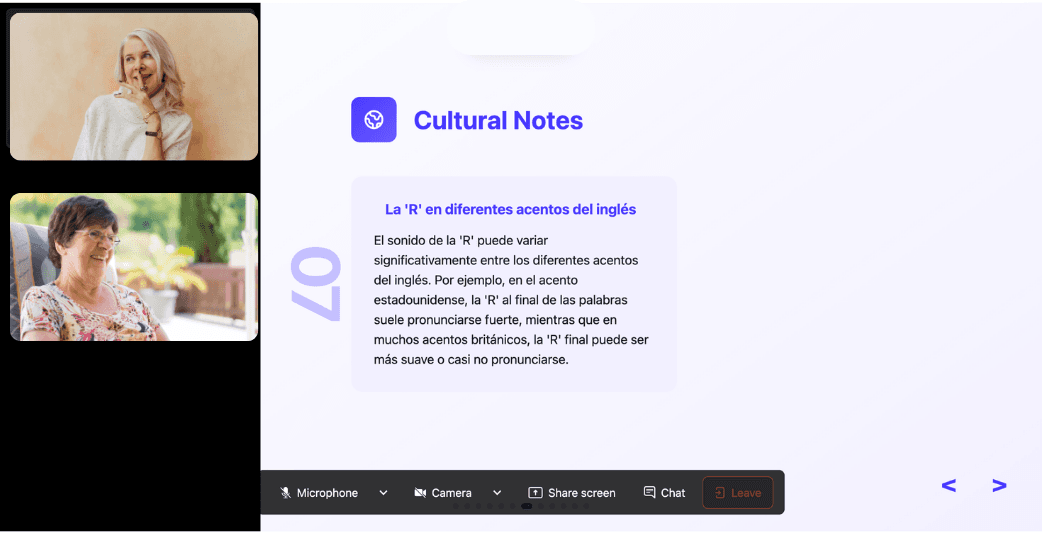
Private language lessons are expensive. Paying between 15 and 50 euros per lesson isn’t realistic for most people—especially when dozens of sessions are needed to see real progress.
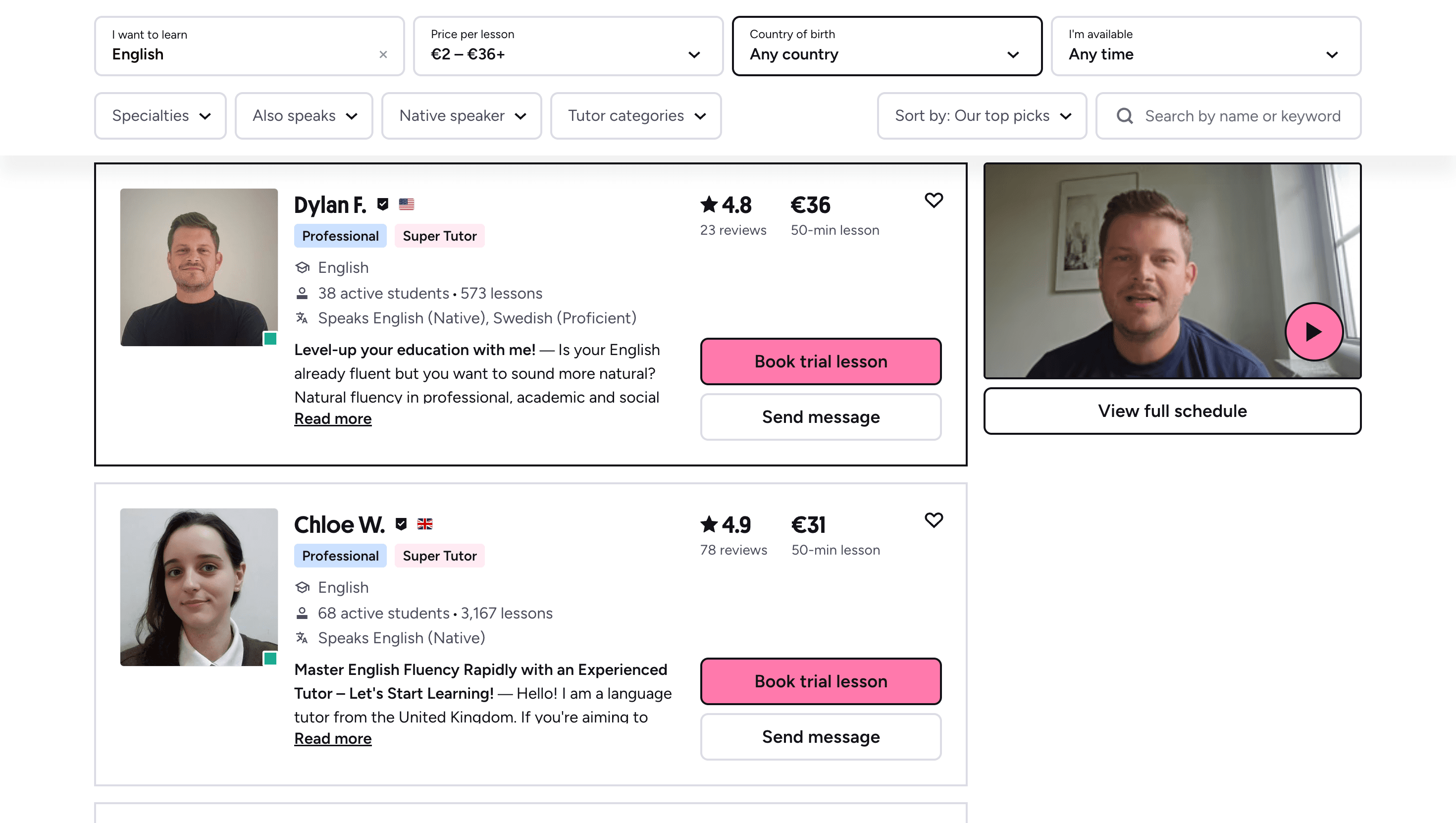
Many learners give up on language learning due to these high costs, missing out on valuable professional and personal opportunities.
That’s why we created Kylian: to make language learning accessible to everyone and help people master a foreign language without breaking the bank.
To get started, just tell Kylian which language you want to learn and what your native language is
Tired of teachers who don’t understand your specific struggles as a French speaker? Kylian’s advantage lies in its ability to teach any language using your native tongue as the foundation.
Unlike generic apps that offer the same content to everyone, Kylian explains concepts in your native language (French) and switches to the target language when necessary—perfectly adapting to your level and needs.
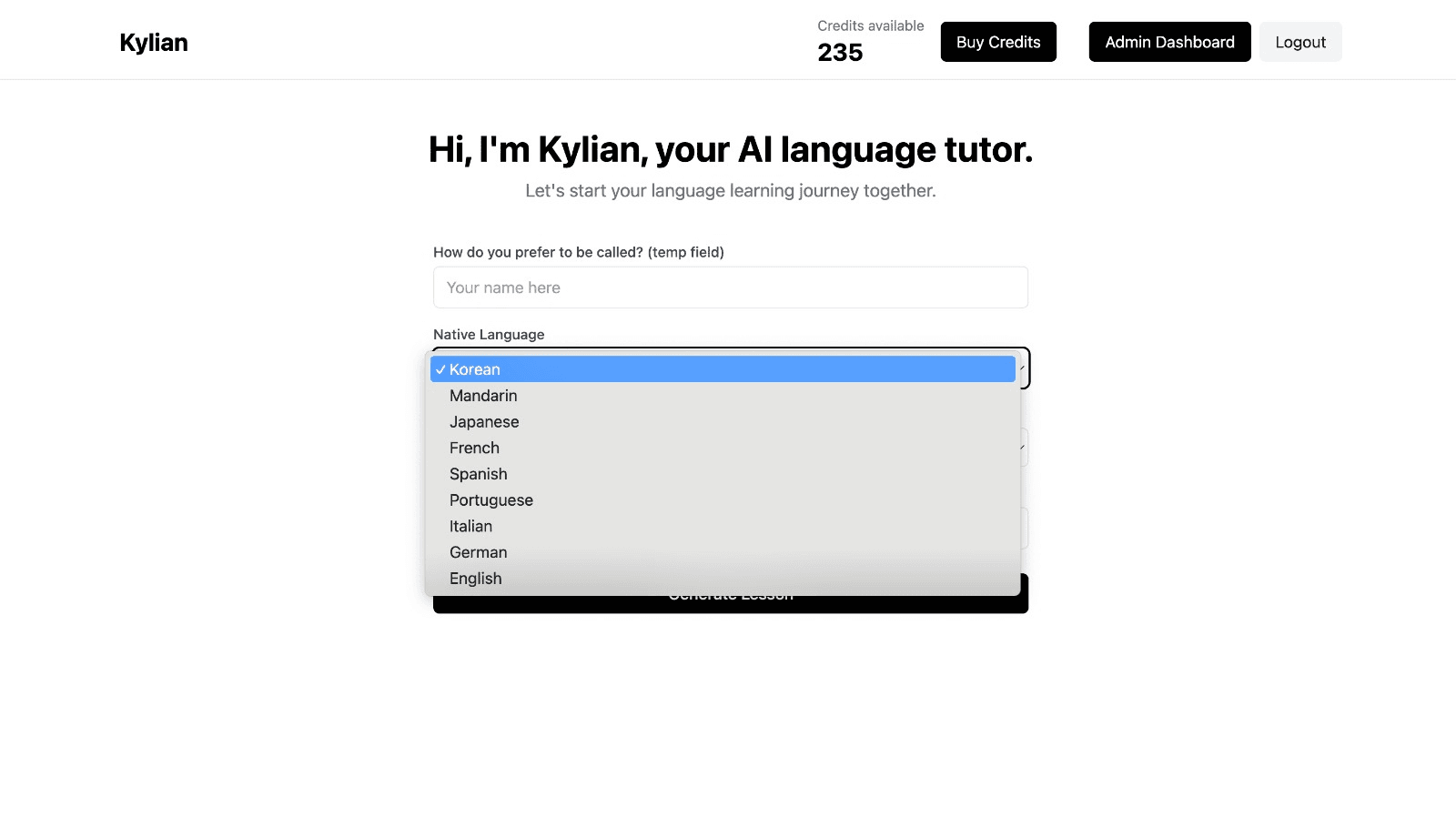
This personalization removes the frustration and confusion that are so common in traditional language learning.
Choose a specific topic you want to learn
Frustrated by language lessons that never cover exactly what you need? Kylian can teach you any aspect of a language—from pronunciation to advanced grammar—by focusing on your specific goals.
Avoid vague requests like “How can I improve my accent?” and be precise: “How do I pronounce the R like a native English speaker?” or “How do I conjugate the verb ‘to be’ in the present tense?”
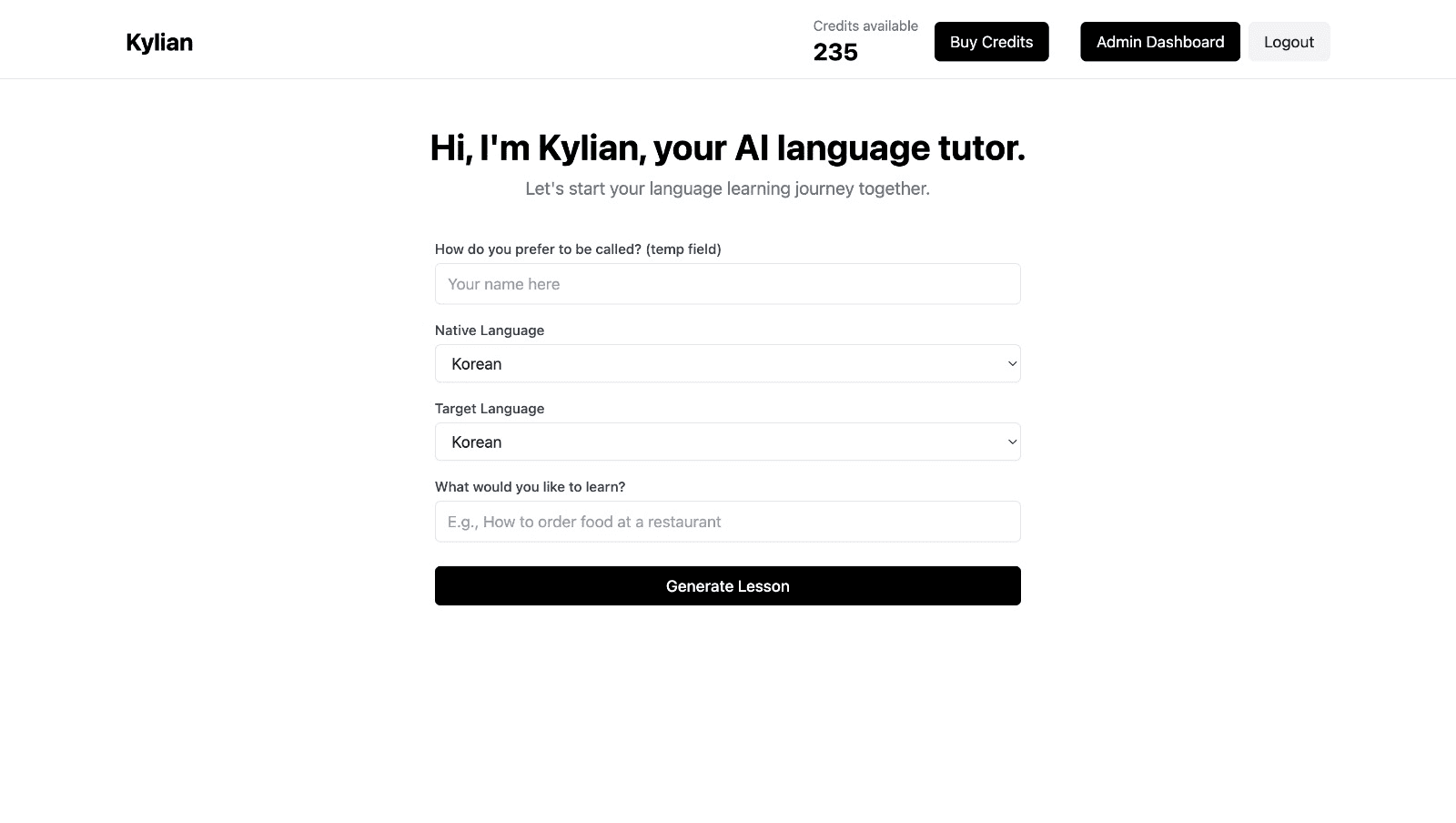
With Kylian, you’ll never again pay for irrelevant content or feel embarrassed asking “too basic” questions to a teacher. Your learning plan is entirely personalized.
Once you’ve chosen your topic, just hit the “Generate a Lesson” button, and within seconds, you’ll get a lesson designed exclusively for you.
Join the room to begin your lesson
The session feels like a one-on-one language class with a human tutor—but without the high price or time constraints.
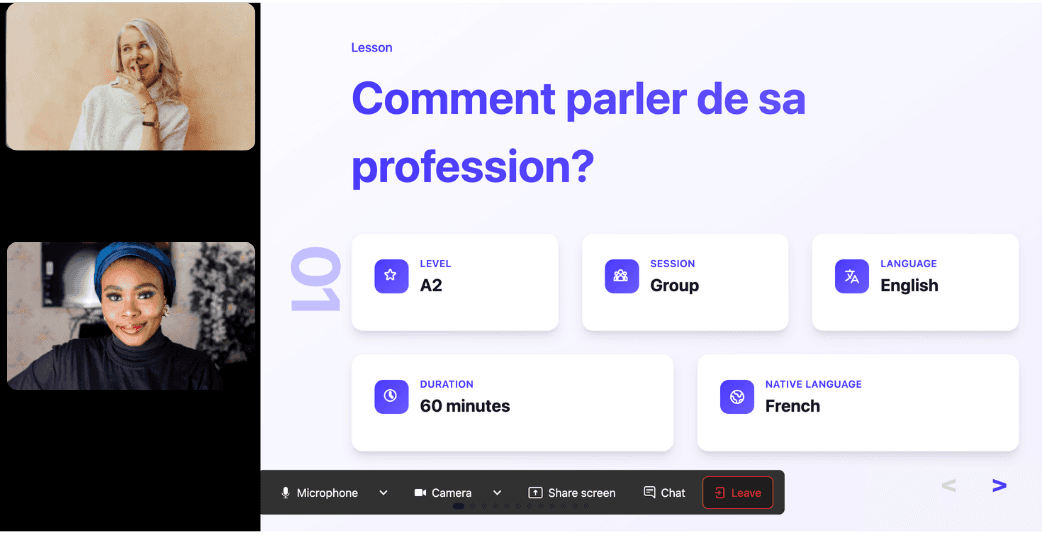
In a 25-minute lesson, Kylian teaches exactly what you need to know about your chosen topic: the nuances that textbooks never explain, key cultural differences between French and your target language, grammar rules, and much more.

Ever felt frustrated trying to keep up with a native-speaking teacher, or embarrassed to ask for something to be repeated? With Kylian, that problem disappears. It switches intelligently between French and the target language depending on your level, helping you understand every concept at your own pace.
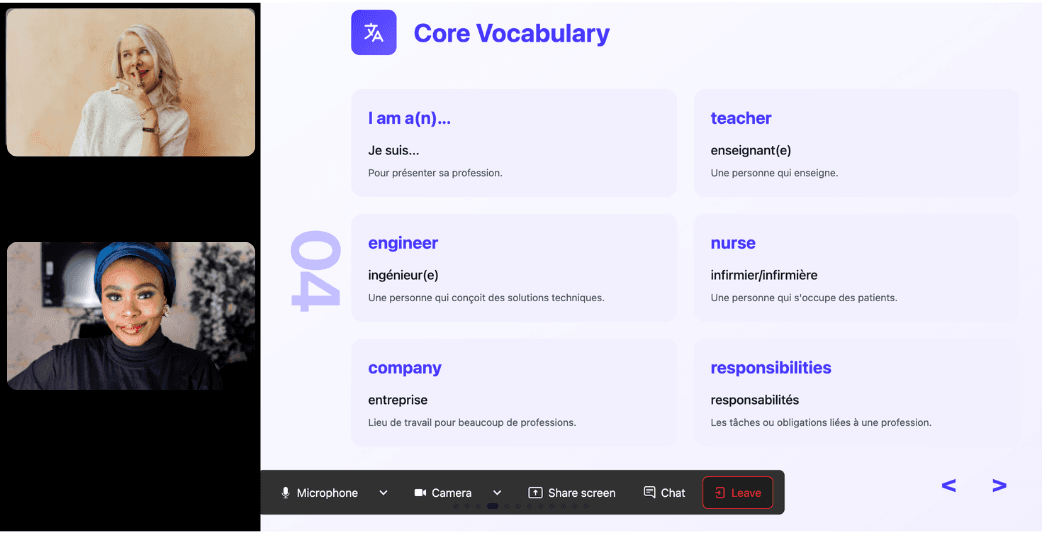
During the lesson, Kylian uses role-plays, real-life examples, and adapts to your learning style. Didn’t understand something? No problem—you can pause Kylian anytime to ask for clarification, without fear of being judged.
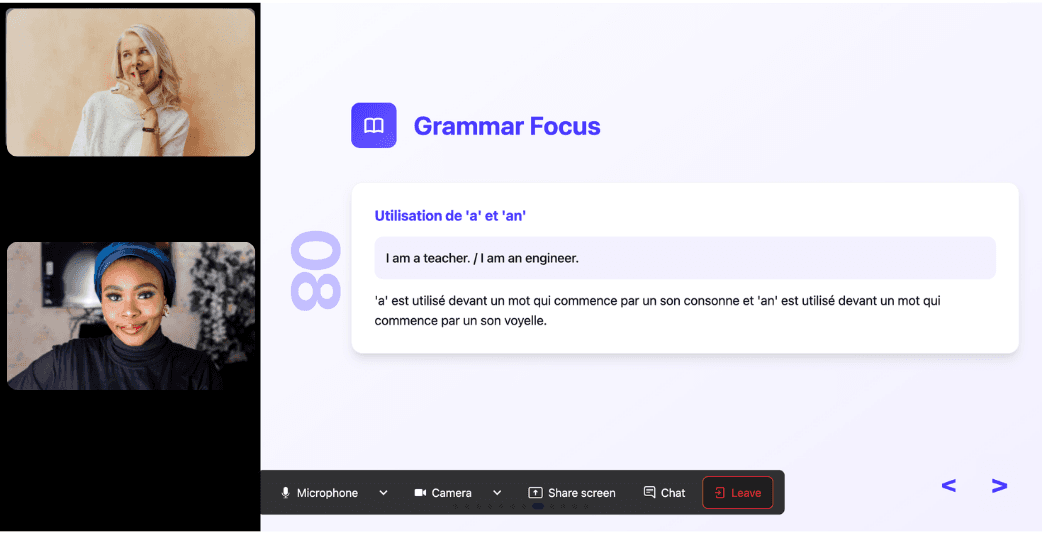
Ask all the questions you want, repeat sections if needed, and customize your learning experience in ways traditional teachers and generic apps simply can’t match.

With 24/7 access at a fraction of the cost of private lessons, Kylian removes all the barriers that have kept you from mastering the language you’ve always wanted to learn.