Communication prowess extends beyond basic fluency—the specific words you choose can significantly shape how others perceive your intelligence. Recent research reveals fascinating insights into which vocabulary choices elevate your perceived intellect and which might inadvertently label you as pretentious.
The Vocabulary Intelligence Paradox
Language serves as more than just a communication vehicle—it functions as a subtle intelligence indicator. The vocabulary you deploy signals your knowledge depth, education level, and analytical capacity. However, a precarious balance exists between demonstrating genuine linguistic sophistication and appearing artificially intellectual.
Where exactly does this boundary lie? A comprehensive survey of nearly 2,000 Americans offers illuminating answers.
Key Research Findings
A nationwide survey of 1,916 Americans revealed several critical insights about vocabulary perception:
- Almost 60% of Americans (58%) have strategically used complex vocabulary to appear more intelligent
- Over half of respondents (56%) assume someone with an advanced vocabulary possesses higher intelligence
- Remarkably, 58% admitted to using words they didn't fully understand to project intellectual superiority
- Nearly 80% of participants (78%) believe utilizing sophisticated vocabulary enhances perceived intelligence
- Over a quarter (28%) perceive people who consistently use complex vocabulary as potentially insecure
Words That Genuinely Enhance Perceived Intelligence
The research identified specific terms that Americans associate with authentic intellectual capacity. These top intelligence-signaling words include:
- Articulate - Expressing thoughts clearly and effectively
- Accolade - An award or privilege granted as a special honor
- Brevity - Concise and exact use of words
- Anomaly - Something that deviates from the standard or norm
- Adulation - Excessive admiration or praise
Additional vocabulary that ranked highly for projecting intelligence:
- Abysmal - Extremely bad or of poor quality
- Candor - The quality of being open and honest
- Adept - Very skilled or proficient at something
- Exacerbate - Make a problem or situation worse
- Vernacular - Language used by ordinary people; everyday speech
Words Most Commonly Used to Project Intelligence
Interestingly, when people consciously attempt to sound smarter, they gravitate toward a somewhat different set of terms:
- Articulate - The only term appearing on both lists
- Ambiguous - Open to multiple interpretations
- Aesthetic - Concerned with beauty or appreciation of beauty
- Capitalize - Take advantage of an opportunity
- Concur - Be of the same opinion; agree
This creates a fascinating dichotomy—the words people use when trying to appear intelligent don't always match those that actually create that impression.
The Strategic Context of Vocabulary Enhancement
People strategically deploy sophisticated vocabulary in specific contexts. According to the survey:
- 68% have deliberately used complex vocabulary to impress someone
- 70% have employed advanced terminology in professional environments, primarily targeting supervisors and colleagues
- 63% have utilized sophisticated vocabulary when attempting to impress romantic interests
This strategic language deployment reveals much about how we navigate social status through communication choices.
The Double-Edged Sword of Complex Vocabulary
While sophisticated vocabulary can enhance intellectual perception, it also carries significant risks:
- 43% of respondents assume people using unnecessarily complex vocabulary are artificially inflating their perceived intelligence
- 28% associate complex vocabulary with personal insecurity
- 58% report feeling bothered or annoyed by unnecessarily complex vocabulary in everyday conversation
- 54% have actively attempted to terminate conversations with people using gratuitously complex language
- 46% consider unnecessarily complex vocabulary a potential romantic "dealbreaker"
- Over 25% indicate they're less likely to trust someone who consistently uses advanced terminology
Words That Can Make You Sound Pretentious
The research identified vocabulary that frequently crosses the line from impressive to pretentious:
- Faux pas - An embarrassing social mistake
- Audacious - Showing a willingness to take surprisingly bold risks
- Caveat - A warning or proviso
- Bonafide - Genuine; real
- Chic - Elegantly and stylishly fashionable
Several terms appeared on both the "intelligent-sounding" and "pretentious-sounding" lists, including:
- Articulate
- Aesthetic
- Ambiguous
- Brevity
- Candor
This overlap demonstrates the thin line between sounding sophisticated and sounding affected.
The Clarity-Complexity Balance
Corporate communication often suffers from prioritizing complexity over clarity. Dense business jargon can render messages incomprehensible, undermining rather than enhancing the communicator's perceived intelligence.
Effective business communication requires more than stringing together industry buzzwords. When the desire to sound intelligent overshadows the need for clarity, the result is often confusion rather than impression.
The Psychology Behind Vocabulary Perception
What drives our judgment of vocabulary choices? Several psychological factors influence how we perceive language sophistication:
The Authority Bias
We tend to associate complex vocabulary with authority figures (professors, executives, experts), creating a cognitive association between sophisticated language and expertise.
The Clarity Principle
Our brains value information that's easily processed. When vocabulary choices impede understanding, we experience cognitive friction that can trigger negative associations.
The Authenticity Factor
We intuitively detect when someone's vocabulary choices feel inauthentic or forced, triggering skepticism about their genuine knowledge.
The Context Sensitivity
The same vocabulary that impresses in an academic paper might alienate in casual conversation—context determines reception.
Vocabulary Development Strategies
If expanding your vocabulary represents a genuine goal, consider these evidence-based approaches:
- Contextual Learning: Acquire new words through authentic reading rather than isolated word lists
- Spaced Repetition: Review new vocabulary at strategically increasing intervals to optimize retention
- Active Usage: Deliberately incorporate new terms into your writing and speech
- Etymology Exploration: Learn word origins to better understand meaning networks
- Vocabulary Journaling: Document unfamiliar words you encounter with context and personal associations
The most effective vocabulary expansion happens organically through extensive reading and thoughtful engagement with language.
Finding Your Vocabulary Sweet Spot
The optimal vocabulary approach varies based on your communication context and goals:
Professional Settings
In workplace environments, prioritize clarity while strategically introducing sophisticated terminology relevant to your field. Balance is crucial—demonstrate expertise without creating communication barriers.
Academic Contexts
Academic settings generally welcome greater vocabulary sophistication, particularly field-specific terminology. However, even here, clarity should outweigh complexity when presenting complicated concepts.
Social Interactions
In casual conversation, vocabulary that facilitates connection outperforms vocabulary that impresses. Social communication prioritizes relational development over intelligence signaling.
Digital Communication
Online contexts typically benefit from more straightforward vocabulary choices. Screen reading often involves skimming, making clarity particularly important in digital communication.
Authenticity Trumps Impression
The research contains a vital takeaway: authentic communication consistently outperforms artificially elevated vocabulary. The most impactful communicators don't focus on sounding intelligent—they focus on conveying ideas effectively.
Using vocabulary you don't fully understand creates significant risks of embarrassment and damaged credibility. Instead, gradually and naturally expand your vocabulary through consistent reading and thoughtful language engagement.
Learn Any Language with Kylian AI
Private language lessons are expensive. Paying between 15 and 50 euros per lesson isn’t realistic for most people—especially when dozens of sessions are needed to see real progress.
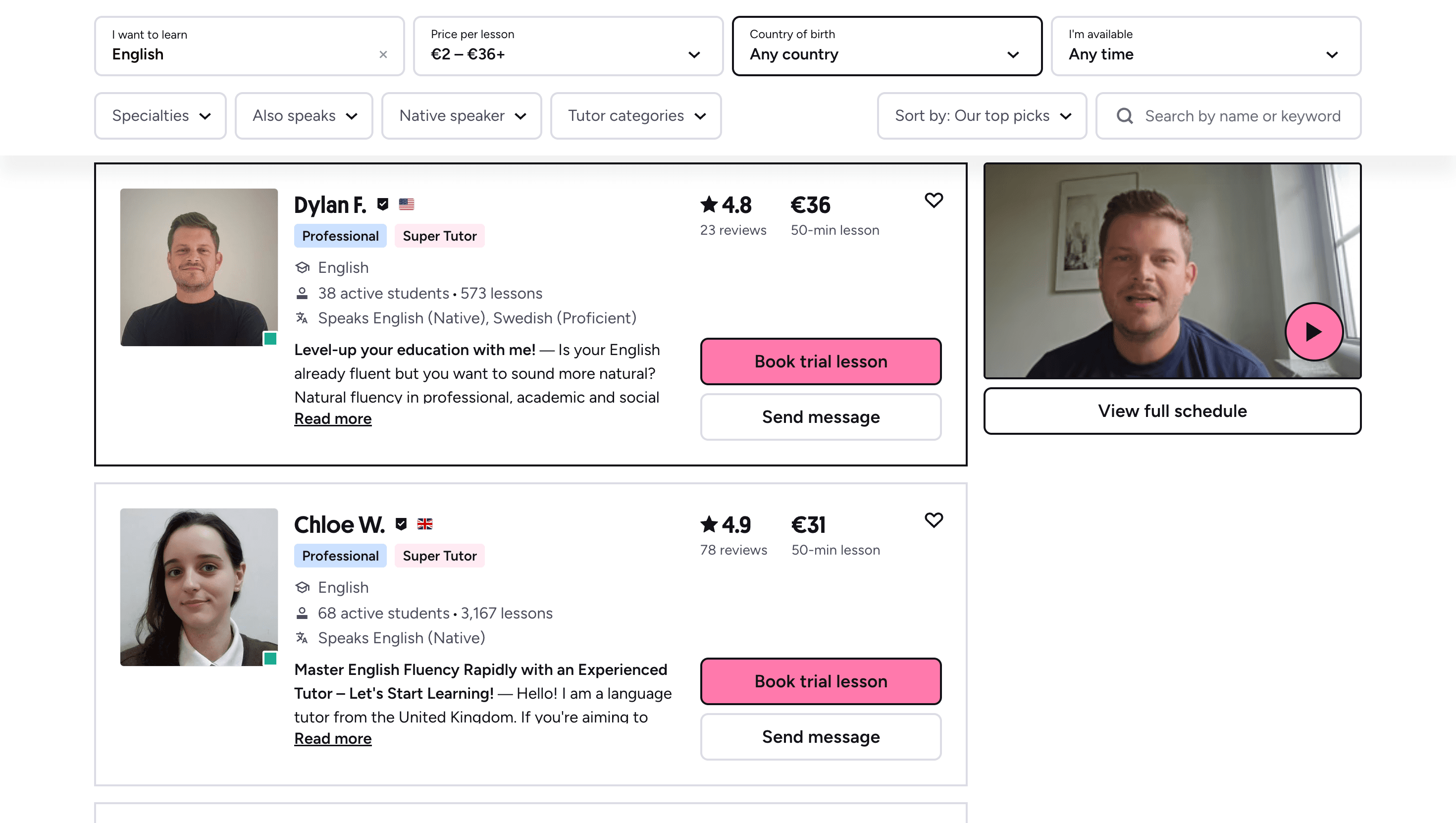
Many learners give up on language learning due to these high costs, missing out on valuable professional and personal opportunities.
That’s why we created Kylian: to make language learning accessible to everyone and help people master a foreign language without breaking the bank.
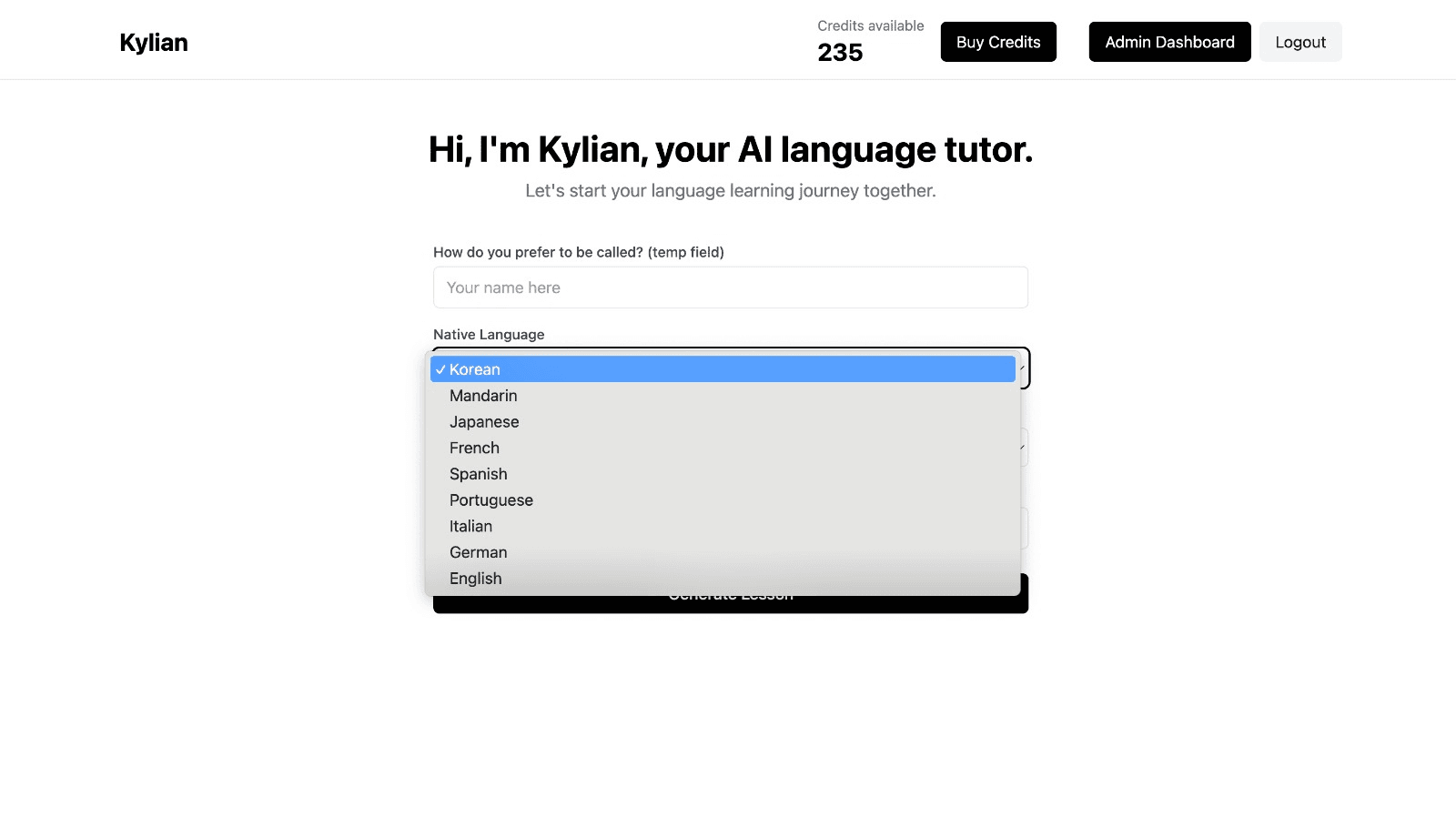
To get started, just tell Kylian which language you want to learn and what your native language is
Tired of teachers who don’t understand your specific struggles as a French speaker? Kylian’s advantage lies in its ability to teach any language using your native tongue as the foundation.
Unlike generic apps that offer the same content to everyone, Kylian explains concepts in your native language (French) and switches to the target language when necessary—perfectly adapting to your level and needs.
This personalization removes the frustration and confusion that are so common in traditional language learning.
Choose a specific topic you want to learn
Frustrated by language lessons that never cover exactly what you need? Kylian can teach you any aspect of a language—from pronunciation to advanced grammar—by focusing on your specific goals.
Avoid vague requests like “How can I improve my accent?” and be precise: “How do I pronounce the R like a native English speaker?” or “How do I conjugate the verb ‘to be’ in the present tense?”
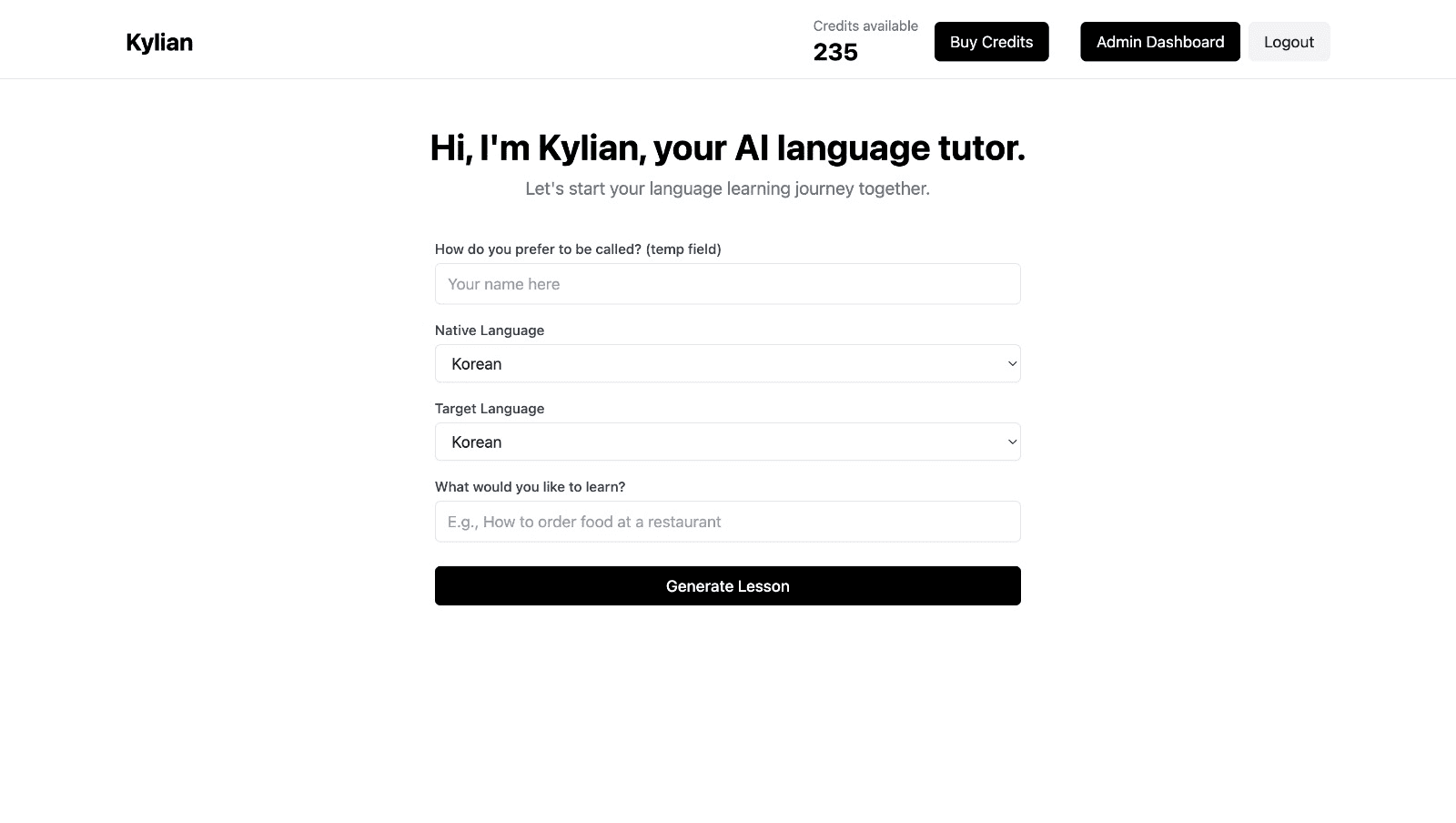
With Kylian, you’ll never again pay for irrelevant content or feel embarrassed asking “too basic” questions to a teacher. Your learning plan is entirely personalized.
Once you’ve chosen your topic, just hit the “Generate a Lesson” button, and within seconds, you’ll get a lesson designed exclusively for you.
Join the room to begin your lesson
The session feels like a one-on-one language class with a human tutor—but without the high price or time constraints.
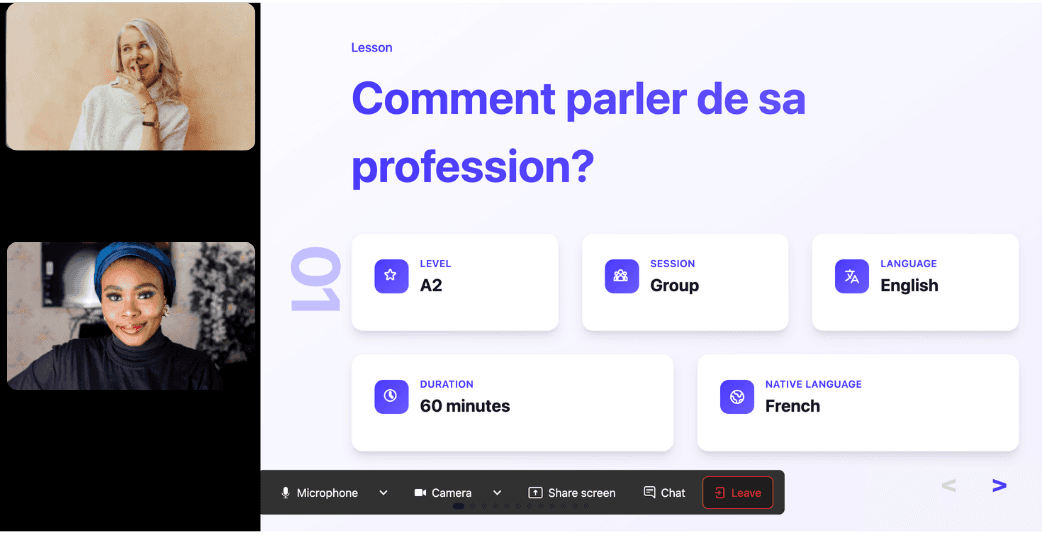
In a 25-minute lesson, Kylian teaches exactly what you need to know about your chosen topic: the nuances that textbooks never explain, key cultural differences between French and your target language, grammar rules, and much more.
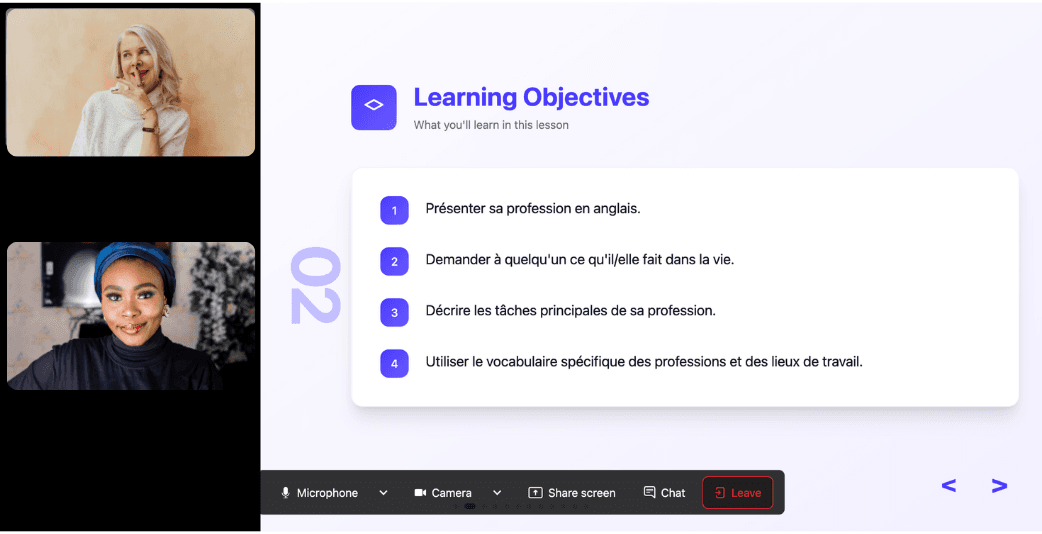
Ever felt frustrated trying to keep up with a native-speaking teacher, or embarrassed to ask for something to be repeated? With Kylian, that problem disappears. It switches intelligently between French and the target language depending on your level, helping you understand every concept at your own pace.
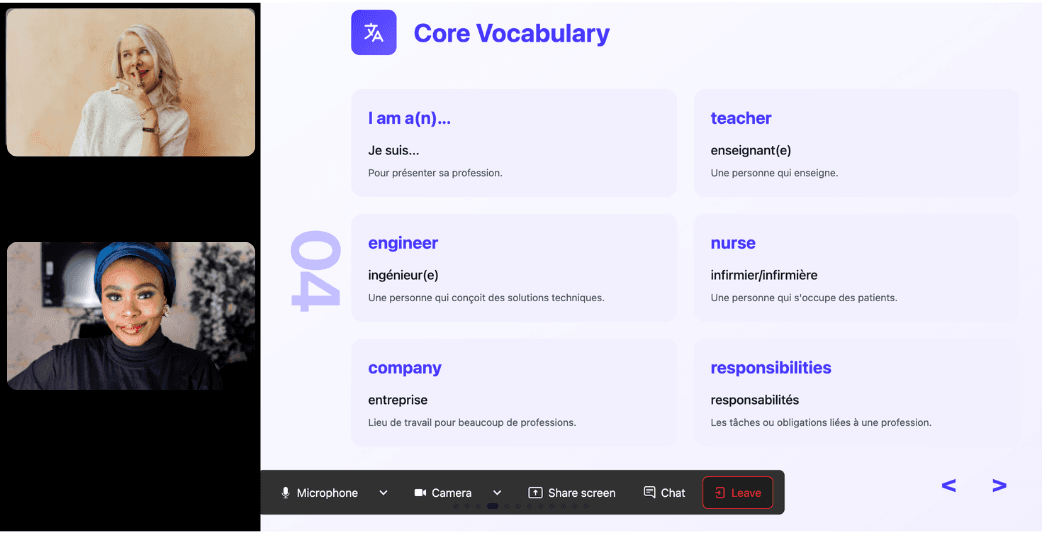
During the lesson, Kylian uses role-plays, real-life examples, and adapts to your learning style. Didn’t understand something? No problem—you can pause Kylian anytime to ask for clarification, without fear of being judged.
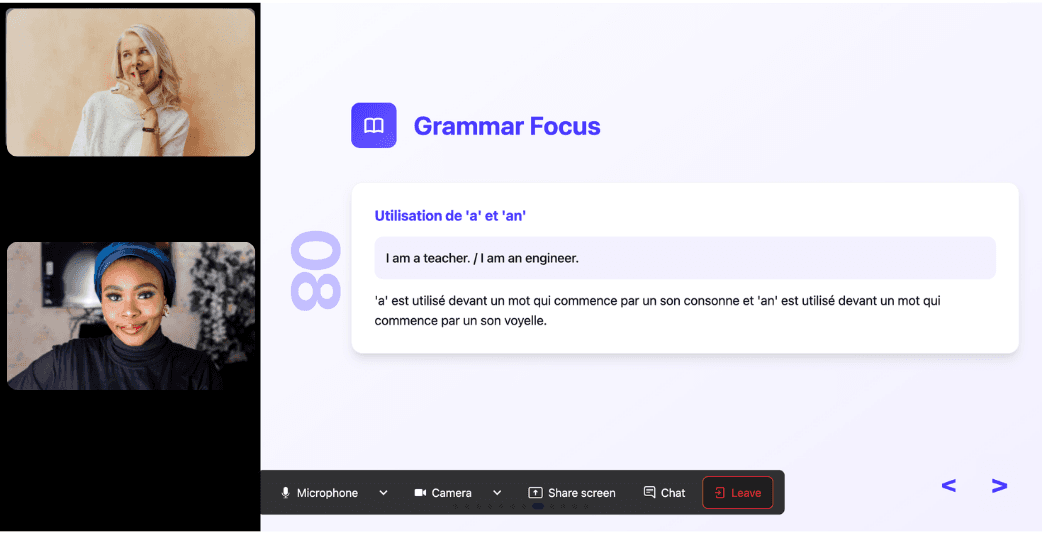
Ask all the questions you want, repeat sections if needed, and customize your learning experience in ways traditional teachers and generic apps simply can’t match.
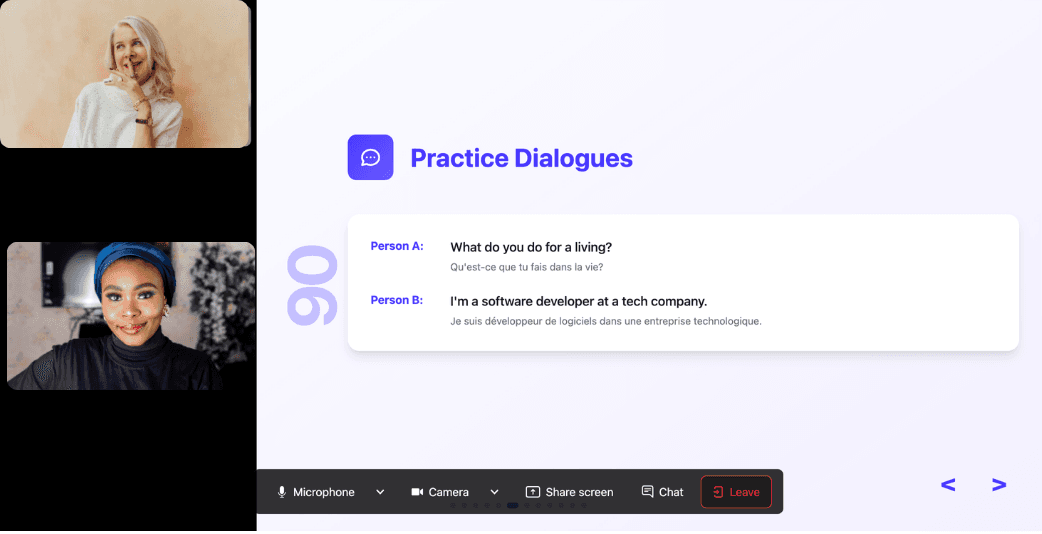
With 24/7 access at a fraction of the cost of private lessons, Kylian removes all the barriers that have kept you from mastering the language you’ve always wanted to learn.