You encounter "wrt" in emails, text messages, and online discussions, but its meaning remains unclear? This abbreviation carries significant weight in professional and academic communication, yet many English speakers struggle with its proper application. "Wrt" stands for "with respect to" or "with regard to," serving as a concise way to introduce topics, reference points, or establish context in written communication.
Understanding "wrt" matters because miscommunication costs businesses an average of $62.4 million annually according to recent productivity studies. When abbreviations like "wrt" create confusion, they contribute to this communication breakdown. More critically, mastering this abbreviation enhances your ability to communicate precisely in environments where brevity and clarity determine professional success.
In What Context Is "wrt" Used?
The abbreviation "wrt" functions across three distinct communication spheres, each carrying unique implications for how readers interpret your message.
Academic and Research Contexts represent the most formal application of "wrt." Here, the abbreviation introduces specific variables, conditions, or frameworks being analyzed. Research papers use "wrt" to establish clear boundaries around what aspect of a complex topic they're addressing. For example: "The algorithm's performance wrt memory usage exceeded expectations by 40%." This usage signals to readers that you're isolating one particular dimension of analysis from a broader set of possibilities.
Business Communication employs "wrt" to streamline professional correspondence while maintaining formality. Project managers, consultants, and executives use this abbreviation to reference specific agenda items, deliverables, or strategic considerations without repeating lengthy phrases. Consider: "Please review the budget projections wrt Q4 marketing initiatives." This application demonstrates respect for recipients' time while ensuring message clarity.
Technical Documentation leverages "wrt" to establish relationships between components, processes, or specifications. Software developers, engineers, and system administrators use this abbreviation to describe how elements function relative to each other. An example: "Database performance wrt concurrent user loads requires optimization." This context demands precision because ambiguity in technical communication can lead to system failures or project delays.
The distinction between these contexts matters because each audience expects different levels of formality and specificity. Academic readers anticipate rigorous precision, business professionals value efficiency, and technical teams require unambiguous relationships between concepts.
How to Use "wrt" Like a Native Speaker with Examples
Grammatical mastery of "wrt" requires understanding its function as a prepositional phrase replacement that maintains sentence flow while introducing comparative or referential elements.
Sentence Structure Patterns follow predictable frameworks that enhance readability. The most common pattern places "wrt" between the main clause and the referenced element: "Subject + verb + object + wrt + reference point." This structure maintains logical flow while clearly establishing what aspect you're addressing. For instance: "Revenue increased 23% wrt last quarter's performance."
Positioning Flexibility allows "wrt" to appear at sentence beginnings for emphasis or mid-sentence for integration. Beginning placement creates stronger focus: "Wrt customer satisfaction metrics, our scores improved significantly." Mid-sentence integration maintains smoother flow: "Marketing campaigns performed exceptionally well wrt conversion rates across all demographics."
Punctuation Considerations require attention because "wrt" often introduces explanatory elements. When the phrase following "wrt" provides essential information, no comma is needed: "Profits declined wrt manufacturing costs." However, when the reference provides supplementary context, comma placement becomes necessary: "The project timeline, wrt resource allocation, needs revision."
Complex Sentence Integration demonstrates advanced usage where "wrt" connects multiple ideas within sophisticated grammatical structures. Professional writers use this technique to pack maximum information into concise statements: "The merger's success, wrt both market positioning and operational efficiency, exceeded stakeholder expectations despite initial regulatory concerns."
These patterns work because they mirror natural speech rhythms while providing the precision that written communication demands. Native speakers internalize these structures through exposure, but deliberate practice accelerates mastery.
4 Alternative Expressions to "wrt" for Natural Communication
Expanding your vocabulary beyond "wrt" prevents overuse while demonstrating linguistic sophistication that marks advanced English proficiency.
"In terms of" provides a more conversational alternative that works across formal and informal contexts. This phrase carries slightly less technical weight than "wrt," making it suitable for broader audiences. Example: "In terms of market share, our position strengthened considerably." This alternative works particularly well when addressing mixed audiences where some members might not recognize "wrt."
"Regarding" offers formal precision without abbreviation, making it ideal for documents where clarity supersedes brevity. Legal, academic, and official communications often prefer this full-form approach. Example: "Regarding budget allocations, the committee approved increased funding." This choice signals respect for traditional communication standards while maintaining professional tone.
"Concerning" introduces a slightly more urgent or problematic tone, making it effective when addressing issues requiring attention. This alternative implies that the referenced topic deserves serious consideration. Example: "Concerning security protocols, immediate updates are necessary." The word choice here suggests priority and potential consequences.
"As for" creates a more conversational transition that works well in presentations or informal business communications. This phrase introduces new topics while maintaining connection to previous discussion points. Example: "As for implementation timelines, we're ahead of schedule." This alternative helps maintain engagement in spoken or less formal written communication.
Choosing between these alternatives depends on audience expectations, communication medium, and the relationship you want to establish with your readers. Each option carries subtle connotations that influence how recipients interpret your message.
How to Use "wrt" in Formal and Informal Scenarios
Context-appropriate usage of "wrt" requires understanding audience expectations and communication norms across different professional and social environments.
Formal Business Scenario: Board Meeting Minutes demand precision and professional tone while maintaining readability for diverse stakeholders. Consider this example: "The CFO presented quarterly results wrt operational expenses, highlighting a 15% reduction in overhead costs." This usage works because board members expect concise reporting that covers multiple topics efficiently. The abbreviation signals familiarity with business communication conventions while respecting time constraints inherent in executive-level meetings.
Formal Academic Scenario: Research Proposal requires scholarly precision where "wrt" establishes clear analytical boundaries. Example: "This study examines consumer behavior wrt sustainable packaging preferences across demographic segments." Academic audiences appreciate this usage because it demonstrates awareness of research scope limitations while indicating systematic analytical approach. The abbreviation shows respect for academic readers' expertise while maintaining focus on specific research parameters.
Informal Professional Scenario: Team Email Communication allows more relaxed usage while maintaining workplace appropriateness. Consider: "Hey team, quick update wrt the client presentation - we're good to go for Friday." This application works in established team environments where members share communication norms and understand context. The informal tone doesn't diminish the abbreviation's utility for providing clear reference points.
Informal Collaborative Scenario: Project Management Software utilizes "wrt" for efficiency in rapid-fire communication exchanges. Example: "Status update wrt deliverables: design phase complete, development 60% done." Digital collaboration platforms reward brevity, making "wrt" valuable for maintaining clarity while minimizing typing effort. Team members working on fast-paced projects appreciate this efficiency.
These scenarios work because they align abbreviation usage with audience expectations and communication medium requirements. Formal contexts benefit from "wrt" because it maintains professionalism while saving space. Informal contexts appreciate the efficiency without sacrificing clarity.
Common Mistakes to Avoid When Using "wrt"
Recognition and prevention of typical "wrt" errors protects your professional credibility while ensuring message clarity across different communication contexts.
Overuse in Single Documents creates reader fatigue and suggests limited vocabulary range. Documents containing "wrt" in every paragraph lose impact because the abbreviation becomes meaningless repetition rather than purposeful precision. Instead of writing "The results wrt sales were positive wrt customer feedback and excellent wrt market penetration," choose varied expressions: "The results regarding sales were positive, customer feedback was encouraging, and market penetration exceeded expectations." This revision demonstrates vocabulary sophistication while maintaining clarity.
Inappropriate Audience Application occurs when writers use "wrt" with readers unfamiliar with the abbreviation. Client-facing communications, customer service responses, and public-facing documents should avoid abbreviations that might confuse recipients. Writing "Your account status wrt payment processing requires attention" might puzzle customers who don't recognize the abbreviation. The clearer version: "Your account status regarding payment processing requires attention" ensures universal understanding.
Grammatical Integration Errors happen when writers treat "wrt" as a conjunction rather than a prepositional phrase. Incorrect usage: "The project succeeded wrt we finished early." This structure creates grammatical confusion because "wrt" cannot connect independent clauses. Correct usage: "The project succeeded wrt timeline expectations" maintains proper grammatical relationships while preserving meaning.
Context Mismatch Problems arise when the formality level of "wrt" doesn't match the overall document tone. Using "wrt" in casual social media posts or personal communications can appear pretentious or overly formal. Similarly, avoiding "wrt" in technical documentation where precision matters can seem unprofessional. Match your abbreviation choices to communication context and audience expectations.
Professional Email Etiquette with "wrt"
Email communication represents the primary professional application of "wrt," requiring specific attention to etiquette norms that enhance rather than hinder message effectiveness.
Subject Line Integration can benefit from "wrt" when space limitations demand brevity while maintaining clarity. Example: "Q3 Budget Review wrt Marketing Spend" communicates the meeting's focus more precisely than "Q3 Budget Review Meeting." However, avoid "wrt" in subject lines when recipients might not understand the abbreviation, particularly in external communications with new clients or partners.
Opening Paragraph Positioning works well when "wrt" establishes immediate context for busy professionals. Consider: "I'm writing wrt our discussion about vendor selection criteria." This opening immediately connects the email to previous conversations while indicating the specific focus area. This approach respects recipients' time by providing instant context that helps them prioritize response urgency.
Action Item Clarity benefits from "wrt" when delegating tasks or requesting specific information. Example: "Please provide updated timelines wrt the software integration project." This usage clearly identifies which project needs attention while avoiding ambiguity that could lead to delayed responses or incorrect task completion.
Response Threading utilizes "wrt" to maintain conversation continuity in email chains where multiple topics emerge. Writing "Wrt your question about budget approvals, here's the latest information" helps recipients quickly identify which part of a complex email thread you're addressing. This technique particularly benefits email chains involving multiple participants and various discussion topics.
"wrt" in Digital Communication Platforms
Modern communication platforms each create unique considerations for "wrt" usage, requiring platform-specific awareness to maintain professional effectiveness.
Slack and Team Messaging environments often embrace "wrt" because team members share professional context and appreciate communication efficiency. Channel communications like "Update wrt client feedback: mostly positive, addressing two concerns" work well because team members understand project context and value brief updates that don't interrupt workflow.
Professional Social Media platforms like LinkedIn require careful consideration of audience diversity when using "wrt." Posts visible to broad professional networks should either avoid the abbreviation or provide context that ensures universal understanding. However, industry-specific groups or technical discussions might embrace "wrt" as shorthand that demonstrates professional fluency.
Video Conference Chat functions benefit from "wrt" during meetings where participants need quick clarification or want to reference specific discussion points without interrupting speakers. Chat messages like "Data wrt Q2 sales available in shared folder" provide meeting participants with relevant information while maintaining meeting flow.
Document Collaboration Platforms such as Google Docs or SharePoint often see "wrt" in comments where reviewers need to reference specific document sections or provide contextual feedback. Comments like "Suggestion wrt paragraph 3: consider adding market data" help authors understand exactly which content needs attention while maintaining collaborative workflow efficiency.
Cultural and Regional Considerations
Understanding how different English-speaking regions and professional cultures perceive "wrt" prevents communication misunderstandings that could impact professional relationships or project success.
American Business Culture generally accepts "wrt" in professional contexts, particularly in technology, finance, and consulting industries where efficiency and precision are valued. However, traditional industries or companies with formal communication cultures might prefer full phrases over abbreviations. Research your organization's communication norms before defaulting to abbreviated forms.
International English Communication requires extra caution with "wrt" because non-native speakers might not recognize the abbreviation even if they possess strong English skills. When communicating across cultural boundaries, choose clarity over brevity unless you're certain all participants understand the abbreviation. This consideration becomes critical in multinational projects where communication breakdown can derail collaboration.
Academic Institution Variations create different expectations for "wrt" usage depending on institutional culture and academic discipline. Science, technology, engineering, and mathematics fields often embrace abbreviations as standard practice, while humanities departments might prefer full expressions that maintain traditional academic writing standards.
Industry-Specific Norms influence "wrt" acceptance across professional sectors. Technology companies, consulting firms, and financial institutions typically embrace efficient communication practices that include standard abbreviations. Healthcare, legal, and government sectors might require more formal communication approaches that avoid abbreviations in official documentation.
Learn Any Language with Kylian AI
Private language lessons are expensive. Paying between 15 and 50 euros per lesson isn’t realistic for most people—especially when dozens of sessions are needed to see real progress.
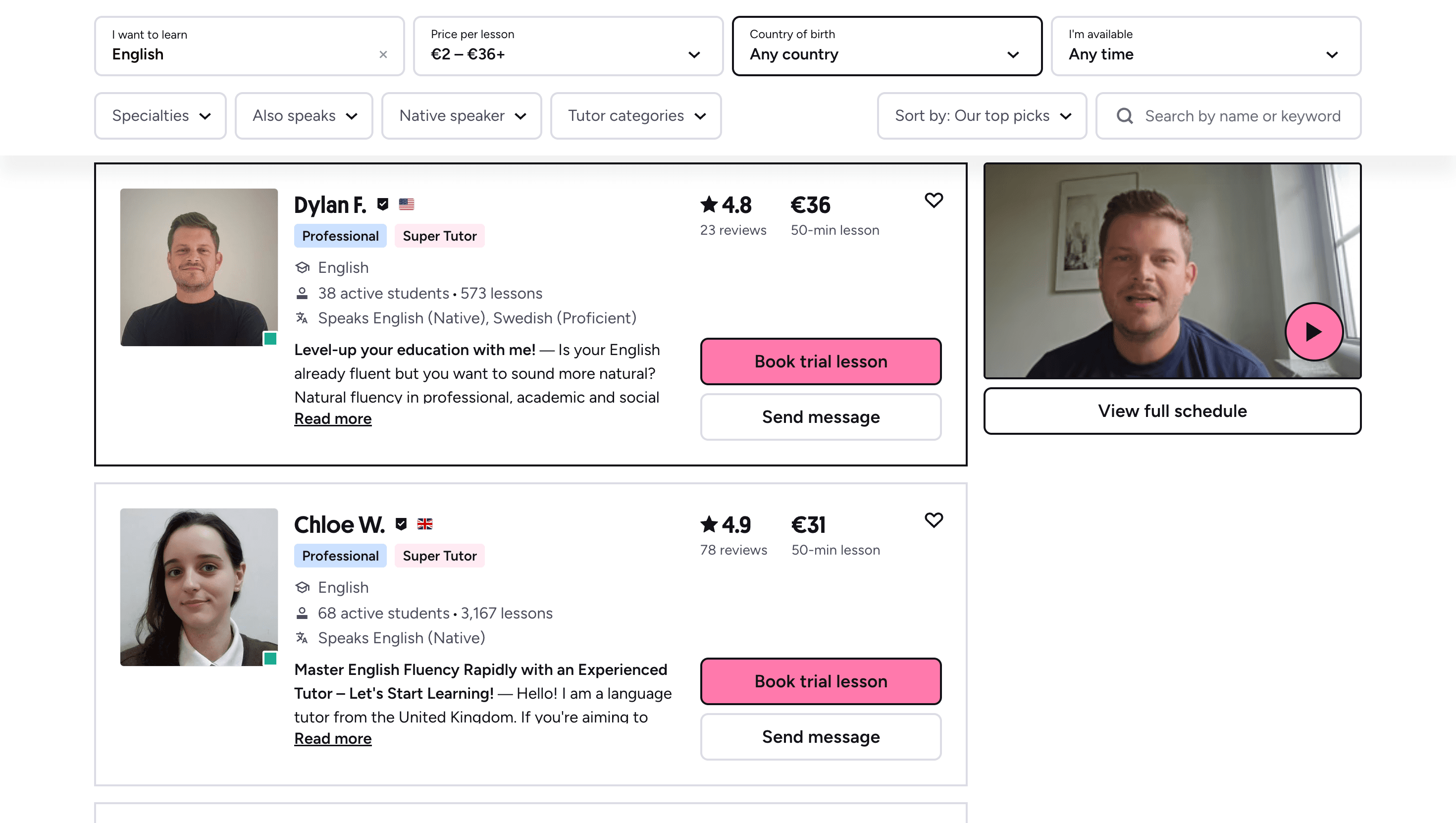
Many learners give up on language learning due to these high costs, missing out on valuable professional and personal opportunities.
That’s why we created Kylian: to make language learning accessible to everyone and help people master a foreign language without breaking the bank.
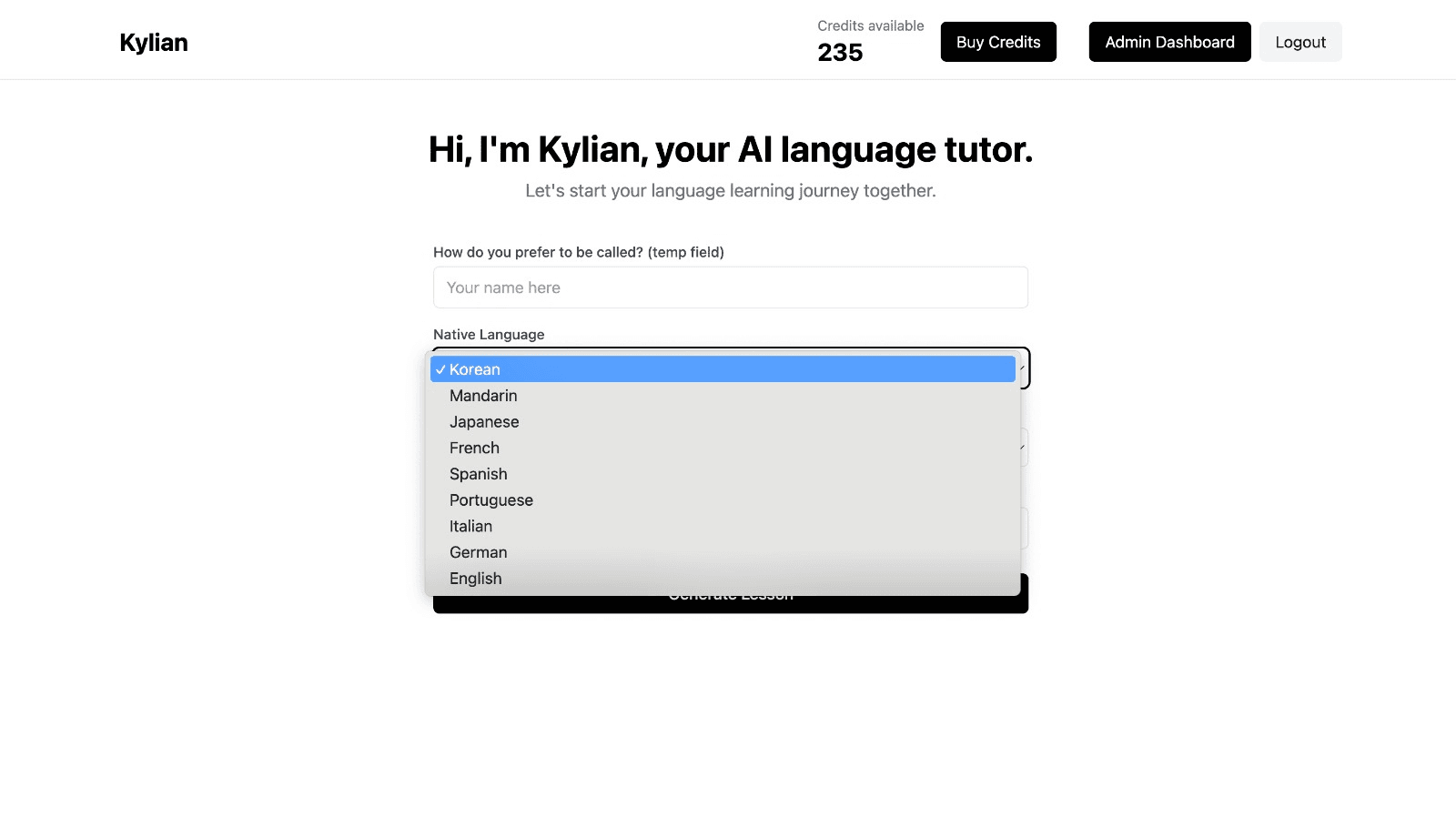
To get started, just tell Kylian which language you want to learn and what your native language is
Tired of teachers who don’t understand your specific struggles as a French speaker? Kylian’s advantage lies in its ability to teach any language using your native tongue as the foundation.
Unlike generic apps that offer the same content to everyone, Kylian explains concepts in your native language (French) and switches to the target language when necessary—perfectly adapting to your level and needs.
This personalization removes the frustration and confusion that are so common in traditional language learning.
Choose a specific topic you want to learn
Frustrated by language lessons that never cover exactly what you need? Kylian can teach you any aspect of a language—from pronunciation to advanced grammar—by focusing on your specific goals.
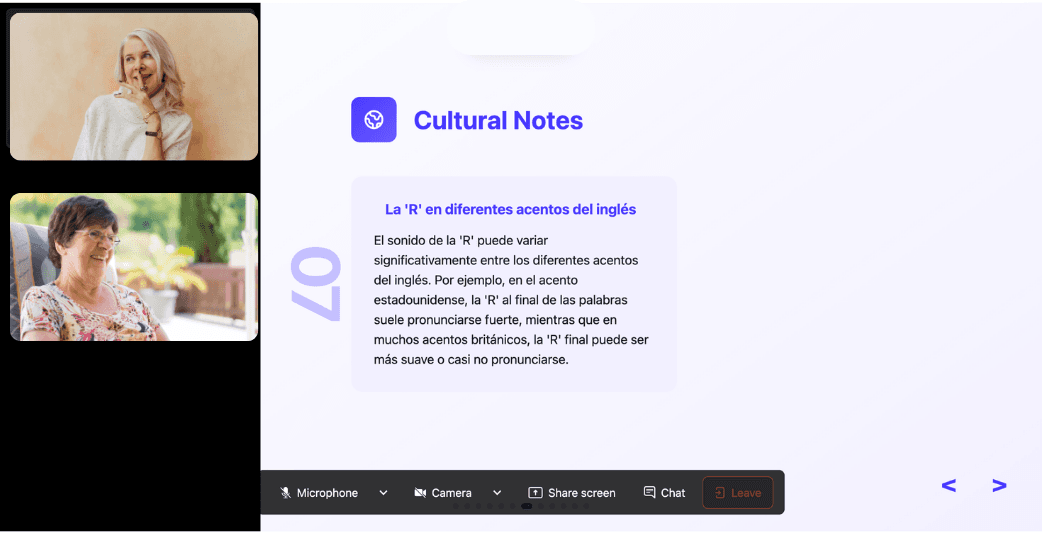
Avoid vague requests like “How can I improve my accent?” and be precise: “How do I pronounce the R like a native English speaker?” or “How do I conjugate the verb ‘to be’ in the present tense?”
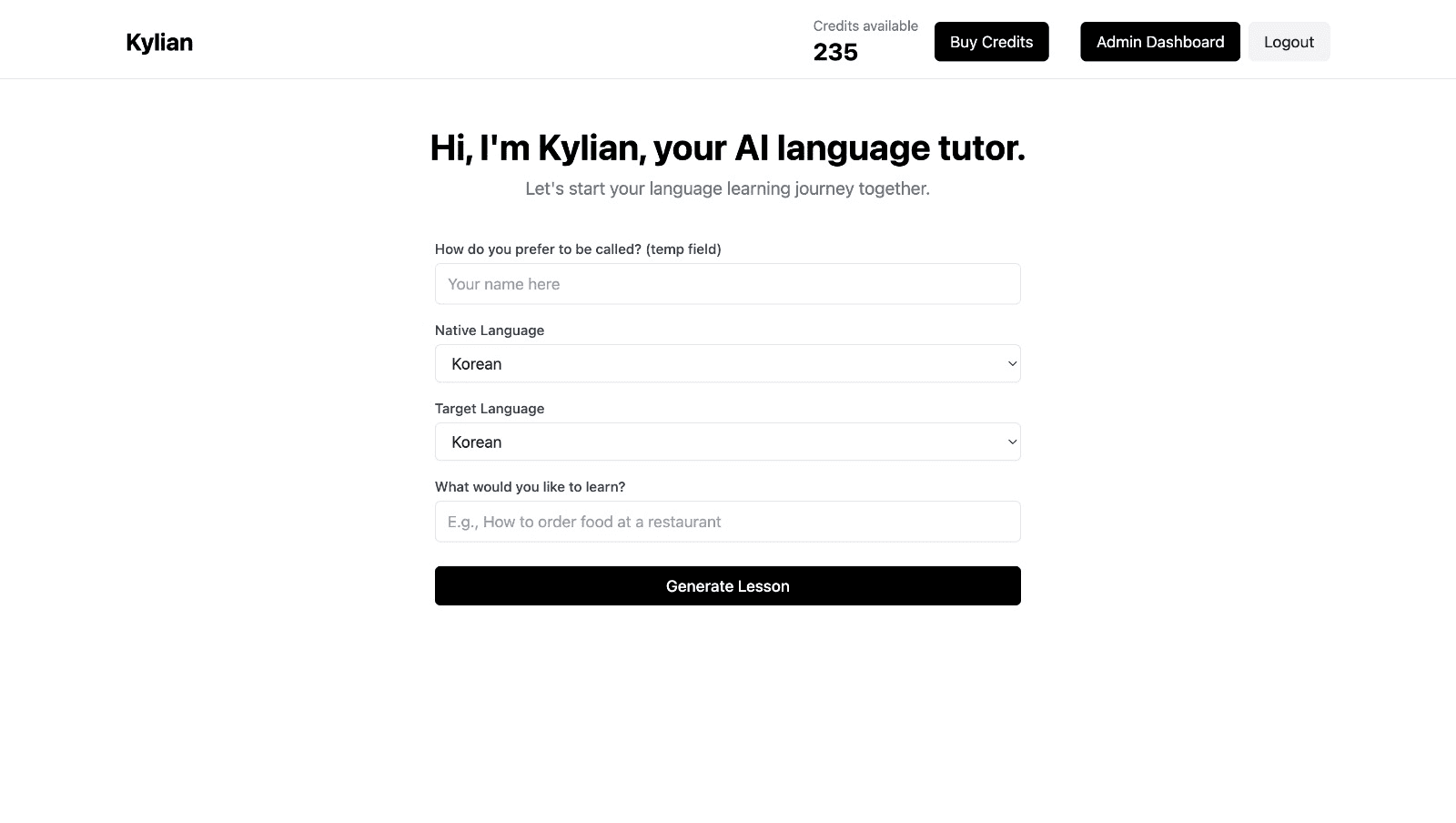
With Kylian, you’ll never again pay for irrelevant content or feel embarrassed asking “too basic” questions to a teacher. Your learning plan is entirely personalized.
Once you’ve chosen your topic, just hit the “Generate a Lesson” button, and within seconds, you’ll get a lesson designed exclusively for you.
Join the room to begin your lesson
The session feels like a one-on-one language class with a human tutor—but without the high price or time constraints.
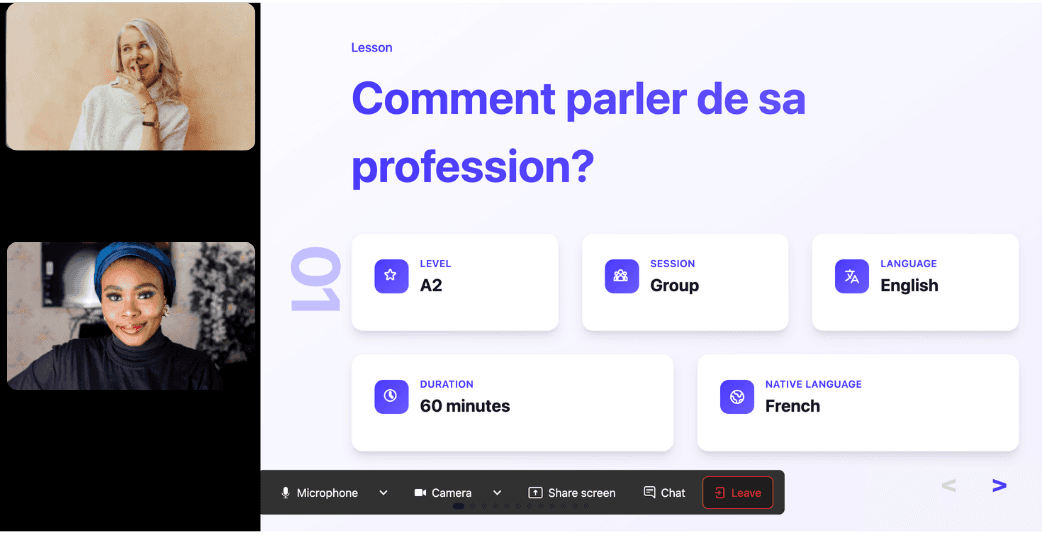
In a 25-minute lesson, Kylian teaches exactly what you need to know about your chosen topic: the nuances that textbooks never explain, key cultural differences between French and your target language, grammar rules, and much more.

Ever felt frustrated trying to keep up with a native-speaking teacher, or embarrassed to ask for something to be repeated? With Kylian, that problem disappears. It switches intelligently between French and the target language depending on your level, helping you understand every concept at your own pace.
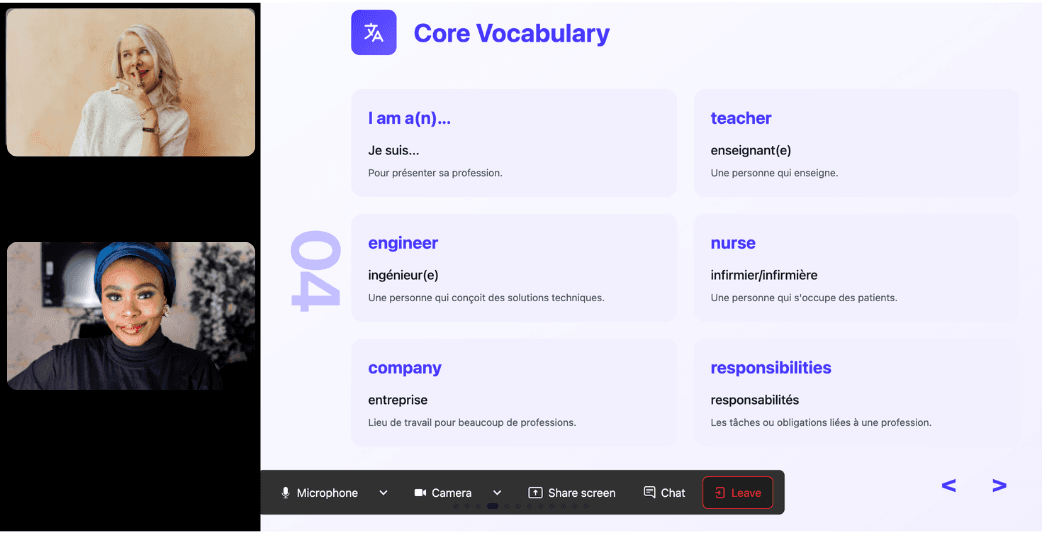
During the lesson, Kylian uses role-plays, real-life examples, and adapts to your learning style. Didn’t understand something? No problem—you can pause Kylian anytime to ask for clarification, without fear of being judged.
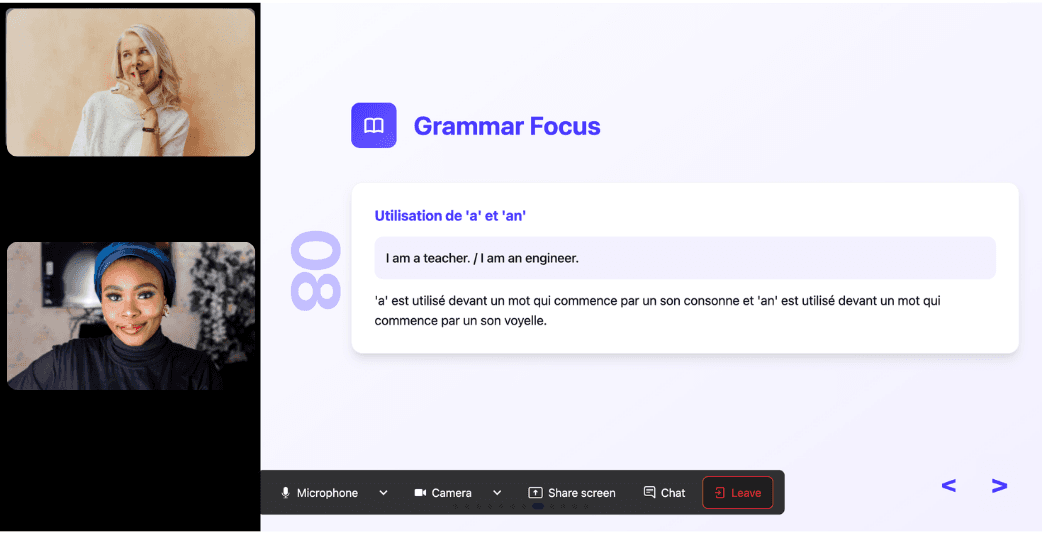
Ask all the questions you want, repeat sections if needed, and customize your learning experience in ways traditional teachers and generic apps simply can’t match.
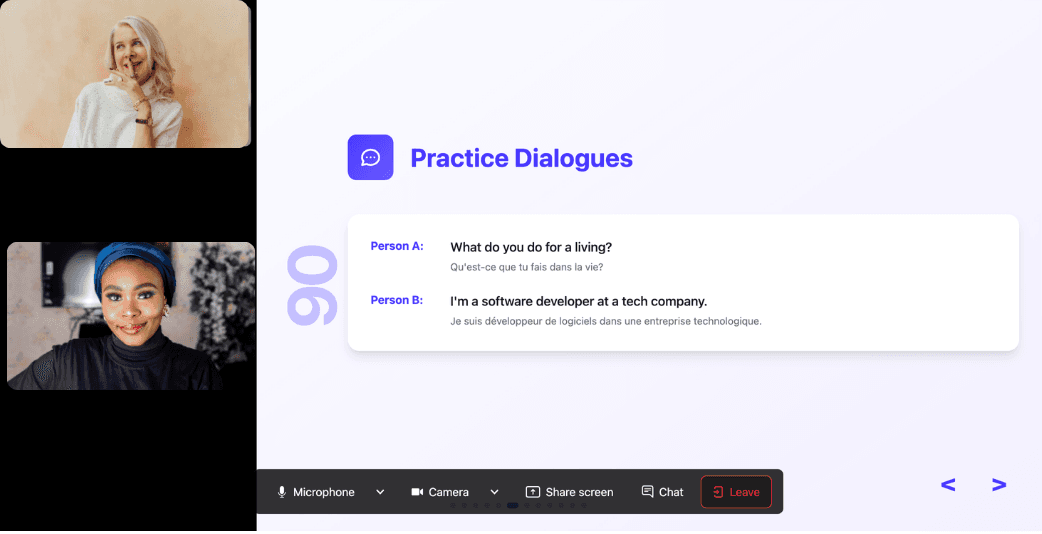
With 24/7 access at a fraction of the cost of private lessons, Kylian removes all the barriers that have kept you from mastering the language you’ve always wanted to learn.