The British linguistic landscape presents a fascinating paradox: a nation that produced Shakespeare and formal diplomatic protocols simultaneously embraces terms like "holibobs" to describe something as universal as holidays. This seemingly innocent word reveals deeper cultural tensions about class, authenticity, and social identity in contemporary Britain.
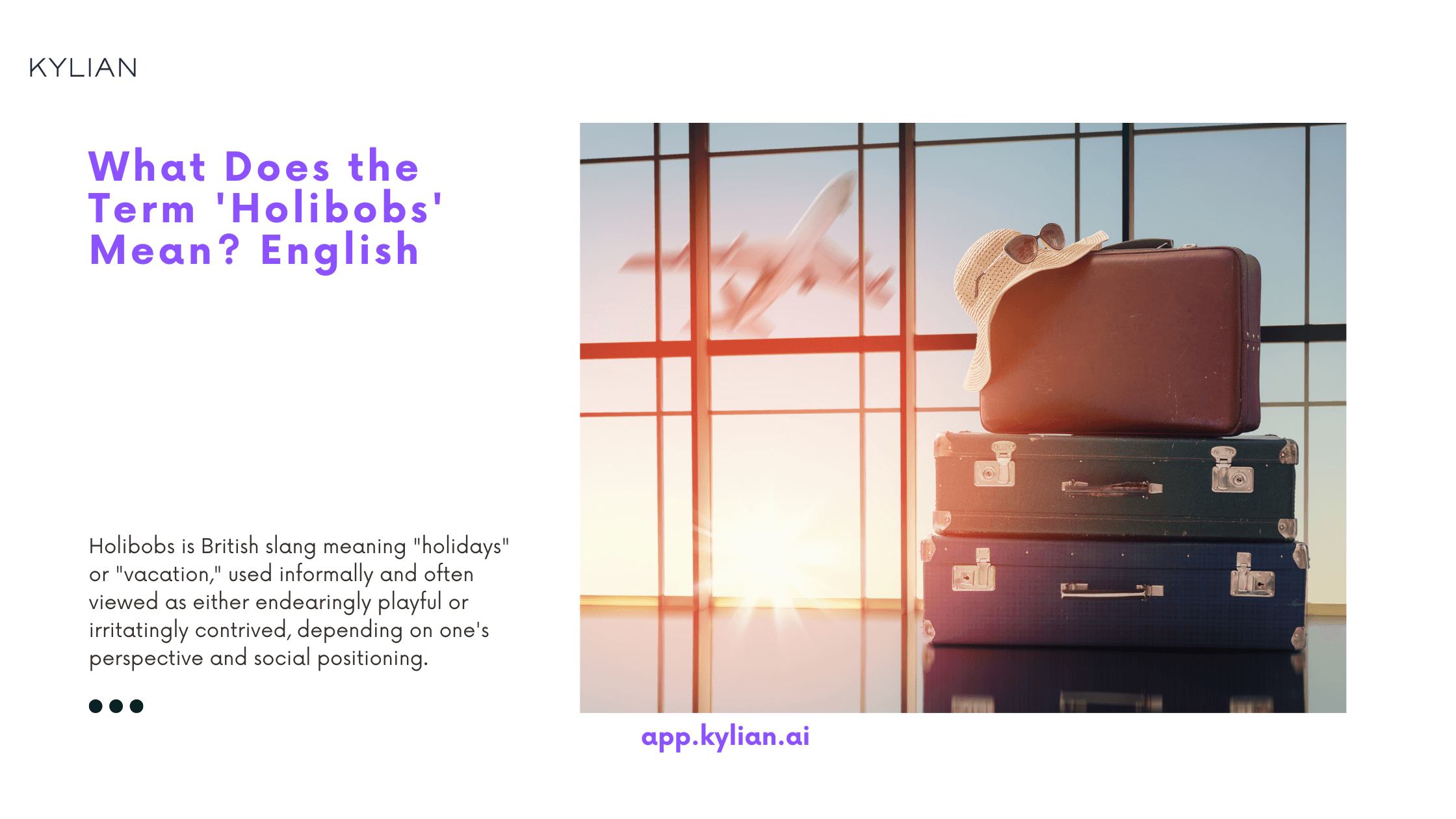
Bottom Line: Holibobs is British slang meaning "holidays" or "vacation," used informally and often viewed as either endearingly playful or irritatingly contrived, depending on one's perspective and social positioning.
The Linguistic Foundation of Holibobs
British slang for going on a holiday/vacation, holibobs represents a linguistic phenomenon that goes beyond simple abbreviation. Unlike conventional shortenings such as "hols" for holidays, holibobs actually contains the same number of syllables as its original word. This challenges the traditional assumption that slang serves primarily for efficiency.
The term functions as a humorous term for holidays that deliberately abandons linguistic economy for what appears to be purely aesthetic or cultural signaling. The suffix "-bobs" lacks clear etymological roots, leading some linguists to categorize it alongside other seemingly arbitrary British additions like "thingummybob" or similar constructions.
Core Characteristics:
- Pronunciation: HOL-i-bobs (three syllables)
- Usage: Plural form typically preferred
- Register: Highly informal, often considered juvenile
- Geographic spread: Primarily England, with limited Scottish adoption
Social Class Dynamics and Cultural Positioning
The most revealing aspect of holibobs lies not in its definition but in the intense reactions it provokes. A woman at work keeps talking about her 'holibobs'. The word makes me cringe a bit (well a lot really), reflects a broader pattern of class-based linguistic anxiety that permeates British society.
Different social classes often had their own slang words and phrases as a way to distinguish themselves from others, and holibobs occupies a particularly contentious position in this hierarchy. The term has become associated with what critics characterize as "Live, Laugh, Love" mugs and mismatched type signs on their kitchen walls aesthetic – a shorthand for performative domesticity and manufactured cheerfulness.
This association reveals a fundamental tension in modern British identity. The working class traditionally viewed elaborate vocabulary as pretentious, while the upper classes maintained linguistic formality as a marker of education and breeding. Holibobs disrupts this binary by being simultaneously informal yet affected, accessible yet grating.
The Authenticity Question
Why does holibobs generate such visceral reactions when other British slang terms gain widespread acceptance? The answer lies in perceived authenticity versus manufactured quirkiness. "I think it's a good thing that the kind of people that say 'hollibobs' say 'hollibobs'. It makes them easy to identify" suggests that the term functions as an inadvertent social sorting mechanism.
Authentic slang typically emerges organically from specific communities facing shared experiences or challenges. Cockney rhyming slang developed among East London working-class communities. Football terminology evolved within sporting cultures. Military slang emerged from shared hardship and camaraderie.
Holibobs, by contrast, appears to lack this organic foundation. "A funky jolly term used to replace 'holiday'" suggests deliberate construction rather than natural evolution. The term seems engineered for whimsy rather than arising from genuine linguistic necessity or community bonding.
Media Influence and Popular Culture Propagation
The term's spread correlates strongly with certain media consumption patterns and lifestyle aspirations. When Channel 4's The Circle's contestants were asked what they would do if they won the £100,000 prize, Tally replied that she would take her family to a hollibob in Spain demonstrates how reality television both reflects and reinforces particular linguistic choices.
British television programming, particularly lifestyle and reality formats, has increasingly embraced this type of deliberately cutesy language. This creates a feedback loop where media personalities adopt terms like holibobs to signal relatability and warmth, which then influences viewers to adopt similar linguistic patterns in their own social circles.
The phenomenon extends beyond television into social media platforms, where the pressure to appear approachable and fun drives the adoption of terms that might feel forced in face-to-face conversation. Instagram captions featuring "off on my holibobs" serve dual purposes: signaling leisure privilege while maintaining an accessible, non-threatening tone.
Generational and Regional Variations
Following the country's mourning of the late Queen, the UK celebrated the King's Coronation in 2023 - a ceremony that officially crowned King Charles, and a brilliant excuse for a national Holibob! shows how the term has achieved sufficient mainstream recognition to appear in tourism marketing and official contexts.
However, usage patterns reveal significant demographic clustering. The term appears most frequently among:
Primary Users:
- Women aged 25-45 in suburban settings
- Social media users seeking to project lifestyle aspirational content
- Reality television personalities and their audiences
- Tourism and hospitality marketing materials
Resistance Demographics:
- Traditional working-class communities favoring "holidays" or "hols"
- Upper-class speakers maintaining formal vocabulary
- Younger generations preferring newer slang innovations
- Scottish and Northern English speakers showing limited adoption
The Psychology of Linguistic Irritation
The intense negative reactions to holibobs reveal deeper psychological mechanisms around language and social identity. "Holibobs is a very lower middle class thing to say" suggests that the term triggers anxieties about social mobility and authentic self-presentation.
Linguistic anthropologists identify several factors that contribute to word aversion:
Phonetic Structure: The repetitive "ob" sounds create what some describe as an infantilizing effect, unconsciously evoking baby talk or nursery rhymes.
Social Signaling: The term signals leisure privilege (the ability to take holidays) while attempting to downplay this privilege through cute language – a combination that strikes many as disingenuous.
Cultural Associations: The term has become linked with specific lifestyle choices and consumer patterns that some find superficial or performative.
Generational Displacement: Older slang terms feel more authentic to established speakers who view new constructions as artificial insertions rather than organic developments.
International Perspective and Export Potential
Unlike many British slang terms that achieve international recognition (brilliant, dodgy, cheeky), holibobs has shown limited export potential. American, Canadian, and Australian English speakers rarely adopt the term, preferring their own vacation-related vocabulary.
This resistance suggests that holibobs may be too culturally specific to transcend British boundaries. The term requires not just linguistic understanding but cultural context about British social dynamics, class consciousness, and media consumption patterns.
International Reception:
- United States: Viewed as quaint but not adopted
- Australia: Occasional usage in British expat communities
- Canada: Limited recognition outside British-influenced areas
- Ireland: Sporadic adoption in Dublin social media circles
Commercial and Marketing Applications
The tourism industry's embrace of holibobs reveals its commercial viability despite cultural controversies. Travel companies use "holibobs" in marketing materials to signal approachability and fun, recognizing that their target demographic responds positively to the term's associations with leisure and indulgence.
Marketing professionals have identified holibobs as effective for:
Target Demographics:
- Family vacation planners seeking inclusive, non-pretentious experiences
- Social media users likely to share vacation content
- Budget-conscious travelers who appreciate playful rather than luxury positioning
- Domestic tourism promotion emphasizing accessibility over exclusivity
Brand Positioning: Companies using holibobs in their marketing typically position themselves as friendly, approachable, and focused on genuine enjoyment rather than status or sophistication.
Contemporary Usage Patterns and Evolution
Recent citations show holibobs appearing in mainstream publications including The Guardian, suggesting the term has achieved sufficient cultural penetration to warrant serious journalistic attention. This represents a significant evolution from its origins in informal conversation.
Current usage patterns reveal interesting adaptations:
Grammatical Flexibility: While typically used as a plural noun ("going on holibobs"), singular usage ("planning a holibob") appears increasingly common.
Contextual Expansion: The term now appears in professional travel industry communication, government tourism materials, and academic discussions of British culture.
Derivative Forms: Related constructions like "holijobs" (working holidays) demonstrate the term's linguistic productivity and potential for further evolution.
The Broader Implications for British English
Holibobs represents a broader trend in contemporary British English toward what linguists term "performative informality" – the deliberate adoption of casual language to signal authenticity and relatability. This phenomenon reflects deeper social changes around class mobility, cultural capital, and authentic self-presentation in digital age Britain.
The term's controversial status illuminates ongoing tensions between traditional British linguistic hierarchies and emerging social media-driven communication patterns. Those who embrace holibobs often view it as harmlessly playful language that breaks down social barriers. Critics see it as linguistic performativity that actually reinforces class distinctions through its very attempt to appear classless.
Linguistic Significance:
- Demonstrates how digital media influences offline language adoption
- Reveals persistent class consciousness in contemporary British society
- Shows the complex relationship between authentic and performed identity
- Illustrates the commercial potential of culturally specific slang
Future Trajectory and Cultural Staying Power
The long-term prospects for holibobs depend largely on whether it can transcend its current associations with specific demographic groups and media consumption patterns. British slang terms that achieve lasting status typically either serve clear linguistic functions or become embedded in broader cultural practices.
Holibobs faces several challenges to long-term survival:
Sustainability Factors:
- Cultural Saturation: Overuse in marketing may diminish its perceived authenticity
- Generational Shift: Younger speakers show preference for newer linguistic innovations
- Class Mobility: Economic changes may alter the social dynamics that support the term
- Media Evolution: Changing entertainment formats may reduce exposure and reinforcement
Yet the term has demonstrated remarkable resilience, moving from informal conversation into mainstream media and commercial applications. This suggests it may have achieved sufficient cultural embedding to persist despite ongoing criticism.
Learn Any Language with Kylian AI
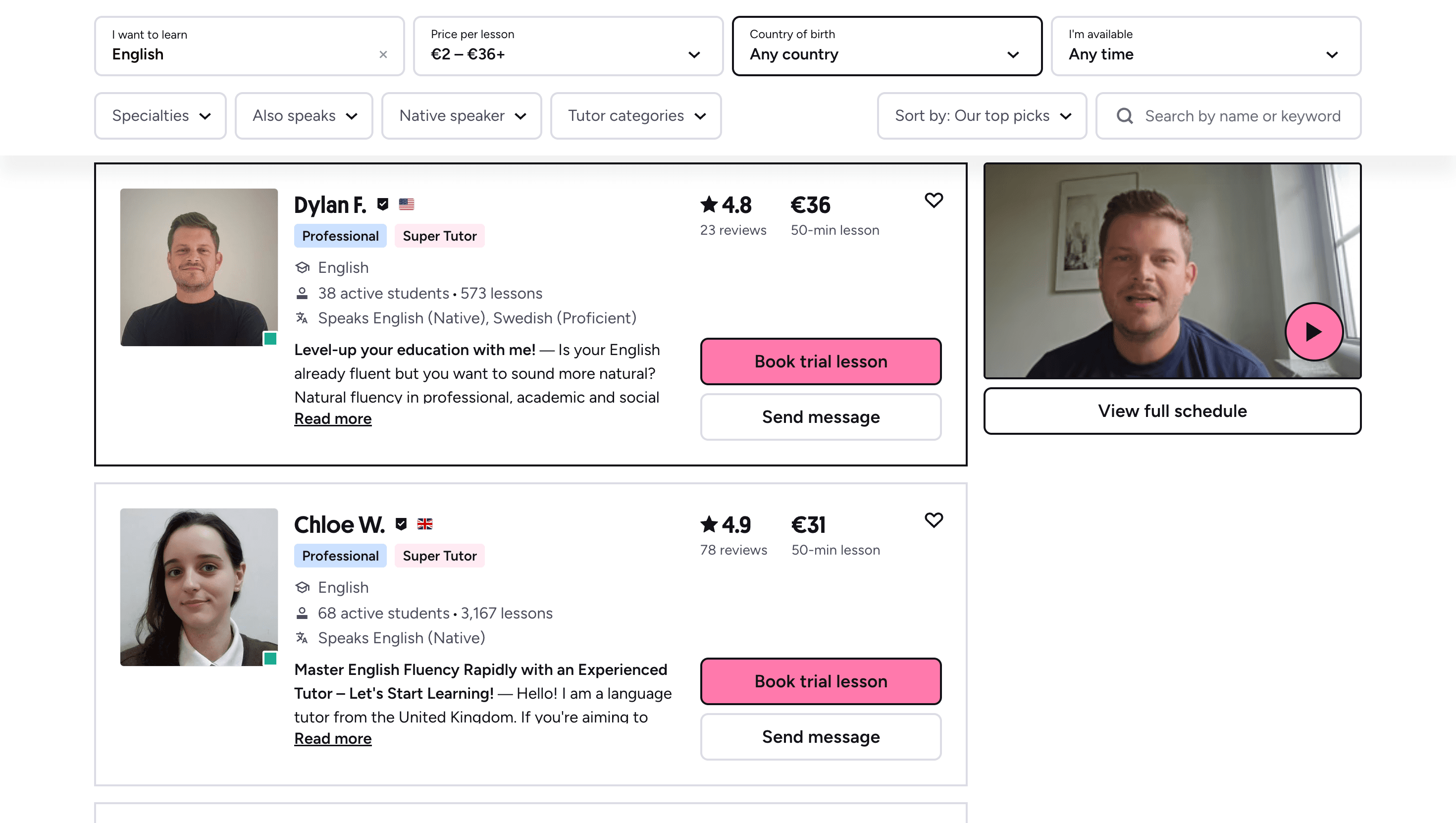
Private language lessons are expensive. Paying between 15 and 50 euros per lesson isn’t realistic for most people—especially when dozens of sessions are needed to see real progress.
Many learners give up on language learning due to these high costs, missing out on valuable professional and personal opportunities.
That’s why we created Kylian: to make language learning accessible to everyone and help people master a foreign language without breaking the bank.
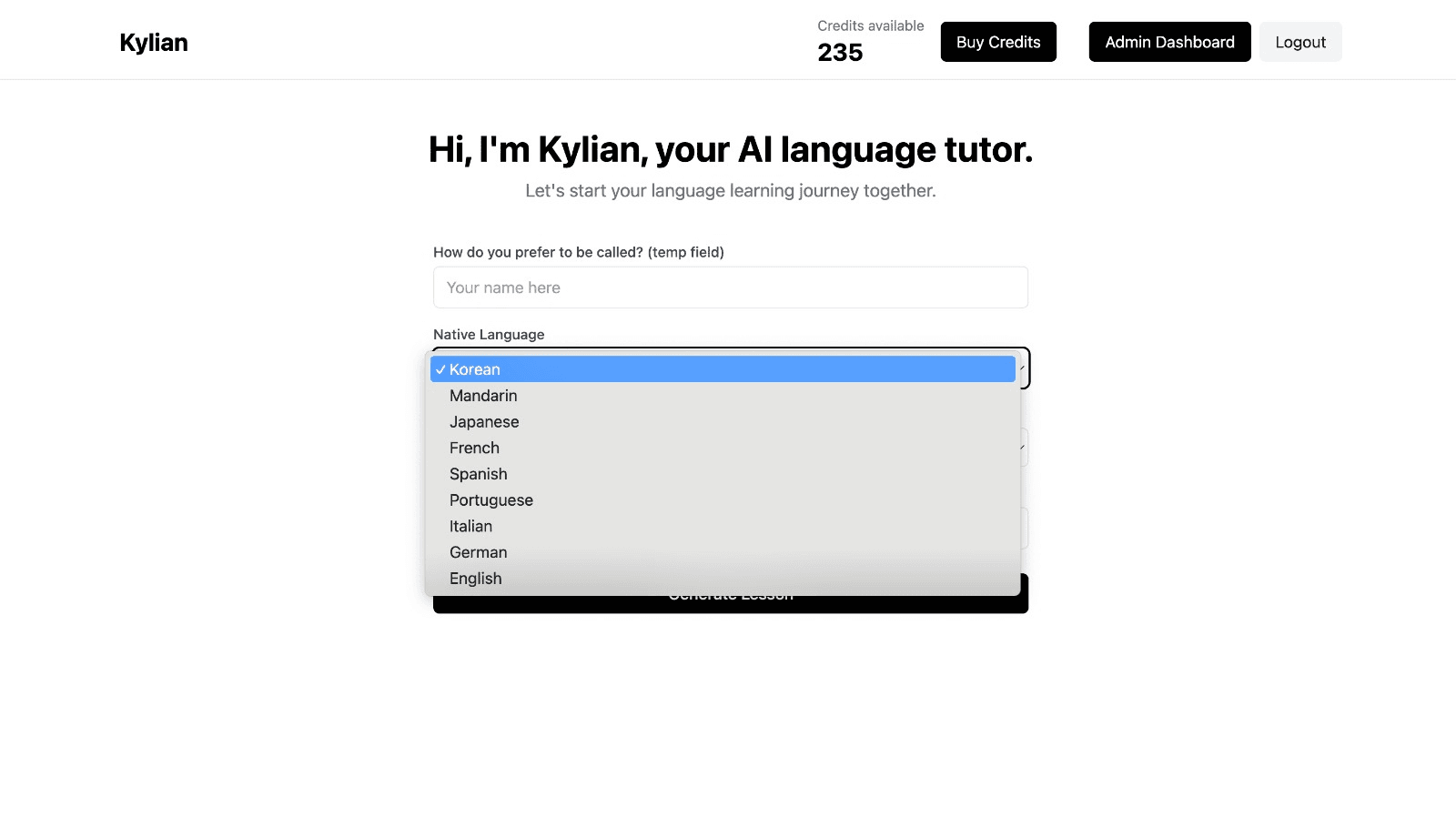
To get started, just tell Kylian which language you want to learn and what your native language is
Tired of teachers who don’t understand your specific struggles as a French speaker? Kylian’s advantage lies in its ability to teach any language using your native tongue as the foundation.
Unlike generic apps that offer the same content to everyone, Kylian explains concepts in your native language (French) and switches to the target language when necessary—perfectly adapting to your level and needs.
This personalization removes the frustration and confusion that are so common in traditional language learning.
Choose a specific topic you want to learn
Frustrated by language lessons that never cover exactly what you need? Kylian can teach you any aspect of a language—from pronunciation to advanced grammar—by focusing on your specific goals.
Avoid vague requests like “How can I improve my accent?” and be precise: “How do I pronounce the R like a native English speaker?” or “How do I conjugate the verb ‘to be’ in the present tense?”
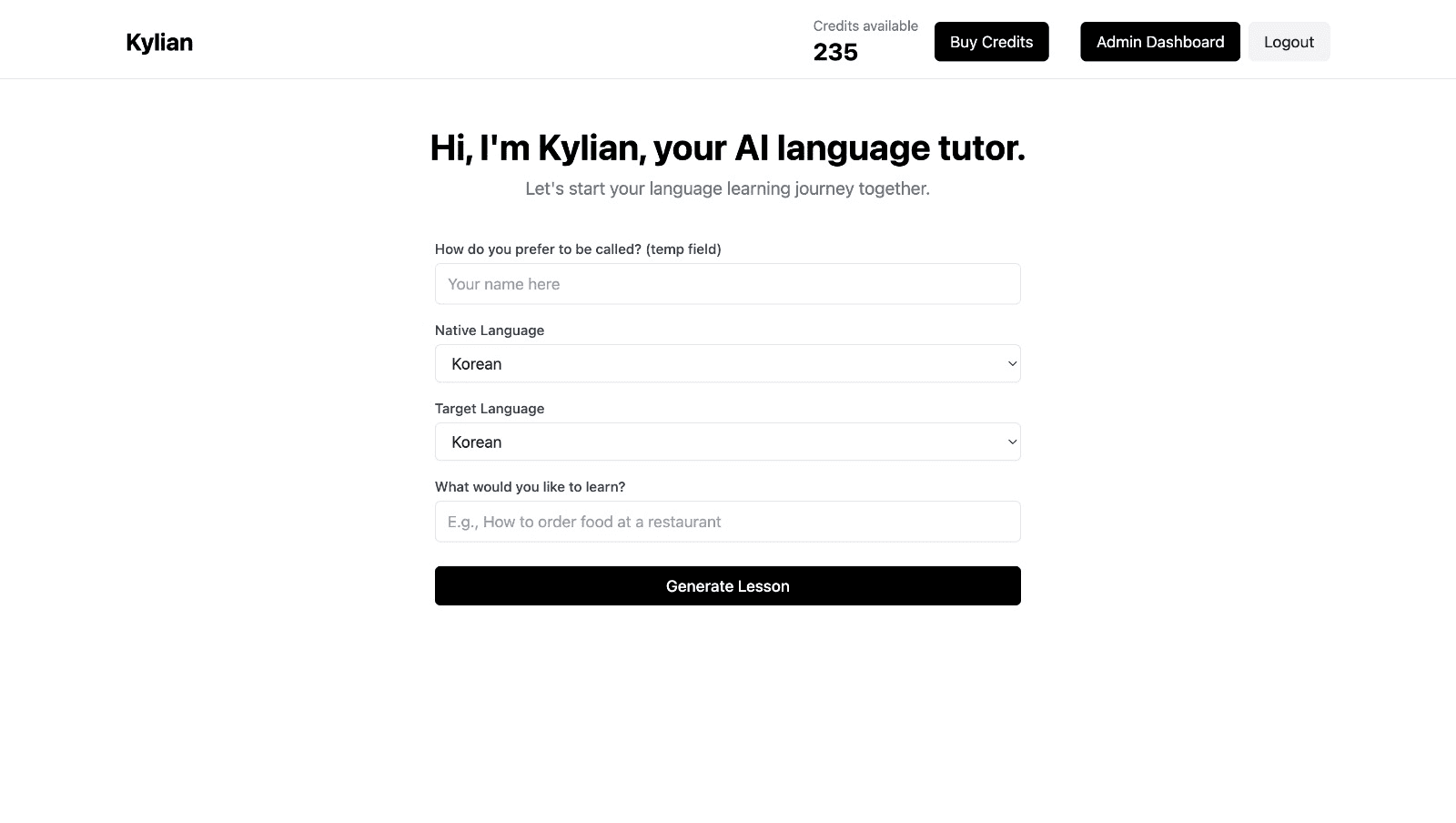
With Kylian, you’ll never again pay for irrelevant content or feel embarrassed asking “too basic” questions to a teacher. Your learning plan is entirely personalized.
Once you’ve chosen your topic, just hit the “Generate a Lesson” button, and within seconds, you’ll get a lesson designed exclusively for you.
Join the room to begin your lesson
The session feels like a one-on-one language class with a human tutor—but without the high price or time constraints.
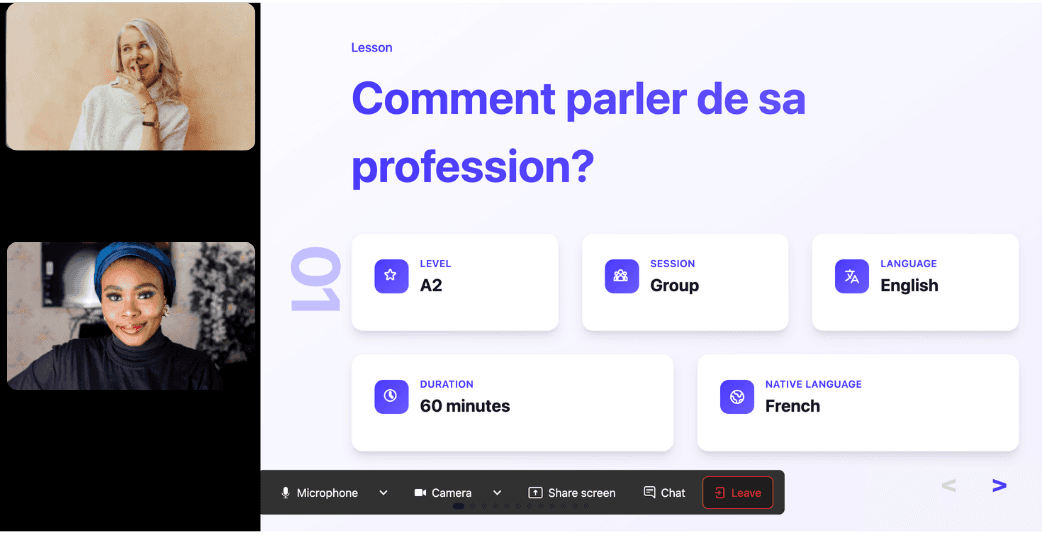
In a 25-minute lesson, Kylian teaches exactly what you need to know about your chosen topic: the nuances that textbooks never explain, key cultural differences between French and your target language, grammar rules, and much more.
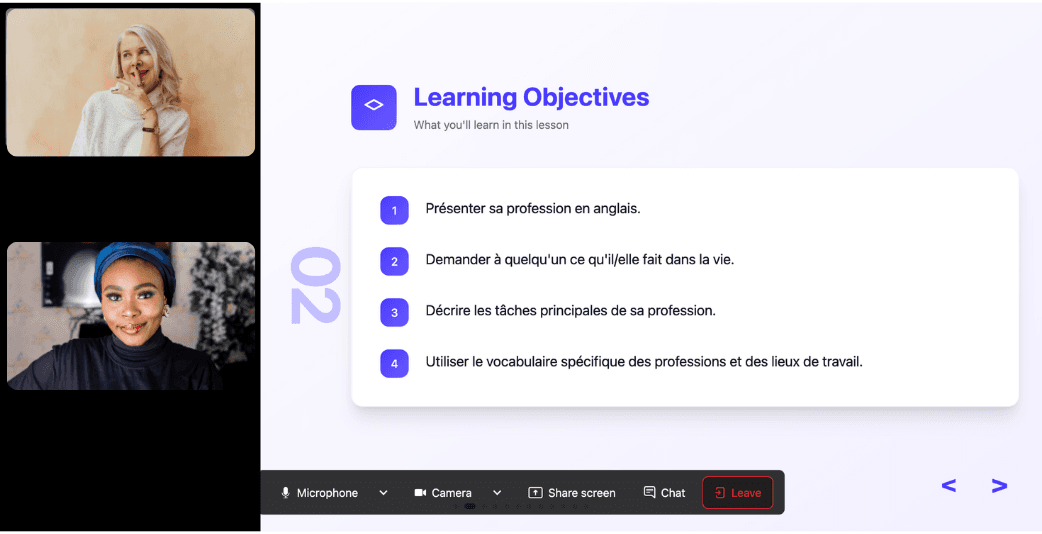
Ever felt frustrated trying to keep up with a native-speaking teacher, or embarrassed to ask for something to be repeated? With Kylian, that problem disappears. It switches intelligently between French and the target language depending on your level, helping you understand every concept at your own pace.
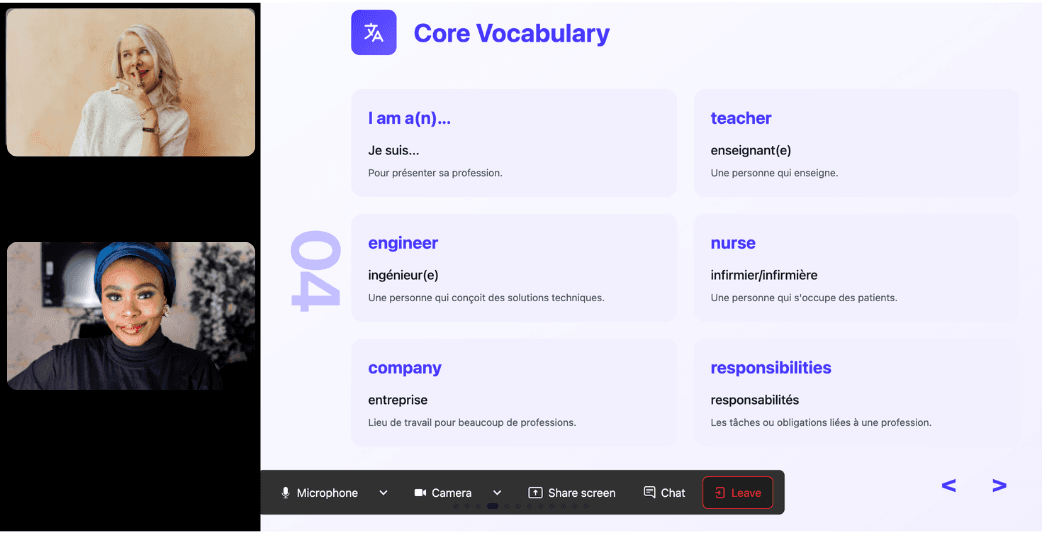
During the lesson, Kylian uses role-plays, real-life examples, and adapts to your learning style. Didn’t understand something? No problem—you can pause Kylian anytime to ask for clarification, without fear of being judged.
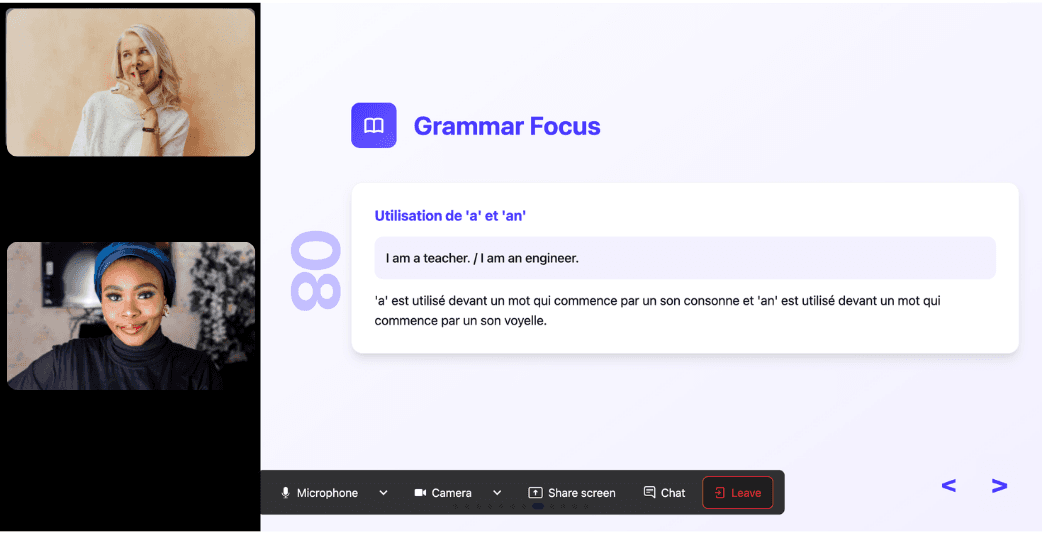
Ask all the questions you want, repeat sections if needed, and customize your learning experience in ways traditional teachers and generic apps simply can’t match.
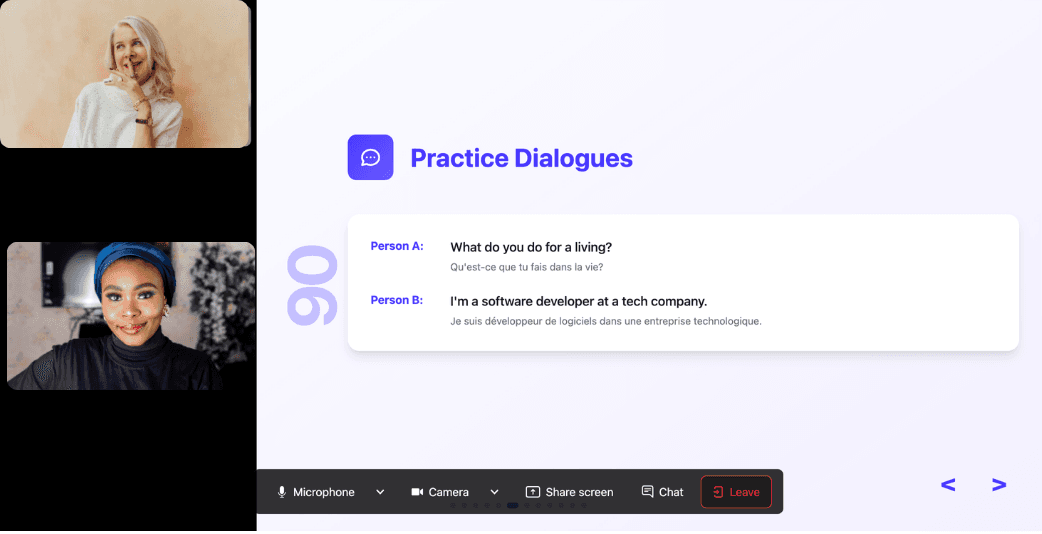
With 24/7 access at a fraction of the cost of private lessons, Kylian removes all the barriers that have kept you from mastering the language you’ve always wanted to learn.