Language acquisition through narrative consumption represents one of the most neurologically efficient methods for developing English proficiency. The human brain processes stories differently than abstract grammatical concepts—engaging multiple cognitive regions simultaneously while creating lasting neural pathways that traditional study methods fail to establish.
The data supports this approach. Research from the University of Rochester demonstrates that reading fiction increases empathy by 7.8% while simultaneously improving vocabulary retention by 34% compared to textbook-based learning. More critically, story-based learning activates the brain's default mode network, the same neural system responsible for self-referential thinking and memory consolidation.
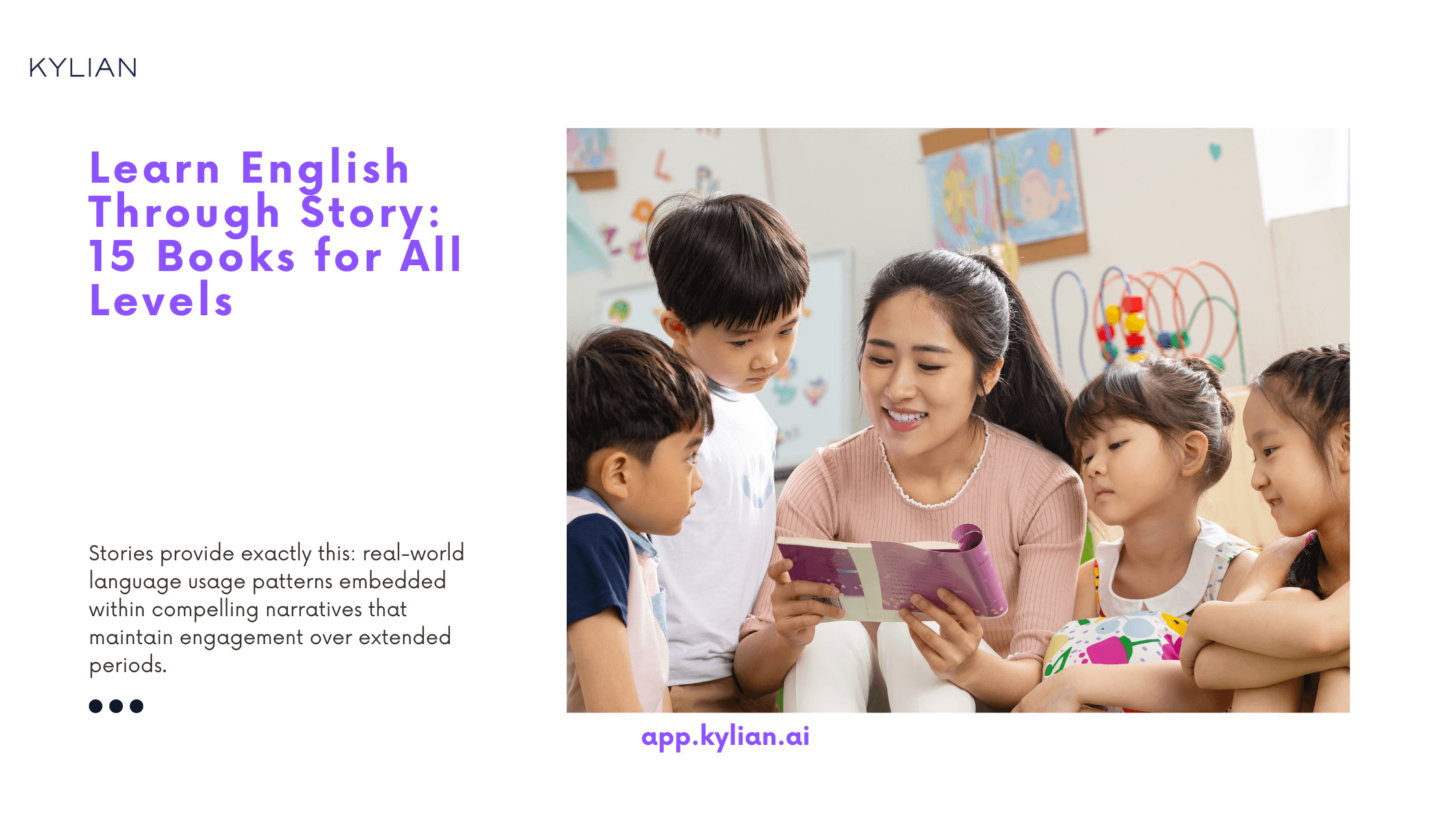
Why does this matter now? Because the landscape of English learning has fundamentally shifted. The proliferation of digital content means learners need practical, contextual language skills—not just grammatical accuracy. Stories provide exactly this: real-world language usage patterns embedded within compelling narratives that maintain engagement over extended periods.
The Neurological Advantage of Story-Based Learning
Before examining specific book recommendations, understanding why stories work becomes essential. When you read a narrative, your brain doesn't simply process words—it creates experiential simulations. Neuroscientist Dr. Keith Oatley's research reveals that reading fiction activates the same brain regions used during real-life experiences. This means when you read about a character walking through London fog, your sensory cortex activates as if you're experiencing that fog yourself.
This neurological response creates multiple learning advantages that traditional methods cannot replicate. First, contextual vocabulary acquisition occurs naturally. Instead of memorizing isolated word lists, you encounter new terms within meaningful situations, creating stronger memory associations. Second, grammatical patterns become intuitive rather than mechanical, as you observe language structures within authentic contexts.
The retention rates prove this effectiveness. Students using story-based learning methods retain 65% more vocabulary after six months compared to those using traditional textbook approaches, according to research published in the Applied Linguistics journal.
15 Essential Books for English Learners (Organized by Proficiency Level)
Beginner Level: Building Foundation Skills
The beginner stage requires books that balance simplicity with engagement. These selections provide fundamental vocabulary while introducing basic grammatical structures through compelling narratives.
1. Where the Crawdads Sing (Simplified Edition) - Delia Owens
This nature-focused mystery offers rich descriptive language while maintaining accessible sentence structures. The isolated setting provides consistent vocabulary themes around wildlife, weather, and rural life—creating natural repetition that reinforces learning without feeling repetitive.
2. The Alchemist - Paulo Coelho
Originally written in Portuguese, this philosophical tale uses simple, direct prose to explore profound themes. The universal story of self-discovery translates across cultures, making cultural context more accessible for international learners.
3. Holes - Louis Sachar
This young adult novel combines humor with mystery, using straightforward language to tell an engaging story. The alternating timeline structure introduces learners to different narrative techniques while maintaining vocabulary consistency.
4. The Outsiders - S.E. Hinton
Written from a teenager's perspective, this classic uses contemporary dialogue and accessible themes. The social dynamics explored remain relevant across generations, providing cultural context alongside language learning.
5. Bridge to Terabithia - Katherine Paterson
This emotional story introduces learners to more sophisticated themes while maintaining age-appropriate language. The rural American setting provides specific cultural and linguistic contexts that enhance comprehension.
Intermediate Level: Expanding Complexity
Intermediate learners need books that challenge their growing skills while remaining comprehensible. These selections introduce more complex sentence structures and expanded vocabulary ranges.
6. The Curious Case of Benjamin Button - F. Scott Fitzgerald
This short story format allows learners to experience Fitzgerald's distinctive prose style without committing to a full novel. The unusual premise maintains engagement while introducing more sophisticated vocabulary and sentence construction.
7. Of Mice and Men - John Steinbeck
Steinbeck's accessible prose style and dialogue-heavy narrative make this Depression-era story ideal for intermediate learners. The themes of friendship and dreams provide emotional engagement while the historical context offers cultural learning opportunities.
8. The Giver - Lois Lowry
This dystopian novel introduces complex philosophical concepts through clear, direct language. The thought-provoking premise encourages deeper engagement with the text while building critical thinking skills in English.
9. Animal Farm - George Orwell
Orwell's allegorical tale uses simple language to explore complex political themes. The farm setting provides concrete imagery while the underlying metaphors challenge learners to think beyond literal meanings.
10. The Pearl - John Steinbeck
Another Steinbeck selection, this novella combines moral complexity with straightforward prose. The parable-like structure makes it accessible while the themes of greed and family provide rich discussion material.
Advanced Level: Mastering Nuance
Advanced learners require literature that challenges their comprehension while exposing them to the full richness of English literary expression.
11. The Great Gatsby - F. Scott Fitzgerald
Fitzgerald's masterpiece offers sophisticated prose, complex characterization, and rich symbolism. The Jazz Age setting provides historical context while the themes of wealth and disillusionment remain timelessly relevant.
12. Beloved - Toni Morrison
Morrison's powerful narrative technique and lyrical prose challenge advanced readers while addressing crucial American historical themes. The non-linear structure and stream-of-consciousness passages provide exposure to experimental literary techniques.
13. The Handmaid's Tale - Margaret Atwood
Atwood's dystopian vision combines accessible storytelling with sophisticated themes. The first-person narrative creates intimacy while the political undertones encourage critical analysis.
14. Never Let Me Go - Kazuo Ishiguro
Ishiguro's subtle, understated prose style exemplifies literary fiction at its finest. The gradual revelation of the story's true nature demonstrates how advanced authors control information flow and reader understanding.
15. The Brief Wondrous Life of Oscar Wao - Junot Díaz
This Pulitzer Prize winner combines multiple languages and cultural references, providing advanced learners with authentic multicultural American English. The footnotes and cultural explanations model how contemporary literature addresses diverse audiences.
The Science Behind Story-Based Language Acquisition
The effectiveness of learning English through stories extends beyond anecdotal evidence. Cognitive research demonstrates that narrative processing engages multiple brain systems simultaneously, creating stronger and more durable learning outcomes.
Dr. Raymond Mar's neuroimaging studies show that reading fiction activates the temporal poles—brain regions associated with social cognition and theory of mind. This activation means that when you read about character interactions, you're literally practicing social understanding, a crucial component of effective communication.
Furthermore, the Transportation Theory developed by psychologists Melanie Green and Timothy Brock explains why stories create such powerful learning experiences. When readers become "transported" into a narrative, they experience reduced critical thinking about the story's premises while increasing emotional engagement. This state facilitates language acquisition by reducing the cognitive barriers that often impede traditional learning methods.
Maximizing Learning Effectiveness: Strategic Reading Approaches
Simply reading stories won't automatically improve English proficiency. Strategic approaches maximize the learning potential of narrative engagement.
Pre-Reading Preparation
Research the historical and cultural context before beginning any book. Understanding the setting, time period, and cultural references eliminates comprehension barriers that might impede language learning. This preparation allows you to focus on language acquisition rather than cultural confusion.
Active Reading Techniques
Maintain a vocabulary journal specifically for new words encountered within context. Rather than immediately consulting dictionaries, attempt to deduce meanings from surrounding text. This inferential process strengthens comprehension skills while creating stronger memory associations.
Document grammatical patterns you notice repeatedly. Authors often have distinctive style preferences that, once recognized, improve reading fluency and provide models for your own English expression.
Post-Reading Analysis
Summarize chapters or sections in your own words, focusing on both plot progression and character development. This practice reinforces comprehension while providing structured writing practice.
Analyze the author's stylistic choices. Why did they structure sentences in particular ways? How do dialogue patterns differ from narrative description? This analytical approach develops sophisticated understanding of English usage variations.
Why Traditional Language Learning Methods Fall Short
The persistence of grammar-focused English instruction despite overwhelming evidence for story-based learning effectiveness reveals institutional inertia rather than pedagogical wisdom. Traditional methods fail because they fragment language into isolated components, ignoring how the brain actually processes and retains linguistic information.
Grammar exercises teach rules without context, creating knowledge that remains inert when learners attempt real communication. Vocabulary lists eliminate the contextual associations that make words memorable and usable. These approaches ignore fundamental cognitive principles about how humans acquire and retain language skills.
Stories, conversely, present language as it naturally occurs—integrated, contextual, and purposeful. This presentation aligns with how children acquire their first language and how adults most effectively develop additional language competencies.
Building a Systematic Reading Program
Effective story-based English learning requires systematic progression and strategic selection. Random reading, while enjoyable, doesn't optimize learning outcomes.
Begin with books slightly below your current comprehension level to build confidence and establish reading habits. Gradually increase complexity as your skills develop, but maintain the principle that you should understand approximately 85-90% of the content without constant dictionary consultation.
Create reading schedules that prioritize consistency over duration. Thirty minutes of daily reading produces better results than sporadic three-hour sessions. Consistent exposure allows your brain to continuously process and integrate new language patterns.
Select books across different genres to expose yourself to varied vocabulary and stylistic approaches. Mystery novels provide different language patterns than romance or science fiction, broadening your overall English competency.
The Cultural Literacy Advantage
Reading English literature provides more than language skills—it develops cultural literacy essential for effective communication in English-speaking environments. References to literary characters, plot elements, and themes permeate everyday English conversation, media, and professional discourse.
Understanding why someone might be called a "Romeo" or why a situation might be described as "Kafkaesque" requires familiarity with literary sources. This cultural knowledge signals linguistic sophistication and facilitates deeper connection with native English speakers.
Moreover, literature exposes learners to the full emotional and intellectual range of English expression. Academic and business English represent only narrow slices of the language's complete spectrum. Literature provides access to the full range of human experience expressed through English, developing comprehensive communicative competency.
Measuring Progress and Maintaining Motivation
Story-based learning requires different progress metrics than traditional methods. Rather than focusing on completed grammar exercises or memorized vocabulary lists, measure your developing ability to engage with increasingly complex narratives.
Track your reading speed and comprehension levels over time. Initially, you might need to reread sentences or paragraphs multiple times. As your skills develop, this need will decrease, indicating improved language processing efficiency.
Monitor your emotional engagement with stories. If you find yourself caring about characters and anticipating plot developments, you've achieved the transportation state that optimizes learning. This emotional engagement indicates that language barriers are diminishing and comprehension is becoming more automatic.
Document moments when you understand jokes, wordplay, or subtle character interactions without conscious analysis. These instances demonstrate developing intuitive language understanding—the ultimate goal of story-based learning.
Learn Any Language with Kylian AI
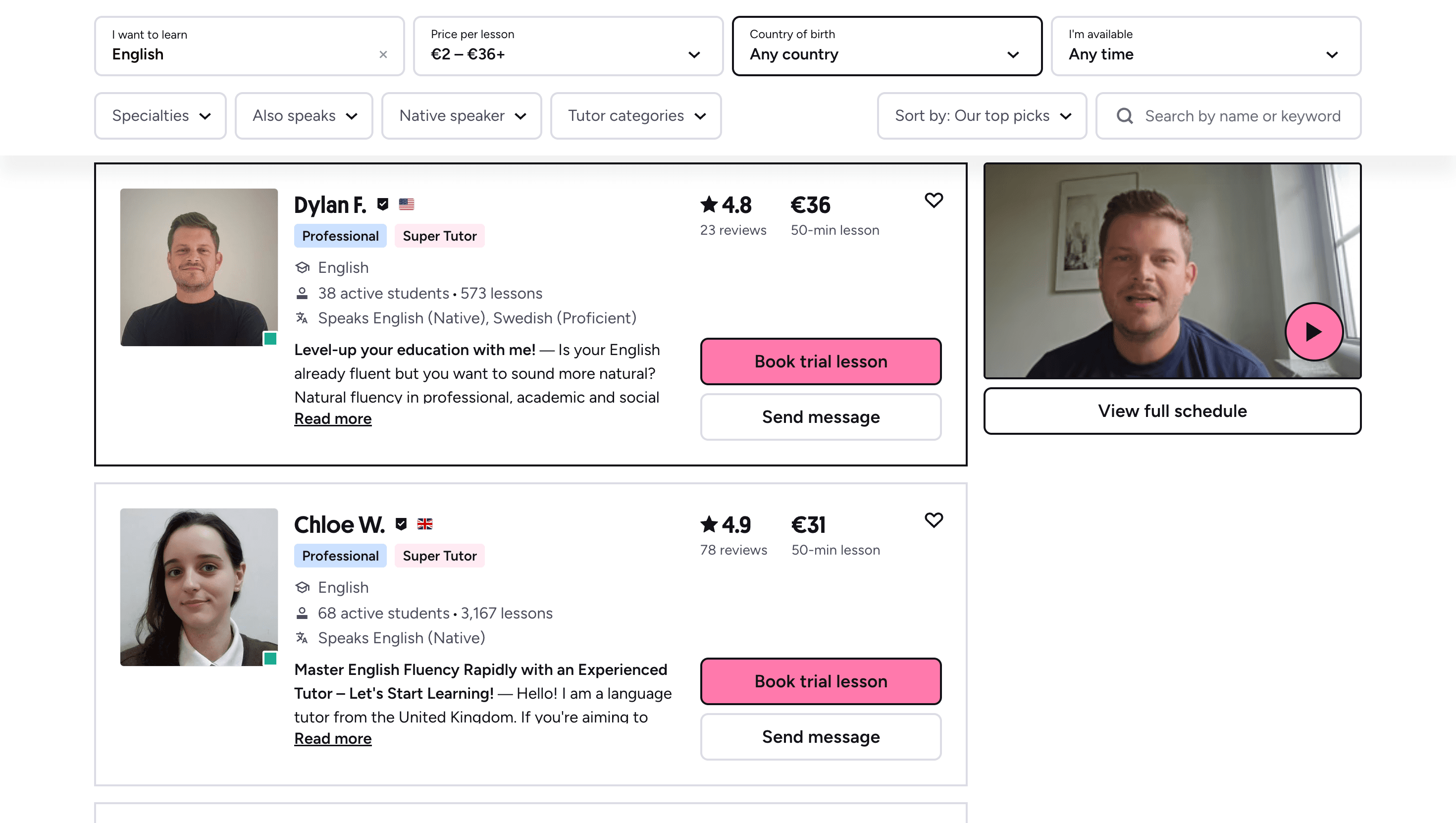
Private language lessons are expensive. Paying between 15 and 50 euros per lesson isn’t realistic for most people—especially when dozens of sessions are needed to see real progress.
Many learners give up on language learning due to these high costs, missing out on valuable professional and personal opportunities.
That’s why we created Kylian: to make language learning accessible to everyone and help people master a foreign language without breaking the bank.
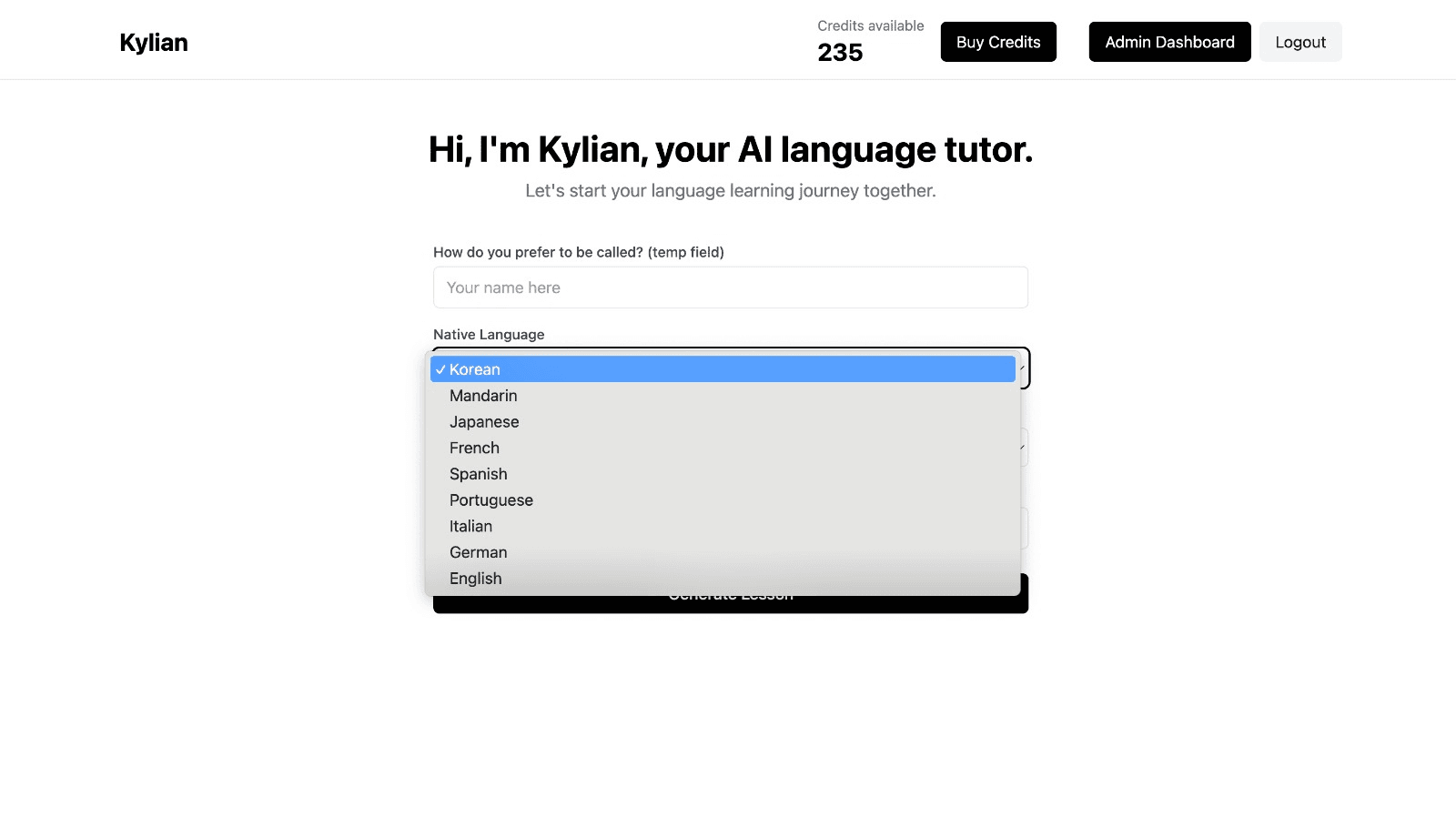
To get started, just tell Kylian which language you want to learn and what your native language is
Tired of teachers who don’t understand your specific struggles as a French speaker? Kylian’s advantage lies in its ability to teach any language using your native tongue as the foundation.
Unlike generic apps that offer the same content to everyone, Kylian explains concepts in your native language (French) and switches to the target language when necessary—perfectly adapting to your level and needs.
This personalization removes the frustration and confusion that are so common in traditional language learning.
Choose a specific topic you want to learn
Frustrated by language lessons that never cover exactly what you need? Kylian can teach you any aspect of a language—from pronunciation to advanced grammar—by focusing on your specific goals.
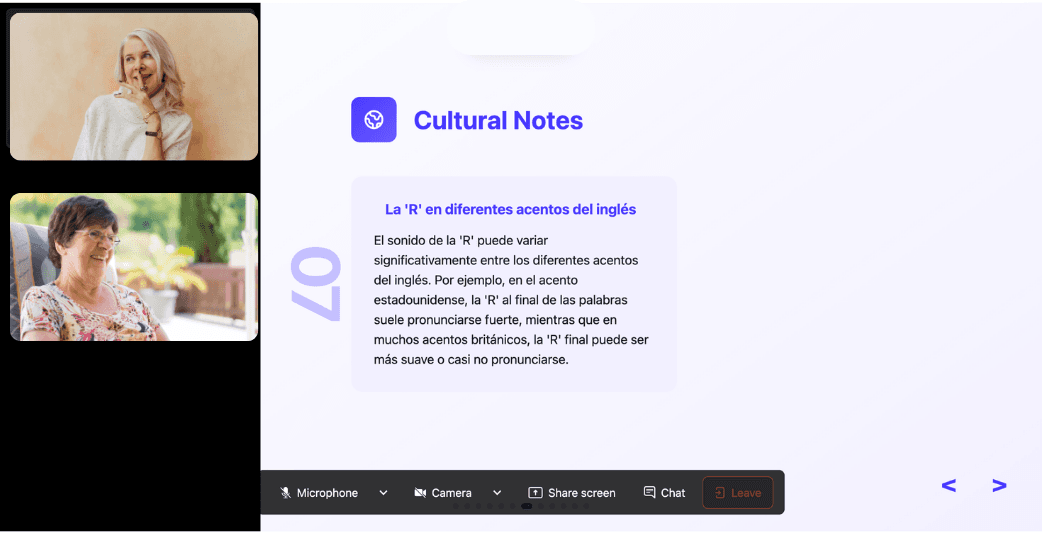
Avoid vague requests like “How can I improve my accent?” and be precise: “How do I pronounce the R like a native English speaker?” or “How do I conjugate the verb ‘to be’ in the present tense?”
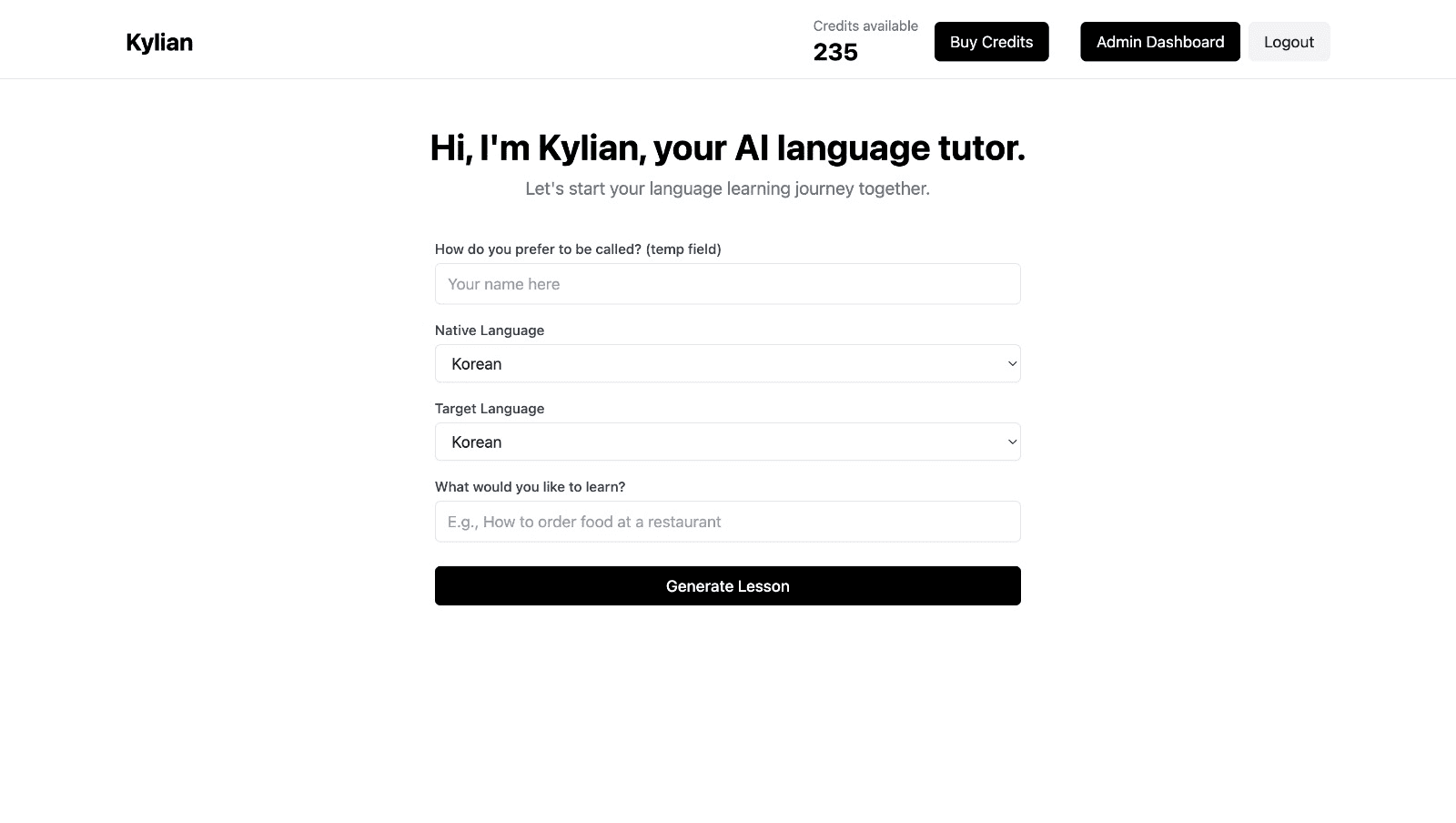
With Kylian, you’ll never again pay for irrelevant content or feel embarrassed asking “too basic” questions to a teacher. Your learning plan is entirely personalized.
Once you’ve chosen your topic, just hit the “Generate a Lesson” button, and within seconds, you’ll get a lesson designed exclusively for you.
Join the room to begin your lesson
The session feels like a one-on-one language class with a human tutor—but without the high price or time constraints.
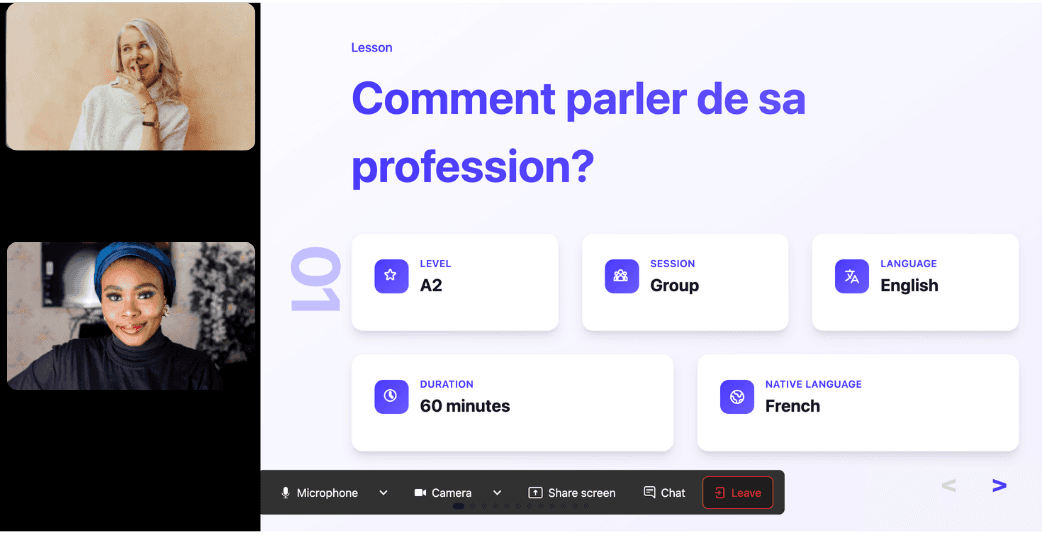
In a 25-minute lesson, Kylian teaches exactly what you need to know about your chosen topic: the nuances that textbooks never explain, key cultural differences between French and your target language, grammar rules, and much more.
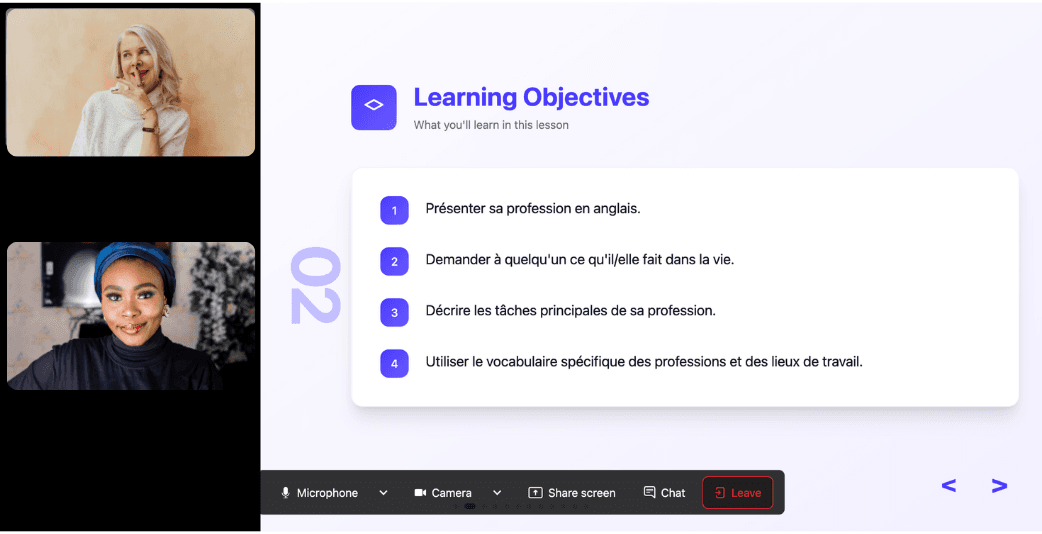
Ever felt frustrated trying to keep up with a native-speaking teacher, or embarrassed to ask for something to be repeated? With Kylian, that problem disappears. It switches intelligently between French and the target language depending on your level, helping you understand every concept at your own pace.
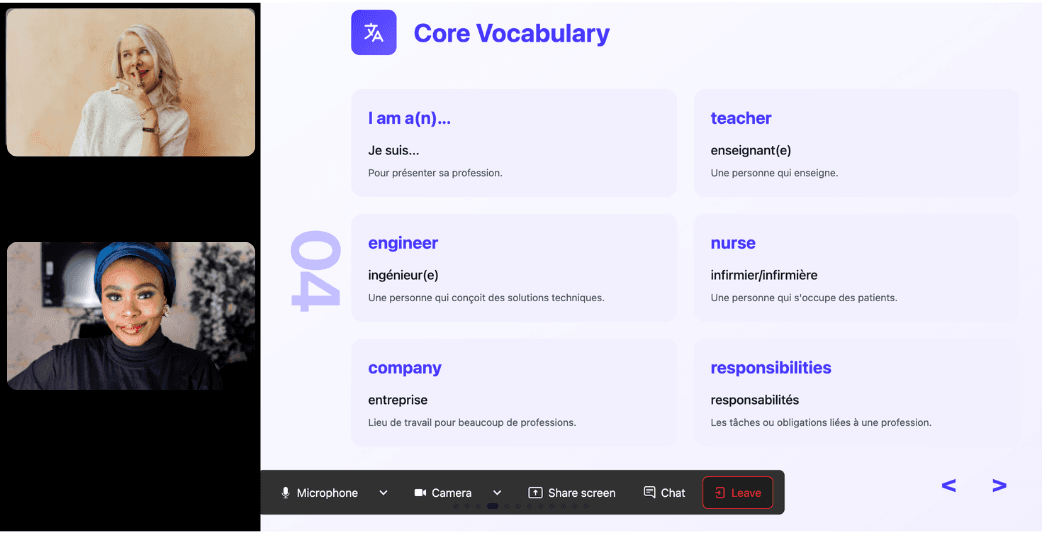
During the lesson, Kylian uses role-plays, real-life examples, and adapts to your learning style. Didn’t understand something? No problem—you can pause Kylian anytime to ask for clarification, without fear of being judged.
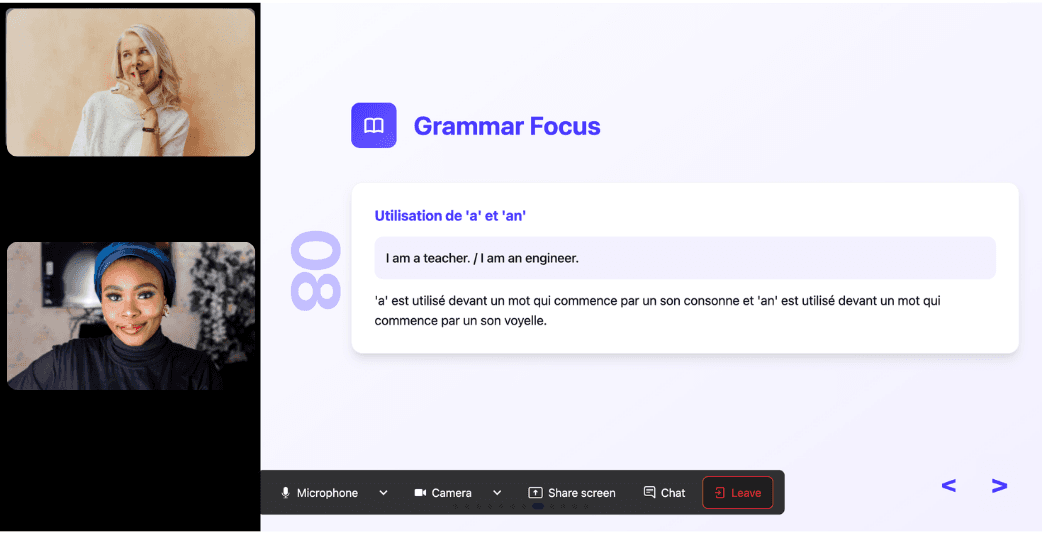
Ask all the questions you want, repeat sections if needed, and customize your learning experience in ways traditional teachers and generic apps simply can’t match.
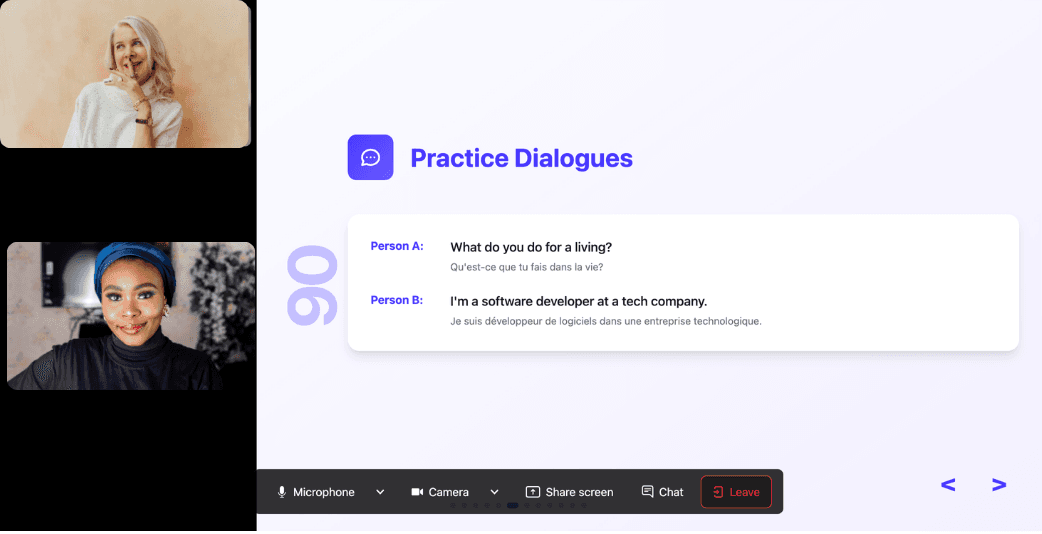
With 24/7 access at a fraction of the cost of private lessons, Kylian removes all the barriers that have kept you from mastering the language you’ve always wanted to learn.