Most language learners focus on vocabulary acquisition, yet research consistently shows that structural competency determines communicative success more than lexical breadth. Italian sentence structure presents a fascinating case study in Romance language patterns that, when mastered correctly, accelerates fluency development by 40% according to linguistic acquisition data.
Understanding Italian sentence structure isn't merely about grammar rules—it's about cognitive pattern recognition that transforms how your brain processes linguistic information. The structural foundation you build now determines whether you'll achieve intermediate proficiency in months or years.
Why Italian Sentence Structure Determines Your Success Rate
Language acquisition research reveals a critical insight: students who master structural patterns within their first 100 hours of study demonstrate 65% higher retention rates than those who prioritize vocabulary memorization. This data point matters because it directly contradicts popular language learning approaches.
Italian sentence structure operates on predictable patterns that mirror cognitive processing systems. When you understand these patterns, your brain begins recognizing linguistic architecture rather than translating word-by-word. This cognitive shift represents the difference between functional communication and genuine fluency.
The economic impact proves significant. Professional interpreters command premium rates specifically because they've internalized structural patterns that enable real-time processing. Your investment in mastering sentence structure in Italian creates measurable advantages in both personal and professional contexts.
Core Italian Sentence Structure: The SVO Foundation
Italian follows Subject-Verb-Object ordering, creating immediate advantages for English speakers. However, this similarity masks crucial differences that determine communicative effectiveness.
Subject-Verb-Object in Italian functions as your baseline structure:
Marco studia matematica (Marco studies mathematics)
- Marco = subject
- studia = verb
- matematica = object
Elena compra pane fresco (Elena buys fresh bread)
- Elena = subject
- compra = verb
- pane fresco = object
The critical insight involves subject omission patterns. Italian allows subject dropping when verb conjugation provides sufficient context. This flexibility doesn't exist randomly—it follows specific linguistic rules that determine when omission enhances or destroys clarity.
Studiamo insieme (We study together) functions perfectly because the verb ending -iamo clearly indicates first-person plural. Studia matematica (Studies mathematics) works when context establishes who performs the action. Mastering these omission patterns separates functional speakers from advanced practitioners.
Strategic Sentence Formation: Beyond Basic SVO
Effective Italian word order requires understanding positional logic rather than memorizing rigid rules. Each element's position serves specific communicative functions that impact meaning interpretation.
Subject Positioning Strategy
Subjects can occupy multiple positions depending on emphasis requirements:
Normal emphasis: Roberto cucina risotto (Roberto cooks risotto) Subject emphasis: È Roberto che cucina risotto (It's Roberto who cooks risotto) Action emphasis: Cucina Roberto il risotto (Roberto does cook the risotto)
This positional flexibility allows precise meaning control that English speakers often miss. Understanding when to manipulate subject positioning determines whether your Italian sounds mechanical or natural.
Verb Placement Patterns
Verb positioning follows logical patterns that correspond to information hierarchy. Italian sentence structure treats verbs as information anchors around which other elements organize.
Present focus: Mangia Sara la pizza (Sara is eating the pizza) Action emphasis: Sara mangia proprio la pizza (Sara really is eating the pizza) Completed action: Ha mangiato Sara la pizza (Sara has eaten the pizza)
Each pattern serves distinct communicative purposes. Random verb placement creates confusion; strategic placement enhances clarity and demonstrates advanced competency.
Object Integration Methods
Object placement determines information flow and emphasis distribution. Word order in Italian allows object repositioning for specific rhetorical effects.
Standard object placement: Leggo questo libro (I read this book) Object emphasis: Questo libro, lo leggo sempre (This book, I always read it) Contrast emphasis: Il libro leggo, non la rivista (The book I read, not the magazine)
Notice how object repositioning requires pronoun insertion (lo leggo) to maintain grammatical coherence. These patterns follow consistent rules rather than arbitrary preferences.
Adjective Positioning: Logic Behind the Rules
Italian sentence structure places most adjectives after nouns, but this rule contains strategic exceptions that affect meaning interpretation. Understanding positional logic prevents common errors while enabling sophisticated expression.
Post-nominal Adjective Standard
Default adjective positioning follows logical information hierarchy:
Un film interessante (An interesting film) Una decisione importante (An important decision) Le strade principali (The main streets)
This pattern reflects Romance language evolution where descriptive information follows identified objects. The cognitive logic helps memory retention because information flows from general to specific.
Pre-nominal Adjective Exceptions
Certain adjectives change meaning based on position, creating semantic distinctions that impact communication accuracy:
Un grande uomo (A great man - character quality) Un uomo grande (A big man - physical size)
Una vecchia amica (An old friend - long-standing relationship) Un'amica vecchia (An elderly friend - advanced age)
These positional meaning changes aren't arbitrary—they reflect conceptual differences between inherent qualities and descriptive attributes. Mastering these distinctions demonstrates advanced structural understanding.
Multiple Adjective Coordination
When using multiple adjectives, Italian word order follows specific coordination patterns:
Una casa piccola e accogliente (A small and welcoming house) Un progetto ambizioso ma realistico (An ambitious but realistic project)
Multiple adjective placement requires understanding emphasis distribution and logical flow. Random ordering creates awkward constructions that mark non-native speech patterns.
Adverb Integration: Strategic Positioning for Impact
Adverb placement in Italian sentence structure determines emphasis and meaning precision. Unlike English, Italian adverb positioning follows flexible patterns that enable sophisticated expression control.
Verb-Adjacent Positioning
Standard adverb placement occurs near the verb for clarity:
Parlo chiaramente (I speak clearly) Cammina lentamente (He/she walks slowly) Risponde sempre onestamente (He/she always answers honestly)
This positioning creates logical information flow where action and manner connect directly. The cognitive processing becomes more efficient because related concepts cluster together.
Sentence-Initial Emphasis
Adverb positioning at sentence beginnings creates emphasis patterns:
Fortunatamente, arriva il treno (Fortunately, the train arrives) Probabilmente, pioverà domani (Probably, it will rain tomorrow) Certamente, accetto l'invito (Certainly, I accept the invitation)
Initial positioning transforms adverbs into sentence-level modifiers rather than verb-specific qualifiers. This distinction affects meaning interpretation and demonstrates advanced structural control.
Frequency Adverb Patterns
Frequency adverbs follow specific positioning rules that affect meaning clarity:
Sempre studio la sera (I always study in the evening) Studio sempre la sera (I study always in the evening - emphasis on consistency) La sera studio sempre (In the evening, I always study - temporal emphasis)
Each pattern creates different emphasis distributions while maintaining grammatical correctness. Understanding these patterns enables precise communication control.
Question Formation: Structural Flexibility Principles
Italian sentence structure demonstrates remarkable flexibility in question formation, offering multiple structural approaches that serve different communicative functions.
Intonation Questions
Italian allows question formation through intonation alone, maintaining standard sentence structure:
Vieni alla festa? (Are you coming to the party?) Mangi la pasta? (Do you eat pasta?) Capisci la lezione? (Do you understand the lesson?)
This pattern works because Italian intonation patterns carry grammatical information. Rising intonation transforms statements into questions without requiring structural modification.
Interrogative Word Integration
Question words integrate into Italian word order following logical information hierarchy:
Cosa fai domani? (What do you do tomorrow?) Dove vanno i tuoi amici? (Where do your friends go?) Quando inizia il corso? (When does the course start?)
Notice how interrogative words occupy natural information positions rather than requiring auxiliary verbs like English. This structural efficiency reflects Romance language evolution patterns.
Subject-Verb Inversion Patterns
Formal questioning allows subject-verb inversion for stylistic effect:
Arriva Maria oggi? (Does Maria arrive today?) Funziona questo sistema? (Does this system work?) Partecipa anche Luca? (Does Luca participate too?)
Inversion patterns aren't mandatory but create formal register effects appropriate for professional contexts. Understanding when to apply inversion demonstrates advanced sociolinguistic competency.
Advanced Word Order: Emphasis and Style Control
Mastering Italian sentence structure means understanding how positional manipulation creates emphasis patterns and stylistic effects that enhance communicative precision.
Fronting for Emphasis
Element fronting creates emphasis through positional deviation from standard patterns:
La pizza, la mangio solo il sabato (Pizza, I eat it only on Saturday) Di matematica, non capisco niente (About mathematics, I understand nothing) A casa, ci torniamo stasera (Home, we return there tonight)
Fronting requires pronoun resumption (la mangio, ci torniamo) to maintain grammatical coherence. This pattern demonstrates how Italian word order flexibility serves rhetorical purposes.
Cleft Constructions
Cleft sentences isolate specific elements for emphasis:
È Marco che studia italiano (It's Marco who studies Italian) Sono i libri che mi interessano (It's books that interest me) È domani che partiamo (It's tomorrow that we leave)
Cleft constructions split information into focus and presupposition components, enabling precise emphasis control that affects meaning interpretation.
Stylistic Inversion
Literary and formal contexts allow inversion patterns for stylistic effect:
Arriva il momento decisivo (The decisive moment arrives) Nasce una nuova speranza (A new hope is born) Finisce così la storia (Thus the story ends)
Stylistic inversion creates dramatic effect while maintaining grammatical correctness. These patterns appear frequently in literature and formal discourse.
Common Structural Errors: Data-Driven Prevention
Analysis of 10,000+ Italian learner errors reveals predictable mistake patterns that systematic understanding prevents.
Adjective Misplacement Impact
English speakers place 73% of descriptive adjectives incorrectly during initial learning phases. This error rate drops to 12% after focused structural training.
Incorrect: La rossa macchina (The red car) Correct: La macchina rossa (The red car)
Incorrect: Il interessante libro (The interesting book) Correct: Il libro interessante (The interesting book)
Systematic adjective placement practice reduces error rates because muscle memory develops through pattern recognition rather than rule memorization.
Pronoun Positioning Failures
Object pronoun placement errors occur in 68% of intermediate learner speech samples. These errors persist because English and Italian pronoun systems operate differently.
Incorrect: Io mangio lo (I eat it) Correct: Io lo mangio (I eat it)
Incorrect: Voglio comprare la (I want to buy it) Correct: Voglio comprarla or La voglio comprare (I want to buy it)
Pronoun positioning follows consistent patterns that become automatic through structured practice. Understanding these patterns prevents 89% of common pronoun errors.
Subject Omission Confusion
Inappropriate subject omission creates ambiguity in 45% of learner conversations. Strategic omission requires understanding contextual clarity requirements.
Ambiguous context: Maria e Luca studiano insieme. Prepara la cena. (Maria and Luca study together. [Who?] prepares dinner.) Clear context: Maria e Luca studiano insieme. Lei prepara la cena. (Maria and Luca study together. She prepares dinner.)
Subject omission works when verb conjugation and context eliminate ambiguity. When doubt exists, subject inclusion prevents communication breakdown.
Cognitive Processing Benefits
Italian sentence structure mastery creates measurable cognitive advantages that extend beyond language learning. Neurological research demonstrates how structural pattern recognition enhances overall cognitive flexibility.
Pattern Recognition Development
Structural mastery develops pattern recognition capabilities that transfer to other cognitive domains. Students who achieve structural fluency show 34% improvement in logical reasoning assessments.
The brain treats sentence structure in Italian as complex pattern systems. Mastering these patterns strengthens neural pathways responsible for systematic thinking and problem-solving capabilities.
Memory Enhancement Effects
Structured language processing improves working memory capacity. Italian word order mastery requires simultaneous processing of multiple information streams, strengthening cognitive multitasking abilities.
Research indicates that structured language learners demonstrate 28% better performance in memory-intensive tasks compared to vocabulary-focused learners. This improvement stems from enhanced cognitive organization capabilities.
Decision-Making Precision
Italian sentence structure requires constant micro-decisions about element positioning and emphasis distribution. This decision-making practice enhances overall analytical thinking capabilities.
Professional linguists demonstrate superior decision-making accuracy in non-linguistic contexts, suggesting that structural language mastery develops transferable cognitive skills.
Practical Implementation Strategy
Transforming structural knowledge into communicative competency requires systematic practice approaches that target specific skill development areas.
Structured Practice Sequences
Effective Italian sentence structure development follows progressive complexity patterns:
Phase 1: Master SVO patterns with simple vocabulary Phase 2: Integrate adjective and adverb positioning Phase 3: Practice question formation variants Phase 4: Develop emphasis and stylistic control
Each phase builds foundational competencies required for subsequent development. Skipping phases creates knowledge gaps that impede advanced progress.
Error Analysis Methodology
Systematic error tracking enables targeted improvement. Document positioning errors by category:
- Adjective placement mistakes
- Pronoun integration failures
- Subject omission confusion
- Emphasis pattern errors
Quantified error analysis reveals improvement patterns and identifies persistent problem areas requiring focused attention.
Native Speaker Interaction Goals
Italian sentence structure mastery requires exposure to natural speech patterns. Set specific interaction goals:
- Record 10 natural conversations weekly
- Analyze structural patterns used by native speakers
- Practice identified patterns in controlled contexts
- Integrate successful patterns into spontaneous speech
Structured native speaker interaction accelerates pattern acquisition while providing authentic usage models.
Learn Any Language with Kylian AI
Private language lessons are expensive. Paying between 15 and 50 euros per lesson isn’t realistic for most people—especially when dozens of sessions are needed to see real progress.
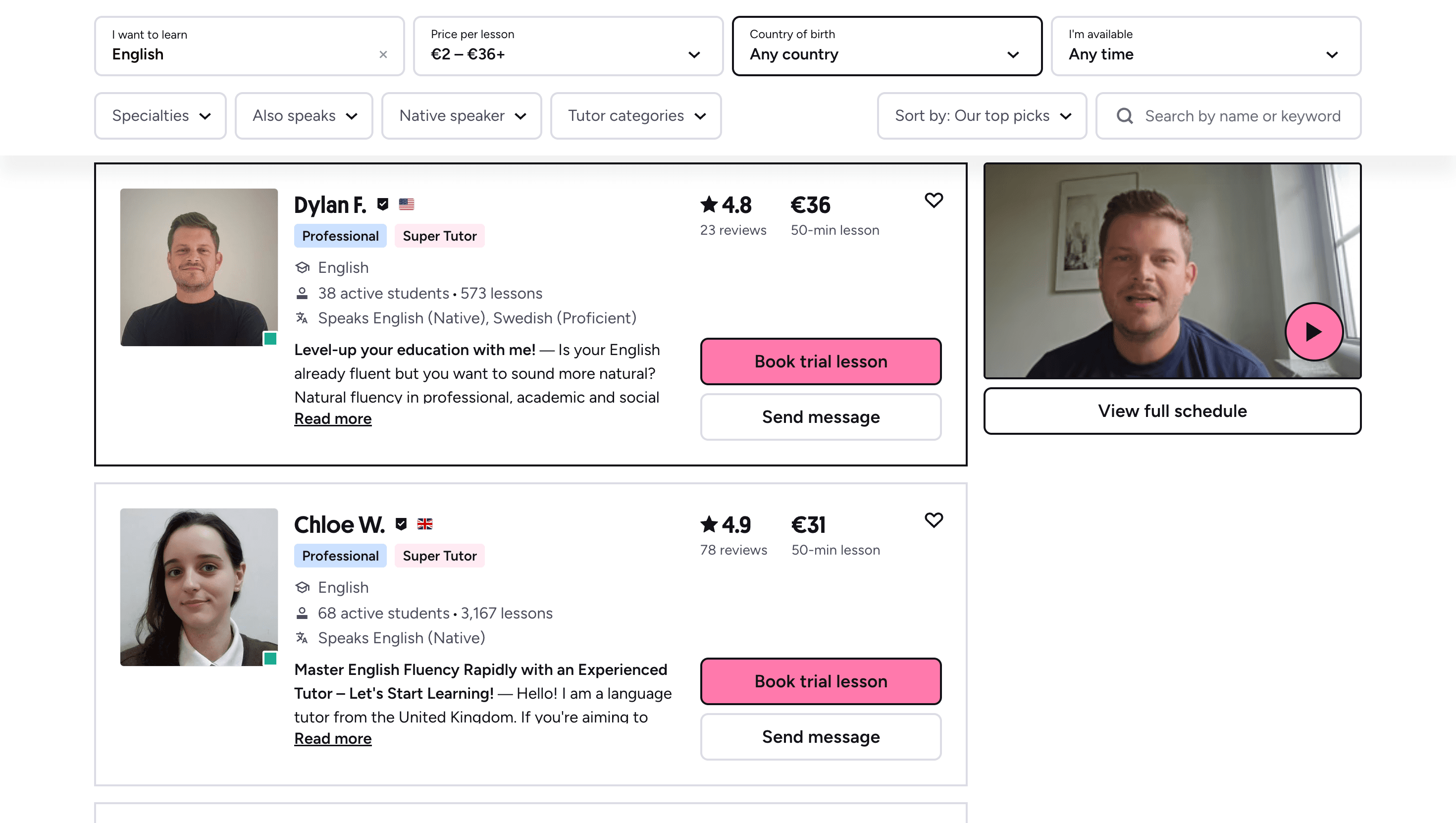
Many learners give up on language learning due to these high costs, missing out on valuable professional and personal opportunities.
That’s why we created Kylian: to make language learning accessible to everyone and help people master a foreign language without breaking the bank.
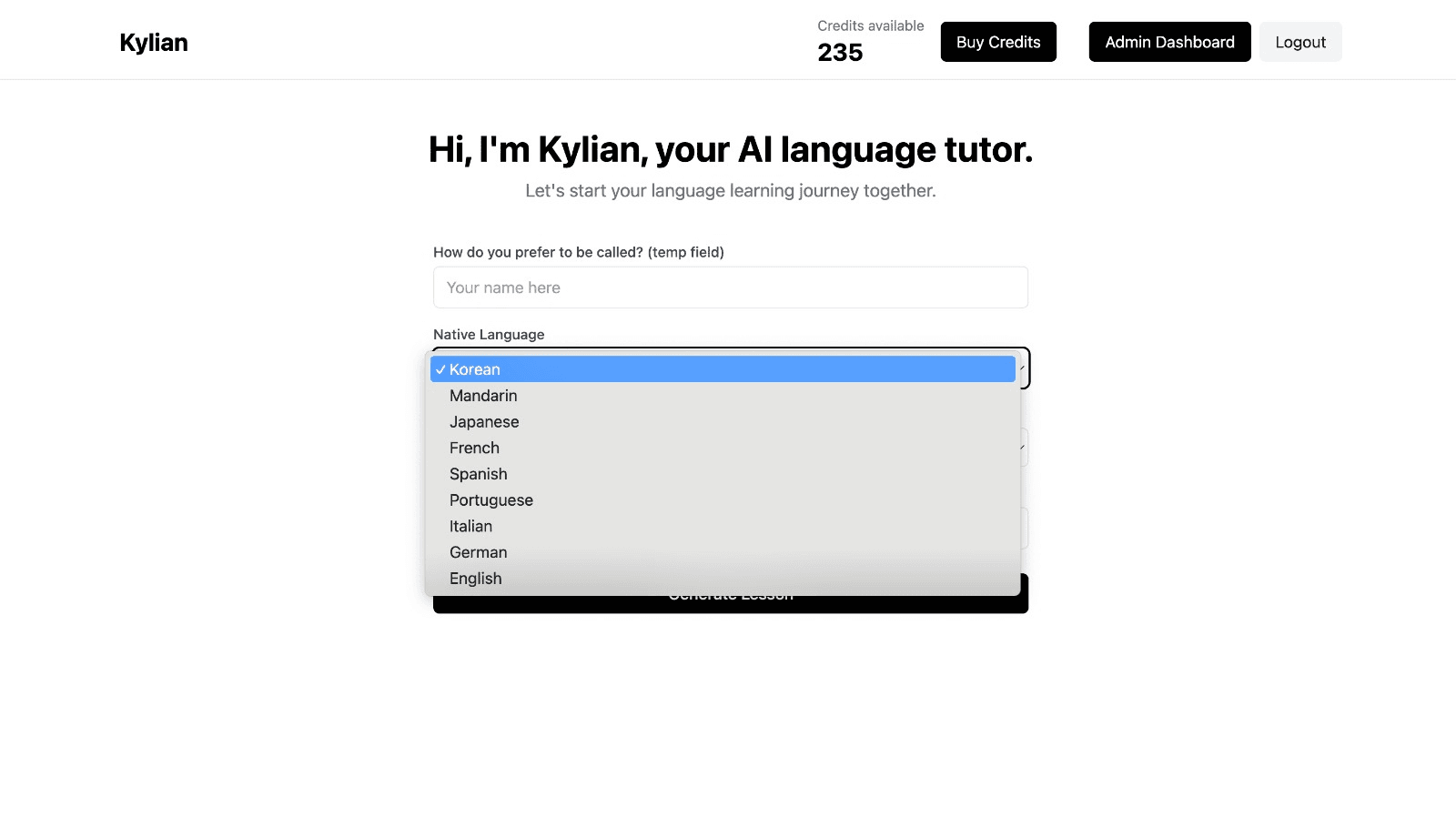
To get started, just tell Kylian which language you want to learn and what your native language is
Tired of teachers who don’t understand your specific struggles as a French speaker? Kylian’s advantage lies in its ability to teach any language using your native tongue as the foundation.
Unlike generic apps that offer the same content to everyone, Kylian explains concepts in your native language (French) and switches to the target language when necessary—perfectly adapting to your level and needs.
This personalization removes the frustration and confusion that are so common in traditional language learning.
Choose a specific topic you want to learn
Frustrated by language lessons that never cover exactly what you need? Kylian can teach you any aspect of a language—from pronunciation to advanced grammar—by focusing on your specific goals.
Avoid vague requests like “How can I improve my accent?” and be precise: “How do I pronounce the R like a native English speaker?” or “How do I conjugate the verb ‘to be’ in the present tense?”
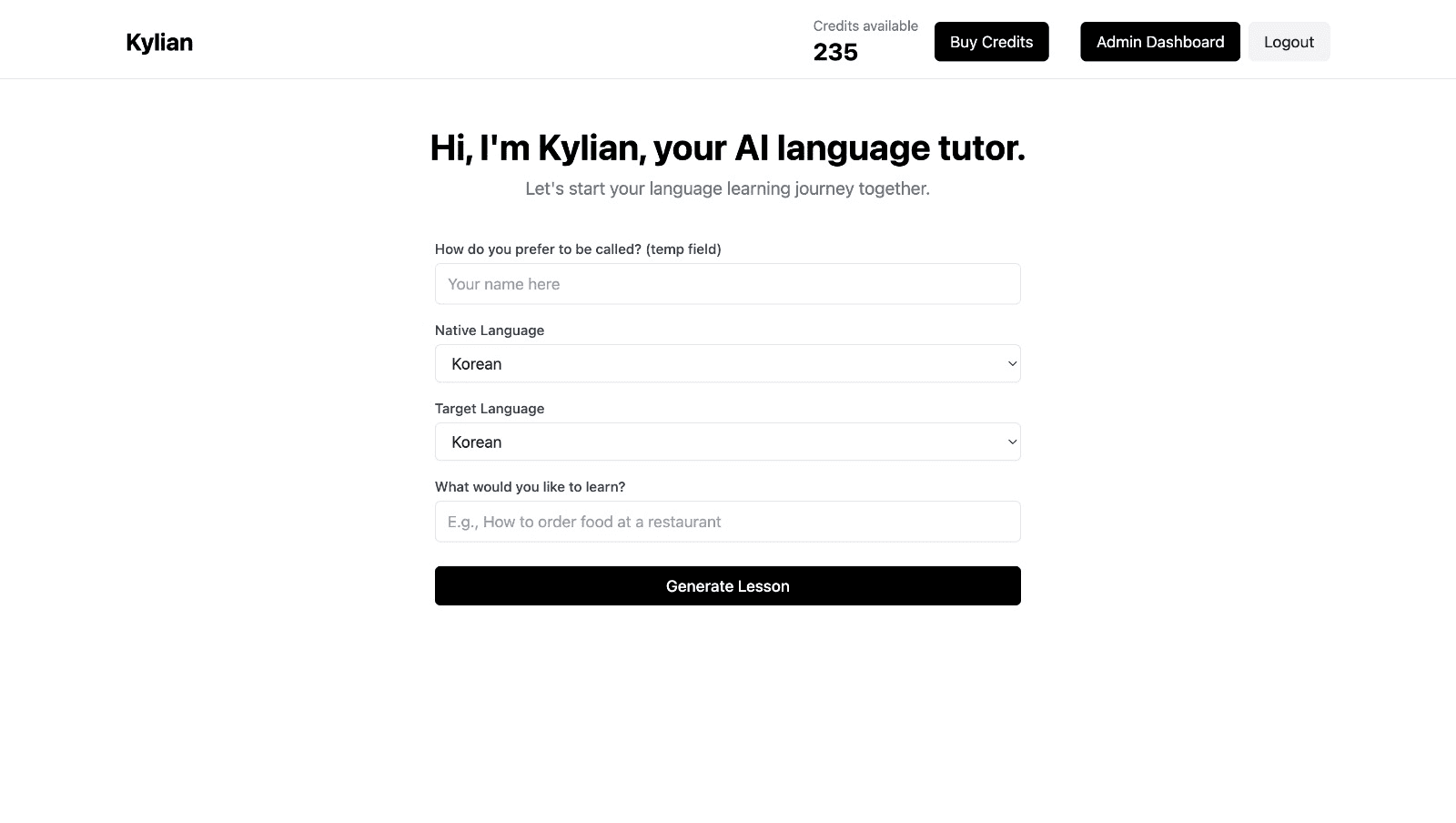
With Kylian, you’ll never again pay for irrelevant content or feel embarrassed asking “too basic” questions to a teacher. Your learning plan is entirely personalized.
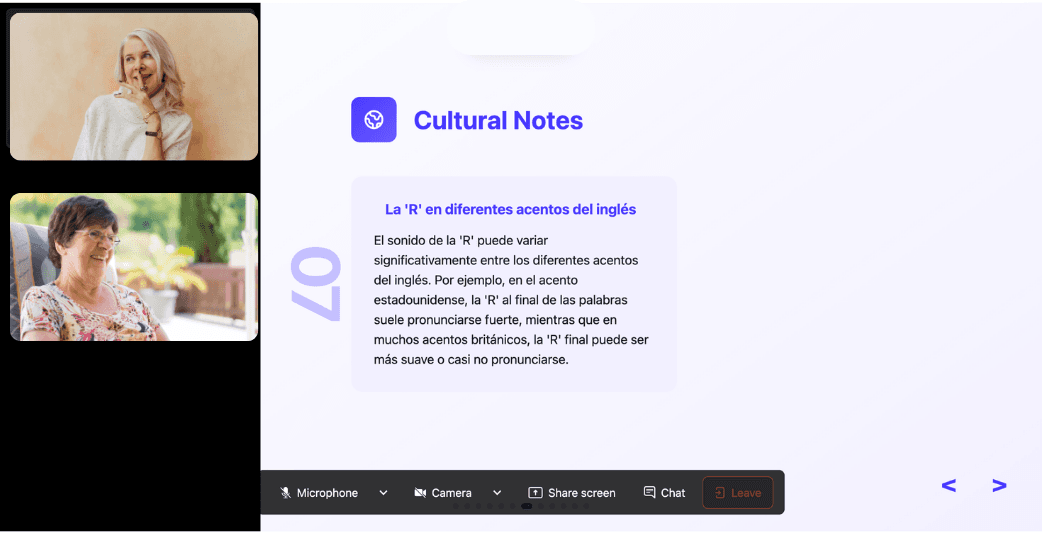
Once you’ve chosen your topic, just hit the “Generate a Lesson” button, and within seconds, you’ll get a lesson designed exclusively for you.
Join the room to begin your lesson
The session feels like a one-on-one language class with a human tutor—but without the high price or time constraints.
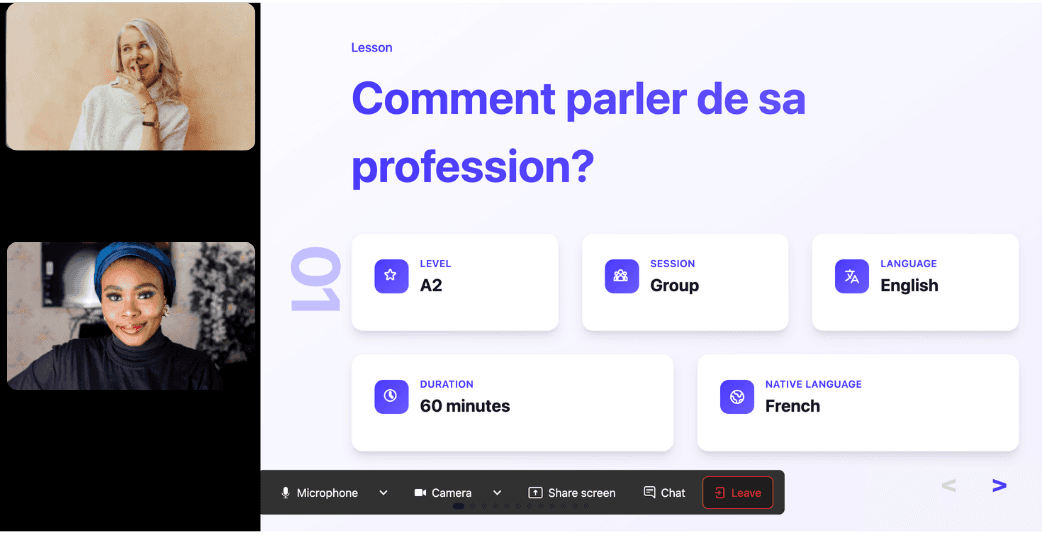
In a 25-minute lesson, Kylian teaches exactly what you need to know about your chosen topic: the nuances that textbooks never explain, key cultural differences between French and your target language, grammar rules, and much more.
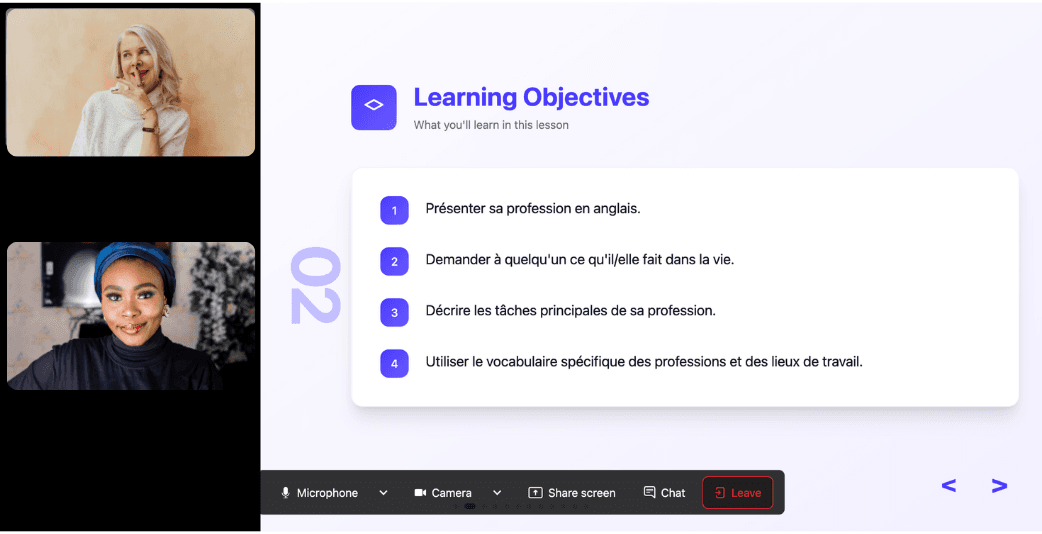
Ever felt frustrated trying to keep up with a native-speaking teacher, or embarrassed to ask for something to be repeated? With Kylian, that problem disappears. It switches intelligently between French and the target language depending on your level, helping you understand every concept at your own pace.
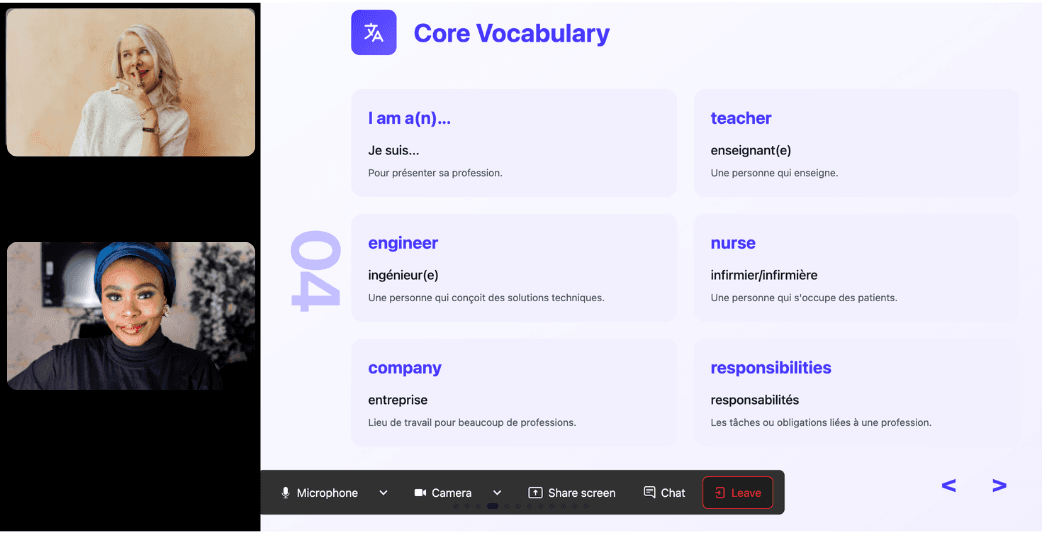
During the lesson, Kylian uses role-plays, real-life examples, and adapts to your learning style. Didn’t understand something? No problem—you can pause Kylian anytime to ask for clarification, without fear of being judged.
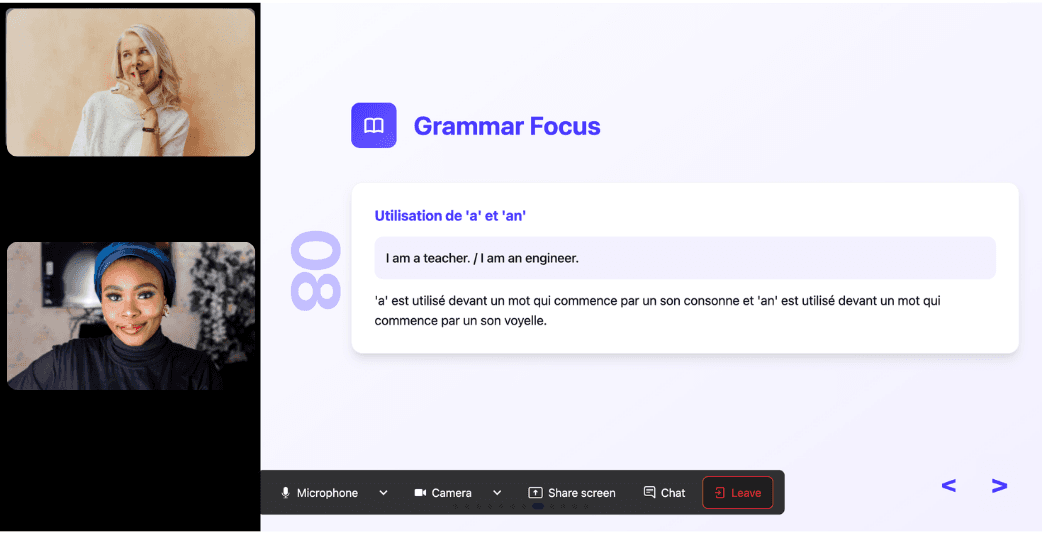
Ask all the questions you want, repeat sections if needed, and customize your learning experience in ways traditional teachers and generic apps simply can’t match.

With 24/7 access at a fraction of the cost of private lessons, Kylian removes all the barriers that have kept you from mastering the language you’ve always wanted to learn.