The English language presents writers with countless opportunities to stumble over seemingly simple words. Among these linguistic pitfalls, the confusion between "than" and "then" ranks as one of the most persistent—and costly—mistakes in professional communication.
This confusion matters more now than ever. Professional credibility hinges on precise communication, and grammatical errors in digital correspondence can undermine authority instantly. The stakes are particularly high when these errors appear in client communications, marketing materials, or academic submissions where precision signals competence.
Understanding when to use "than" versus "then" requires grasping their fundamental grammatical roles. "Than" functions exclusively as a conjunction or preposition in comparative statements, while "then" operates as an adverb indicating temporal sequence or logical consequence. The distinction seems straightforward, yet native speakers continue making this error with alarming frequency.
The Core Distinction: Comparison vs Sequence
The fundamental difference between "than" and "then" lies in their grammatical purpose and semantic meaning. This distinction operates on two levels: syntactic function and conceptual application.
"Than" serves one primary function: establishing comparative relationships between elements. It creates hierarchical connections, positioning one item against another in terms of degree, quality, or quantity. The word signals that a comparison is being drawn, requiring the reader to evaluate relative positions or measurements.
"Then" fulfills multiple temporal and logical functions. It establishes chronological sequences, indicates consequences, and creates causal relationships between events or ideas. Unlike "than," which remains static in its comparative function, "then" demonstrates remarkable versatility in connecting ideas across time and logic.
Consider how these words operate in context. When you write "The quarterly results exceeded expectations more dramatically than previous forecasts suggested," the word "than" creates a direct comparison between current performance and historical predictions. Remove "than" and substitute "then," and the sentence becomes nonsensical because no comparative relationship exists.
Conversely, examine this sequence: "The team analyzed the data, then presented their findings to stakeholders." Here, "then" establishes temporal order, indicating that presentation followed analysis. Substituting "than" would destroy the logical flow because no comparison is being made between analysis and presentation.
The cognitive processing of these words differs significantly. Comparative statements using "than" require readers to evaluate relationships and make judgments about relative positioning. Sequential statements using "then" guide readers through ordered processes or events, creating narrative flow rather than analytical comparison.
Mastering 'Than' in Comparative Contexts
Comparative constructions using "than" follow specific grammatical patterns that writers must internalize for consistent accuracy. These patterns extend beyond simple adjective comparisons to encompass complex comparative structures across various sentence types.
The most common comparative pattern involves adjectives in their comparative form followed by "than." Examples include "more efficient than," "less complicated than," or "better than." However, sophisticated writers employ "than" in more complex constructions that demonstrate advanced grammatical control.
Consider preference expressions using "would rather" or "prefer." The construction "I would rather negotiate directly than involve intermediaries" demonstrates how "than" connects preferred and rejected alternatives. This pattern appears frequently in professional communication where decision-makers must articulate choices and justify selections.
Quantitative comparisons represent another crucial application. Financial reporting, performance metrics, and analytical writing rely heavily on comparative statements: "Revenue increased 23% more than projections indicated" or "Customer satisfaction scores dropped lower than industry benchmarks." These constructions require precise "than" usage because ambiguity in comparative statements can lead to misinterpretation of critical data.
Advanced comparative structures include elliptical constructions where elements are implied rather than stated explicitly. "She demonstrates greater leadership potential than her colleagues" contains an implied verb structure ("than her colleagues demonstrate"). Understanding these implied elements prevents errors in complex comparative writing.
Negative comparisons also utilize "than" in constructions like "no more than," "nothing more than," or "no less than." These phrases create boundaries and limitations: "The project requires no more than six months to complete" establishes an upper temporal limit using comparative structure.
Strategic Application of 'Then' in Sequential Writing
Sequential writing using "then" requires understanding temporal, logical, and causal relationships between ideas. Effective deployment of "then" creates smooth transitions that guide readers through complex processes and multi-step explanations.
Chronological sequences represent the most straightforward application of "then." Process documentation, instructional writing, and narrative accounts rely on clear temporal markers to maintain reader orientation. "Complete the initial assessment, then schedule follow-up meetings with key stakeholders" provides explicit ordering that prevents confusion or missequencing.
Logical sequences using "then" indicate consequence rather than mere temporal progression. "If market conditions deteriorate, then we must implement contingency protocols" establishes a conditional relationship where the second element follows logically from the first. This usage appears frequently in strategic planning, policy documentation, and analytical writing where cause-and-effect relationships require explicit articulation.
"Then" also functions in argumentative writing to indicate conclusions drawn from preceding evidence. "The data clearly demonstrates declining engagement rates, then strategic intervention becomes necessary" uses "then" to signal that the conclusion follows logically from the presented evidence.
Historical or narrative contexts employ "then" to maintain temporal coherence across extended passages. Academic writing, case studies, and research reports use "then" to connect events and maintain chronological clarity: "Initial results showed promise, then subsequent trials revealed significant limitations."
The positioning of "then" within sentences affects emphasis and flow. Beginning sentences with "then" creates strong transitional force: "Then the committee reconsidered their initial recommendation." Mid-sentence placement provides smoother integration: "The team completed their analysis, then presented findings to senior management."
Common Usage Errors and Professional Consequences
Professional writers encounter specific error patterns when confusing "than" and "then." Understanding these patterns enables targeted improvement and prevents reputation-damaging mistakes in high-stakes communication.
The most frequent error occurs in comparative statements where writers substitute "then" for "than." This mistake appears particularly often in business writing: "Our solution is more cost-effective then traditional approaches" should use "than" because a comparison is being made. Such errors signal carelessness and can undermine credibility in client presentations or proposal documents.
Reverse substitution—using "than" instead of "then"—typically occurs in sequential descriptions. "We reviewed the contract, than signed the agreement" incorrectly uses "than" where temporal sequence requires "then." This error pattern suggests fundamental misunderstanding of the words' functions rather than simple typographical mistakes.
Complex sentence structures increase error probability because writers lose track of whether they're making comparisons or describing sequences. "The implementation process proved more challenging than anticipated, than we adjusted our timeline accordingly" contains both correct and incorrect usage within the same sentence. The first "than" correctly establishes comparison, while the second should be "then" to indicate subsequent action.
Email communication presents particular challenges because rapid composition and informal tone increase error likelihood. Professional emails containing "than/then" errors can damage sender credibility, especially when addressing senior stakeholders or external clients. The informal nature of email doesn't excuse grammatical precision in professional contexts.
Marketing and promotional materials suffer severely from "than/then" confusion because these documents represent company quality standards. A marketing brochure claiming "Our service is faster then competitors" immediately signals poor attention to detail and potentially undermines product credibility.
Memory Techniques and Practical Applications
Developing reliable techniques for choosing between "than" and "then" requires understanding both words' essential characteristics and creating memorable associations that function under pressure.
The substitution test provides the most reliable verification method. Replace "than" with "compared to" or "in comparison with" to test comparative usage. If the substitution works grammatically and semantically, "than" is correct. "This approach is more effective than traditional methods" becomes "This approach is more effective compared to traditional methods," confirming correct usage.
For "then," substitute "after that," "next," or "subsequently" to verify temporal or logical sequence. "We completed the analysis, then presented our findings" becomes "We completed the analysis, after that we presented our findings," confirming appropriate "then" usage.
Mnemonic devices help writers remember the distinction under deadline pressure. "Than = comparison" uses the "a" in both "than" and "comparison" as a memory trigger. "Then = time" connects the "e" in both words. While simple, these associations provide quick verification during rapid writing situations.
Reading sentences aloud reveals incorrect usage through awkward sound patterns. "Than" in sequential contexts often creates jarring rhythm that careful listening can detect. Similarly, "then" in comparative contexts typically produces awkward phrasing that oral reading exposes.
Contextual awareness improves accuracy by training writers to recognize comparison versus sequence signals in their own thinking. Before writing either word, pause to identify whether you're drawing comparisons or describing sequences. This conscious recognition prevents automatic errors.
Regional Variations and Style Considerations
While "than" and "then" maintain consistent meanings across English variants, style preferences and usage frequency vary among different English-speaking regions and professional contexts.
American business writing tends toward explicit comparative statements using "than" in formal documents, performance reviews, and strategic planning materials. The preference for directness in American professional culture encourages clear comparative language that positions alternatives explicitly.
British professional writing demonstrates similar "than" usage but often employs more subtle comparative constructions. British academic and business writing may use "rather than" constructions more frequently, creating softer comparative tone while maintaining grammatical precision.
Technical writing across all English variants requires particular attention to "than/then" accuracy because technical documentation cannot tolerate ambiguity. Engineering specifications, software documentation, and scientific reports demand precise language where "than/then" errors can create serious misunderstandings.
Legal writing represents the highest-stakes context for "than/then" accuracy. Contracts, legal briefs, and regulatory documents require absolute precision because grammatical errors can affect legal interpretation. Legal professionals often employ additional proofreading specifically to catch such errors.
Advanced Applications in Professional Writing
Sophisticated professional writing employs "than" and "then" in complex constructions that demonstrate advanced grammatical control and enhance communication effectiveness.
Nested comparisons using multiple "than" instances require careful management to maintain clarity. "This solution is more comprehensive than previous approaches and more cost-effective than competing alternatives" employs parallel comparative structures that reinforce the argument through repetition while maintaining grammatical precision.
Conditional sequences combining "if-then" logic with comparative elements create powerful argumentative structures. "If our performance metrics exceed industry benchmarks more significantly than projected, then we should accelerate expansion plans accordingly" demonstrates sophisticated deployment of both words within complex logical relationships.
Comparative sequences using both words appropriately show mastery of English grammar nuances. "The initial proposal was more ambitious than realistic; then we revised our approach to balance aspiration with feasibility" correctly employs "than" for comparison and "then" for subsequent action.
Digital Communication Considerations
Modern professional communication occurs increasingly through digital channels where "than/then" errors carry amplified consequences due to permanent record-keeping and wide distribution capabilities.
Social media platforms used for professional networking demand particular attention to "than/then" accuracy because posts represent professional brand and expertise. LinkedIn articles or Twitter threads containing these errors can damage professional reputation instantly among peer networks.
Email chains preserve "than/then" errors indefinitely, creating potential embarrassment when messages are forwarded or referenced later. Professional email requires the same grammatical precision as formal documents because digital permanence makes errors lasting.
Collaborative documents and shared platforms multiply the visibility of grammatical errors. Google Docs, Slack channels, and project management platforms expose "than/then" mistakes to entire teams, making accuracy essential for maintaining professional credibility within organizations.
Learn Any Language with Kylian AI
Private language lessons are expensive. Paying between 15 and 50 euros per lesson isn’t realistic for most people—especially when dozens of sessions are needed to see real progress.
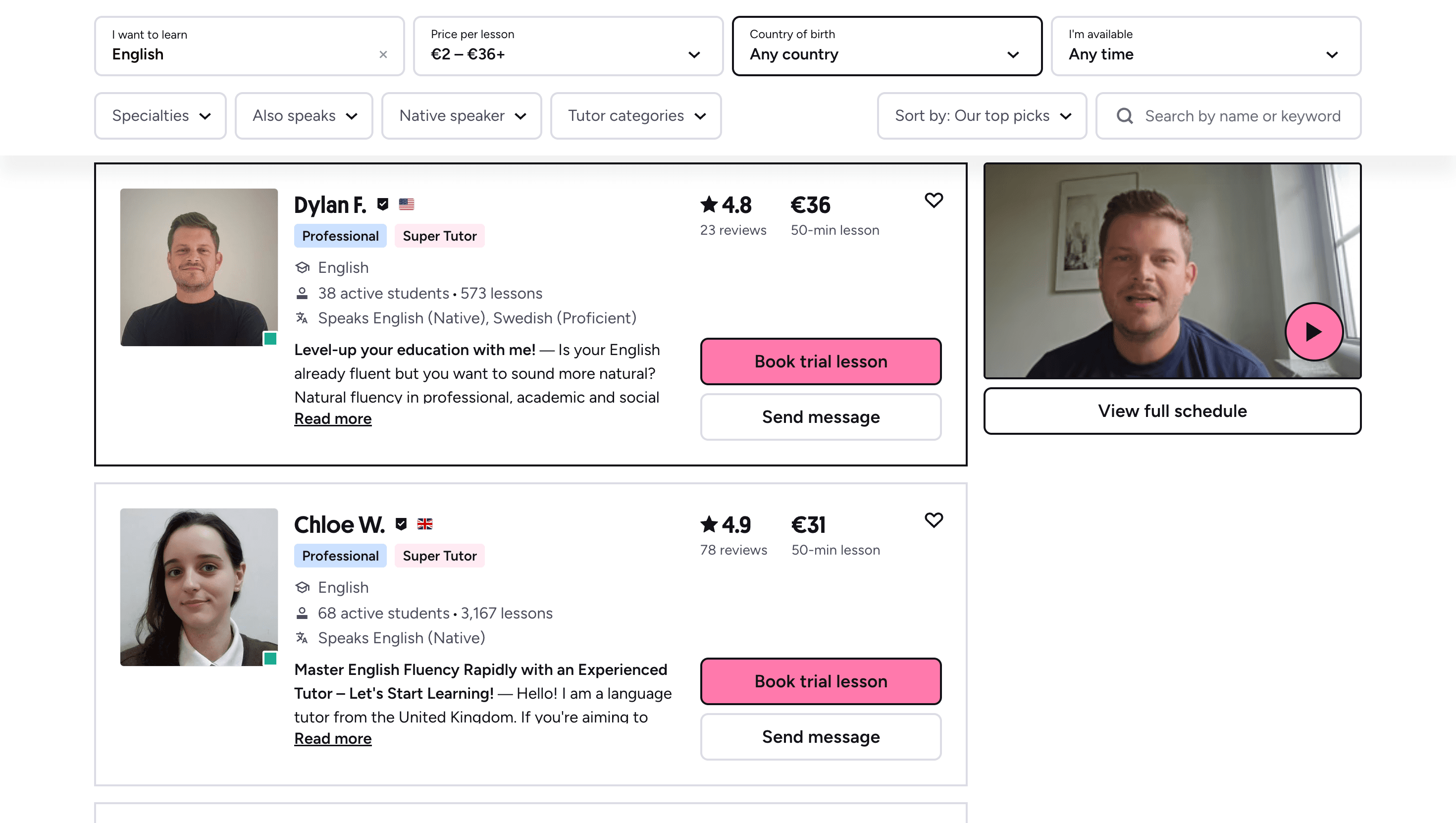
Many learners give up on language learning due to these high costs, missing out on valuable professional and personal opportunities.
That’s why we created Kylian: to make language learning accessible to everyone and help people master a foreign language without breaking the bank.
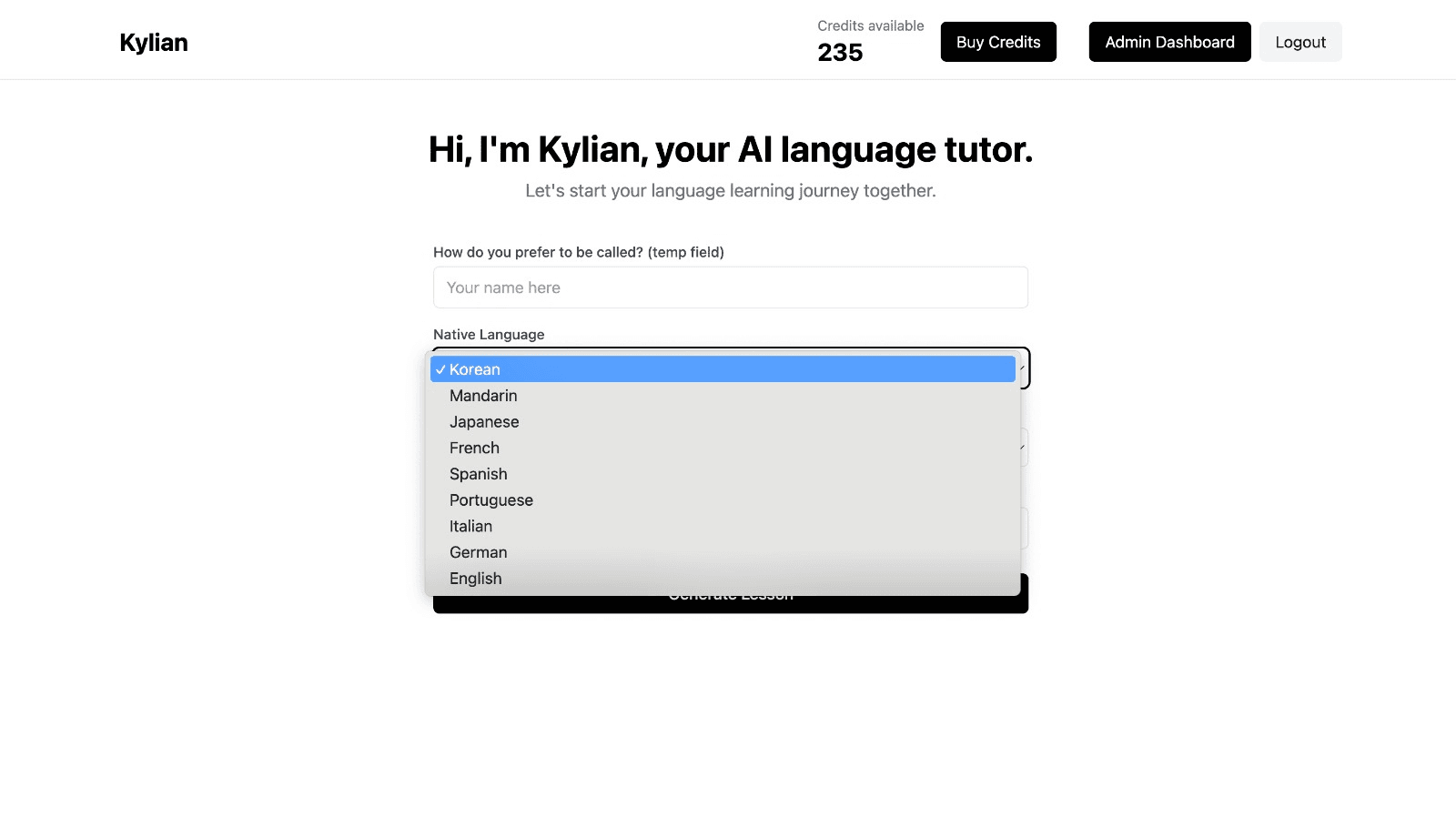
To get started, just tell Kylian which language you want to learn and what your native language is
Tired of teachers who don’t understand your specific struggles as a French speaker? Kylian’s advantage lies in its ability to teach any language using your native tongue as the foundation.
Unlike generic apps that offer the same content to everyone, Kylian explains concepts in your native language (French) and switches to the target language when necessary—perfectly adapting to your level and needs.
This personalization removes the frustration and confusion that are so common in traditional language learning.
Choose a specific topic you want to learn
Frustrated by language lessons that never cover exactly what you need? Kylian can teach you any aspect of a language—from pronunciation to advanced grammar—by focusing on your specific goals.
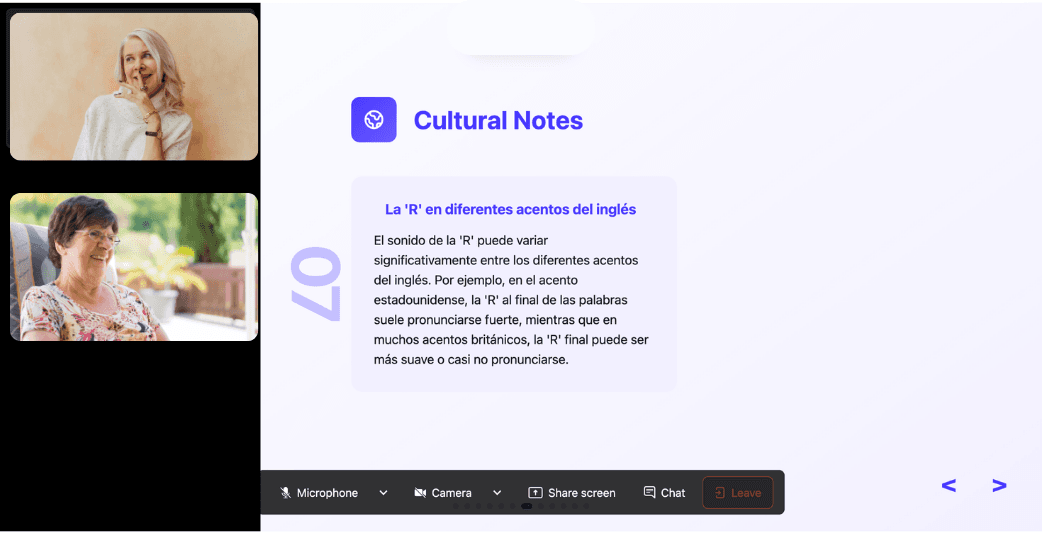
Avoid vague requests like “How can I improve my accent?” and be precise: “How do I pronounce the R like a native English speaker?” or “How do I conjugate the verb ‘to be’ in the present tense?”
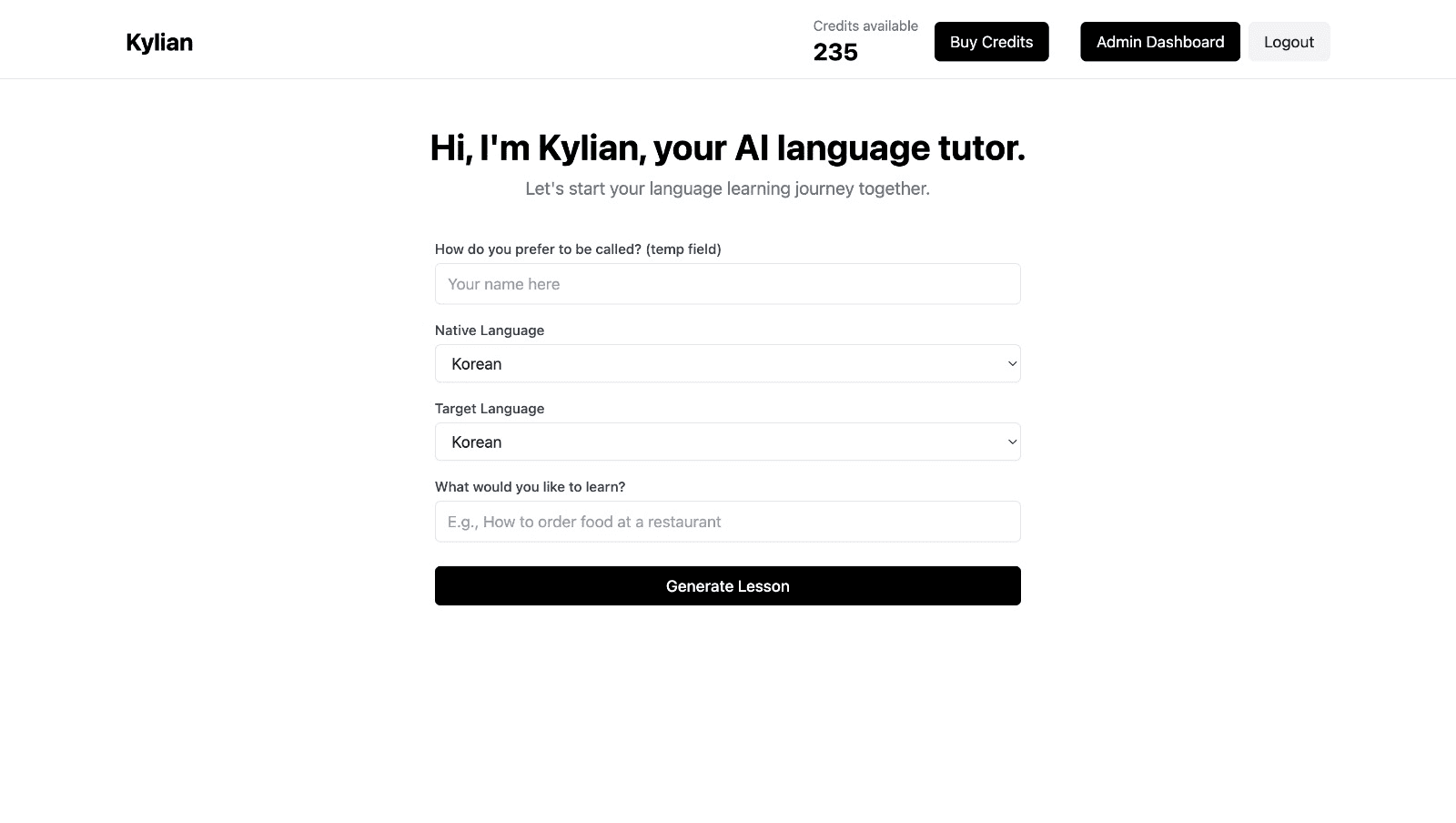
With Kylian, you’ll never again pay for irrelevant content or feel embarrassed asking “too basic” questions to a teacher. Your learning plan is entirely personalized.
Once you’ve chosen your topic, just hit the “Generate a Lesson” button, and within seconds, you’ll get a lesson designed exclusively for you.
Join the room to begin your lesson
The session feels like a one-on-one language class with a human tutor—but without the high price or time constraints.
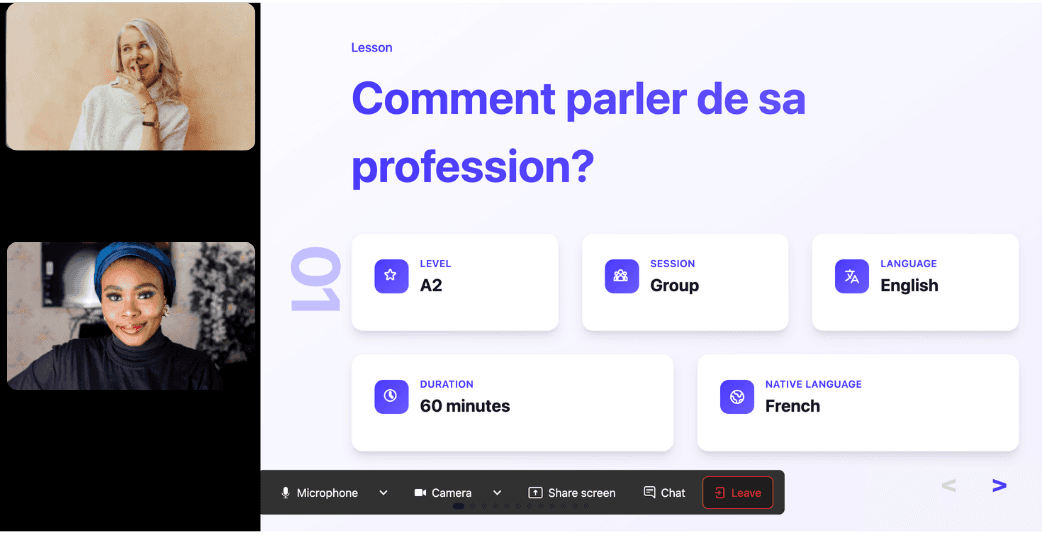
In a 25-minute lesson, Kylian teaches exactly what you need to know about your chosen topic: the nuances that textbooks never explain, key cultural differences between French and your target language, grammar rules, and much more.
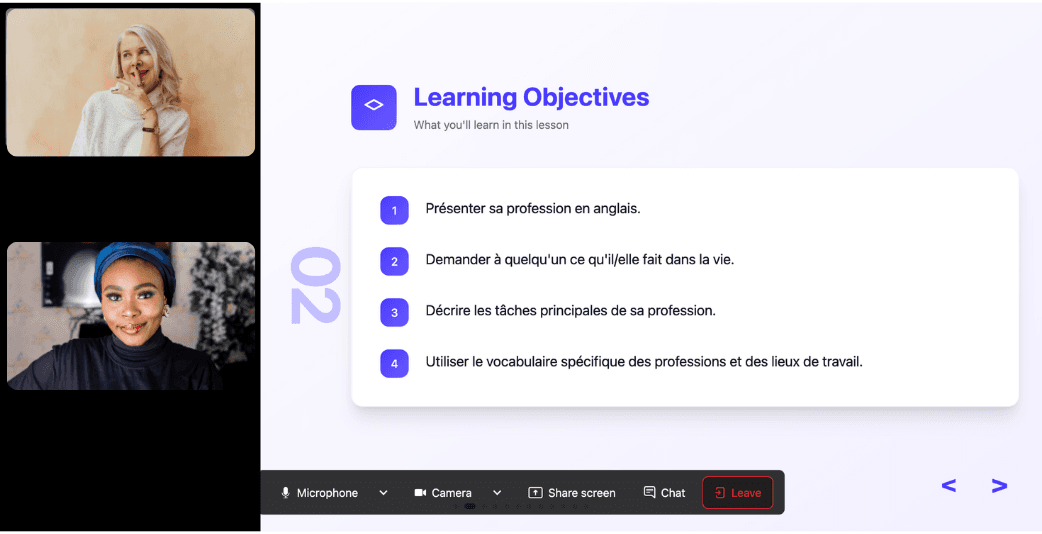
Ever felt frustrated trying to keep up with a native-speaking teacher, or embarrassed to ask for something to be repeated? With Kylian, that problem disappears. It switches intelligently between French and the target language depending on your level, helping you understand every concept at your own pace.
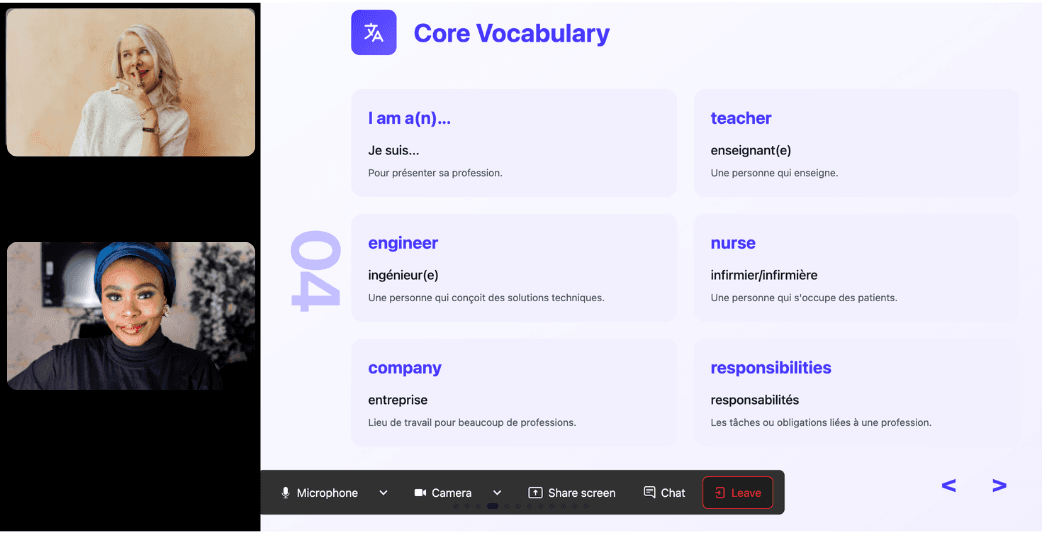
During the lesson, Kylian uses role-plays, real-life examples, and adapts to your learning style. Didn’t understand something? No problem—you can pause Kylian anytime to ask for clarification, without fear of being judged.
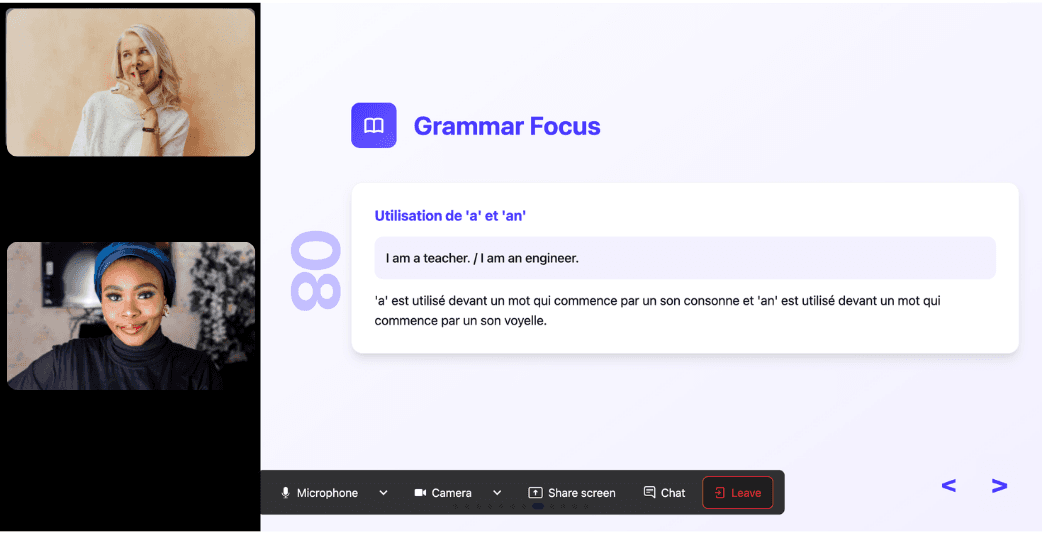
Ask all the questions you want, repeat sections if needed, and customize your learning experience in ways traditional teachers and generic apps simply can’t match.
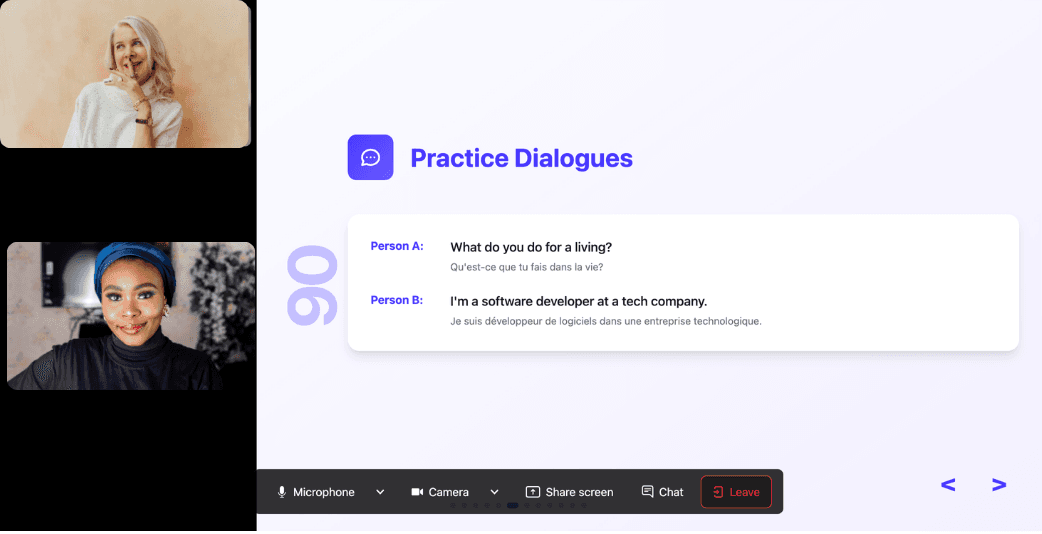
With 24/7 access at a fraction of the cost of private lessons, Kylian removes all the barriers that have kept you from mastering the language you’ve always wanted to learn.