

Italian beckons language enthusiasts with its melodic cadence and rich cultural heritage. The allure of mastering phrases like bellissima, tesoro, and dolcezza draws many to begin this linguistic journey. But beyond the romantic appeal lies a practical question: what does it take to achieve true fluency?
This comprehensive guide breaks down the process into actionable steps, providing clarity for anyone looking to master the language of Dante and Da Vinci.
Is Italian Easy to Learn?
For English speakers, Italian offers several distinct advantages. Its Latin roots create numerous vocabulary connections with English, giving learners a substantial head start. Approximately 30-40% of Italian vocabulary shares recognizable roots with English words.
As a Romance language alongside Spanish, French, and Portuguese, Italian follows logical patterns that become increasingly intuitive as you progress. If you already speak one Romance language, you'll find Italian notably easier to acquire.
Three key factors make Italian more approachable than many other languages:
- Consistent pronunciation rules: What you see is generally what you say
- Simpler grammar in many areas compared to English
- Familiar alphabet with no new characters to learn
However, like any language acquisition process, progress depends on consistent effort and strategic learning methods.
Why Invest Time in Learning Italian?
Enhanced Travel Experiences
While English suffices in major metropolitan areas like Rome, Milan, and Florence, venturing beyond tourist centers reveals a different Italy. In smaller towns and rural areas, limited English proficiency means Italian speakers enjoy:
- More authentic cultural exchanges
- Access to hidden local spots
- Deeper connections with residents
- The ability to navigate independently
Professional Advantages
Italy maintains the 8th largest economy globally, with particular strength in:
- Fashion and luxury goods
- Automotive engineering
- Culinary arts and hospitality
- Design and architecture
- Manufacturing and machinery
For professionals in these sectors, Italian proficiency opens doors to partnerships, clients, and career advancement opportunities inaccessible to non-speakers.
Cultural Immersion
Learning Italian provides direct access to one of the world's richest cultural traditions:
- Literature from Dante to Umberto Eco
- Cinematic masterpieces of Fellini and Sorrentino
- Opera and classical music traditions
- Architectural and artistic innovations spanning centuries
- Nuanced understanding of regional cuisines and traditions
Rather than experiencing these treasures through translation, Italian speakers engage directly with primary sources.
Setting Effective Learning Goals
Progress in language acquisition depends heavily on establishing the right objectives. While the ultimate goal of fluency matters, breaking the journey into smaller milestones creates sustainable momentum.
Effective language learning goals should be:
- Specific: "Complete 30 minutes of speaking practice three times weekly" rather than "practice more"
- Measurable: Track vocabulary acquisition numerically or use proficiency frameworks like CEFR levels
- Achievable: Set challenges that stretch but don't overwhelm your current abilities
- Relevant: Focus on the aspects of Italian most applicable to your personal reasons for learning
- Time-bound: Establish clear deadlines for each milestone
Document these goals in a dedicated language journal or digital tracker, creating accountability and making progress visible.
Your Strategic Learning Plan
Establish a Consistent Schedule
Consistency trumps intensity in language acquisition. Research demonstrates that regular, moderate practice outperforms occasional cramming sessions.
For optimal results:
- Schedule 3-4 shorter sessions throughout the week rather than a single marathon
- Identify your peak cognitive hours and align study time accordingly
- Create environmental triggers (such as a dedicated study space) that signal language-learning mode
- Use time-blocking techniques to protect your language practice from schedule disruptions
- Track consistency streaks to build motivation
Even with limited availability, 20-30 minutes of daily practice yields remarkable progress over time.
Master the Sound System First
The Italian phonetic system provides a critical foundation for all subsequent learning. Begin by:
- Familiarizing yourself with the 21 letters of the Italian alphabet
- Practicing the seven vowel sounds (a, e [open], e [closed], i, o [open], o [closed], u)
- Mastering consonant combinations (especially double consonants)
- Understanding syllable stress patterns
Pay particular attention to the letters C and G, which change pronunciation based on the following vowel:
- Hard C/G before A, O, U: casa (house), gatto (cat)
- Soft C/G before E, I: cinema (cinema), gente (people)
Record yourself speaking and compare with native pronunciations, making targeted adjustments to your articulation.
Build Foundational Grammar
Rather than memorizing abstract rules, approach Italian grammar through functional patterns that enable communication. Focus initially on:
Word Order Fundamentals
Italian uses the Subject-Verb-Object structure similar to English, simplifying your early sentence construction. For example:
- Io mangio la pasta (I eat pasta)
- Lei legge il libro (She reads the book)
Noun Gender and Articles
Every Italian noun carries either masculine or feminine gender, determining the form of accompanying articles and adjectives.
Common patterns include:
- Masculine nouns often end in -o: libro (book), tavolo (table)
- Feminine nouns typically end in -a: casa (house), sedia (chair)
- Nouns ending in -e may be either gender and require memorization
Verb Conjugation Essentials
Italian verbs belong to three conjugation groups based on their infinitive endings:
- First conjugation (-are): parlare (to speak), mangiare (to eat)
- Second conjugation (-ere): leggere (to read), scrivere (to write)
- Third conjugation (-ire): dormire (to sleep), sentire (to hear/feel)
Begin by mastering the present tense of regular verbs in each group, plus essential irregulars like essere (to be) and avere (to have).
Adjective Agreement
Adjectives must match the gender and number of the nouns they modify:
- Masculine singular: libro rosso (red book)
- Feminine singular: casa rossa (red house)
- Masculine plural: libri rossi (red books)
- Feminine plural: case rosse (red houses)
Strategic Vocabulary Acquisition
Rather than randomly accumulating words, prioritize vocabulary based on frequency and relevance to your specific needs.
Start with these high-value categories:
- Survival phrases: Greetings, basic questions, numbers, emergencies
- Connector words: Conjunctions, prepositions, and transition terms
- Personal relevance: Vocabulary related to your hobbies, profession, and interests
- Frequency lists: The 1000 most common Italian words account for approximately 85% of everyday speech
Implement a systematic review system using spaced repetition techniques to maximize retention. Tools like Anki or similar flashcard systems algorithmically schedule reviews based on recall difficulty.
Immersive Learning Approaches
Even without relocating to Italy, you can create an immersive language environment:
- Change device languages: Set your phone, social media, or email to Italian
- Create Italian zones: Designate certain activities (cooking, exercise) as Italian-only
- Consume authentic media: Begin with subtitled content, gradually reducing dependency
- Label household items: Create visual vocabulary cues in your daily environment
- Practice inner dialogue: Mentally narrate routine activities in Italian
The goal is to transform Italian from an academic exercise into a living communication tool.
Accelerating Your Progress
Leverage Technology Effectively
Modern language learners benefit from unprecedented technological resources:
- AI-driven tutoring platforms: Adaptive systems that personalize lessons based on your progress
- Speech recognition tools: Immediate pronunciation feedback even without a human tutor
- Streaming services: Access to authentic Italian content with adjustable subtitle options
- Language exchange apps: Connect with native speakers for mutual learning
- Digital flashcard systems: Optimize vocabulary retention through spaced repetition algorithms
While technology offers valuable support, it works best as a complement to structured learning rather than a standalone solution.
Work with Professional Instructors
Independent study builds a foundation, but personalized guidance accelerates progress dramatically. Professional Italian tutors provide:
- Immediate correction of developing errors before they become habits
- Customized explanations tailored to your learning style
- Cultural context that textbooks often miss
- Accountability and motivation during challenging phases
- Conversation practice adjusted precisely to your level
Online tutoring platforms make professional instruction more accessible and affordable than traditional language schools, with the added benefit of scheduling flexibility.
Master the Art of Deliberate Practice
Not all practice yields equal results. Deliberate practice—focusing intensely on specific weaknesses with immediate feedback—accelerates progress dramatically.
When studying Italian:
- Identify specific weaknesses through regular self-assessment
- Design targeted exercises addressing those particular challenges
- Seek immediate feedback through recordings, tutors, or language partners
- Gradually increase difficulty just beyond your comfort zone
- Regularly reassess to ensure progress
This approach makes each practice session significantly more productive than generalized study.
Common Obstacles and Solutions
Motivation Fluctuations
Initial enthusiasm inevitably encounters challenges. When motivation wanes:
- Reconnect with your personal "why" for learning Italian
- Join language communities for mutual encouragement
- Create accountability through learning partnerships
- Celebrate small victories and milestone achievements
- Vary learning activities to prevent monotony
Remember that motivation naturally fluctuates; building systems and habits sustains progress during lower-motivation periods.
Plateau Phases
Every learner encounters plateaus where progress seems to stall. When this occurs:
- Temporarily shift focus to a different aspect of the language
- Increase authentic input through films, podcasts, or books
- Seek more challenging conversation partners
- Reassess your methods and consider new approaches
- Remember that apparent plateaus often precede breakthrough periods
These challenging phases often represent consolidation periods where your brain integrates previously learned material.
Time Management Challenges
For busy professionals balancing multiple responsibilities:
- Implement micro-learning sessions during transitional moments in your day
- Use dead time (commuting, waiting, etc.) for passive listening practice
- Combine language learning with other activities (listening while exercising)
- Prioritize consistency over duration in your practice sessions
- Consider more intensive periodic immersion experiences when time allows
Even fifteen minutes of daily focused practice outperforms occasional longer sessions.
Assessing Your Progress
Objective Measurement Tools
Track your development using recognized frameworks and assessment tools:
- Common European Framework of Reference (CEFR): Standardized proficiency levels from A1 (beginner) to C2 (mastery)
- Self-assessment checklists: Specific "can-do" statements for each proficiency level
- Standardized tests: CILS, PLIDA, or other official Italian proficiency examinations
- Comprehension metrics: Percentage of understood content when watching untranslated media
- Production analysis: Recording and reviewing your speaking samples at regular intervals
Documenting progress objectively provides motivation and helps identify areas needing additional focus.
Defining Fluency Realistically
"Fluency" represents a spectrum rather than a binary state. Consider these progressive benchmark levels:
- Survival Italian: Basic needs, simple transactions, limited conversations
- Conversational competence: Comfort in everyday situations with some specialized vocabulary
- Professional proficiency: Career-specific discussions with occasional errors
- Near-native fluency: Cultural nuances, idioms, regional variations, complex topics
Setting realistic expectations prevents discouragement and helps recognize genuine achievements along the way.
The Neurological Advantage of Language Learning
Beyond practical benefits, Italian acquisition creates measurable cognitive advantages:
- Enhanced executive function: Improved ability to focus, plan, and multitask
- Delayed cognitive decline: Research indicates bilingualism may delay dementia onset by 4-5 years
- Improved memory: Language learning strengthens both working and long-term memory systems
- Increased mental flexibility: Switching between languages enhances cognitive adaptability
- Enhanced problem-solving skills: Navigating multiple language systems develops creative thinking
These neurological benefits emerge regardless of your ultimate proficiency level, making even partial language acquisition valuable.
Learn Any Language with Kylian AI
Private language lessons are expensive. Paying between 15 and 50 euros per lesson isn’t realistic for most people—especially when dozens of sessions are needed to see real progress.
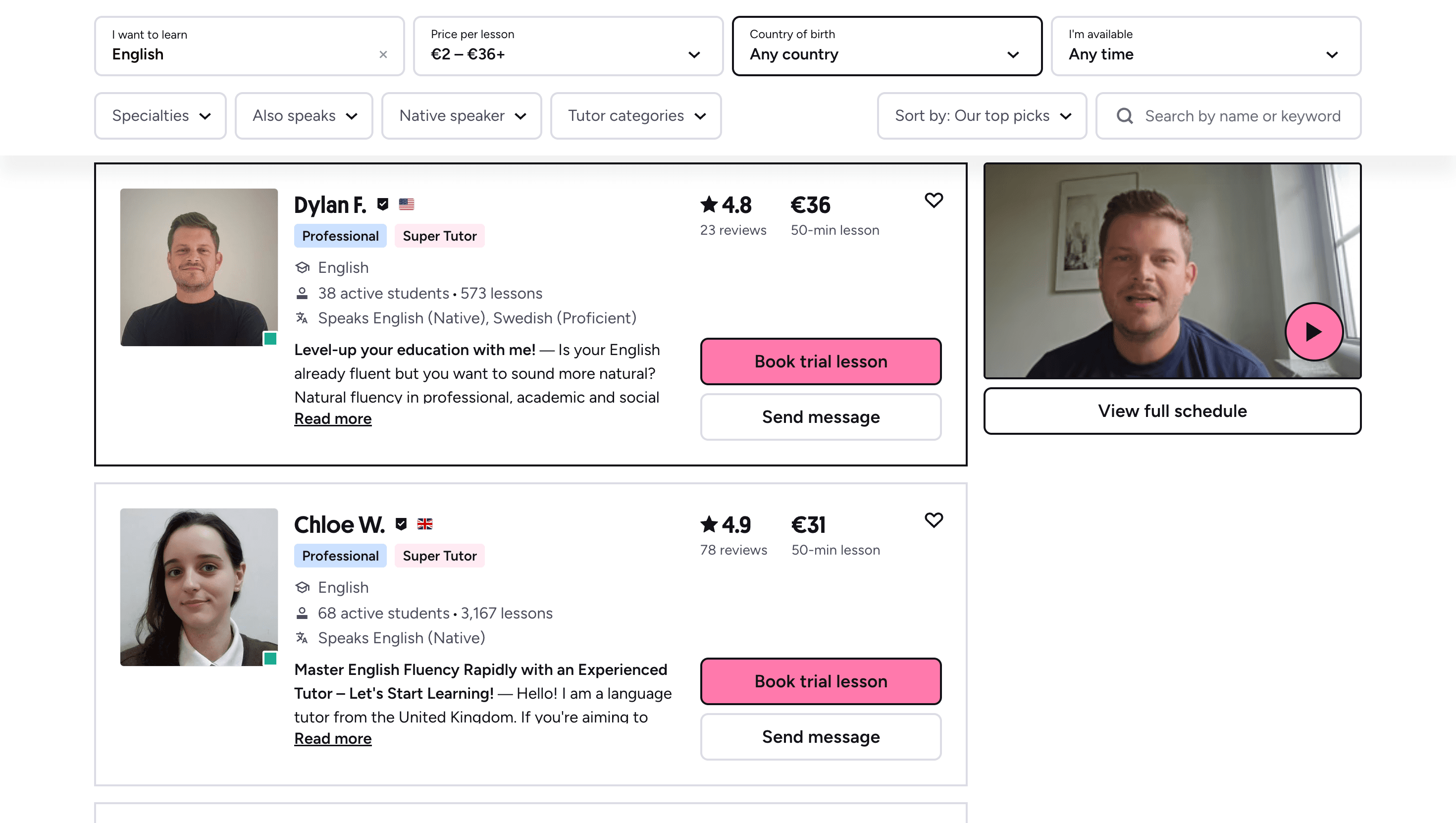
Many learners give up on language learning due to these high costs, missing out on valuable professional and personal opportunities.
That’s why we created Kylian: to make language learning accessible to everyone and help people master a foreign language without breaking the bank.
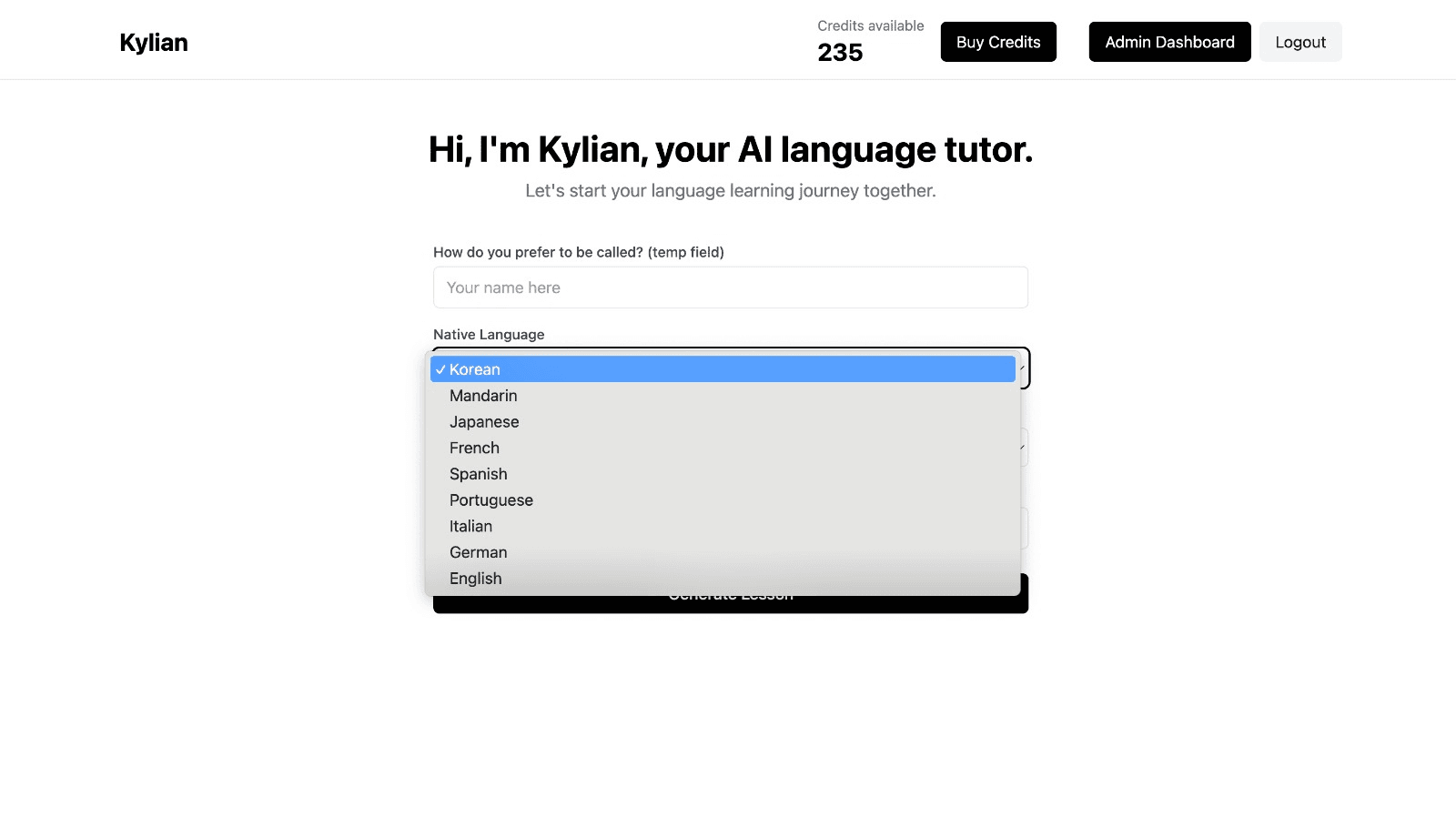
To get started, just tell Kylian which language you want to learn and what your native language is
Tired of teachers who don’t understand your specific struggles as a French speaker? Kylian’s advantage lies in its ability to teach any language using your native tongue as the foundation.
Unlike generic apps that offer the same content to everyone, Kylian explains concepts in your native language (French) and switches to the target language when necessary—perfectly adapting to your level and needs.
This personalization removes the frustration and confusion that are so common in traditional language learning.
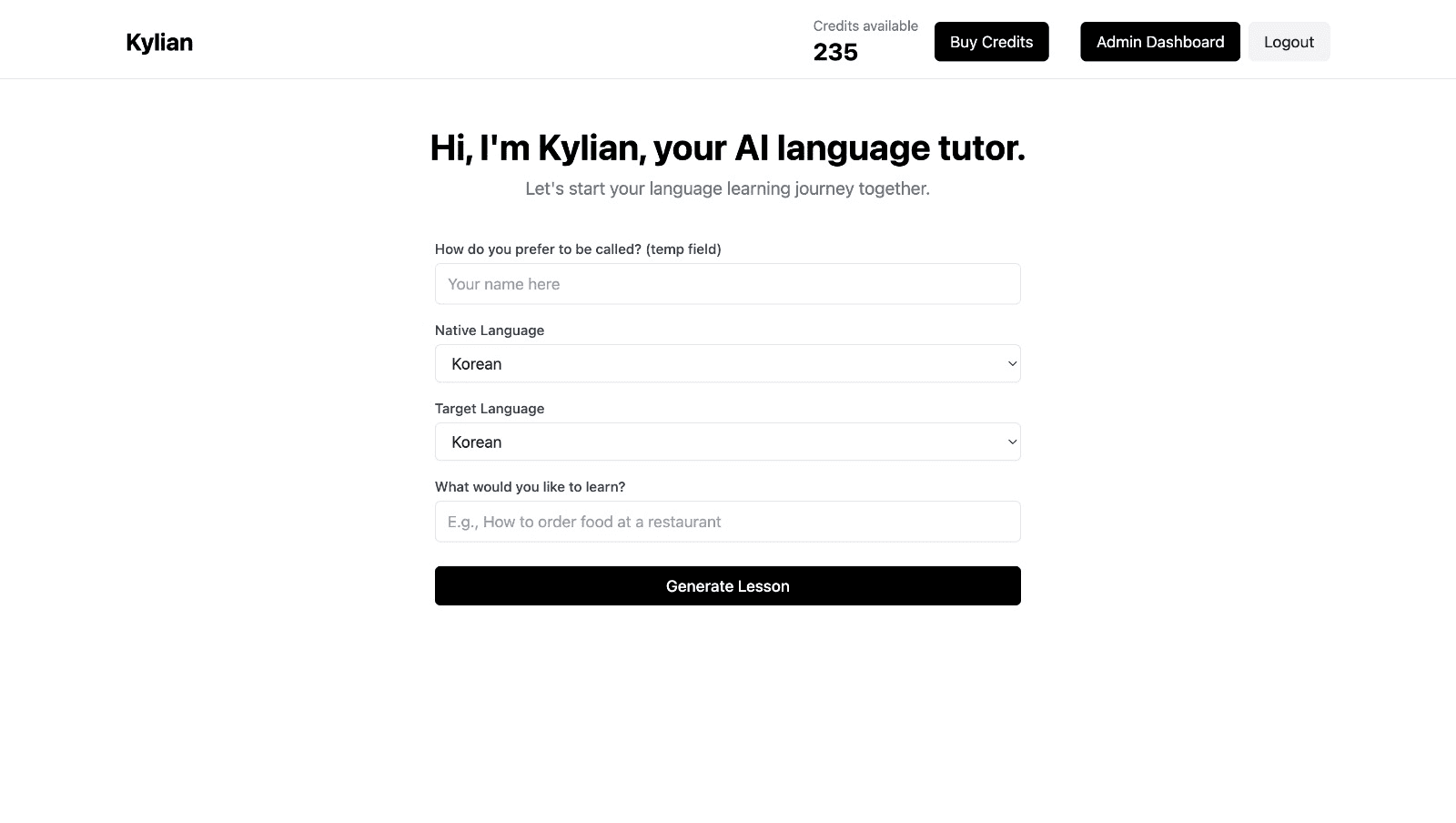
Choose a specific topic you want to learn
Frustrated by language lessons that never cover exactly what you need? Kylian can teach you any aspect of a language—from pronunciation to advanced grammar—by focusing on your specific goals.
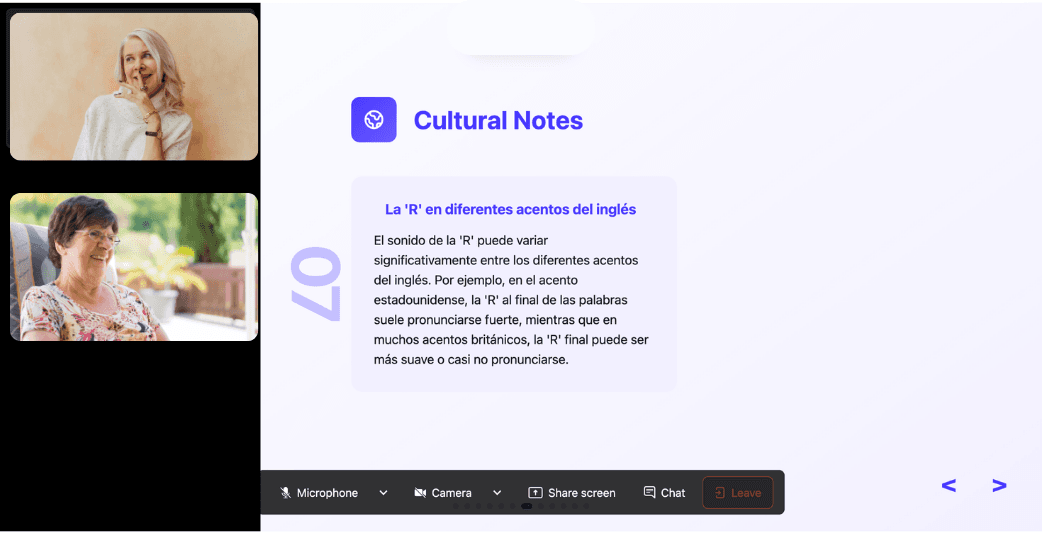
Avoid vague requests like “How can I improve my accent?” and be precise: “How do I pronounce the R like a native English speaker?” or “How do I conjugate the verb ‘to be’ in the present tense?”
With Kylian, you’ll never again pay for irrelevant content or feel embarrassed asking “too basic” questions to a teacher. Your learning plan is entirely personalized.
Once you’ve chosen your topic, just hit the “Generate a Lesson” button, and within seconds, you’ll get a lesson designed exclusively for you.
Join the room to begin your lesson
The session feels like a one-on-one language class with a human tutor—but without the high price or time constraints.
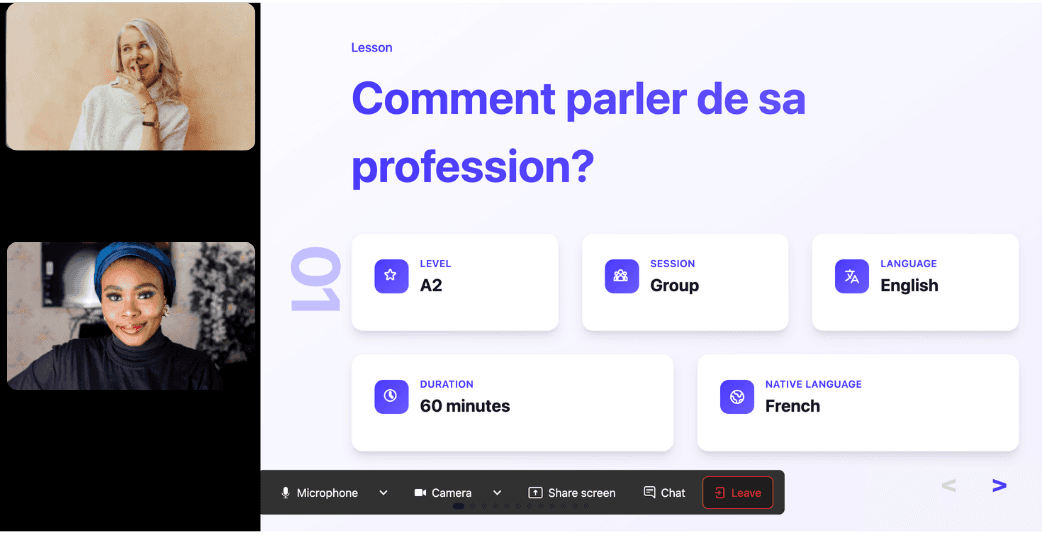
In a 25-minute lesson, Kylian teaches exactly what you need to know about your chosen topic: the nuances that textbooks never explain, key cultural differences between French and your target language, grammar rules, and much more.
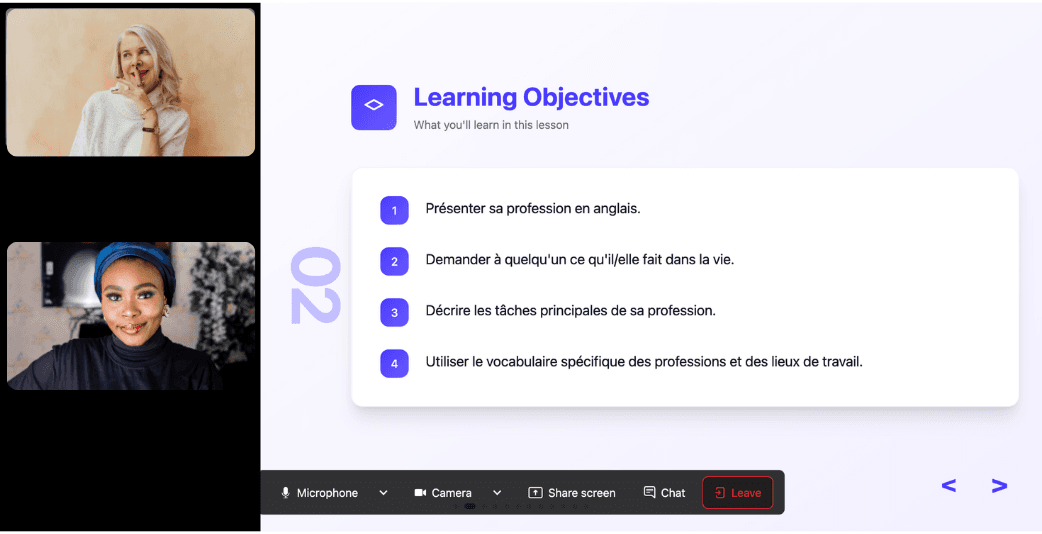
Ever felt frustrated trying to keep up with a native-speaking teacher, or embarrassed to ask for something to be repeated? With Kylian, that problem disappears. It switches intelligently between French and the target language depending on your level, helping you understand every concept at your own pace.
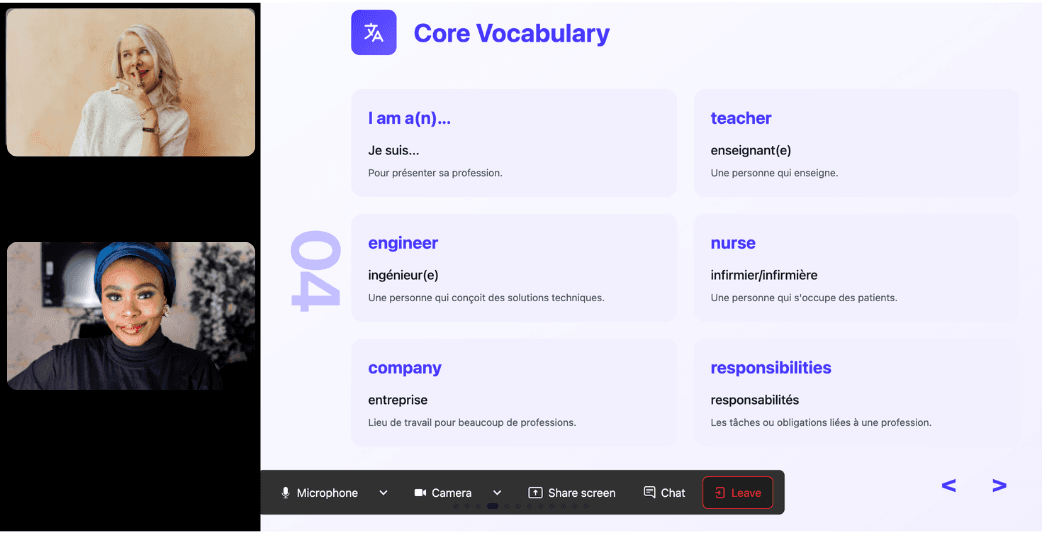
During the lesson, Kylian uses role-plays, real-life examples, and adapts to your learning style. Didn’t understand something? No problem—you can pause Kylian anytime to ask for clarification, without fear of being judged.
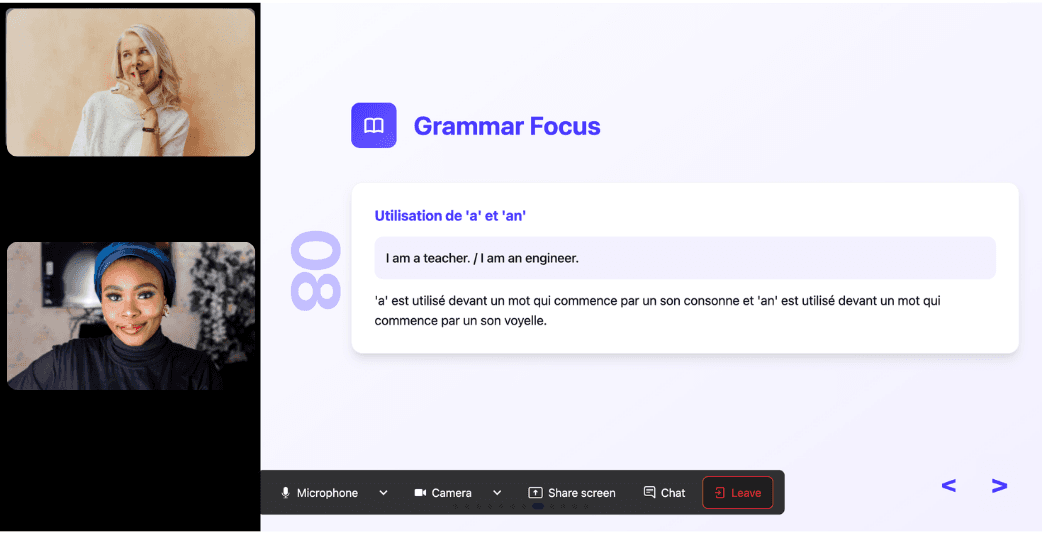
Ask all the questions you want, repeat sections if needed, and customize your learning experience in ways traditional teachers and generic apps simply can’t match.
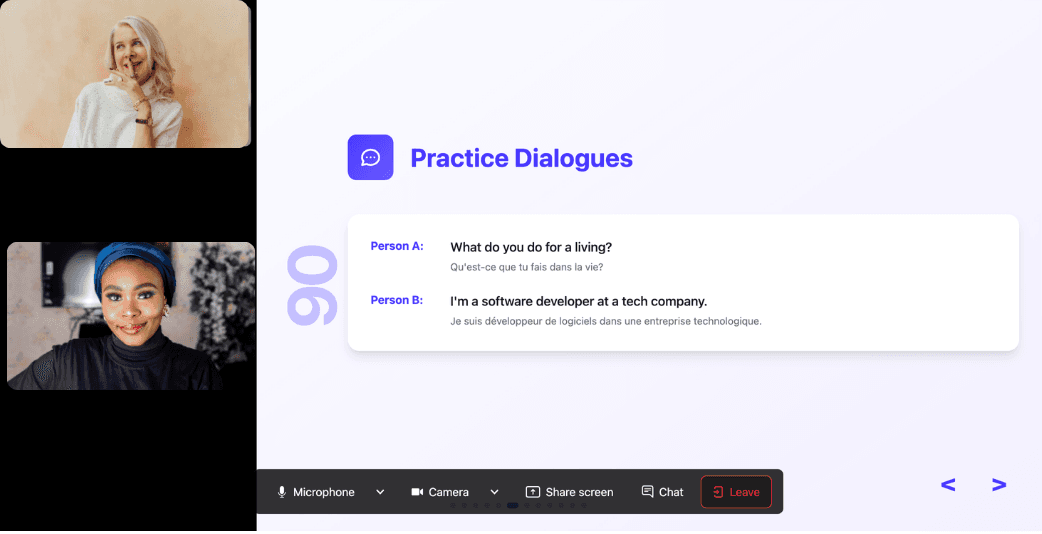
With 24/7 access at a fraction of the cost of private lessons, Kylian removes all the barriers that have kept you from mastering the language you’ve always wanted to learn.


![What is the plural of mango? [English]](/_next/image?url=https%3A%2F%2Fcdn.sanity.io%2Fimages%2F147z5m2d%2Fproduction%2F73e49bb8178def72d2994c8e7afdb25264559244-2240x1260.png%3Frect%3D175%2C0%2C1890%2C1260%26w%3D600%26h%3D400&w=3840&q=75)


