Navigating Japan's complex transportation networks and unfamiliar streets demands more than reliance on digital maps. When your phone battery dies or you venture into rural areas with limited English signage, knowing how to ask for directions in Japanese becomes invaluable. This practical knowledge transforms potential frustration into smooth interactions with locals who are typically eager to help.
Why Learning Directional Japanese Matters
Travel within Japan offers remarkable efficiency through its extensive train networks, convenient buses, and walkable cities. However, Tokyo alone features nearly 30 different subway lines—a labyrinth that challenges even seasoned travelers. Rural areas present additional challenges where English guidance diminishes significantly.
Preparing with essential Japanese directional vocabulary serves as your communication safety net. Rather than panicking when lost, you'll possess the linguistic tools to seek assistance confidently and understand the guidance provided.
Critical Phrases for Direction-Seeking in Japanese
Japan's transportation infrastructure ranks among the world's most sophisticated, yet navigation complexities arise when transferring between lines or locating specific destinations. Mastering these foundational phrases equips you to handle disorientation with confidence:
- Where is the station? - 駅はどこですか? (Eki wa doko desu ka?)
- Where do I transfer? - どこで乗り換えますか? (Doko de norikae masu ka?)
- How long does it take? - どのくらいかかりますか? (Donokurai kakarimasu ka?)
- How far is it by car? - 車でどのくらい遠いですか? (Kuruma de donokurai tooi desu ka?)
- Where is the restaurant? - レストランはどこですか? (Resutoran wa doko desu ka?)
- Where is the bathroom? - トイレはどこですか? (Toire wa doko desu ka?)
- I want to go to [place name]. - [場所の名前]に行きたいです。([Name of place] ni ikitai desu.)
- How can I get to [place name]? - どうやって[場所の名前]に行けますか? (Douyatte [name of place] ni ikemasu ka?)
- Please tell me how to get there. - 道を教えてください。(Michi wo oshiete kudasai.)
- Where am I? - ここはどこですか? (Koko wa doko desu ka?)
Essential Directional Vocabulary in Japanese
While larger cities offer comprehensive transportation options, smaller towns may require walking or cycling. Understanding directional terminology proves essential regardless of your transportation mode. These words form the foundation of navigational communication:
General Direction Words
- Right - 右 (Migi)
- Left - 左 (Hidari)
- Straight - 真っ直ぐ (Massugu)
- Front - 前 (Mae)
- Back - 後ろ (Ushiro)
- Next to - 隣 (Tonari)
- Near - 近い (Chikai)
- Far - 遠い (Tooi)
- Corner - 角 (Kado)
- Inside - 中 (Naka)
- Outside - 外 (Soto)
Cardinal Directions
- North - 北 (Kita)
- East - 東 (Higashi)
- West - 西 (Nishi)
- South - 南 (Minami)
Positional References
- Here - ここ (Koko)
- There - そこ (Soko)
- Over there - あそこ (Asoko)
Transportation Terminology
Understanding transportation vocabulary enhances your ability to receive and comprehend directions:
- Train - 電車 (Densha)
- Subway - 地下鉄 (Chikatetsu)
- Bus - バス (Basu)
- Taxi - タクシー (Takushii)
- Car - 車 (Kuruma)
- Bullet train - 新幹線 (Shinkansen)
- Airplane - 飛行機 (Hikooki)
Action Verbs for Navigation
These verbs describe the physical movements needed to reach your destination:
- To turn - 曲がる (Magaru)
- To walk - 歩く (Aruku)
- To cross - 渡る (Wataru)
- To ride - 乗る (Noru)
- To drive - 運転する (Unten suru)
Location-Specific Vocabulary
These terms identify common destinations and landmarks that serve as navigational reference points:
Transportation Hubs
- Train station - 駅 (Eki)
- Bus stop - バス停 (Basu tei)
- Airport - 空港 (Kuukou)
- Parking - 駐車場 (Chuushajou)
Essential Services
- Bank - 銀行 (Ginkou)
- Hospital - 病院 (Byouin)
- Park - 公園 (Kouen)
- Temple - お寺 (Otera)
- Hotel - ホテル (Hoteru)
- Police station - 交番 (Kouban)
- Intersection - 交差点 (Kousaten)
Building Navigation Terminology
Finding your way within buildings requires specific vocabulary:
- Building - 建物 (Tatemono)
- Entrance - 入口 (Iriguchi)
- Exit - 出口 (Deguchi)
- Elevator - エレベーター (Erebeetaa)
- Escalator - エスカレーター (Esukareetaa)
- Stairs - 階段 (Kaidan)
- Room - 部屋 (Heya)
- Front desk - フロント (Furonto)
- Bathroom - トイレ (Toire)
- Restaurant - レストラン (Resutoran)
- Café - カフェ (Kafe)
Numerical References for Transportation
Understanding basic Japanese numbers proves particularly useful when counting subway stops or bus stations. The first ten numbers form a critical foundation:
- One - 一 (Ichi)
- Two - 二 (Ni)
- Three - 三 (San)
- Four - 四 (Shi/Yon)
- Five - 五 (Go)
- Six - 六 (Roku)
- Seven - 七 (Shichi/Nana)
- Eight - 八 (Hachi)
- Nine - 九 (Kyuu/Ku)
- Ten - 十 (Juu)
Time Expressions for Journey Planning
When receiving directions, understanding time references helps establish expectations for your journey:
- Minutes - 分 (Fun/Pun)
- Hours - 時間 (Jikan)
- Now - 今 (Ima)
- Later - 後で (Ato de)
- Soon - すぐに (Sugu ni)
Cultural Context: Politeness in Directional Inquiries
Japanese culture emphasizes respect and politeness in all interactions. When asking for directions, incorporating these cultural elements demonstrates consideration and typically elicits more helpful responses. Essential courteous expressions include:
- Excuse me - すみません (Sumimasen)
- Thank you - ありがとうございます (Arigatou gozaimasu)
- I'm sorry - ごめんなさい (Gomennasai)
- Please - お願いします (Onegaishimasu)
Adding these expressions before requesting directions and after receiving help demonstrates cultural awareness that Japanese people deeply appreciate.
Practical Conversation Examples
To illustrate how these vocabulary elements combine into effective interactions, consider these realistic scenarios:
Scenario 1: Finding Tokyo Station
You: すみません。東京駅に行きたいです。どうやって行けますか? (Sumimasen. Tokyo eki ni ikitai desu. Douyatte ikemasu ka?) Excuse me. I want to go to Tokyo Station. How can I get there?
Local: 電車で行けます。 (Densha de ikemasu.) You can go by train.
You: 電車でどのくらいかかりますか? (Densha de donokurai kakarimasu ka?) How long does it take by train?
Local: 30分かかります。 (Sanjuppun kakarimasu.) It takes 30 minutes.
You: ありがとうございます。 (Arigatou gozaimasu.) Thank you.
Scenario 2: Finding a Popular Restaurant
You: すみません。一風堂はどこですか? (Sumimasen. Ippuudo wa doko desu ka?) Excuse me. Where is Ippudo?
Local: ここから真っ直ぐ行って、二つ目の角を右に曲がってください。 (Koko kara massugu itte, futatsume no kado wo migi ni magatte kudasai.) Go straight from here and turn right at the second corner.
You: どのくらい歩きますか? (Donokurai arukimasu ka?) How long will I walk?
Local: 約5分です。 (Yaku gofun desu.) About 5 minutes.
You: ありがとうございます。 (Arigatou gozaimasu.) Thank you.
Advanced Navigation Techniques
Understanding Japanese Address Systems
Japanese addressing systems differ fundamentally from Western conventions. Rather than street names, Japanese addresses typically reference blocks and building numbers. When receiving directions, locals may refer to:
- Chome (丁目) - District subdivision
- Ban (番) - Block number
- Gou (号) - Building number
This system makes visual maps particularly valuable, as verbal directions may reference landmarks rather than street names.
Leveraging Technology with Japanese Knowledge
While smartphone navigation proves helpful, combining digital tools with language skills creates the most effective navigation strategy:
- Save key destinations in Japanese characters for showing locals
- Download offline maps before traveling to remote areas
- Learn to recognize your destination in Japanese characters
- Prepare screenshots of locations with Japanese addresses
These preparations enable you to show visual references even when verbal communication presents challenges.
Regional Variation Awareness
Japanese directional language maintains consistency nationwide, but awareness of regional accents enhances comprehension:
- Kansai region (Osaka, Kyoto) features distinctive intonation patterns
- Tohoku region (northern Honshu) often drops certain consonants
- Kyushu dialects may substitute certain vowel sounds
While standard Japanese (hyōjungo) predominates in formal situations, recognizing regional speaking patterns improves understanding in diverse areas.
Building Confidence Through Practice
Developing directional language skills requires practical application:
- Role-play scenarios before your trip
- Label common items in your home with Japanese directional terms
- Practice with native speakers through language exchange platforms
- Use Japanese-language GPS for simulated navigation practice
These preparation techniques build muscle memory for essential phrases, reducing hesitation during actual travel situations.
Learn Any Language with Kylian AI
Private language lessons are expensive. Paying between 15 and 50 euros per lesson isn’t realistic for most people—especially when dozens of sessions are needed to see real progress.
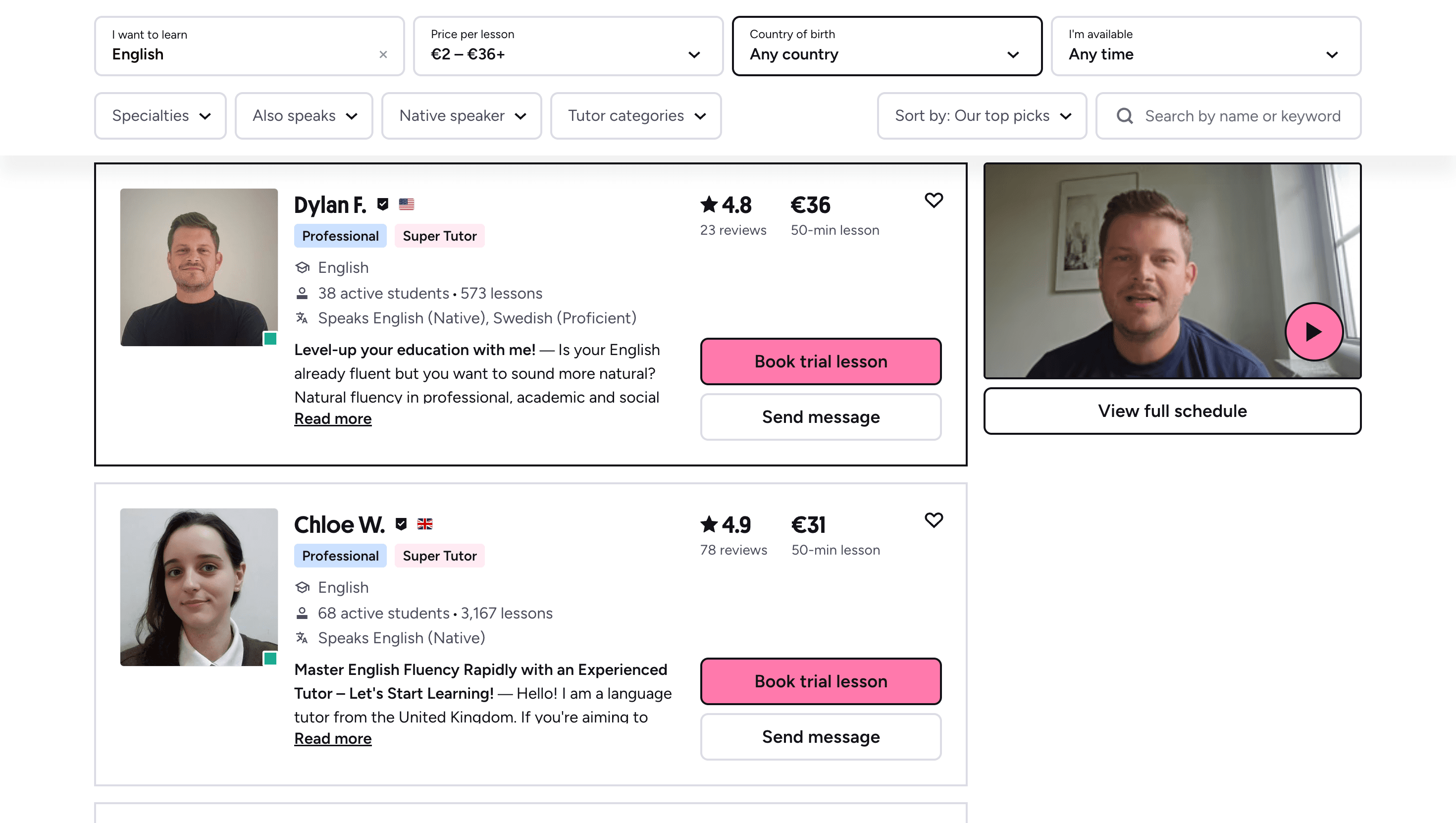
Many learners give up on language learning due to these high costs, missing out on valuable professional and personal opportunities.
That’s why we created Kylian: to make language learning accessible to everyone and help people master a foreign language without breaking the bank.
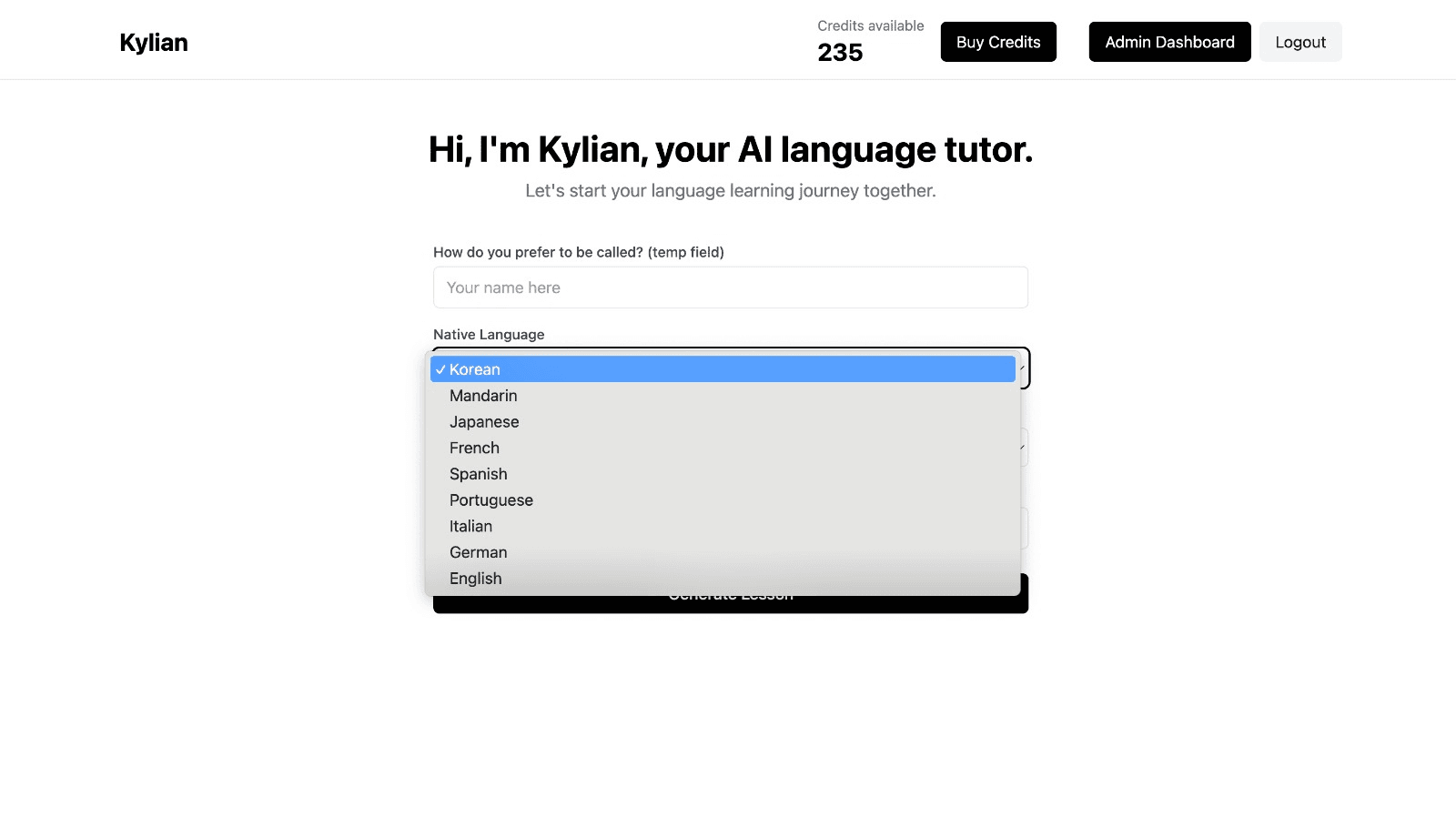
To get started, just tell Kylian which language you want to learn and what your native language is
Tired of teachers who don’t understand your specific struggles as a French speaker? Kylian’s advantage lies in its ability to teach any language using your native tongue as the foundation.
Unlike generic apps that offer the same content to everyone, Kylian explains concepts in your native language (French) and switches to the target language when necessary—perfectly adapting to your level and needs.
This personalization removes the frustration and confusion that are so common in traditional language learning.
Choose a specific topic you want to learn
Frustrated by language lessons that never cover exactly what you need? Kylian can teach you any aspect of a language—from pronunciation to advanced grammar—by focusing on your specific goals.
Avoid vague requests like “How can I improve my accent?” and be precise: “How do I pronounce the R like a native English speaker?” or “How do I conjugate the verb ‘to be’ in the present tense?”
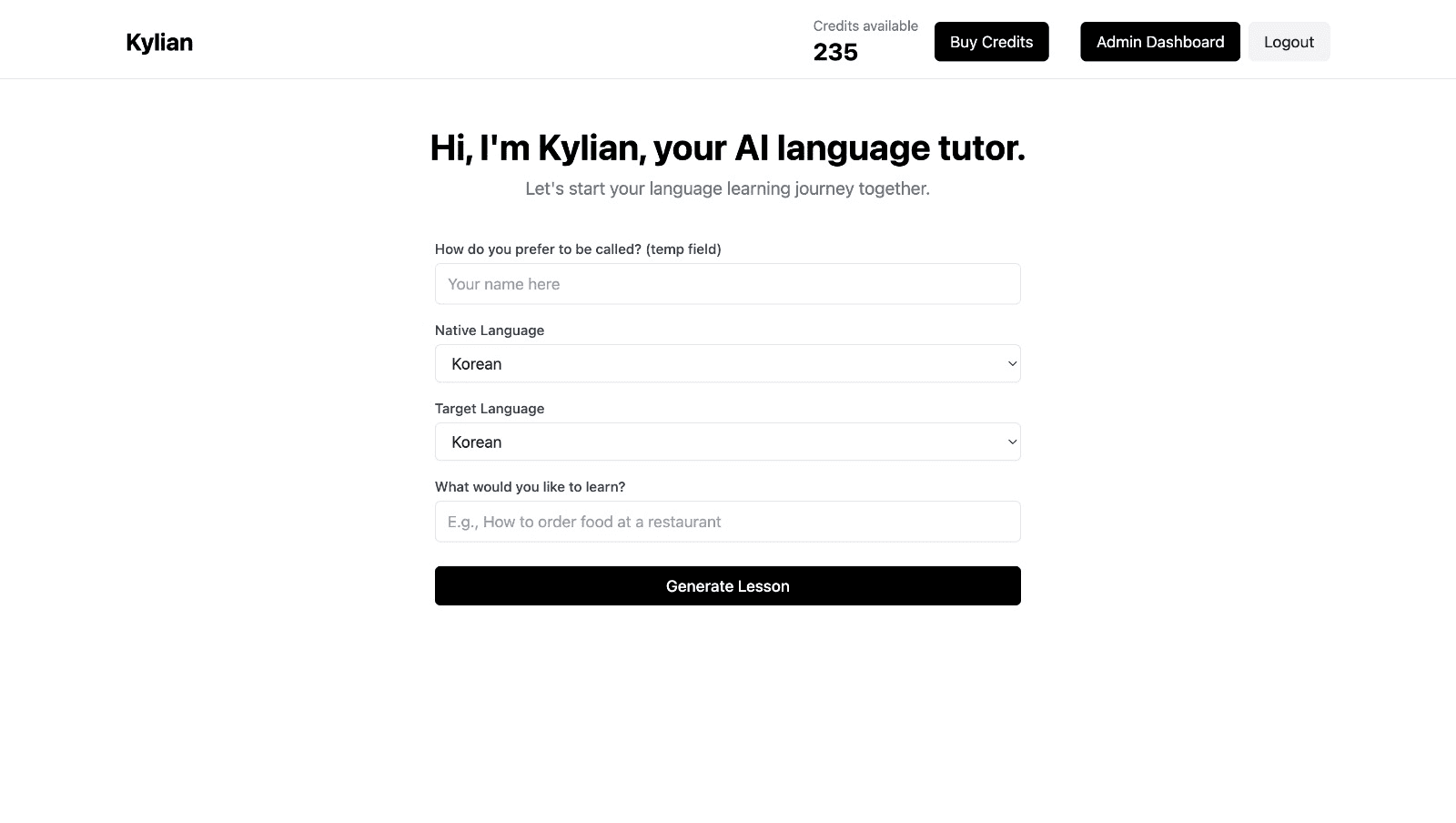
With Kylian, you’ll never again pay for irrelevant content or feel embarrassed asking “too basic” questions to a teacher. Your learning plan is entirely personalized.
Once you’ve chosen your topic, just hit the “Generate a Lesson” button, and within seconds, you’ll get a lesson designed exclusively for you.
Join the room to begin your lesson
The session feels like a one-on-one language class with a human tutor—but without the high price or time constraints.
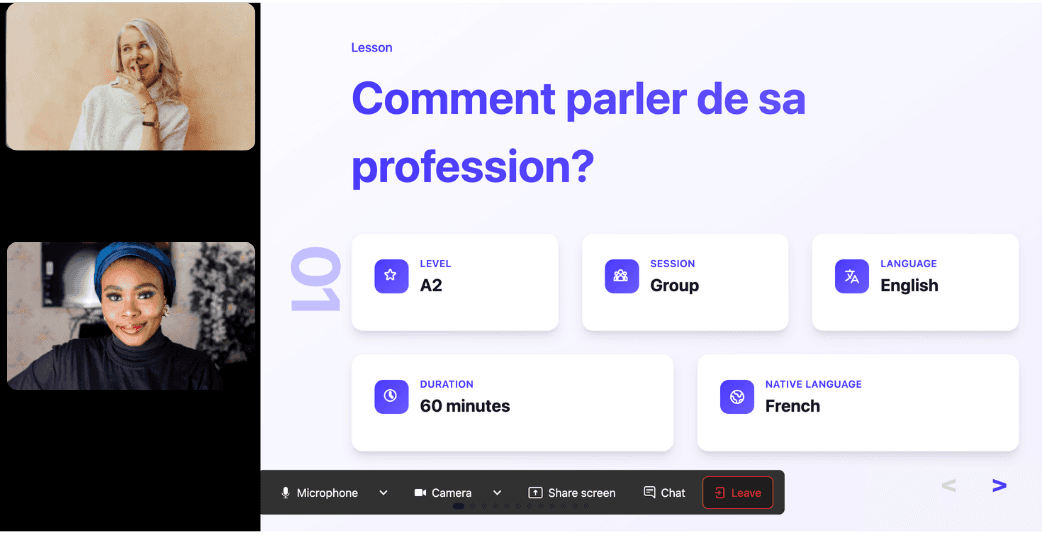
In a 25-minute lesson, Kylian teaches exactly what you need to know about your chosen topic: the nuances that textbooks never explain, key cultural differences between French and your target language, grammar rules, and much more.
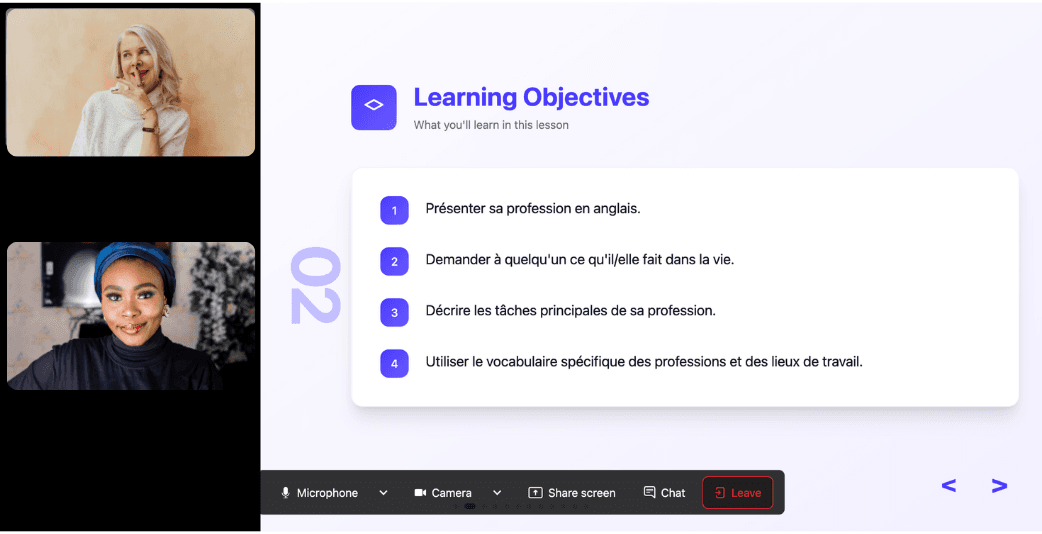
Ever felt frustrated trying to keep up with a native-speaking teacher, or embarrassed to ask for something to be repeated? With Kylian, that problem disappears. It switches intelligently between French and the target language depending on your level, helping you understand every concept at your own pace.
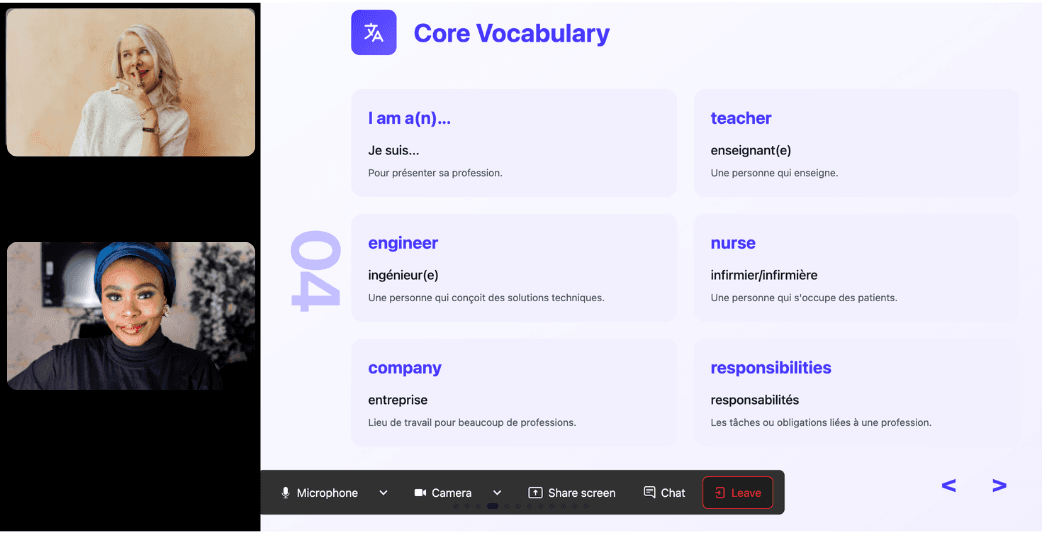
During the lesson, Kylian uses role-plays, real-life examples, and adapts to your learning style. Didn’t understand something? No problem—you can pause Kylian anytime to ask for clarification, without fear of being judged.
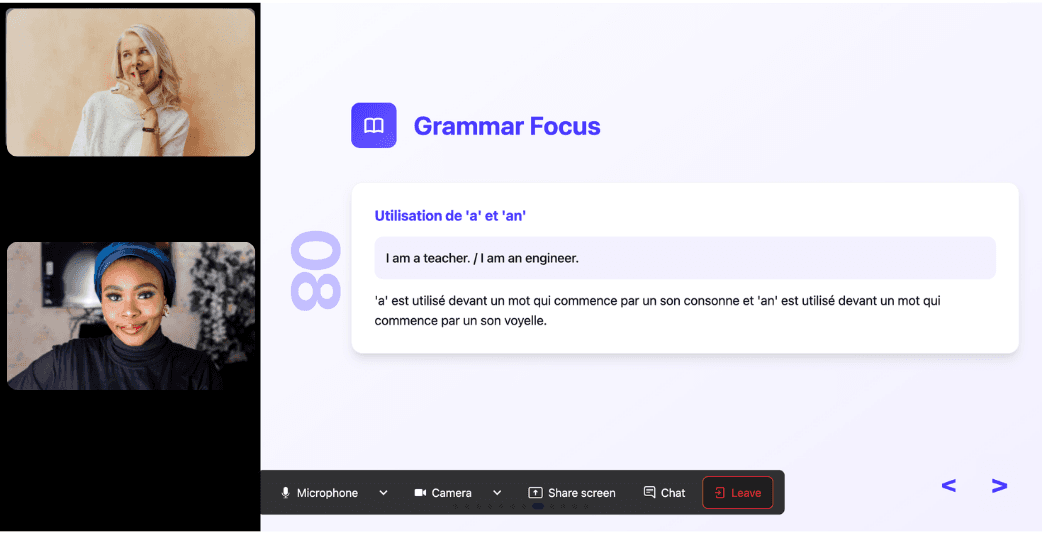
Ask all the questions you want, repeat sections if needed, and customize your learning experience in ways traditional teachers and generic apps simply can’t match.
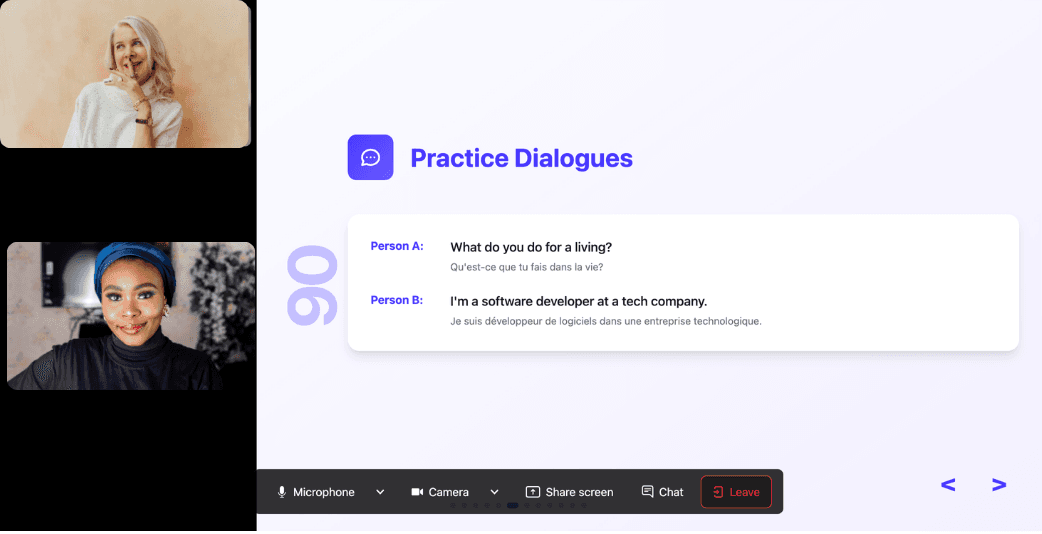
With 24/7 access at a fraction of the cost of private lessons, Kylian removes all the barriers that have kept you from mastering the language you’ve always wanted to learn.