English speakers use "fat" constantly in conversations, media, and casual interactions, yet most non-native speakers struggle with its nuanced applications beyond basic dictionary definitions. This disconnect creates communication barriers that extend far beyond vocabulary gaps—it reflects deeper cultural understanding deficits that impact authentic English fluency.
The word "fat" operates across multiple registers in English, from medical terminology to playground insults, each carrying distinct social implications that learners must navigate carefully. Mastering these variations becomes essential for anyone seeking genuine English proficiency rather than textbook-level communication.
In what context is "fat" used in English?
English speakers deploy "fat" across three primary contextual frameworks, each serving distinct communicative purposes that reflect Anglo-American cultural patterns around body image and social interaction.
Medical and descriptive contexts represent the most straightforward usage pattern. Healthcare professionals, fitness experts, and scientific discussions employ "fat" as neutral terminology for adipose tissue or excess weight conditions. This clinical application removes emotional charge, focusing purely on biological or health-related facts.
Example: "The doctor said I need to reduce the fat in my diet." This usage parallels medical terminology in many languages but requires understanding when English speakers shift between clinical and colloquial registers within the same conversation.
Offensive or derogatory contexts constitute perhaps the most socially dangerous usage category. English speakers use "fat" as an insult, particularly in childhood environments, workplace harassment, or aggressive social interactions. This application carries severe social consequences and legal implications in many English-speaking countries.
Example: "He called me fat in front of everyone." Understanding this usage helps learners recognize when they're being insulted and avoid accidentally using the term inappropriately themselves.
Casual self-reference and friendly banter represent the most culturally complex usage pattern. English speakers frequently use "fat" in self-deprecating humor or among close friends, creating intimacy through shared vulnerability. This usage requires deep cultural understanding to execute successfully without causing offense.
Example: "I feel so fat after this huge meal." This context demands understanding English-speaking culture's relationship with body image, self-criticism, and friendship dynamics.
How to use "fat" like a native English speaker
Grammatical positioning and structural patterns around "fat" follow specific English syntax rules that require conscious learning rather than direct translation approaches from other languages.
Attributive versus predicative positioning creates meaning distinctions that learners often miss. "Fat" functions as both an attributive adjective (before nouns) and predicative adjective (after linking verbs), but these positions carry different emotional weights and social implications.
Compare: "A fat man" versus "The man is fat." The first construction suggests weight as a defining characteristic, while the second presents it as a current state, potentially temporary or changeable.
Comparative and superlative forms follow irregular English patterns. English uses "fatter" and "fattest" rather than "more fat" or "most fat," creating exceptions to standard English grammar rules that learners must memorize.
Correct usage: "He's getting fatter and fatter" (not "more and more fat").
Intensifier combinations create idiomatic expressions that resist literal translation. English speakers combine "fat" with specific intensifiers like "really," "pretty," or "kind of" to create nuanced meaning gradations that learners must understand as complete units.
Example: "She's pretty fat" uses "pretty" as an intensifier meaning "quite" or "rather," not describing attractiveness.
Four alternative words for "fat" to sound more natural
Native English speakers rotate through vocabulary alternatives that demonstrate linguistic sophistication while navigating social sensitivities around body-related commentary.
"Overweight" provides medical legitimacy when discussing weight issues professionally or sensitively. This term carries clinical connotations that reduce emotional impact while maintaining descriptive accuracy. English speakers use this in healthcare contexts, formal discussions, or when showing consideration for others' feelings.
Example: "My doctor says I'm overweight." This alternative allows learners to discuss weight concerns without risking social offense.
"Chubby" offers endearing or gentle alternatives when describing roundness affectionately. English speakers use this term for children, beloved pets, or when expressing fondness for someone's physical characteristics. The word carries positive emotional associations that "fat" lacks entirely.
Example: "This baby is so chubby and adorable." The term suggests healthy plumpness rather than problematic excess weight.
"Heavy" provides euphemistic alternatives that focus on weight without emphasizing appearance. This term allows English speakers to acknowledge size while avoiding direct body commentary. It's particularly useful in business contexts or when discussing practical considerations like clothing sizes or furniture capacity.
Example: "I need clothes for heavy people." This phrasing focuses on practical needs rather than appearance judgments.
"Plus-size" represents modern, politically correct terminology that acknowledges size while maintaining dignity. English retail, fashion, and health industries increasingly adopt this language to serve larger customers without stigmatization. Learners must understand these evolving linguistic preferences.
Example: "She wears plus-size clothes." This terminology shows awareness of current social sensitivities around body image.
Using "fat" in formal and informal English scenarios
Real-world application requires understanding contextual appropriateness, since English-speaking cultures maintain strict social rules around body-related commentary that vary dramatically across situations.
Informal scenario: Gym conversation among workout partners English-speaking fitness environments often include direct body commentary as motivational strategy. Friends use "fat" to acknowledge starting points while building commitment to improvement goals. This usage assumes mutual understanding and supportive relationships.
Example dialogue: "We're all fat, but we're going to change that together." This context transforms potentially negative language into group solidarity, assuming all participants share fitness goals and understand supportive intent.
Informal scenario: Family dinner conversations English-speaking families frequently navigate weight discussions during meals, particularly during holiday gatherings or when addressing health concerns. Family members use "fat" within established relationship dynamics that outsiders might find harsh but family members understand as caring.
Example: "Grandma, your cooking is going to make us fat!" This usage acknowledges indulgent eating while complimenting the cook's skills, showing how context determines meaning.
Formal scenario: Corporate wellness program presentation English-speaking business environments require careful language selection when addressing employee health initiatives. HR professionals and wellness coordinators avoid "fat" entirely, choosing diplomatic alternatives that encourage participation without creating embarrassment or potential discrimination lawsuits.
Example: "Our program helps employees who want to improve their health and fitness." This avoids direct weight commentary while offering support services.
Formal scenario: Medical consultation discussion English-speaking healthcare providers must balance clinical accuracy with patient sensitivity when discussing weight-related health issues. Medical professionals use "fat" in technical contexts while employing gentler alternatives when communicating directly with patients.
Example: "The patient has excess fat tissue in the abdominal region." This clinical language maintains professional objectivity while addressing health concerns.
Common mistakes to avoid when using "fat"
Misunderstanding usage patterns creates social friction that damages relationships and demonstrates cultural ignorance. Non-native speakers make two critical error categories that require particular attention.
Direct translation errors from native language body-related expressions create awkward or offensive English constructions. Learners often directly translate idioms or expressions from their native languages, resulting in unnatural English that confuses native speakers or causes unintended offense.
Common mistake: "He has fat on the bones" should be "He has meat on his bones" or "He's well-built." The literal translation doesn't work in English and sounds unnatural.
Social context misjudgment represents the most serious error category. Learners may use "fat" in situations where English speakers consider it inappropriate, failing to recognize Anglo-American cultural boundaries around body commentary. This particularly affects professional, educational, or new relationship contexts.
Problematic scenario: Calling a new English-speaking colleague "fat" as friendly teasing during first week interactions. This presumption of intimacy violates English-speaking workplace norms and could create harassment complaints.
The timing of "fat" usage also matters significantly. Using the word immediately after someone mentions diet struggles, health concerns, or self-esteem issues appears cruel rather than playful. English conversation requires reading emotional context before deploying potentially sensitive vocabulary.
Cultural sensitivity in modern English usage
Contemporary English-speaking societies increasingly question traditional body commentary, creating evolving standards for acceptable language use. Understanding these shifts becomes essential for learners seeking appropriate modern English usage.
English-speaking feminist movements and body positivity advocates actively challenge casual weight commentary, particularly targeting terms like "fat" that reinforce appearance-based judgments. Younger English speakers show growing awareness of these concerns, adapting their language choices accordingly.
Social media platforms accelerate these linguistic changes, as English-speaking influencers and content creators model alternative ways of discussing bodies and appearance. Traditional expressions face scrutiny in digital contexts where comments become permanent and widely visible.
Professional environments increasingly prohibit body-related commentary entirely. English-speaking companies implement strict policies against appearance-based remarks, making "fat" usage potentially career-damaging. Learners entering English-speaking workplaces must understand these professional boundaries.
Educational institutions teach body-positive language alternatives. English-speaking schools actively discourage "fat" usage among students, promoting inclusive language that reduces bullying and supports mental health initiatives. Learners interacting with English-speaking educational environments must adapt accordingly.
Regional variations across English-speaking countries
"Fat" usage varies considerably across English-speaking regions, reflecting local cultural attitudes and social norms. Learners must navigate these differences when traveling or communicating internationally.
American English maintains relatively direct usage patterns in informal contexts while implementing strict professional boundaries. American workplace culture particularly emphasizes anti-discrimination policies that make "fat" usage legally problematic in employment contexts.
British English shows greater tolerance for self-deprecating humor involving "fat," with cultural traditions of taking the piss that allow more extensive body-related banter among friends. However, British professional environments maintain similar restrictions to American contexts.
Australian English embraces casual directness that might surprise learners accustomed to more formal interactions. Australian speakers use "fat" more freely in friendly contexts while maintaining respect boundaries.
Canadian English reflects American patterns with additional sensitivity influenced by multiculturalism policies. Canadian speakers often avoid "fat" usage entirely in mixed cultural contexts, preferring inclusive alternatives.
Advanced usage: "Fat" in idioms and expressions
Native English speakers employ "fat" in numerous idiomatic expressions that extend far beyond physical description, requiring learners to understand metaphorical and cultural meanings.
"Fat chance" means "no chance at all," representing ironic usage where "fat" suggests abundance but actually indicates impossibility. This expression confuses learners who interpret it literally.
Example: "Fat chance he'll apologize after what he did." This means there's virtually no possibility of an apology.
"Living off the fat of the land" describes luxurious living using abundance metaphors that connect physical fat with wealth and prosperity. This biblical reference appears in literature and formal speech.
"Fat cat" refers to wealthy, powerful people, particularly in business or politics. This metaphor suggests both physical comfort and moral criticism of excessive privilege.
Example: "The fat cats on Wall Street don't understand ordinary people's struggles." This usage carries political implications about wealth inequality.
Learn Any Language with Kylian AI
Private language lessons are expensive. Paying between 15 and 50 euros per lesson isn’t realistic for most people—especially when dozens of sessions are needed to see real progress.
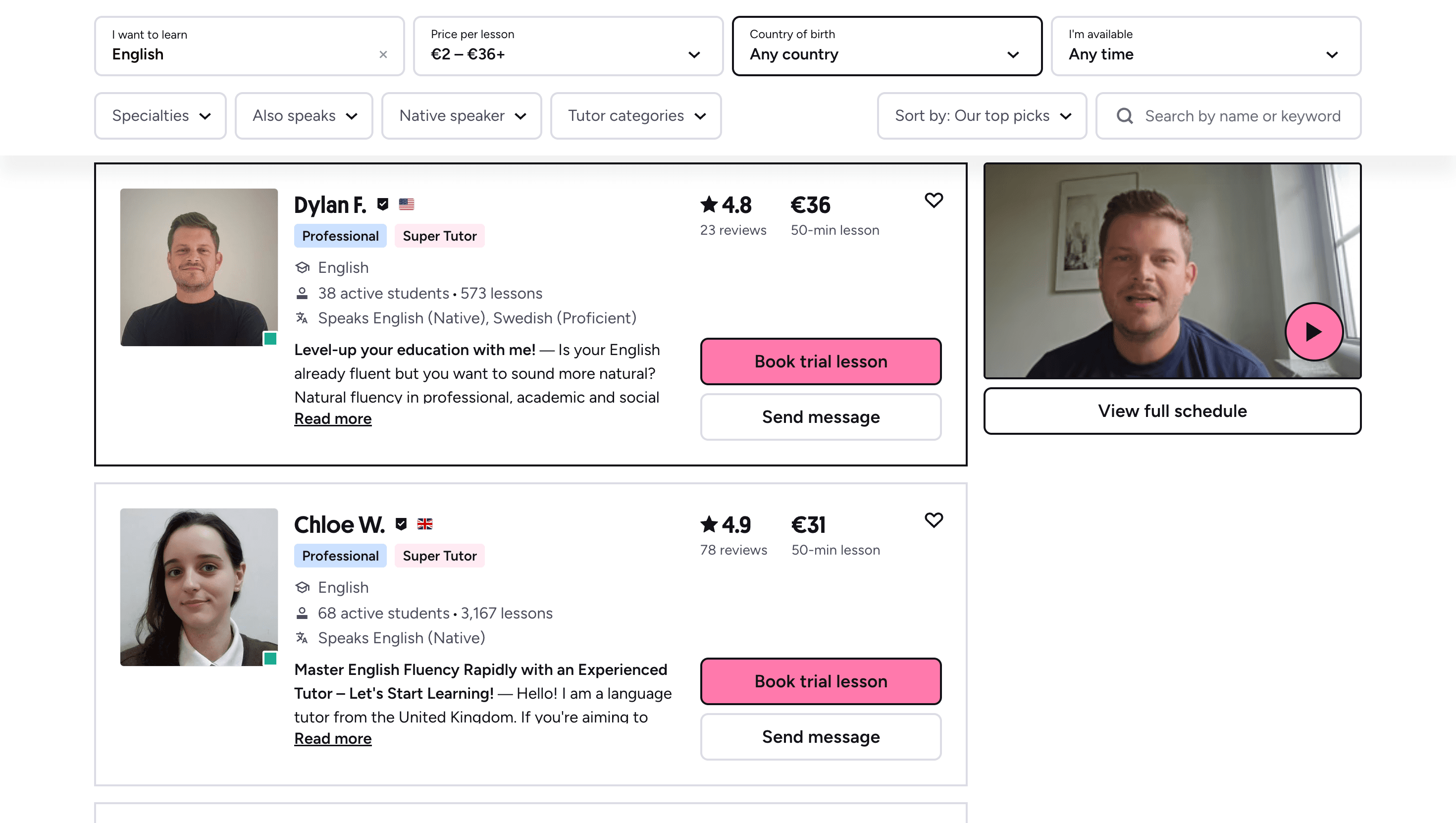
Many learners give up on language learning due to these high costs, missing out on valuable professional and personal opportunities.
That’s why we created Kylian: to make language learning accessible to everyone and help people master a foreign language without breaking the bank.
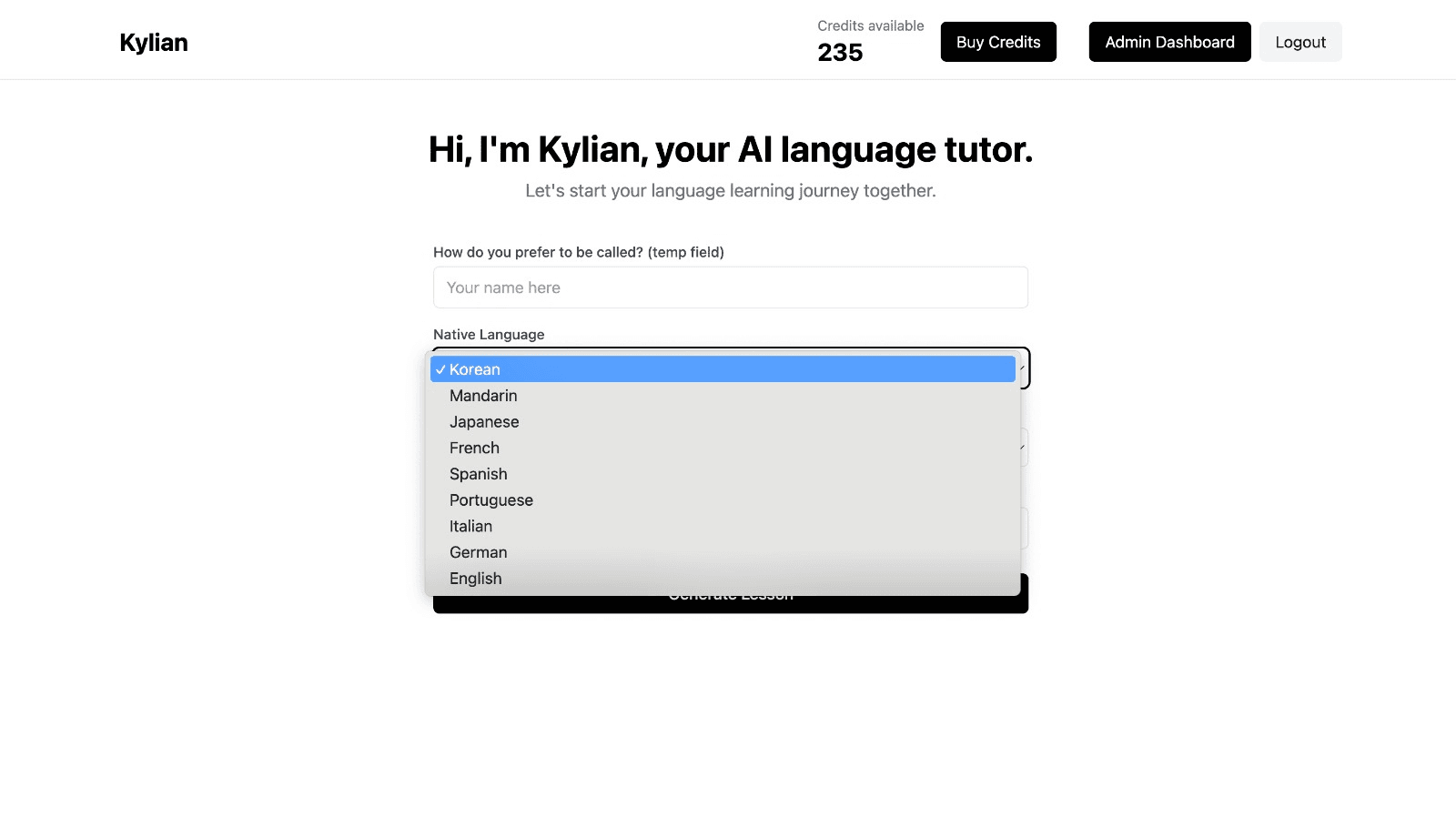
To get started, just tell Kylian which language you want to learn and what your native language is
Tired of teachers who don’t understand your specific struggles as a French speaker? Kylian’s advantage lies in its ability to teach any language using your native tongue as the foundation.
Unlike generic apps that offer the same content to everyone, Kylian explains concepts in your native language (French) and switches to the target language when necessary—perfectly adapting to your level and needs.
This personalization removes the frustration and confusion that are so common in traditional language learning.
Choose a specific topic you want to learn
Frustrated by language lessons that never cover exactly what you need? Kylian can teach you any aspect of a language—from pronunciation to advanced grammar—by focusing on your specific goals.
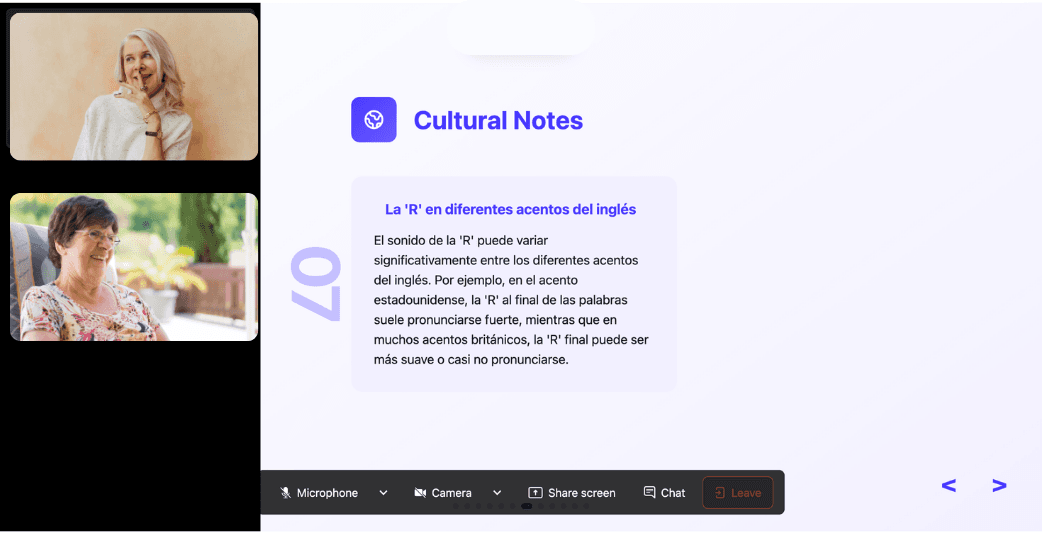
Avoid vague requests like “How can I improve my accent?” and be precise: “How do I pronounce the R like a native English speaker?” or “How do I conjugate the verb ‘to be’ in the present tense?”
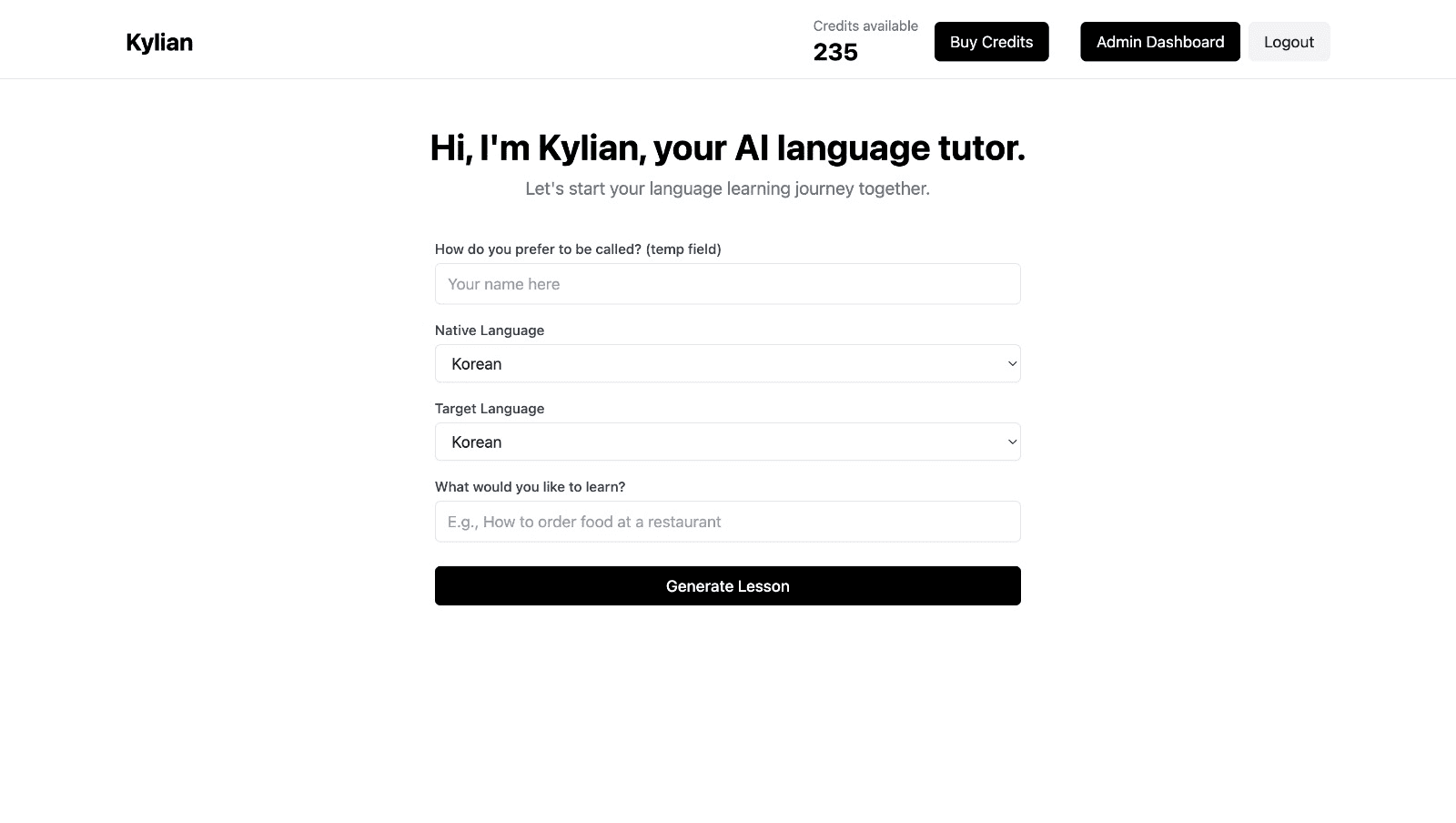
With Kylian, you’ll never again pay for irrelevant content or feel embarrassed asking “too basic” questions to a teacher. Your learning plan is entirely personalized.
Once you’ve chosen your topic, just hit the “Generate a Lesson” button, and within seconds, you’ll get a lesson designed exclusively for you.
Join the room to begin your lesson
The session feels like a one-on-one language class with a human tutor—but without the high price or time constraints.
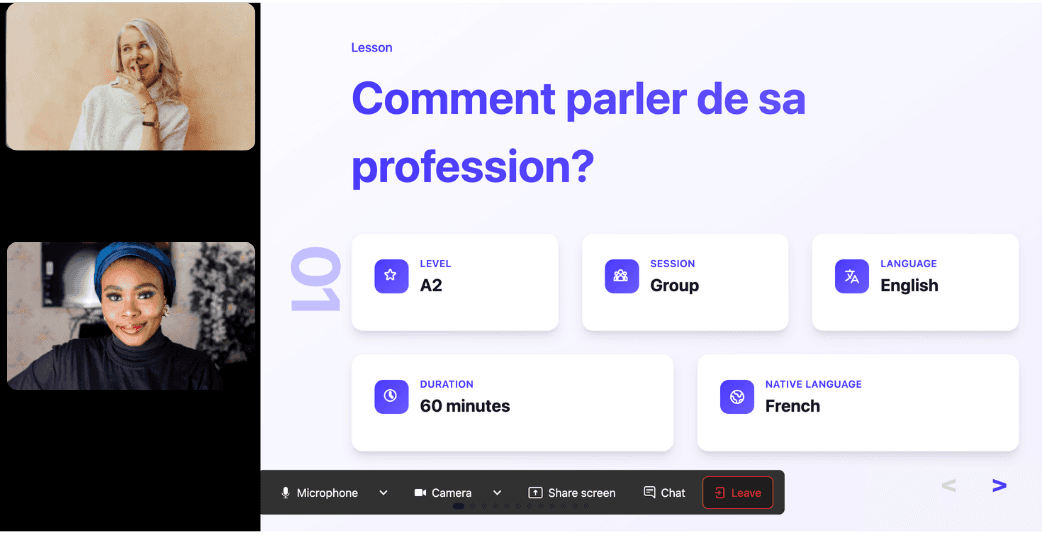
In a 25-minute lesson, Kylian teaches exactly what you need to know about your chosen topic: the nuances that textbooks never explain, key cultural differences between French and your target language, grammar rules, and much more.

Ever felt frustrated trying to keep up with a native-speaking teacher, or embarrassed to ask for something to be repeated? With Kylian, that problem disappears. It switches intelligently between French and the target language depending on your level, helping you understand every concept at your own pace.
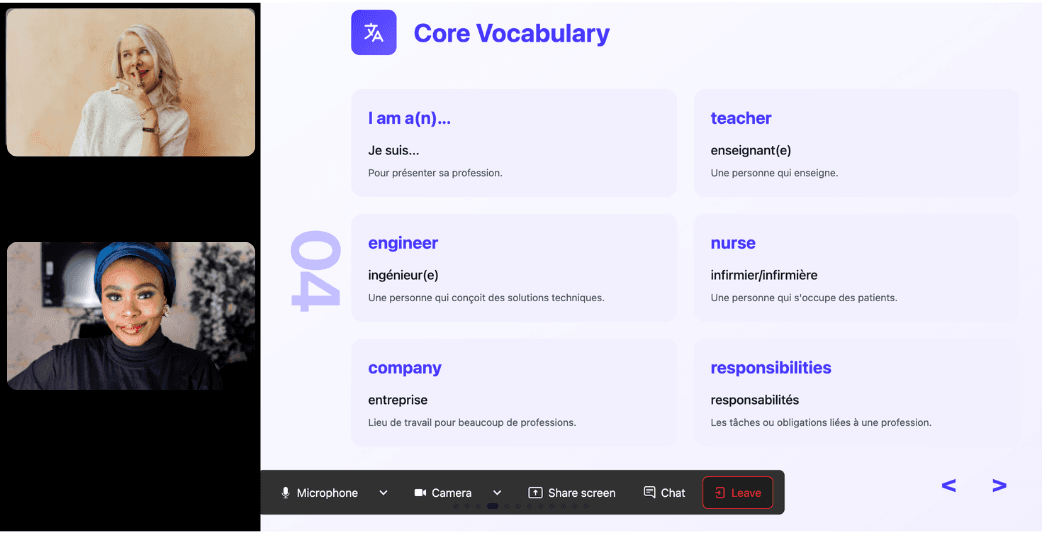
During the lesson, Kylian uses role-plays, real-life examples, and adapts to your learning style. Didn’t understand something? No problem—you can pause Kylian anytime to ask for clarification, without fear of being judged.
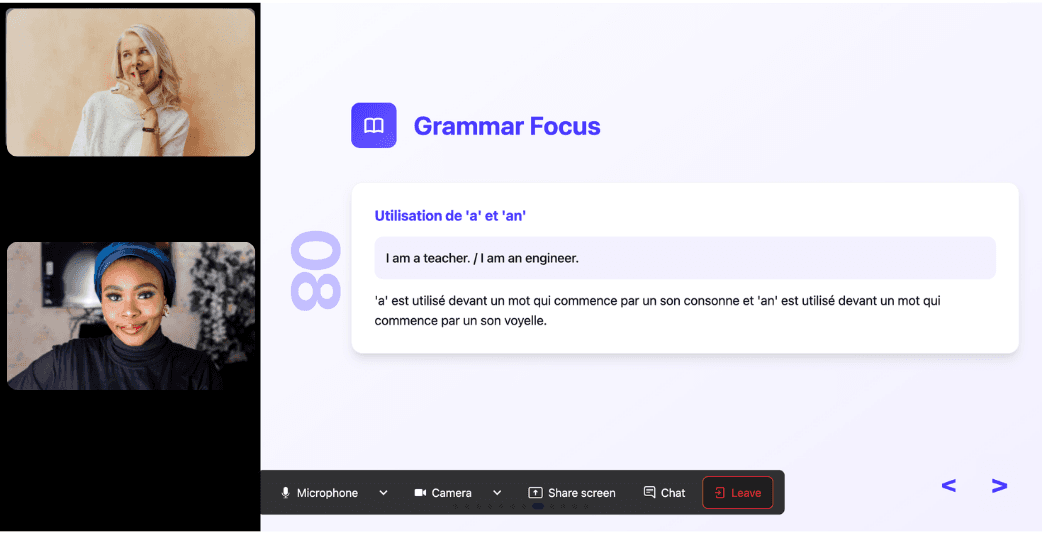
Ask all the questions you want, repeat sections if needed, and customize your learning experience in ways traditional teachers and generic apps simply can’t match.

With 24/7 access at a fraction of the cost of private lessons, Kylian removes all the barriers that have kept you from mastering the language you’ve always wanted to learn.