Mastering possessive pronouns transforms scattered, repetitive speech into precise, professional communication. These grammatical tools don't just indicate ownership—they create the linguistic efficiency that separates fluent speakers from those still wrestling with English fundamentals.
Consider this reality: every time you say "the car of John" instead of "his car," you're adding unnecessary cognitive load to your listener's processing. This matters because effective communication isn't about showing off vocabulary—it's about transmitting ideas with maximum clarity and minimum friction.
Possessive pronouns serve as linguistic shortcuts that eliminate redundancy while maintaining semantic precision. They represent ownership, belonging, and relationships between entities in ways that streamline both written and spoken English. When you replace lengthy possessive constructions with concise pronouns, you're not just following grammar rules—you're demonstrating mastery of English's efficiency mechanisms.
The strategic use of possessive pronouns signals linguistic competence to native speakers and creates the flow that makes complex ideas accessible. This isn't about memorizing rules for the sake of rules. It's about understanding why these grammatical structures exist and how they serve the fundamental purpose of clear, efficient communication.
Understanding Possessive Pronouns: Definition and Core Function
Possessive pronouns stand as independent words that replace entire possessive noun phrases. Unlike other pronoun categories that simply substitute for nouns, possessive pronouns carry the additional semantic load of indicating ownership or association.
The core set consists of seven primary forms: mine, yours, his, hers, its, ours, and theirs. Each corresponds to a specific grammatical person and number, creating a systematic approach to expressing possession without repeating the possessed noun.
What makes possessive pronouns particularly valuable is their ability to function independently. They don't require the presence of the noun they're replacing, which creates conversational efficiency. When you say "The responsibility is mine," the pronoun "mine" carries the full semantic weight of "my responsibility" without the redundancy.
This independence distinguishes possessive pronouns from possessive determiners (my, your, his, her, its, our, their), which must always accompany a noun. Understanding this distinction prevents the common error of treating these two categories as interchangeable when they serve fundamentally different grammatical functions.
The systematic nature of possessive pronouns reflects English's underlying logic. Each pronoun maps directly to its corresponding subject pronoun and possessive determiner, creating predictable patterns that, once understood, eliminate guesswork in usage.
The Complete System: Seven Possessive Pronouns Explained
First Person Singular: Mine
"Mine" replaces any noun phrase beginning with "my." Its power lies in definitiveness—when you claim something as "mine," you're making an absolute statement of ownership. Example: "The decision to restructure the department was mine" carries more weight than "The decision to restructure the department was my decision."
The pronoun eliminates repetition while maintaining emphasis. In business contexts, this precision matters. "The project timeline is mine to manage" establishes clear ownership without the wordiness of "The project timeline is my project timeline to manage."
Second Person: Yours
"Yours" handles both singular and plural second-person possession, demonstrating English's efficiency in collapsing grammatical distinctions where they don't serve communicative purposes. Whether addressing one person or multiple people, "yours" functions identically.
This pronoun frequently appears in questions and confirmations: "Is the final authority yours?" establishes responsibility boundaries clearly. The directness serves professional communication by eliminating ambiguity about who holds decision-making power.
Third Person Singular: His, Hers, Its
These three pronouns handle the complexity of third-person singular possession while maintaining gender and animacy distinctions that English preserves.
"His" covers masculine possession: "The strategy behind the merger was his." This construction focuses attention on the possessor while keeping the possessed concept (strategy) central to the sentence's meaning.
"Hers" serves feminine possession with identical grammatical properties: "The breakthrough in the research was hers." The parallel structure between "his" and "hers" maintains consistency in how English handles gendered possession.
"Its" handles non-human possession, though it appears less frequently as an independent pronoun: "The company expanded beyond its original mission—the new direction was entirely its." This usage, while grammatically correct, often sounds awkward, leading speakers to restructure sentences rather than use "its" independently.
First Person Plural: Ours
"Ours" establishes collective ownership, which proves crucial in collaborative environments. "The success of this initiative is ours" creates shared responsibility and shared credit, essential for team dynamics.
The pronoun's collective nature makes it powerful in organizational communication. When leaders say "The vision is ours to implement," they're creating buy-in through linguistic inclusion rather than top-down mandate.
Third Person Plural: Theirs
"Theirs" handles all third-person plural possession regardless of gender composition. "The competitive advantage is theirs" acknowledges others' success while maintaining analytical objectivity.
In professional contexts, "theirs" allows for diplomatic acknowledgment of competitors' strengths without emotional loading: "The market leadership position is theirs, but the innovation gap is narrowing."
Practical Applications: Real-World Usage Patterns
Understanding possessive pronouns academically differs from using them naturally in professional communication. Real fluency emerges through recognizing patterns and contexts where these pronouns create maximum impact.
In email communication, possessive pronouns create conciseness: "The quarterly results are impressive. The improvement is yours to claim" sounds more professional than "The quarterly results are impressive. The improvement is your improvement to claim."
During meetings, possessive pronouns establish clear ownership: "We've identified three potential solutions. The final choice is yours" places decision-making authority precisely where it belongs while avoiding lengthy explanations about decision-making processes.
In written reports, these pronouns eliminate repetition: "Department A exceeded targets by 15%. Department B reached 98% of their goals. The stronger performance was clearly theirs" maintains objectivity while drawing necessary comparisons.
Customer service contexts benefit from possessive pronoun precision: "The account concerns you've raised are valid. The resolution is ours to provide" establishes responsibility without creating defensive language patterns.
Advanced Considerations: Nuance and Style
Possessive pronouns carry subtle implications beyond basic ownership. The choice between possessive determiners and possessive pronouns affects emphasis and tone in ways that impact professional communication.
"Your project succeeded" (possessive determiner) versus "The success was yours" (possessive pronoun) shifts emphasis from the project to the person. This distinction matters when providing feedback, acknowledging contributions, or assigning responsibility.
In formal writing, possessive pronouns can create elegant variation: "The research methodology reflects Dr. Johnson's approach. The innovative data analysis, however, was entirely hers." This construction avoids repetitive phrasing while maintaining academic tone.
Conversational flow improves through strategic possessive pronoun use. Instead of: "I reviewed your proposal and I think your proposal has merit," the smoother version reads: "I reviewed your proposal and think the merit is clearly yours."
Common Errors and Professional Implications
The most frequent error involves confusing possessive pronouns with possessive determiners. Writing "This is your" instead of "This is yours" immediately signals non-native speaker status or casual attention to grammar details.
Another common mistake appears in formal contexts where speakers attempt to use "its" as an independent possessive pronoun. While grammatically possible, constructions like "The company's success? The credit is its" sound unnatural. Professional speakers restructure such sentences rather than forcing awkward pronoun usage.
Overcorrection represents another pitfall. Some speakers, aware of the your/yours distinction, incorrectly apply possessive pronouns where possessive determiners belong: "I appreciate yours feedback" instead of "I appreciate your feedback."
These errors matter because they distract from content. When grammar mistakes interrupt the flow of professional communication, the message gets lost while listeners process the error.
Strategic Advantages in Professional Communication
Possessive pronouns offer specific advantages in business and academic contexts that extend beyond basic grammatical correctness.
They create conciseness in executive communication where every word counts. "The strategic decision is mine" conveys authority more effectively than longer alternatives while maintaining professional tone.
In collaborative settings, possessive pronouns help distribute credit and responsibility clearly: "The research phase was theirs, the analysis was ours, and the recommendations are mine." This construction acknowledges contributions without ambiguity.
For international business communication, possessive pronouns reduce translation complexity. Their straightforward semantic load translates more cleanly across languages than complex possessive constructions, making them valuable in global communication contexts.
Mastery Through Systematic Practice
Achieving natural fluency with possessive pronouns requires systematic exposure to varied contexts rather than rote memorization. The goal is internalization that makes correct usage automatic rather than calculated.
Reading professional communications reveals possessive pronoun patterns in context. Business emails, academic papers, and news articles demonstrate how skilled writers use these pronouns for efficiency and clarity.
Active practice involves consciously replacing possessive constructions with pronouns during speaking and writing. Instead of thinking "Should I use a possessive pronoun here?" the question becomes "What's the clearest way to express this ownership relationship?"
Self-correction develops through recording yourself or reviewing your written work specifically for possessive pronoun opportunities. Many speakers unconsciously avoid these pronouns, missing chances to create more sophisticated expression patterns.
Contextual Flexibility and Register Awareness
Professional contexts demand different possessive pronoun usage patterns than casual conversation. Understanding these distinctions prevents awkward formality in relaxed settings or inappropriate casualness in professional environments.
In academic writing, possessive pronouns create scholarly tone while avoiding repetition: "The methodology borrows from established frameworks, but the application is entirely ours." This usage demonstrates both collaboration with existing research and original contribution.
Business presentations benefit from possessive pronouns that establish clear ownership: "The market analysis shows three trends. The opportunity to capitalize on them is ours." This creates confident assertion without aggressive language.
Diplomatic communication uses possessive pronouns to acknowledge others' positions while maintaining your own: "The concerns they've raised are valid. The responsibility to address them is ours." This construction accepts validity without accepting blame.
Integration with Broader Communication Skills
Possessive pronouns don't exist in isolation—they integrate with other English grammar systems to create sophisticated expression. Understanding their relationship with other pronoun types, verb tenses, and sentence structures multiplies their effectiveness.
Complex sentences often require multiple pronoun types working together: "When they completed their analysis, the conclusions were theirs, but the implications are ours to consider." This construction demonstrates advanced grammatical coordination while maintaining clarity.
Conditional statements frequently incorporate possessive pronouns for hypothetical ownership: "If the project succeeds, the credit will be yours." This usage shows how possessive pronouns adapt to different grammatical moods and tenses.
Learn Any Language with Kylian AI
Private language lessons are expensive. Paying between 15 and 50 euros per lesson isn’t realistic for most people—especially when dozens of sessions are needed to see real progress.
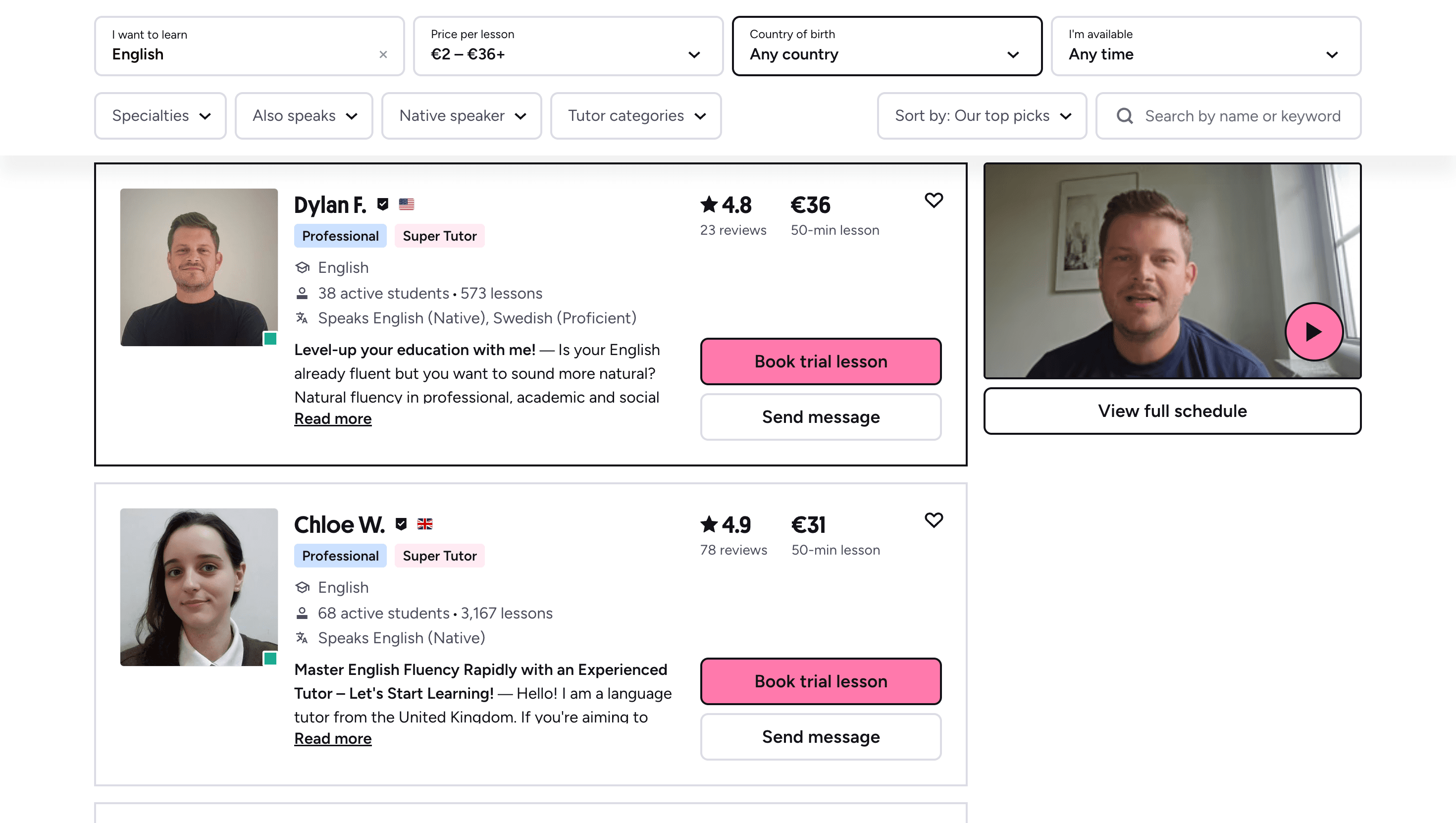
Many learners give up on language learning due to these high costs, missing out on valuable professional and personal opportunities.
That’s why we created Kylian: to make language learning accessible to everyone and help people master a foreign language without breaking the bank.
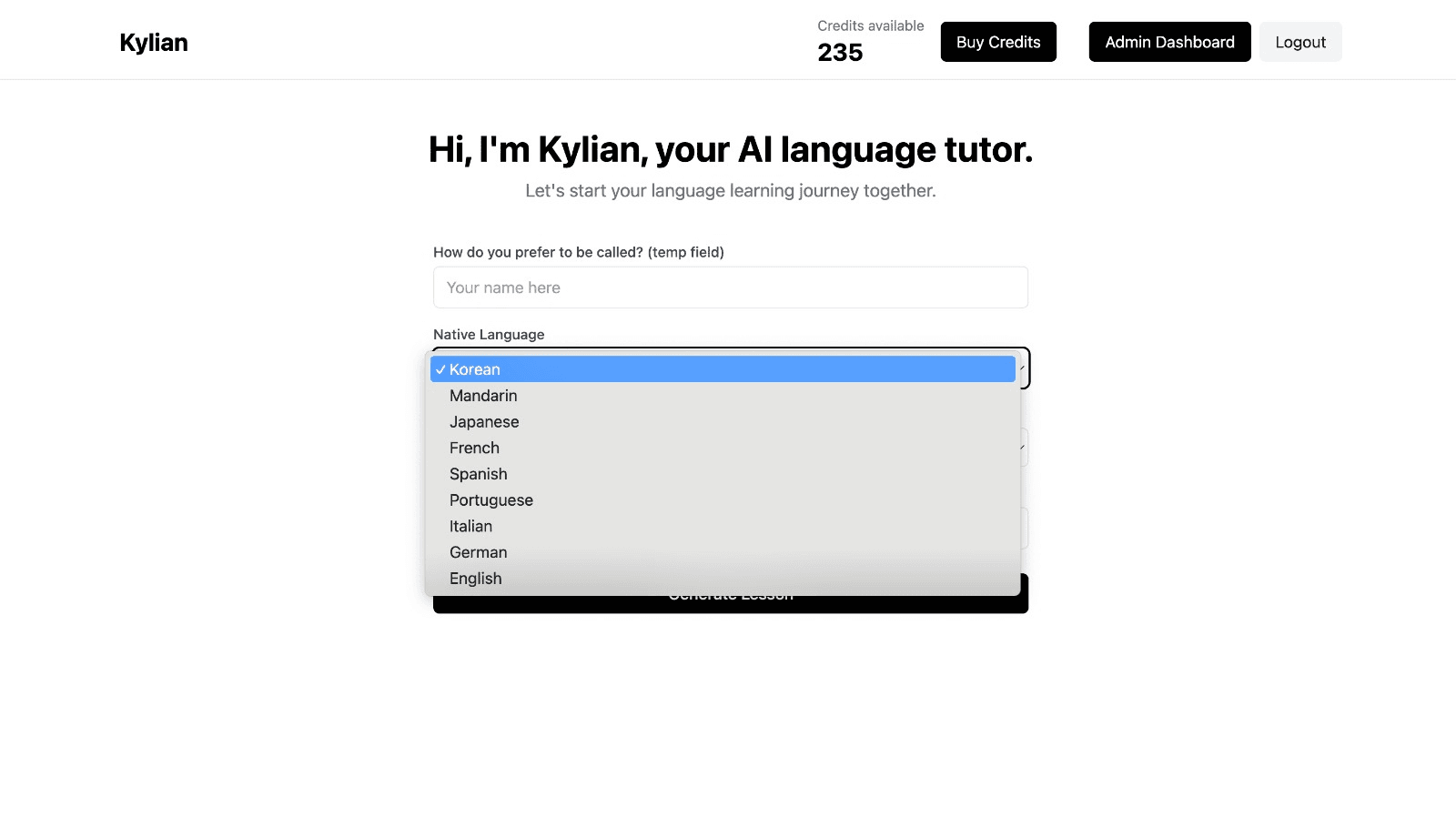
To get started, just tell Kylian which language you want to learn and what your native language is
Tired of teachers who don’t understand your specific struggles as a French speaker? Kylian’s advantage lies in its ability to teach any language using your native tongue as the foundation.
Unlike generic apps that offer the same content to everyone, Kylian explains concepts in your native language (French) and switches to the target language when necessary—perfectly adapting to your level and needs.
This personalization removes the frustration and confusion that are so common in traditional language learning.
Choose a specific topic you want to learn
Frustrated by language lessons that never cover exactly what you need? Kylian can teach you any aspect of a language—from pronunciation to advanced grammar—by focusing on your specific goals.
Avoid vague requests like “How can I improve my accent?” and be precise: “How do I pronounce the R like a native English speaker?” or “How do I conjugate the verb ‘to be’ in the present tense?”
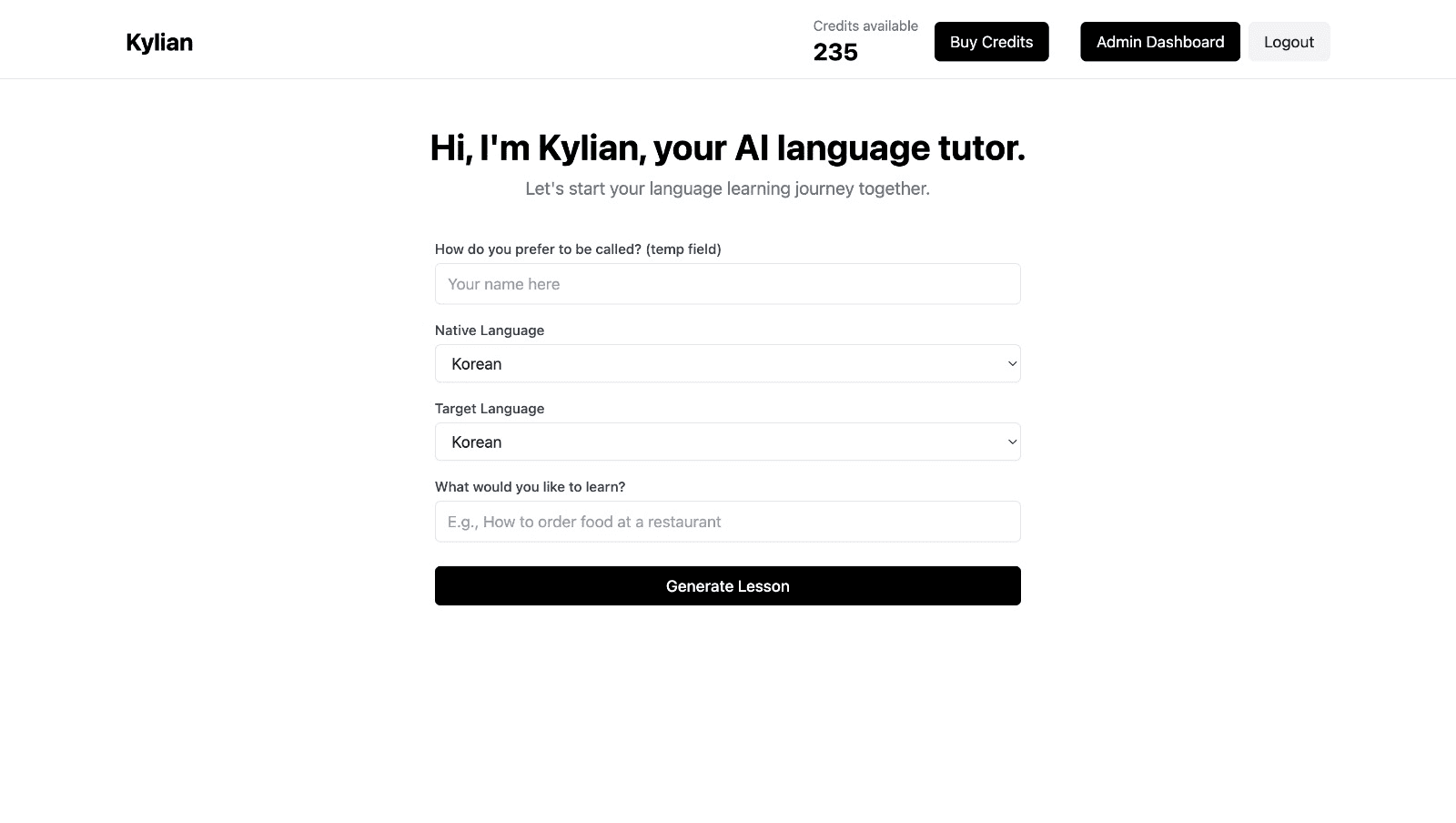
With Kylian, you’ll never again pay for irrelevant content or feel embarrassed asking “too basic” questions to a teacher. Your learning plan is entirely personalized.
Once you’ve chosen your topic, just hit the “Generate a Lesson” button, and within seconds, you’ll get a lesson designed exclusively for you.
Join the room to begin your lesson
The session feels like a one-on-one language class with a human tutor—but without the high price or time constraints.
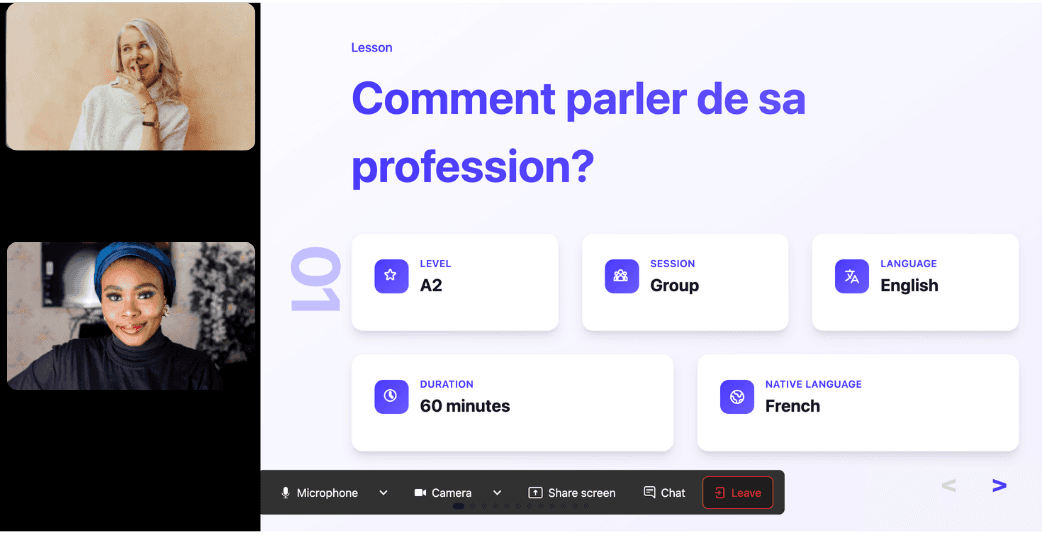
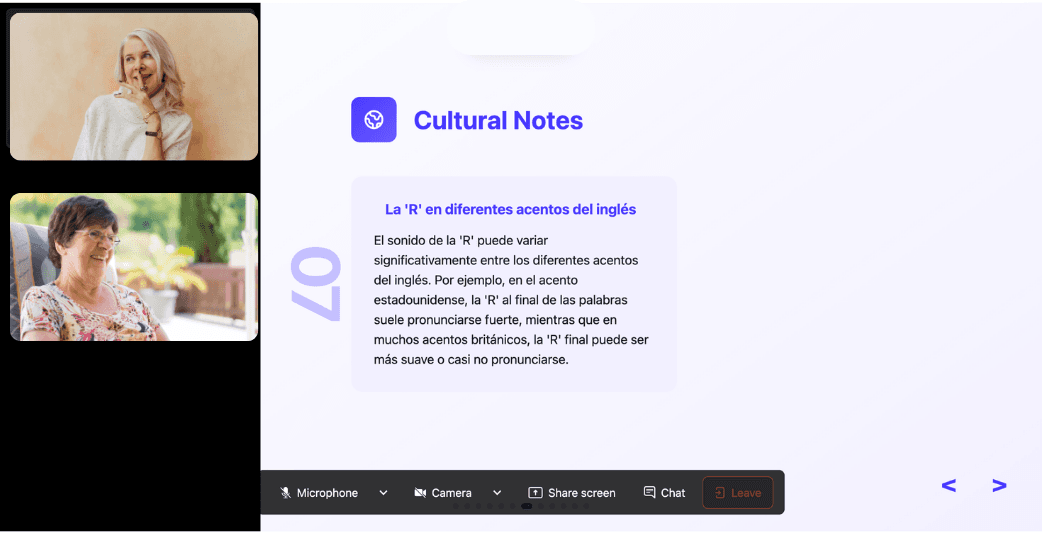
In a 25-minute lesson, Kylian teaches exactly what you need to know about your chosen topic: the nuances that textbooks never explain, key cultural differences between French and your target language, grammar rules, and much more.
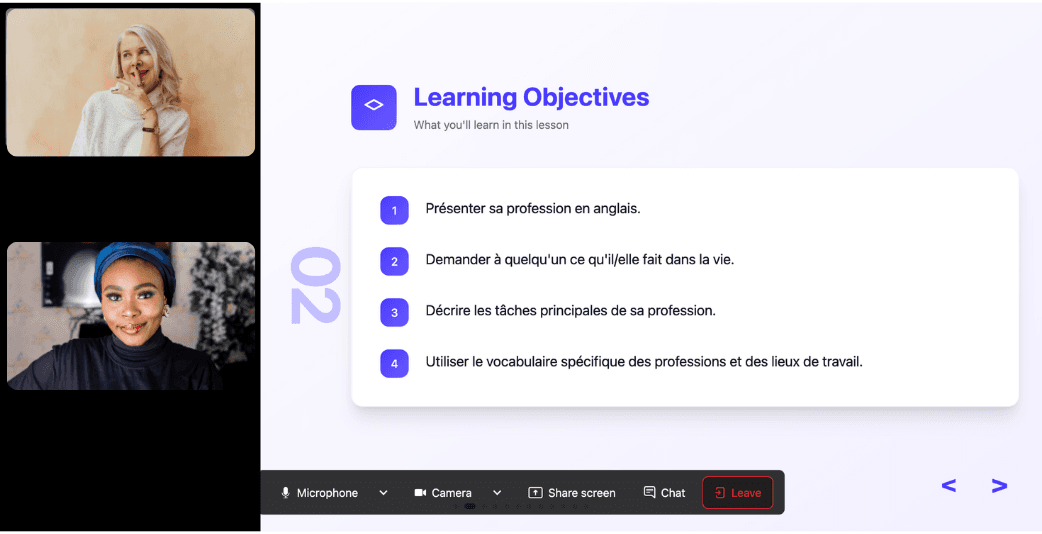
Ever felt frustrated trying to keep up with a native-speaking teacher, or embarrassed to ask for something to be repeated? With Kylian, that problem disappears. It switches intelligently between French and the target language depending on your level, helping you understand every concept at your own pace.
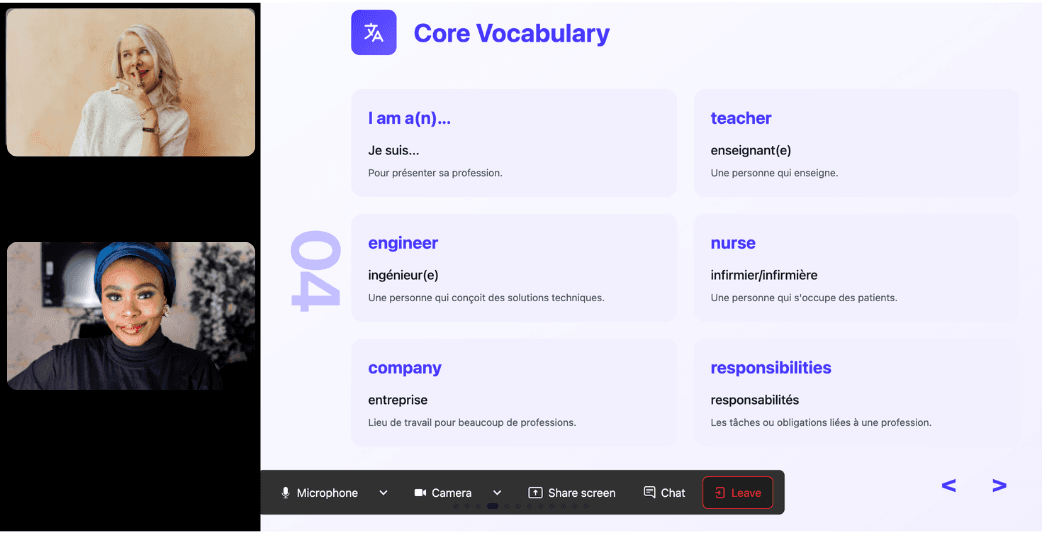
During the lesson, Kylian uses role-plays, real-life examples, and adapts to your learning style. Didn’t understand something? No problem—you can pause Kylian anytime to ask for clarification, without fear of being judged.
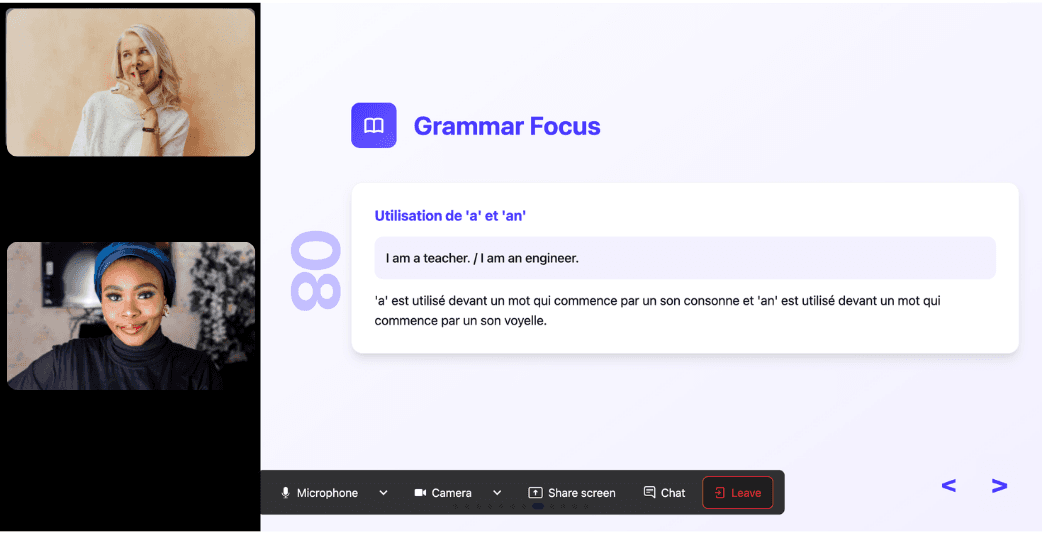
Ask all the questions you want, repeat sections if needed, and customize your learning experience in ways traditional teachers and generic apps simply can’t match.
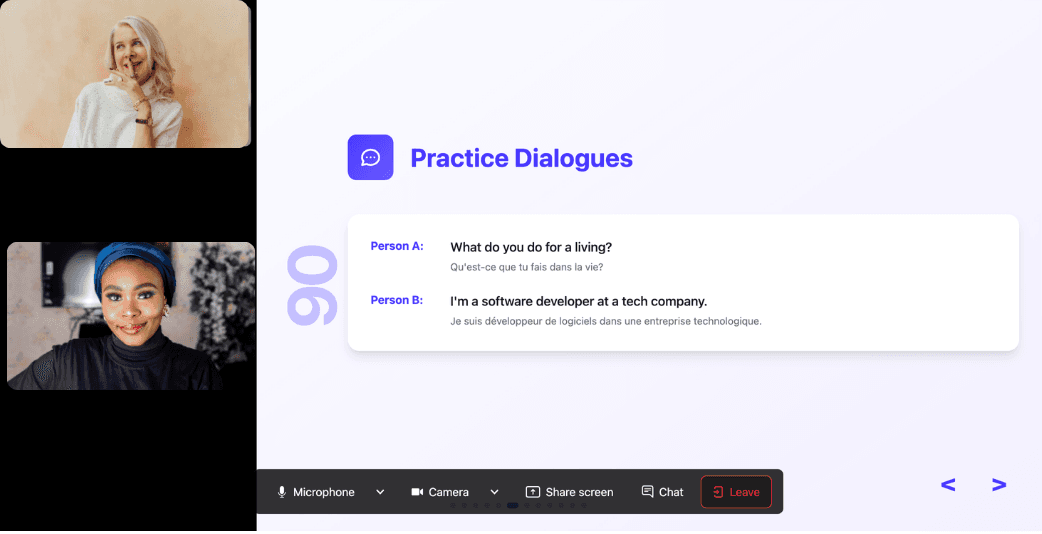
With 24/7 access at a fraction of the cost of private lessons, Kylian removes all the barriers that have kept you from mastering the language you’ve always wanted to learn.