So you hear English speakers casually drop "bwt" in conversations but find yourself completely lost? You're not alone. This abbreviated expression has become increasingly prevalent in digital communication, yet its meaning remains elusive to many non-native speakers. "Bwt" stands for "by the way" – a transitional phrase that native speakers use to introduce additional information, change topics, or add afterthoughts to conversations.
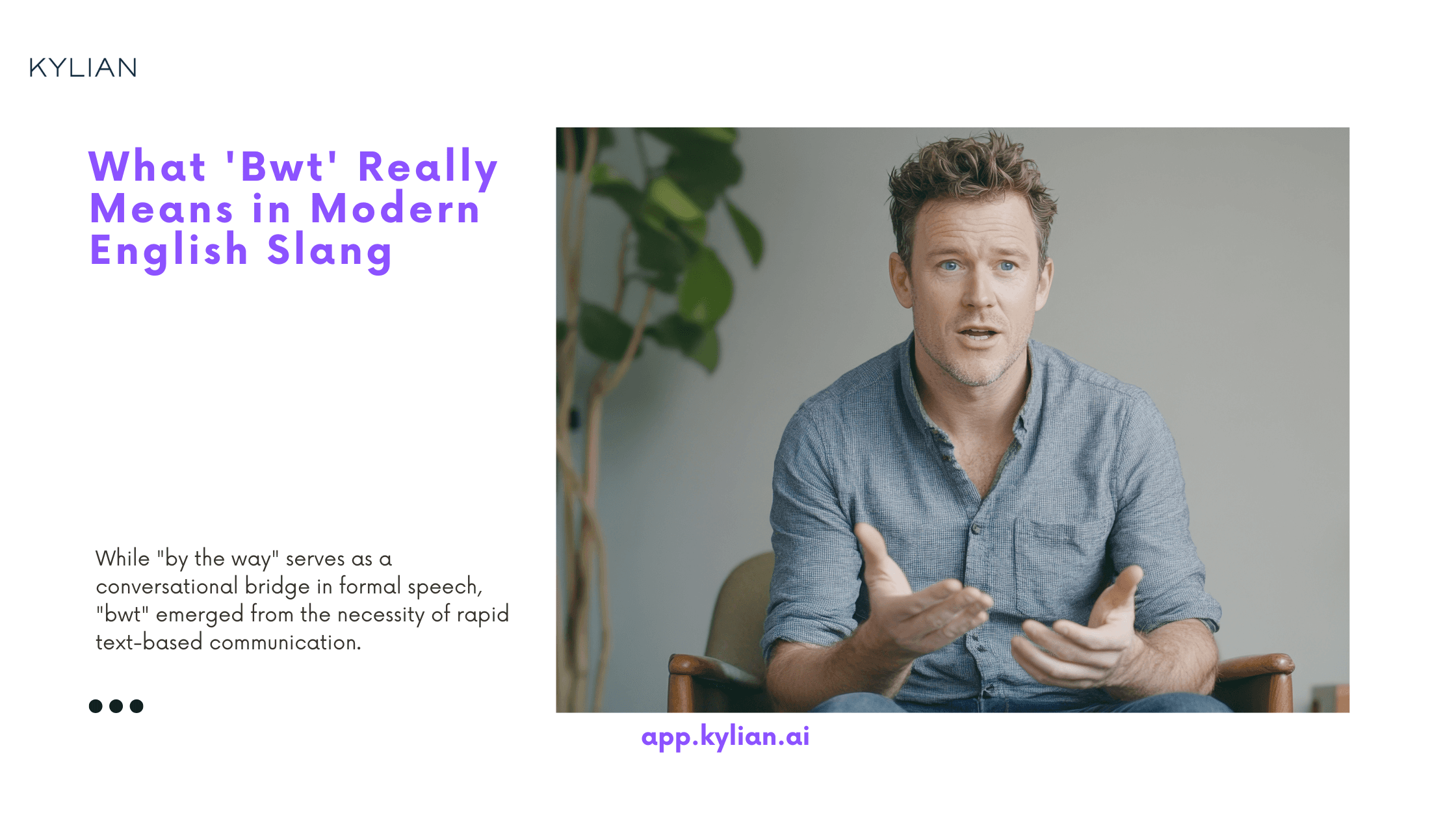
The rise of "bwt" reflects a broader linguistic phenomenon where digital communication drives language compression. While "by the way" serves as a conversational bridge in formal speech, "bwt" emerged from the necessity of rapid text-based communication. Understanding this expression isn't just about decoding three letters – it's about grasping how native speakers naturally shift between topics and layer information in real-time conversations.
Context and Usage Patterns of 'Bwt'
The expression "bwt" functions across three distinct communicative contexts, each carrying subtle but important differences that impact how your message is received.
Topic Transition Usage Native speakers deploy "bwt" when pivoting from one subject to another, particularly when the new information wasn't part of the original conversation plan. This usage signals that what follows represents a shift in focus rather than a continuation of the current discussion thread. The expression acts as a verbal comma, creating space between disparate pieces of information.
For example: "I finished the report you requested, bwt have you seen the latest budget projections?" (English translation: I completed the report you asked for, by the way have you reviewed the recent budget forecasts?)
Information Layering Usage The second context involves adding supplementary information that enhances or provides background to the main conversation. Here, "bwt" introduces details that aren't essential to the primary message but add value or context. This usage demonstrates sophisticated conversational awareness – the speaker recognizes that additional information could be useful without derailing the main discussion.
For example: "The meeting is at 3 PM, bwt Sarah will be joining us remotely from the London office." (English translation: The meeting starts at 3 PM, by the way Sarah will participate virtually from our London location.)
Casual Reminder Usage The third application involves introducing information that the speaker suddenly remembers or wants to ensure doesn't get forgotten. This usage carries a more spontaneous quality, as if the thought just occurred to the speaker. It's particularly common in ongoing relationships where shared context makes such additions natural and expected.
For example: "Thanks for covering my shift yesterday, bwt my sister asked if you're still interested in those concert tickets." (English translation: I appreciate you working my shift yesterday, by the way my sister wants to know if you still want those concert tickets.)
Grammatical Structure and Native Speaker Nuances
The grammatical positioning of "bwt" reveals sophisticated patterns that distinguish fluent usage from learner attempts. Native speakers intuitively understand these structural principles, while learners often struggle with placement and punctuation.
Sentence-Initial Positioning When "bwt" opens a sentence, it typically follows a comma or period from the previous statement. This positioning creates the strongest topic shift signal and often introduces completely new information. The pause implied by this placement gives the listener time to process the transition.
Structure: [Previous statement], bwt [new information]. Example: "I'll send the proposal by Friday, bwt did you receive feedback from the client about the timeline?" (English translation: I will deliver the proposal by Friday, by the way did you get the client's response about our schedule?)
Mid-Sentence Integration Native speakers frequently embed "bwt" within longer sentences, creating a more fluid conversational feel. This placement requires stronger grammatical awareness because the expression must fit naturally within the sentence's syntactic structure. The integration suggests that the additional information, while supplementary, connects logically to the main statement.
Structure: [Main clause], bwt [additional information], [continuation]. Example: "The presentation went well, bwt the client specifically mentioned our innovative approach, which opens up new project possibilities." (English translation: The presentation was successful, by the way the client highlighted our creative method, creating opportunities for additional projects.)
End-of-Thought Positioning Less common but still significant, "bwt" sometimes appears at the end of statements, creating an afterthought effect. This placement suggests the information wasn't planned but became relevant as the speaker concluded their main point.
Structure: [Main statement] bwt [afterthought]. Example: "Let's schedule the follow-up for next week, probably Tuesday bwt." (English translation: We should arrange the follow-up meeting for next week, likely on Tuesday by the way.)
Four Natural Alternatives to 'Bwt'
Sophisticated English communication requires variation, and relying solely on "bwt" can make your speech sound repetitive or overly casual. These alternatives provide nuanced options for different contexts and relationships.
"Incidentally" for Professional Contexts This formal alternative works particularly well in business communications where "bwt" might sound too casual. "Incidentally" carries a more deliberate, thoughtful tone and suggests the additional information has some logical connection to the main topic.
Example: "The quarterly results exceeded expectations, incidentally our team's performance metrics ranked highest in the division." (English translation: The three-month financial results surpassed projections, incidentally our team's performance measurements scored best in our business unit.)
"Speaking of which" for Logical Connections This alternative works when the additional information directly relates to something previously mentioned. It creates stronger logical bridges than "bwt" and demonstrates sophisticated conversational awareness.
Example: "The conference was incredibly informative, speaking of which did you register for the follow-up workshop they're offering?" (English translation: The conference provided valuable information, speaking of which did you sign up for the additional workshop they're providing?)
"While I'm thinking about it" for Spontaneous Additions This phrase perfectly captures the spontaneous nature of remembered information. It's particularly effective in casual conversations where the additional information might otherwise be forgotten.
Example: "Dinner was fantastic, while I'm thinking about it my colleague recommended that new restaurant downtown." (English translation: Dinner was excellent, while I'm thinking about it my coworker suggested that new restaurant in the city center.)
"On a related note" for Thematic Connections This alternative works when introducing information that shares thematic similarity with the current discussion. It's more formal than "bwt" but less stuffy than "incidentally."
Example: "The project timeline looks realistic, on a related note have you considered the potential impact of the upcoming holiday season?" (English translation: The project schedule appears achievable, on a related note have you thought about how the approaching holidays might affect our work?)
Formal and Informal Application Scenarios
Understanding when and how to use "bwt" appropriately requires recognizing the contextual factors that influence its acceptance and effectiveness.
Formal Business Communication Scenario During a client presentation debrief, you might say: "The client appreciated our comprehensive approach to risk management, bwt they specifically requested additional case studies for the next phase." (English translation: The client valued our thorough risk management strategy, by the way they explicitly asked for more case studies in the next stage.)
This usage works because it adds valuable information without disrupting the professional tone. The additional information directly relates to business outcomes and demonstrates active listening during the client interaction.
Informal Team Collaboration Scenario In a casual team meeting, you might say: "The design mockups look great, bwt I found some interesting user interface inspiration we might want to explore." (English translation: The design previews appear excellent, by the way I discovered some compelling user interface ideas we could consider investigating.)
The informal setting allows for more creative, exploratory language while still maintaining professional relevance. The "bwt" introduction makes the suggestion feel like a natural addition rather than criticism of the current work.
Professional Networking Scenario At an industry conference, you might say: "Your presentation on sustainable practices was thought-provoking, bwt I'd love to continue this conversation about implementation strategies." (English translation: Your talk about sustainable practices was intellectually stimulating, by the way I would enjoy extending this discussion about putting these strategies into practice.)
This formal usage demonstrates respect for the other person's expertise while expressing genuine interest in deeper engagement. The "bwt" softens what could otherwise sound like a direct request for more of someone's time.
Casual Social Scenario With friends, you might say: "The movie was better than expected, bwt Jake asked if we want to check out that new pizza place afterward." (English translation: The film exceeded our expectations, by the way Jake wondered if we want to try that new pizza restaurant afterward.)
The casual context allows for more relaxed information sharing, where the additional information serves social coordination purposes rather than business objectives.
Critical Mistakes That Undermine Your Communication
Avoiding these common errors will prevent your usage from sounding unnatural or confusing to native speakers.
Overuse in Single Conversations Many learners discover "bwt" and immediately begin using it multiple times within single conversations, creating a repetitive and unnatural communication pattern. Native speakers vary their transitional expressions and use "bwt" strategically rather than habitually.
Incorrect example: "The meeting went well, bwt the client liked our proposal, bwt they want to schedule another meeting, bwt can you check your calendar?" (English translation: The meeting was successful, by the way the client approved our proposal, by the way they want to arrange another meeting, by the way can you verify your schedule?)
Correct approach: "The meeting went well, bwt the client liked our proposal. They want to schedule another meeting – can you check your calendar?"
Inappropriate Formality Level Matching Using "bwt" in highly formal contexts can undermine your credibility and suggest poor judgment about communication appropriateness. Academic presentations, legal discussions, and executive-level communications typically require more formal transitional phrases.
Incorrect example: "Our research indicates significant market potential, bwt we should consider regulatory implications before proceeding." (English translation: Our research shows substantial market opportunity, by the way we should examine regulatory consequences before moving forward.)
Correct alternative: "Our research indicates significant market potential. Incidentally, we should consider regulatory implications before proceeding."
Advanced Usage Strategies for Fluent Communication
Timing and Rhythm Considerations Native speakers intuitively understand that "bwt" requires slight pauses before and after its usage. This rhythmic awareness creates natural conversation flow and gives listeners time to process the topic transition. Practice incorporating these pauses to avoid rushing through the expression.
Cultural Context Awareness Different English-speaking cultures have varying comfort levels with abbreviated expressions in professional settings. American business culture generally accepts "bwt" more readily than British or Australian professional environments, where more formal alternatives might be preferred.
Why 'Bwt' Matters in Modern Communication
The prevalence of "bwt" reflects broader communication trends that language learners must understand to participate effectively in contemporary English-speaking environments. Digital communication continues to influence spoken language, creating hybrid forms that bridge formal and informal registers.
Understanding "bwt" isn't just about mastering one expression – it's about developing the conversational agility that characterizes fluent speakers. The ability to smoothly introduce additional information, change topics naturally, and layer thoughts without losing audience attention represents advanced communicative competence.
Native speakers use "bwt" unconsciously, but learners must develop conscious awareness of its patterns and applications. This awareness ultimately becomes intuitive through practice and exposure, but the initial learning phase requires deliberate study and application.
The expression also demonstrates how English continues to evolve through user innovation rather than institutional decree. Language learners who understand these organic developments can participate more fully in contemporary communication culture rather than relying solely on traditional textbook expressions.
Learn Any Language with Kylian AI
Private language lessons are expensive. Paying between 15 and 50 euros per lesson isn’t realistic for most people—especially when dozens of sessions are needed to see real progress.
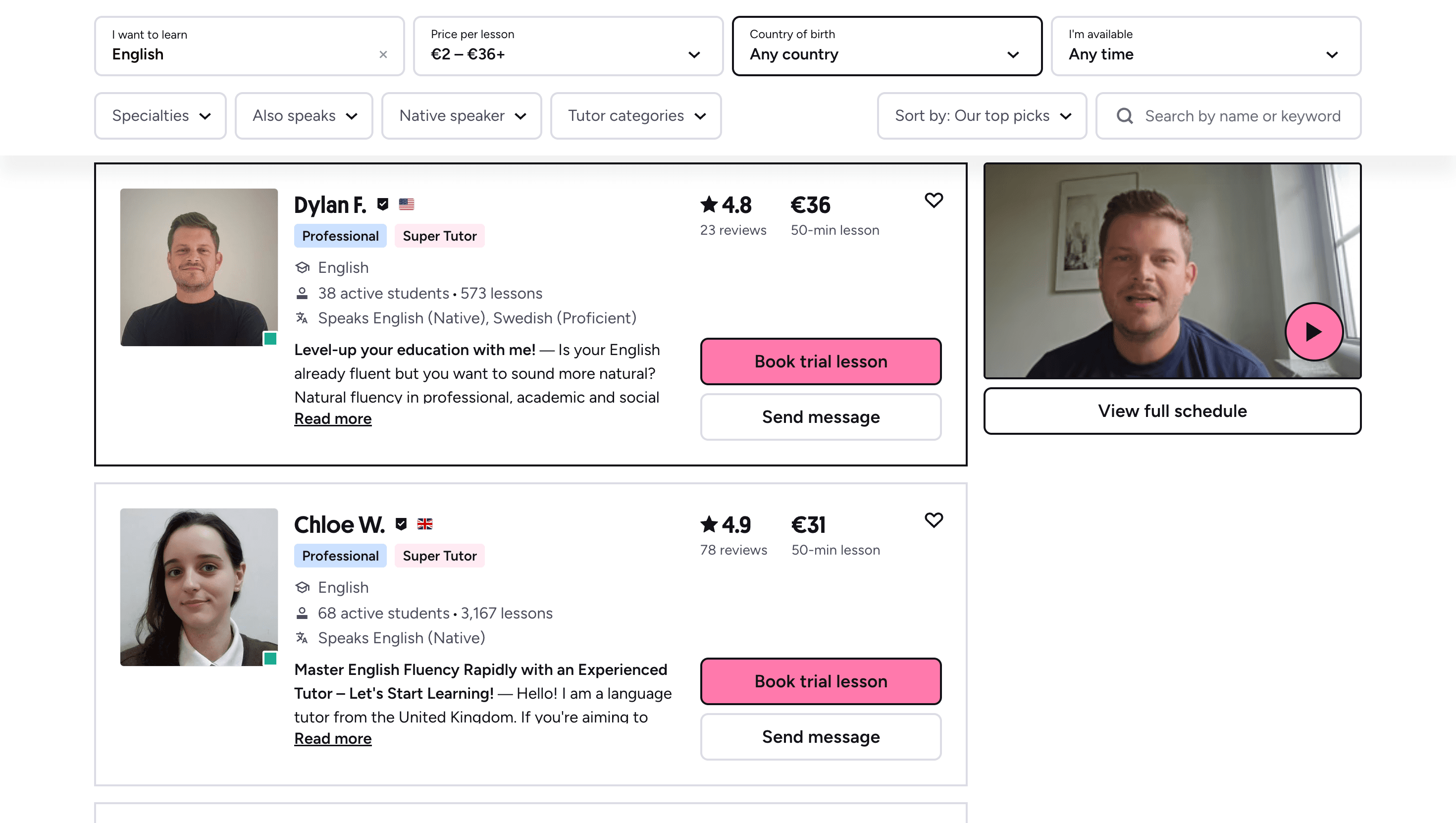
Many learners give up on language learning due to these high costs, missing out on valuable professional and personal opportunities.
That’s why we created Kylian: to make language learning accessible to everyone and help people master a foreign language without breaking the bank.
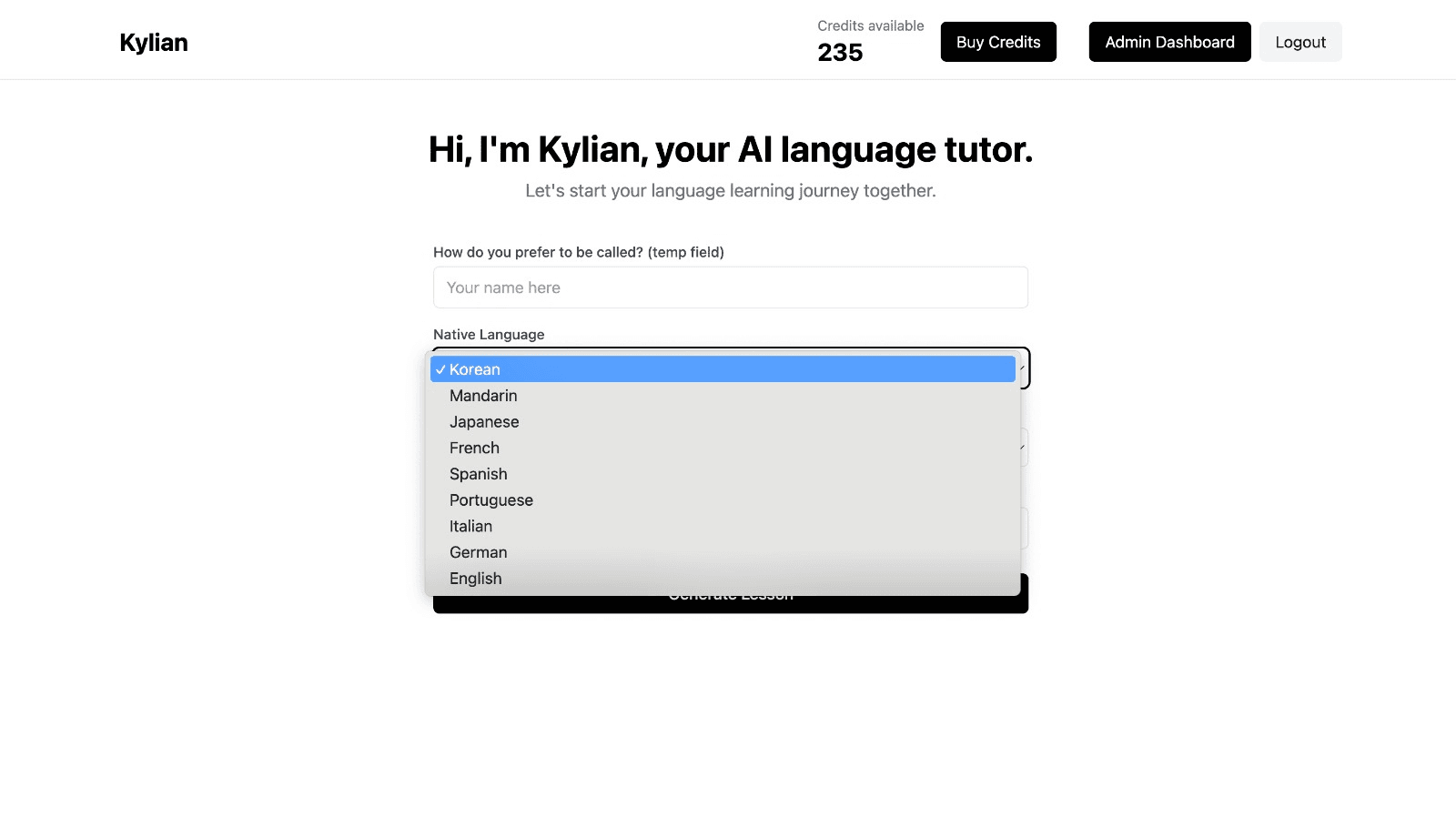
To get started, just tell Kylian which language you want to learn and what your native language is
Tired of teachers who don’t understand your specific struggles as a French speaker? Kylian’s advantage lies in its ability to teach any language using your native tongue as the foundation.
Unlike generic apps that offer the same content to everyone, Kylian explains concepts in your native language (French) and switches to the target language when necessary—perfectly adapting to your level and needs.
This personalization removes the frustration and confusion that are so common in traditional language learning.
Choose a specific topic you want to learn
Frustrated by language lessons that never cover exactly what you need? Kylian can teach you any aspect of a language—from pronunciation to advanced grammar—by focusing on your specific goals.
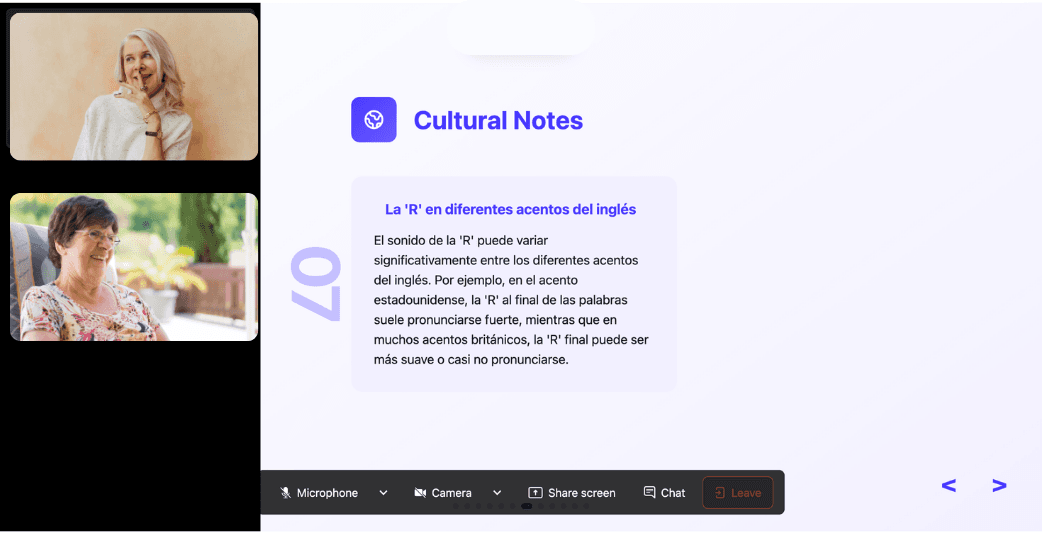
Avoid vague requests like “How can I improve my accent?” and be precise: “How do I pronounce the R like a native English speaker?” or “How do I conjugate the verb ‘to be’ in the present tense?”
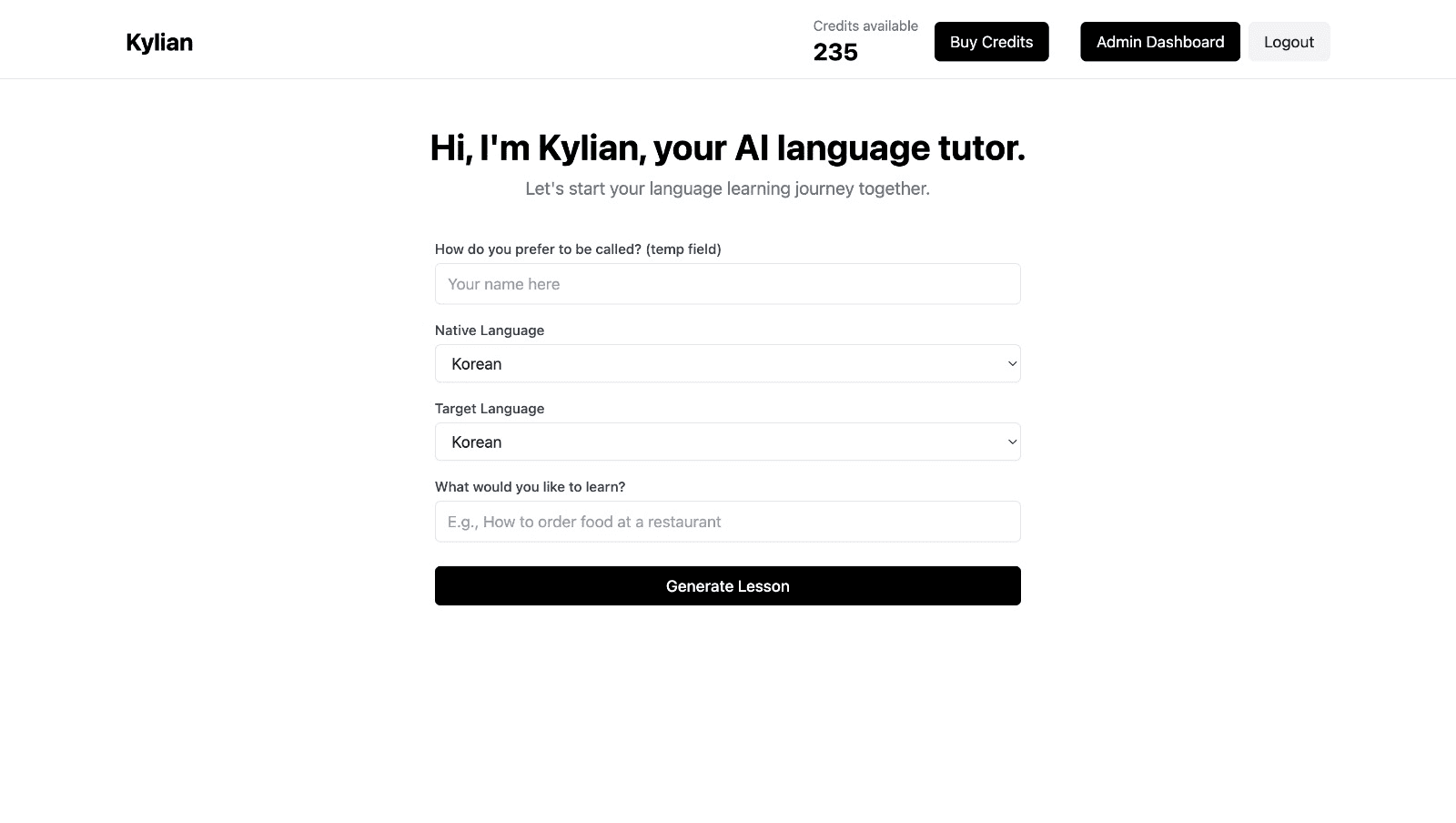
With Kylian, you’ll never again pay for irrelevant content or feel embarrassed asking “too basic” questions to a teacher. Your learning plan is entirely personalized.
Once you’ve chosen your topic, just hit the “Generate a Lesson” button, and within seconds, you’ll get a lesson designed exclusively for you.
Join the room to begin your lesson
The session feels like a one-on-one language class with a human tutor—but without the high price or time constraints.
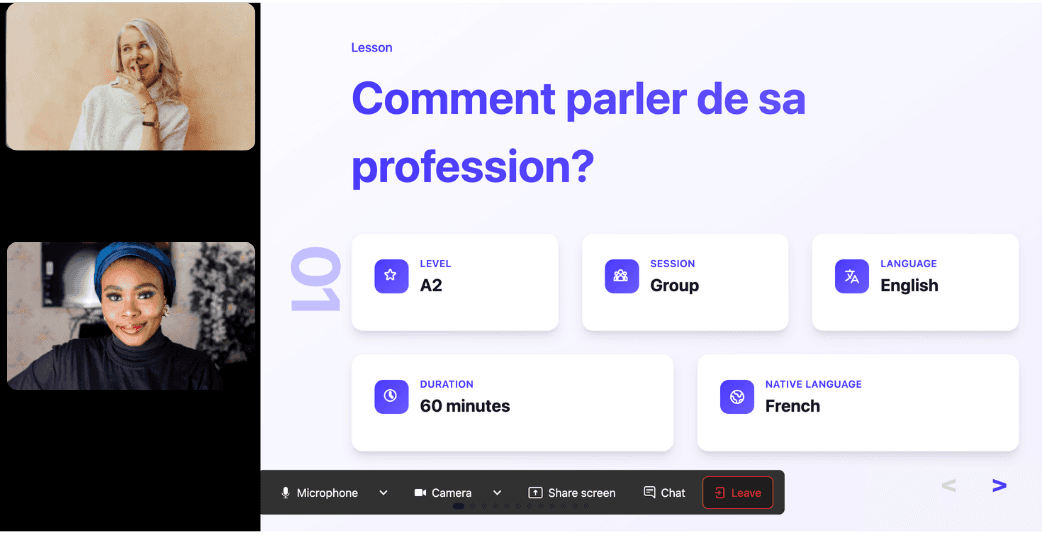
In a 25-minute lesson, Kylian teaches exactly what you need to know about your chosen topic: the nuances that textbooks never explain, key cultural differences between French and your target language, grammar rules, and much more.
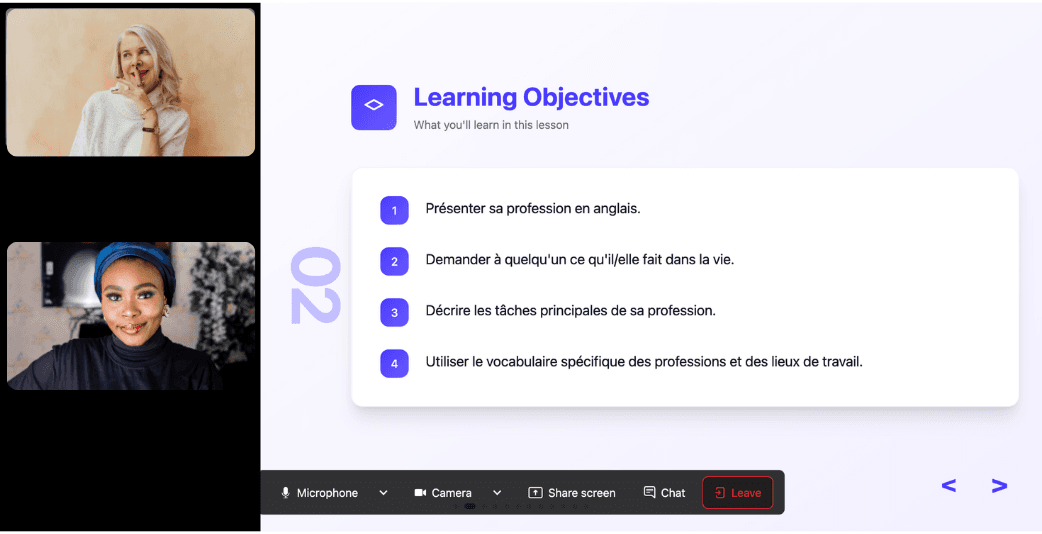
Ever felt frustrated trying to keep up with a native-speaking teacher, or embarrassed to ask for something to be repeated? With Kylian, that problem disappears. It switches intelligently between French and the target language depending on your level, helping you understand every concept at your own pace.
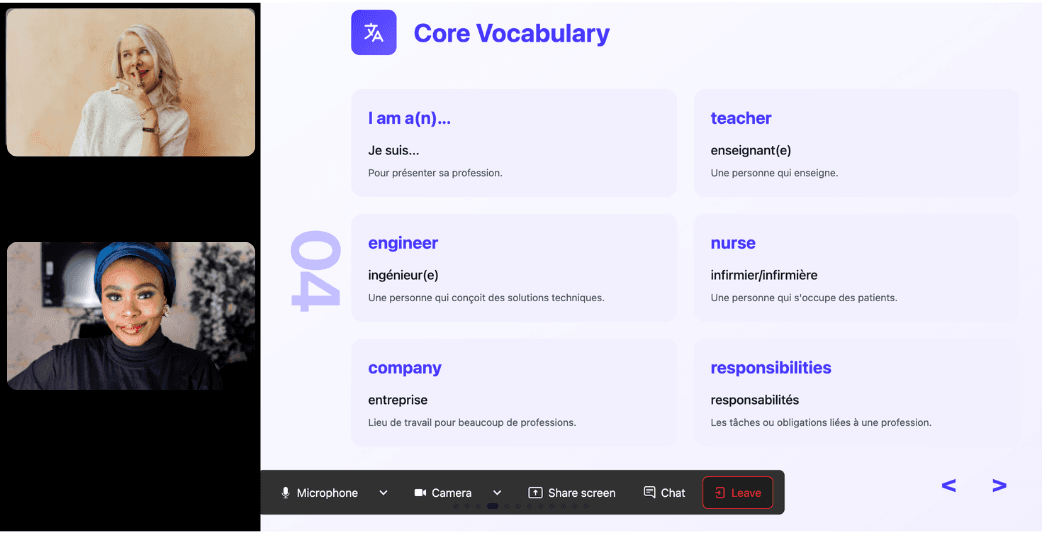
During the lesson, Kylian uses role-plays, real-life examples, and adapts to your learning style. Didn’t understand something? No problem—you can pause Kylian anytime to ask for clarification, without fear of being judged.
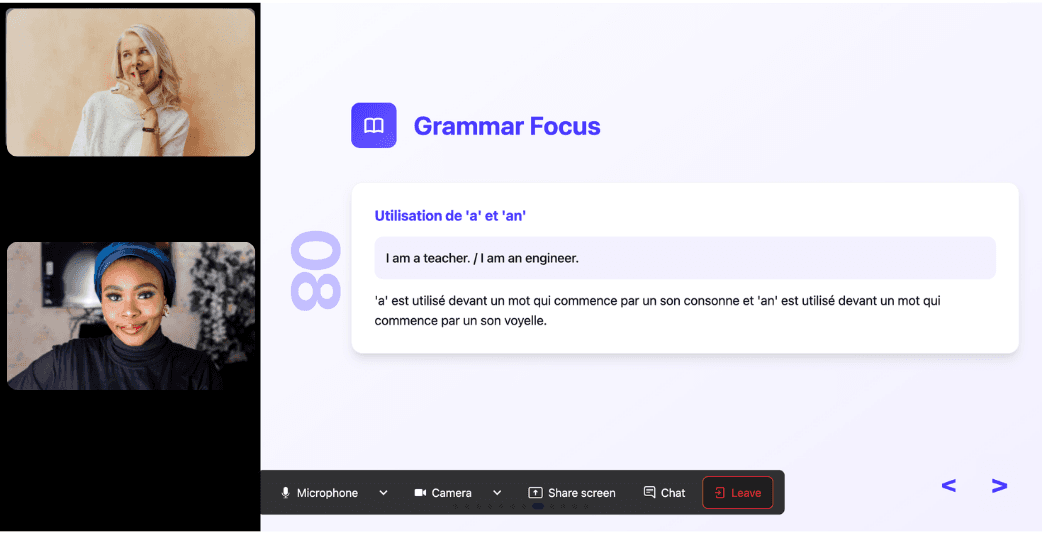
Ask all the questions you want, repeat sections if needed, and customize your learning experience in ways traditional teachers and generic apps simply can’t match.
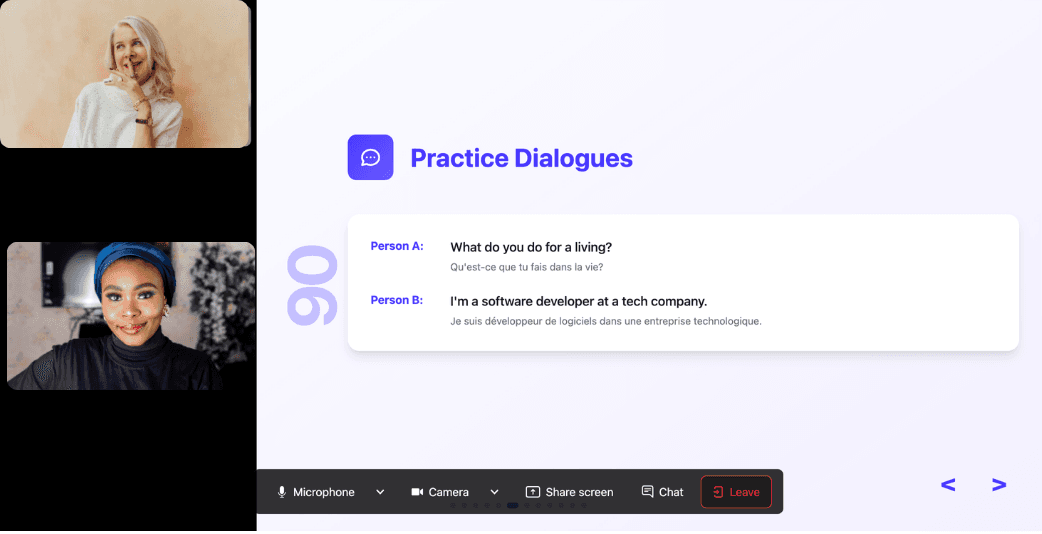
With 24/7 access at a fraction of the cost of private lessons, Kylian removes all the barriers that have kept you from mastering the language you’ve always wanted to learn.