

Learning Spanish has become a strategic necessity rather than just a cultural pursuit. With over 500 million Spanish speakers worldwide and Spanish being the second most spoken language globally, the demand for quality online Spanish education has reached unprecedented levels. Recent linguistic research demonstrates that digital Spanish learning platforms achieve comparable proficiency outcomes to traditional classroom instruction, but with significantly greater accessibility and cost efficiency.
The challenge isn't finding Spanish courses online—it's identifying which platforms deliver measurable results. After analyzing dozens of programs based on methodology effectiveness, learning outcomes, cost-benefit ratios, and user retention rates, we've identified nine platforms that consistently produce fluent Spanish speakers.
Kylian AI: The Best Platform to Learn Spanish
Private language lessons are expensive. Paying between 15 and 50 euros per lesson isn’t realistic for most people—especially when dozens of sessions are needed to see real progress.
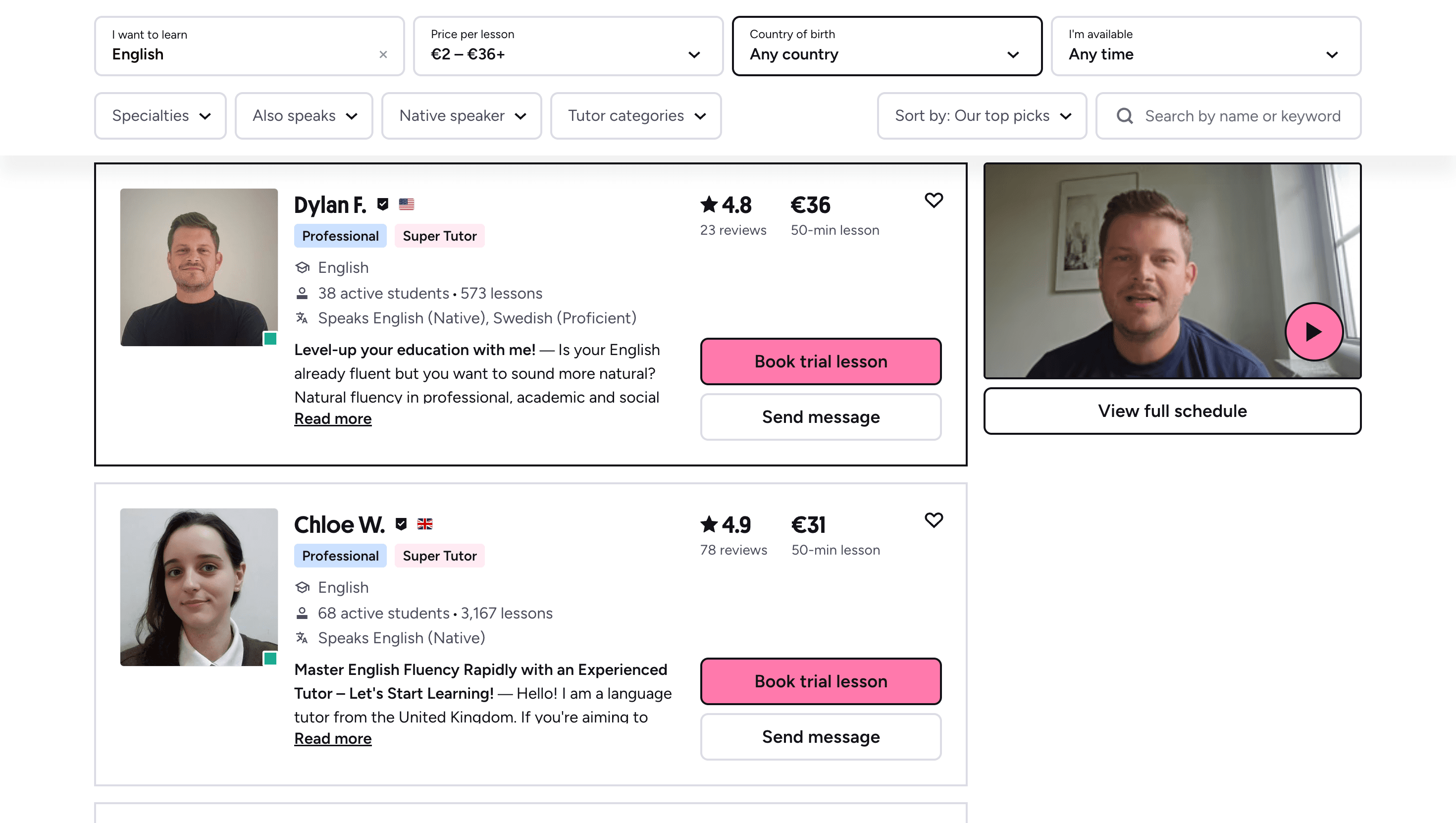
Many learners give up on language learning due to these high costs, missing out on valuable professional and personal opportunities.
That’s why we created Kylian: to make language learning accessible to everyone and help people master a foreign language without breaking the bank.
To get started, just tell Kylian which language you want to learn and what your native language is
Tired of teachers who don’t understand your specific struggles as a French speaker? Kylian’s advantage lies in its ability to teach any language using your native tongue as the foundation.
Unlike generic apps that offer the same content to everyone, Kylian explains concepts in your native language (French) and switches to the target language when necessary—perfectly adapting to your level and needs.
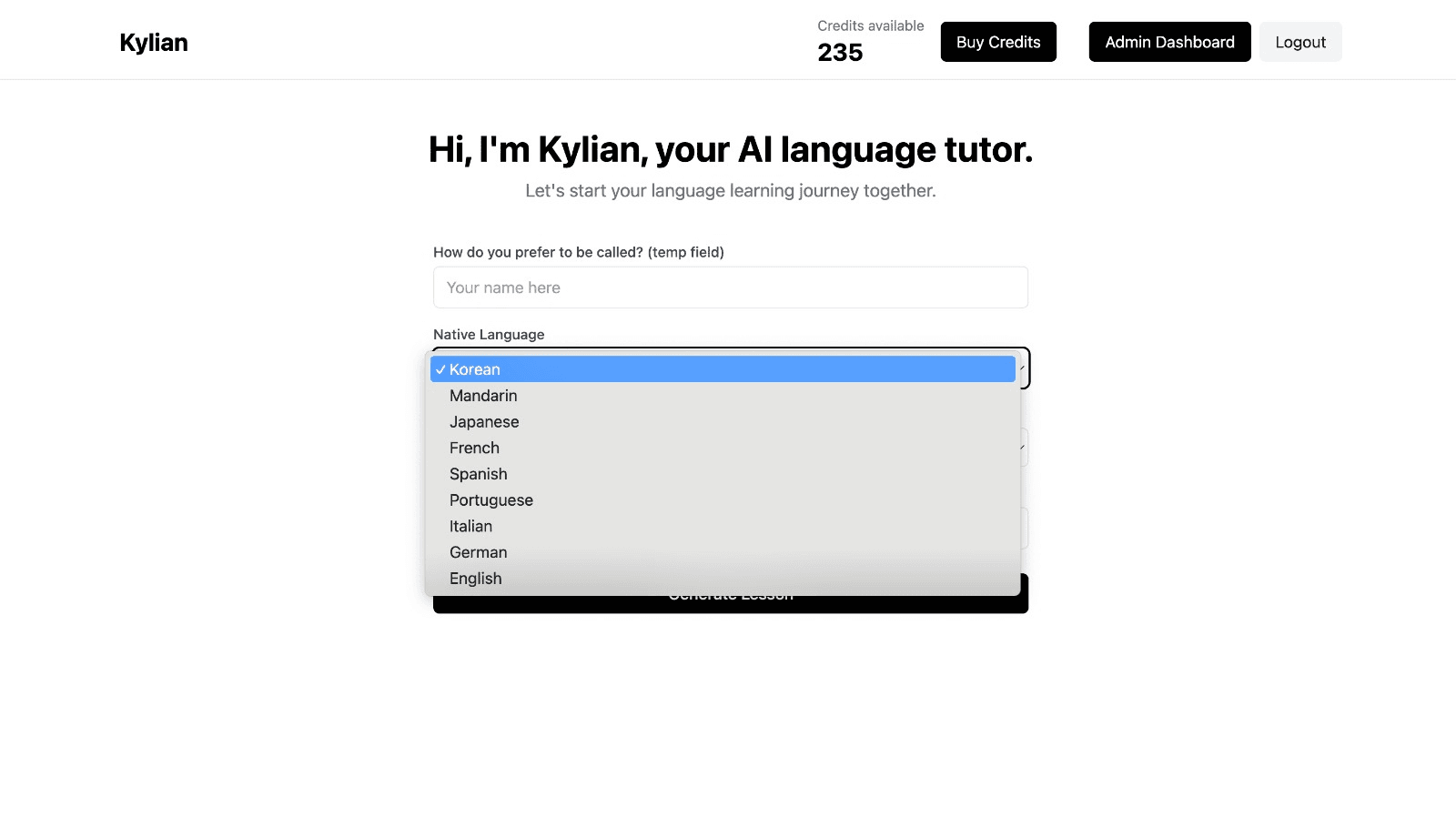
This personalization removes the frustration and confusion that are so common in traditional language learning.
Choose a specific topic you want to learn
Frustrated by language lessons that never cover exactly what you need? Kylian can teach you any aspect of a language—from pronunciation to advanced grammar—by focusing on your specific goals.
Avoid vague requests like “How can I improve my accent?” and be precise: “How do I pronounce the R like a native English speaker?” or “How do I conjugate the verb ‘to be’ in the present tense?”
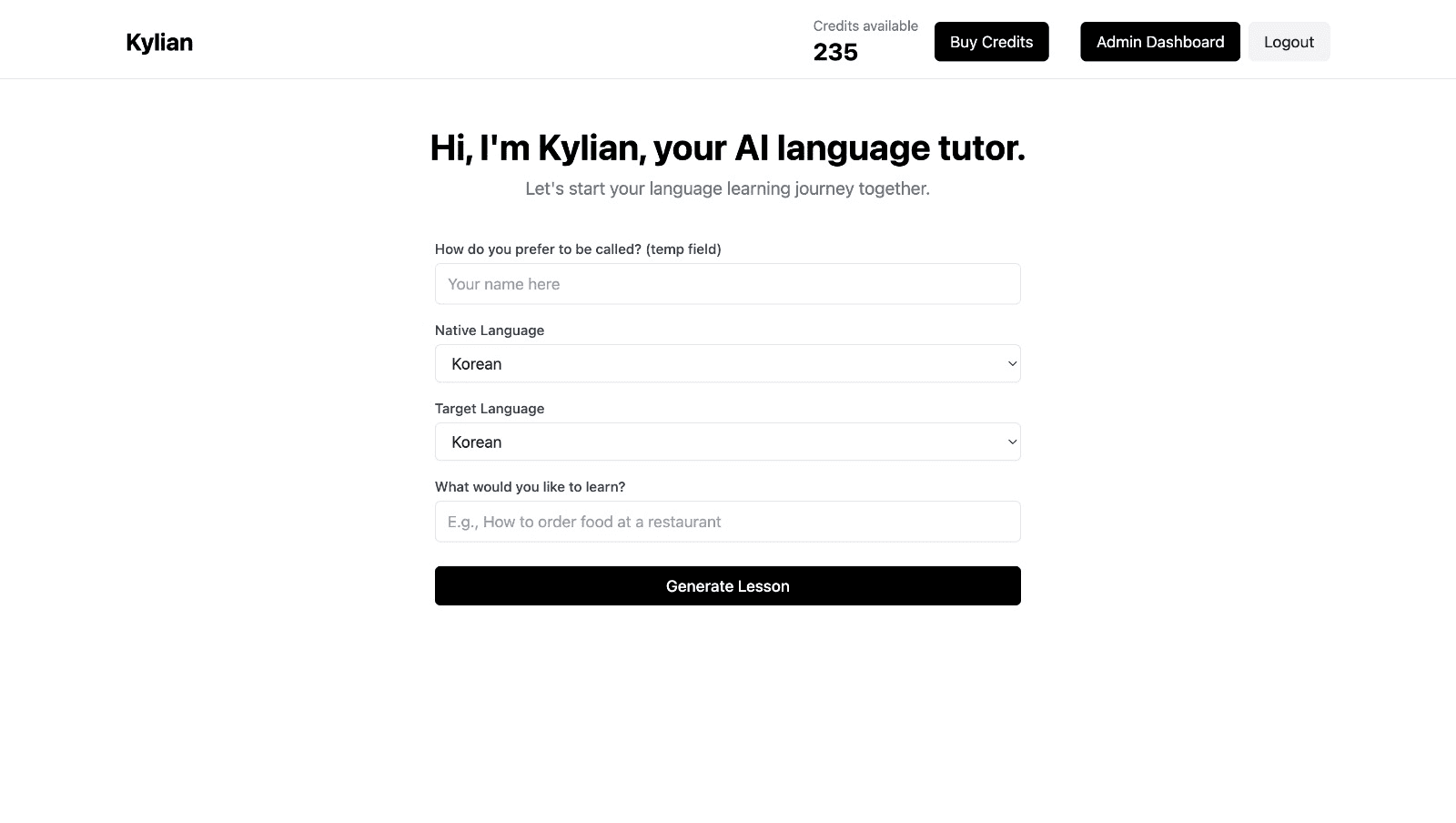
With Kylian, you’ll never again pay for irrelevant content or feel embarrassed asking “too basic” questions to a teacher. Your learning plan is entirely personalized.
Once you’ve chosen your topic, just hit the “Generate a Lesson” button, and within seconds, you’ll get a lesson designed exclusively for you.
Join the room to begin your lesson
The session feels like a one-on-one language class with a human tutor—but without the high price or time constraints.
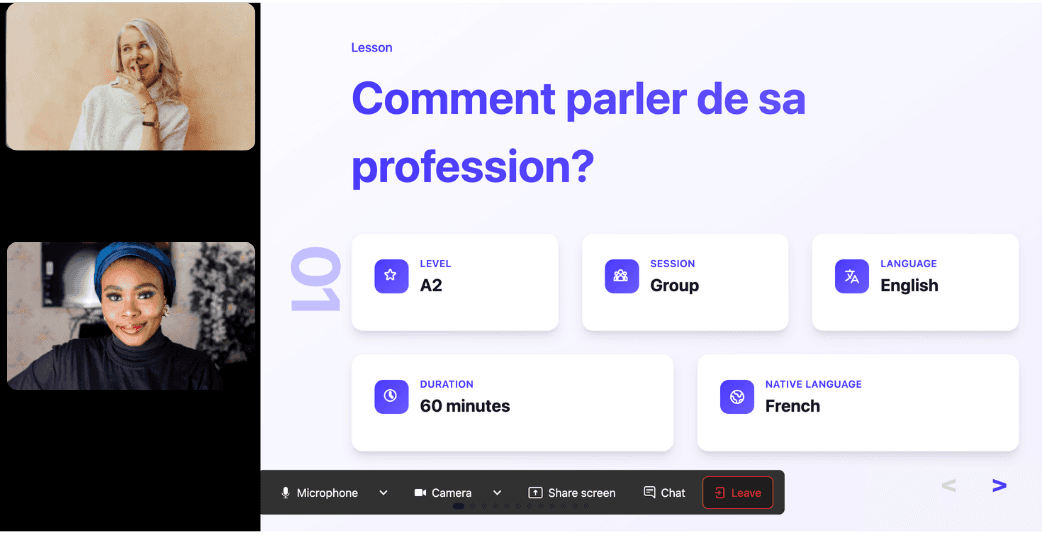
In a 25-minute lesson, Kylian teaches exactly what you need to know about your chosen topic: the nuances that textbooks never explain, key cultural differences between French and your target language, grammar rules, and much more.
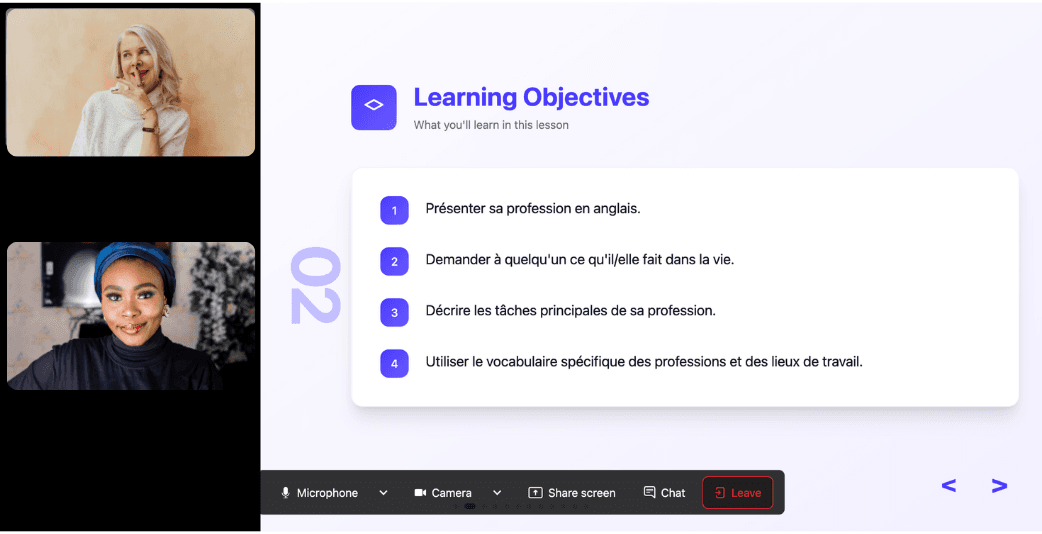
Ever felt frustrated trying to keep up with a native-speaking teacher, or embarrassed to ask for something to be repeated? With Kylian, that problem disappears. It switches intelligently between French and the target language depending on your level, helping you understand every concept at your own pace.
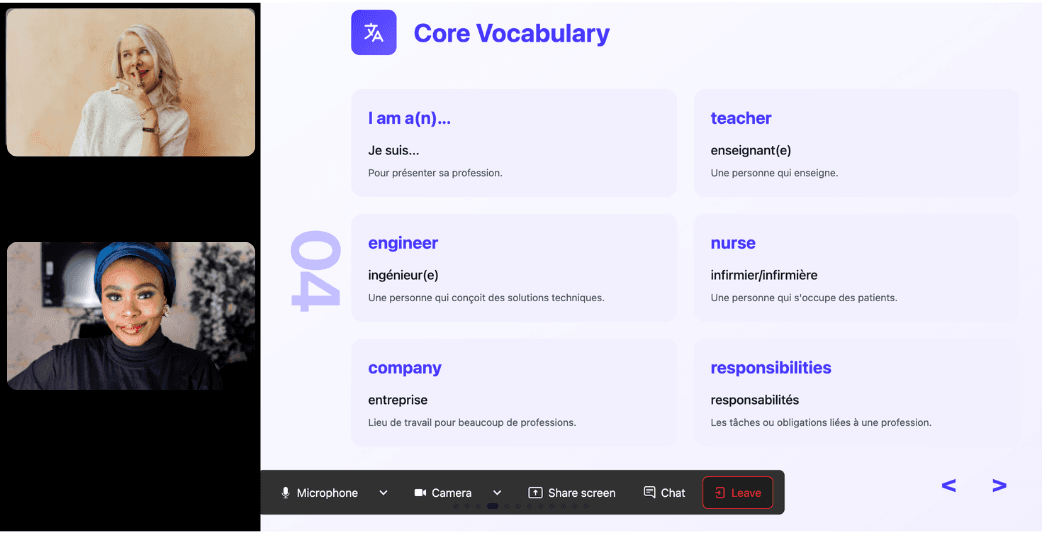
During the lesson, Kylian uses role-plays, real-life examples, and adapts to your learning style. Didn’t understand something? No problem—you can pause Kylian anytime to ask for clarification, without fear of being judged.
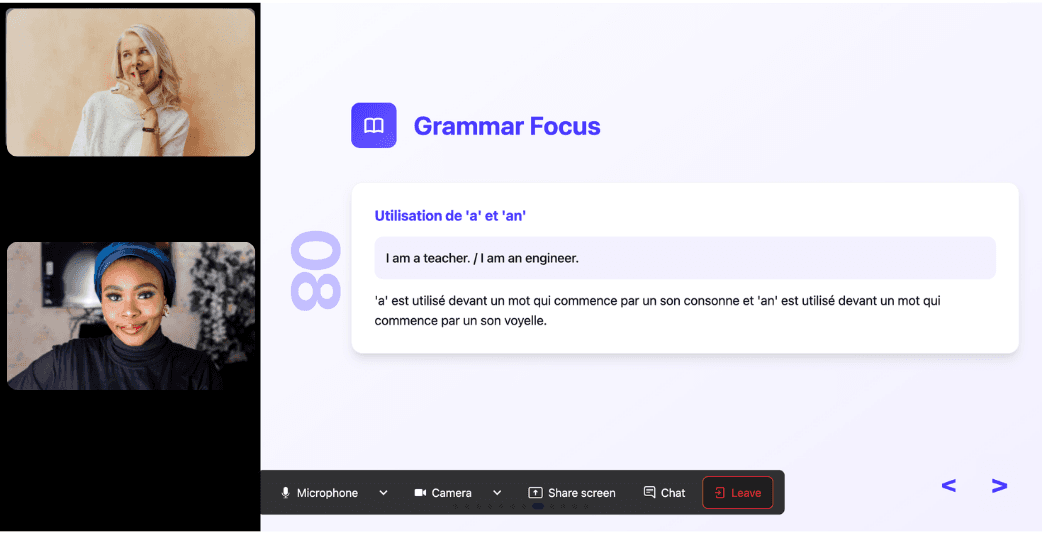
Ask all the questions you want, repeat sections if needed, and customize your learning experience in ways traditional teachers and generic apps simply can’t match.
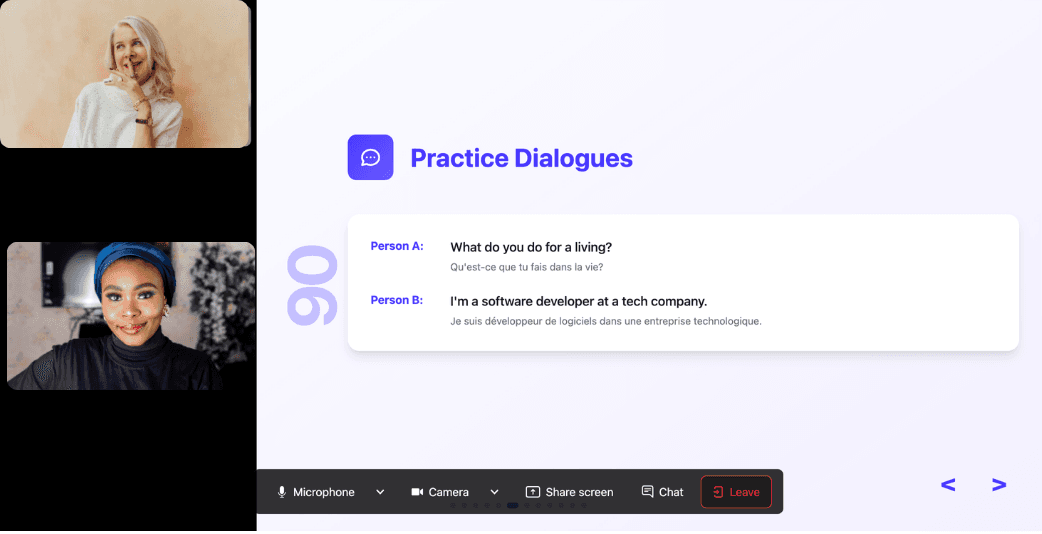
With 24/7 access at a fraction of the cost of private lessons, Kylian removes all the barriers that have kept you from mastering the language you’ve always wanted to learn.
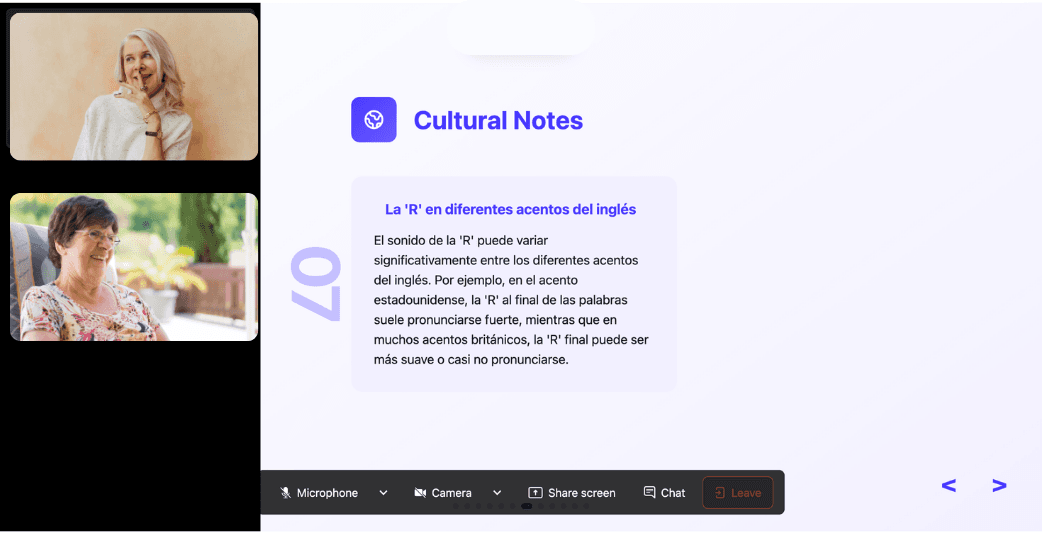
Take your free lesson with Kylian today.
Why Online Spanish Learning Works
Digital Spanish education has evolved beyond simple vocabulary drills. Modern platforms leverage cognitive science principles, incorporating spaced repetition, immersive audio-visual content, and real-time conversational practice. MIT's comparative study on language acquisition effectiveness confirms that well-designed online courses match traditional classroom learning outcomes while offering superior flexibility and personalization.
The key differentiator lies in implementation quality rather than delivery method. Effective online Spanish programs combine structured curriculum progression with adaptive learning algorithms and human interaction elements.
Top 9 Other Online Spanish Learning Platforms (2025)
1. Private Tutoring Platforms: Best for Personalized Instruction
Format: One-on-one video sessions with certified Spanish instructors Price Range: $8-35 per hour Levels: Complete beginner to advanced Best For: Learners requiring customized curriculum and speaking practice
The most effective Spanish learning occurs through personalized instruction that adapts to individual learning patterns and goals. Private tutoring platforms connect learners with qualified Spanish instructors who create customized lesson plans based on specific objectives—whether preparing for DELE certification, mastering business Spanish, or developing conversational fluency.
These platforms typically offer instructor filtering by specialty, accent preference (Latin American vs. Iberian Spanish), and pricing. The flexibility to schedule sessions across time zones makes consistent practice feasible regardless of location or schedule constraints.
Advantages:
- Immediate feedback and error correction
- Curriculum tailored to specific goals and learning pace
- Extensive speaking practice in a low-pressure environment
- Cultural context and real-world application guidance
Limitations:
- Requires self-motivation to maintain regular scheduling
- Cost accumulates with frequent sessions
- Quality varies by instructor selection
Effectiveness Data: Students taking 2-3 private sessions weekly typically achieve conversational proficiency 40% faster than self-study methods alone.
2. Instituto Cervantes-Affiliated Schools: Best for Academic Rigor
Format: Live group classes following structured curriculum Price: $400-500 for 4-week intensive programs Levels: A1 through B2 (CEFR framework) Best For: Learners seeking formal certification and intensive study
Cervantes-affiliated institutions offer the gold standard in Spanish language education. These programs replicate traditional language school rigor through virtual classrooms, maintaining small group sizes (6-10 students) and following internationally recognized curriculum standards.
The intensive format typically requires 15-20 hours of weekly commitment, combining live instruction with homework assignments and cultural workshops. This approach produces rapid proficiency gains but demands significant time investment.
Advantages:
- Internationally recognized certification
- Comprehensive curriculum covering all language skills
- Cultural immersion components
- Group interaction and peer learning
Limitations:
- Fixed schedule with limited flexibility
- High intensity may overwhelm casual learners
- Primarily serves beginner to intermediate levels
3. Unlimited Subscription Tutoring: Best for Intensive Practice
Format: Unlimited one-on-one sessions for monthly subscription Price: $150-200 per month Levels: All levels Best For: Learners with time availability for daily practice
Subscription-based unlimited tutoring represents exceptional value for intensive learners. These platforms provide access to professional instructors for daily sessions without per-lesson costs, enabling true immersion experience from home.
The model works particularly well for learners with flexible schedules or those preparing for specific deadlines like job interviews, relocation, or academic requirements. Daily practice sessions accelerate pronunciation improvement and conversational confidence.
Advantages:
- Exceptional cost-per-lesson value with frequent use
- Daily practice opportunity
- Multiple instructor options
- No long-term commitment
Limitations:
- Requires significant time investment to justify cost
- May lead to practice overload without proper pacing
- Limited to specific time zones for live sessions
4. Audio-First Learning Programs: Best for Busy Professionals
Format: Podcast-style lessons with supplementary materials Price: Free basic access; $150-200 for premium content Levels: Beginner through advanced Best For: Multitasking learners and audio-focused study
Audio-centric Spanish programs excel at fitting language learning into existing routines. These platforms deliver 15-20 minute episodes covering grammar, vocabulary, and cultural topics while allowing hands-free learning during commutes, exercise, or household tasks.
Premium versions typically include transcripts, interactive exercises, and cultural background content. The bite-sized format promotes consistency—a critical factor in language acquisition success.
Advantages:
- Highly portable and multitask-friendly
- Consistent daily practice opportunity
- Cultural context integrated with language instruction
- Low time commitment threshold
Limitations:
- Limited speaking practice opportunities
- Lack of personalized feedback
- May require supplementary visual learning materials
5. News-Based Learning Platforms: Best for Intermediate Learners
Format: Current events delivered in simplified Spanish Price: $20-25 per month Levels: Intermediate to advanced Best For: Learners seeking real-world context and cultural awareness
News-focused Spanish platforms bridge the gap between structured lessons and authentic content consumption. These services deliver current events, cultural topics, and relevant discussions at deliberately reduced speaking speeds, making real-world Spanish accessible to intermediate learners.
Interactive transcripts, vocabulary highlighting, and comprehension exercises transform passive listening into active learning. The approach combines language acquisition with cultural literacy—essential for meaningful Spanish communication.
Advantages:
- Real-world vocabulary and current expressions
- Cultural and political awareness development
- Engaging, constantly updated content
- Preparation for authentic Spanish media consumption
Limitations:
- Requires foundational Spanish knowledge
- Limited beginner-friendly content
- Passive learning without speaking practice
6. Hybrid App-Tutoring Platforms: Best for Structured Flexibility
Format: Self-paced app lessons combined with scheduled tutor sessions Price: $50-300 per month based on tutoring frequency Levels: All levels Best For: Learners wanting structure with professional guidance
Hybrid platforms combine app-based learning with human instruction, addressing the limitations of purely self-study approaches. Students progress through interactive lessons independently, then apply knowledge in scheduled tutor sessions focused on speaking and complex concepts.
This model provides learning structure while ensuring practical application. The integration allows tutors to focus session time on conversation and challenging concepts rather than basic vocabulary introduction.
Advantages:
- Structured progression with human guidance
- Cost-effective compared to pure tutoring
- Consistent practice schedule
- Progress tracking and accountability
Limitations:
- More expensive than app-only solutions
- Requires coordination between self-study and sessions
- Platform-specific content limitations
7. YouTube-Based Spanish Instruction: Best for Free Learning
Format: Free video lessons covering grammar, vocabulary, and culture Price: Free Levels: Beginner to intermediate Best For: Budget-conscious learners and visual learning preferences
High-quality YouTube Spanish channels provide comprehensive instruction at no cost. Leading educators offer structured playlists covering grammar progression, pronunciation guides, and cultural insights with production quality rivaling paid courses.
The format allows unlimited review and self-paced progression. Successful channels typically feature experienced instructors who explain concepts clearly and provide multiple examples for complex topics.
Advantages:
- Zero financial investment
- Unlimited access and review capability
- Visual and auditory learning combination
- Community discussion and support
Limitations:
- No structured progression tracking
- Lack of personalized feedback
- Limited interactive practice
- Requires self-discipline for consistent study
8. University MOOC Platforms: Best for Academic Credit
Format: University-developed courses with academic structure Price: Free audit option; $40-60 for certification Levels: Beginner through advanced, plus specialized topics Best For: Academic credit seekers and structured learning preferences
Massive Open Online Courses (MOOCs) from accredited universities provide rigorous Spanish education with optional certification. These platforms offer both general Spanish courses and specialized programs like Medical Spanish, Business Spanish, or Hispanic Cultural Studies.
The academic approach includes peer-reviewed assignments, discussion forums, and comprehensive assessments. Many courses qualify for continuing education credit or university transfer.
Advantages:
- University-level curriculum and credibility
- Specialized subject matter options
- Academic credit potential
- Comprehensive resource libraries
Limitations:
- Limited speaking practice opportunities
- Academic pace may not suit all learners
- Minimal personalized instruction
- Assignment deadlines and academic pressure
9. Virtual Language Schools: Best for Classroom Experience
Format: Live group classes with cultural activities Price: $150-400 per week for intensive programs Levels: A1 through C2 Best For: Learners preferring group dynamics and cultural immersion
Virtual language schools recreate traditional classroom environments through video conferencing technology. Students join scheduled classes with classmates worldwide, participating in group discussions, collaborative exercises, and cultural workshops.
These programs often include extracurricular activities like virtual museum tours, cooking classes, and conversation clubs, providing cultural context beyond language instruction.
Advantages:
- Social learning environment and peer interaction
- Cultural activities and immersion elements
- Structured accountability and routine
- International classroom diversity
Limitations:
- Fixed scheduling requirements
- Limited individual attention in group settings
- Time zone coordination challenges
- Higher cost than self-study options
Additional Learning Resources Worth Considering
Vocabulary-Focused Applications
Specialized vocabulary apps using spaced repetition algorithms help learners master Spanish word recognition and recall. These platforms adapt review frequency based on individual retention patterns, optimizing memory consolidation.
Virtual Reality Language Practice
Emerging VR platforms offer immersive Spanish practice in simulated environments like restaurants, offices, or social gatherings. While still developing, these tools show promise for contextual learning and reducing speaking anxiety.
Comprehensible Input Platforms
Video platforms featuring graded Spanish content allow learners to develop listening comprehension through enjoyable, slightly challenging material. This approach mirrors natural language acquisition patterns observed in childhood learning.
Choosing Your Optimal Spanish Learning Approach
Effective Spanish learning requires honest assessment of personal learning preferences, available time, and specific goals. Consider these decision factors:
Learning Style Assessment: Visual learners benefit from video-based instruction and written exercises. Auditory learners excel with podcast-style lessons and conversation practice. Kinesthetic learners require interactive exercises and real-world application.
Time Availability: Daily 20-30 minute commitments suit app-based learning. Weekly 1-2 hour blocks work well for tutor sessions. Intensive study periods favor bootcamp-style courses.
Goal Specificity: Travel Spanish requires basic conversational skills and practical vocabulary. Professional Spanish demands formal register and industry-specific terminology. Academic Spanish needs reading comprehension and formal writing abilities.
Budget Considerations: Free resources provide solid foundations but require self-motivation. Mid-range options ($20-100 monthly) offer structured guidance. Premium services ($200+ monthly) deliver personalized instruction and rapid progress.
Implementation Strategy for Maximum Results
Successful Spanish learning combines multiple resources strategically rather than relying on single platforms. Research indicates that learners using 2-3 complementary methods achieve fluency 35% faster than single-method approaches.
Recommended Combinations:
- Structure + Practice: University course + private tutoring
- Convenience + Depth: Audio lessons + weekend group classes
- Budget + Effectiveness: YouTube instruction + language exchange partnerships
Progress Measurement: Establish monthly proficiency checkpoints using standardized assessments. Track vocabulary acquisition, listening comprehension improvement, and speaking confidence development.
Cultural Integration: Supplement formal instruction with Spanish media consumption, native speaker interactions, and cultural event participation. Language learning succeeds when it extends beyond classroom boundaries.
The Spanish learning landscape offers unprecedented options for achieving fluency through digital platforms. Success depends on selecting methods aligned with personal learning preferences, maintaining consistent practice, and integrating Spanish into daily life contexts. With proper platform selection and dedicated effort, conversational Spanish proficiency becomes achievable within 6-12 months of focused study.


