Most language learners focus on grammar rules and vocabulary lists, missing a critical component that separates fluent speakers from textbook learners: phonetic precision. The difference between sounding foreign and sounding natural often comes down to mastering the subtle rhythms and sound patterns that make each language unique.
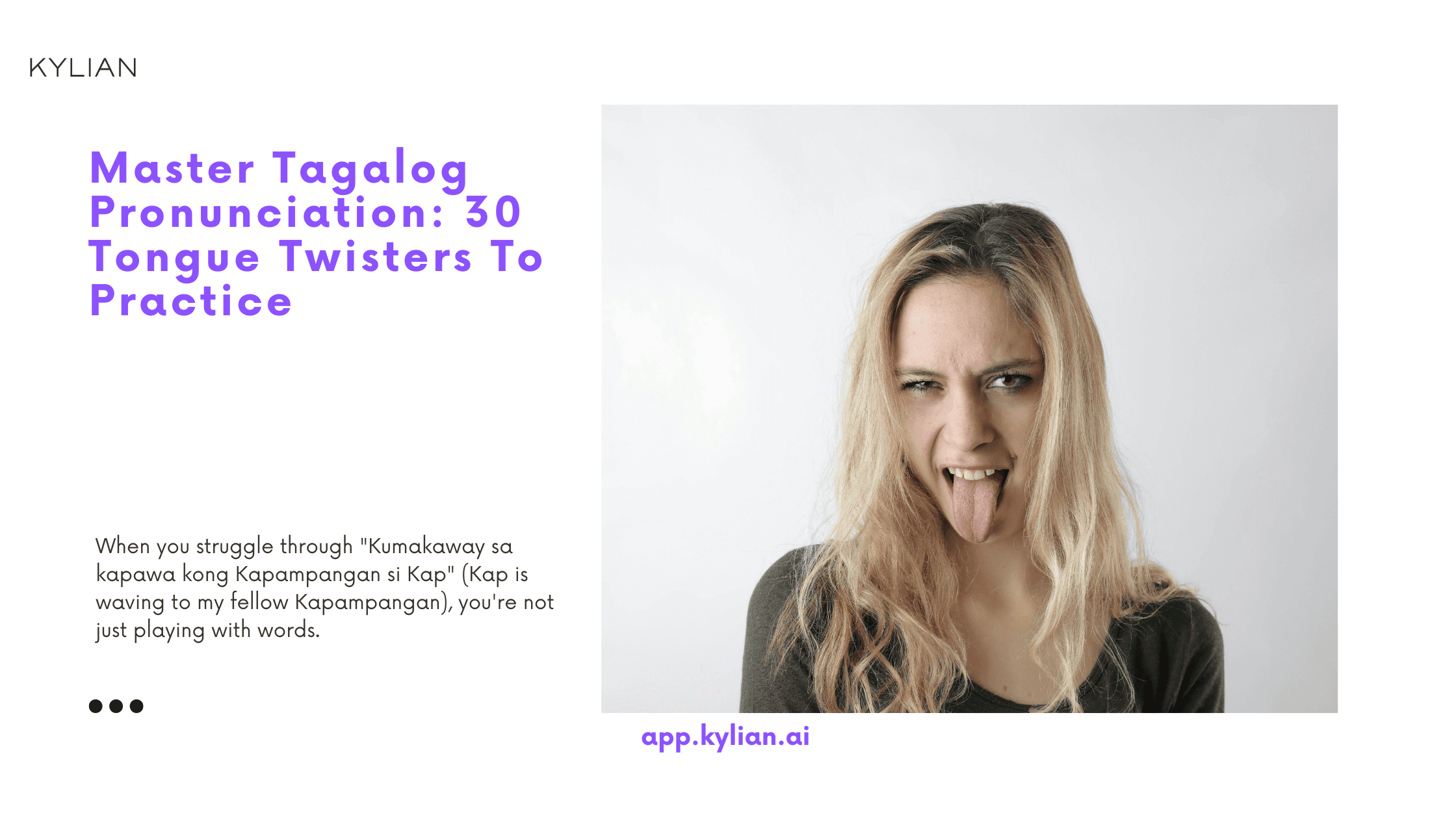
Tagalog tongue twisters represent more than linguistic entertainment—they're precision instruments for developing authentic pronunciation. When you struggle through "Kumakaway sa kapawa kong Kapampangan si Kap" (Kap is waving to my fellow Kapampangan), you're not just playing with words. You're training your articulatory muscles to navigate the specific sound combinations that native speakers produce effortlessly.
This matters now because traditional language learning methods often fail to address phonetic nuances. Students spend years studying Tagalog grammar but still sound distinctly foreign when speaking. The solution lies in targeted phonetic training through systematic tongue twister practice.
Why Tongue Twisters Transform Language Learning
The neuroscience behind tongue twisters reveals why they're exceptionally effective for language acquisition. When you attempt rapid repetition of similar sounds, your brain creates new neural pathways for motor speech control. This process, called neuroplasticity, physically rewires your ability to produce foreign sounds.
Research in phonetic training demonstrates that learners who incorporate tongue twisters into their practice develop superior pronunciation accuracy compared to those using traditional methods. The reason is straightforward: tongue twisters force concentrated practice on the most challenging sound combinations in a language.
Tagalog presents specific phonetic challenges for English speakers. The language contains sounds that don't exist in English, requiring new muscle memory patterns. Tongue twisters systematically target these problem areas, accelerating your progress toward native-like pronunciation.
The cognitive load of processing rapid, similar-sounding syllables also improves your overall language processing speed. When you can successfully navigate "Nagsasaya sa saya ang may sayaw na saya" (The person with a dancing dress is happy in joy), regular conversation becomes significantly easier.
The Phonetic Foundation: Understanding Tagalog Sound Patterns
Before diving into practice, understanding Tagalog's phonetic structure provides crucial context. The language operates on different rhythm patterns than English, emphasizing syllable timing over stress timing. This fundamental difference explains why English speakers often sound choppy when speaking Tagalog.
Tagalog contains 21 letters with specific pronunciation rules that remain consistent across words. This consistency makes tongue twisters particularly effective—once you master a sound pattern, it applies universally. Unlike English, where identical letter combinations can produce different sounds, Tagalog maintains phonetic regularity.
The language's vowel system presents the first major challenge. Tagalog uses five pure vowels (a, e, i, o, u) pronounced consistently without the diphthongs common in English. Tongue twisters focusing on vowel clarity help establish this foundation.
Consonant clusters in Tagalog follow specific rules that English speakers must learn. Many combinations that feel natural in English are impossible in Tagalog, while others that seem difficult are actually standard. Systematic practice through tongue twisters builds intuitive understanding of these patterns.
30 Essential Tagalog Tongue Twisters for Pronunciation Mastery
Beginner Level: Building Basic Sound Recognition
These foundational exercises target the most common sound combinations in Tagalog. Master these before progressing to more complex patterns.
1. Bababa ba? Bababa. (Are you going down? Going down.) This classic introduces the basic "ba" syllable pattern while practicing intonation differences between questions and statements.
2. Pitumpu't pitong puting tupa (Seventy-seven white sheep) Focuses on the challenging "p" and "t" combination that appears frequently in Tagalog numbers.
3. Pasko, paksiw, paksoy (Christmas, pickled fish, bok choy) Develops "pak" and "pas" sound combinations while introducing cultural vocabulary.
4. Siopao, siomai, suman, sisig (Steamed bun, dumpling, rice cake, sizzling dish) Practices "s" sounds with different vowel combinations, essential for food-related conversations.
5. Buwaya, bayawak, balut (Crocodile, monitor lizard, duck embryo) Targets "ba" and "bu" sounds while building animal and food vocabulary.
6. Ako ay alikabok, ikaw ay alikabuk (I am dust, you are dust) Emphasizes vowel clarity and the challenging "k" sound placement.
7. Butiki, bituka, botika (Gecko, intestine, pharmacy) Develops "b" and "t" combinations with vowel variations.
8. Kutsero, kutsara, kutsilyo (Coachman, spoon, knife) Practices "kut" sound combinations common in household vocabulary.
9. Kabilugan ng buwan sa buwan ng kabilugan (Full moon in the month of fullness) Introduces rhythm patterns while practicing "bu" and "ka" sounds.
10. Ang relo ni Leroy ay may Rolex (Leroy's watch has a Rolex) Focuses on the challenging "r" and "l" distinction that many learners struggle with.
Intermediate Level: Complex Sound Combinations
These exercises introduce more challenging phonetic patterns while maintaining practical vocabulary.
11. Pitumpu't pitong puting pating sa putik (Seventy-seven white sharks in mud) Advances the basic "p" and "t" pattern with additional complexity.
12. Sinusuot ni Susan ang susing susundin (Susan wears the key to follow) Develops "s" sound mastery with rapid repetition patterns.
13. Minekaniko ni Moniko ang makina ng manika (Moniko mechanically fixed the doll's machine) Practices "m" and "n" combinations while building technical vocabulary.
14. Bumili ng bituka ng butiki sa botika (Bought gecko intestines at the pharmacy) Combines "b" sounds with vowel variations for advanced practice.
15. Tumuka ng pitong puting pato ang pitumpu't pitong puto (Seven white ducks pecked seventy-seven rice cakes) Integrates numbers with action verbs for comprehensive practice.
16. Aba, bababa ka ba, Baba? (Hey, are you going down, Father?) Practices tone variations and cultural address forms.
17. Kumakaway sa Kawayan si Kay habang kumakain (Kay waves at Kawayan while eating) Develops "ka" sound patterns with action descriptions.
18. Nakakapagpabagabag na nakakabaliw (Worryingly maddening) Introduces complex prefix patterns common in Tagalog.
19. Sumasayaw ang sanay na mananayaw (The experienced dancer dances) Practices "sa" and "na" combinations with professional vocabulary.
20. Nagsasalita ang may sakit sa sikmura (The person with stomach ache speaks) Combines health vocabulary with complex sound patterns.
Advanced Level: Mastering Linguistic Complexity
These exercises challenge even advanced learners with intricate sound combinations and cultural references.
21. Nakakapagpabagabag kapag kinakabahan ka (It's worrying when you're nervous) Develops advanced emotional vocabulary with complex phonetic patterns.
22. Palakang Kabkab sa Kahabagan, kumakalabog (Kabkab frog in Kahabagan, making noise) Integrates place names with onomatopoeia for cultural fluency.
23. Nagkukumpulan ang mga kumpadre sa komprehensibong pagkakakilala (The godfathers gather in comprehensive recognition) Practices formal vocabulary with complex consonant clusters.
24. Kinaladkad ni Kaloy ang kalapaw na kalapaw (Kaloy dragged the very wilted vegetables) Develops descriptive vocabulary with repetitive sound patterns.
25. Kumakaway habang kumakain ng kamatis si Kamay (Kamay waves while eating tomatoes) Integrates action descriptions with food vocabulary.
26. Magkakapatid na managkakapatid sa pagkakamagkakapatid (Siblings who will become siblings in sisterhood/brotherhood) Practices family relationship vocabulary with complex prefixes.
27. Pinapakain ni Pepito ang pitong puting pato (Pepito feeds the seven white ducks) Combines proper names with animal care vocabulary.
28. Pitumpu't pitong puting pato sa putikan (Seventy-seven white ducks in the muddy area) Advanced number practice with environmental descriptions.
29. Ngumanganga habang nangangamba si Nang Nena (Nang Nena gapes while worrying) Practices "ng" sound combinations with emotional states.
30. Nagsasalita sa sariling salita ang may sariling salitaan (Speaking in one's own language the one with their own dictionary) Masters complex vocabulary and grammar structures.
Strategic Practice Methodology
Effective tongue twister practice requires systematic approach rather than random repetition. The neuroplasticity research indicates that focused, deliberate practice produces superior results compared to casual attempts.
Begin each session with phonetic warm-ups. Produce individual sounds slowly and clearly before attempting combinations. This preparation activates the correct muscle groups and establishes proper positioning.
Break complex tongue twisters into component parts. Rather than attempting "Nakakapagpabagabag kapag kinakabahan ka" as a complete phrase initially, practice "nakakapag," then "pagbabag," then "kapag kinaka," and finally "kabahan ka." This segmented approach builds confidence while developing accuracy.
Record your practice sessions for objective feedback. Many learners believe they're pronouncing sounds correctly until they hear recordings. This external perspective identifies specific areas needing improvement.
Gradually increase speed only after achieving consistent accuracy. The goal is muscle memory development, not rapid speech. Speed without accuracy reinforces incorrect patterns that become difficult to correct later.
Common Pronunciation Pitfalls and Solutions
English speakers consistently struggle with specific Tagalog sound combinations. Understanding these patterns accelerates improvement by focusing effort on actual problem areas rather than perceived difficulties.
The "ng" sound at word beginnings challenges most learners. English uses this sound only at word endings, requiring new neural pathways for initial positioning. Practice words like "ngayon" (now) and "ngipin" (teeth) in isolation before incorporating them into tongue twisters.
Vowel length and quality present another significant challenge. English speakers often substitute English vowel sounds for Tagalog ones, creating foreign-sounding speech. The "i" in "bituka" must remain pure, avoiding the English tendency toward diphthong production.
The "r" sound in Tagalog requires different tongue positioning than English "r." It's produced with a single tap rather than the continuous sound English speakers use. Practice this sound in isolation using words like "relo" (watch) and "baro" (shirt).
Consonant clusters that don't exist in English create articulation difficulties. The "ts" combination in "kutsara" (spoon) requires practice for smooth production. These sounds exist in English but not in the same positions, requiring new motor patterns.
The Neuroscience of Phonetic Acquisition
Understanding how your brain processes new sounds provides insight into why tongue twisters work so effectively. When you encounter unfamiliar phonetic patterns, your brain must create new neural pathways connecting auditory perception to motor production.
Repetitive practice strengthens these pathways through myelination—the process where neural connections become more efficient through use. This explains why consistent daily practice produces better results than intensive but infrequent sessions.
The motor cortex regions controlling speech production adapt to new language requirements through practice. Tongue twisters specifically target these areas by requiring rapid, precise movements that don't exist in your native language.
Research in second language acquisition demonstrates that phonetic skills transfer across linguistic contexts. Mastering Tagalog sound patterns through tongue twisters improves your ability to acquire pronunciation in other languages as well.
Cultural Context and Linguistic Authenticity
Tagalog tongue twisters often contain cultural references that provide insight into Filipino society and values. Understanding these contexts enhances both pronunciation practice and cultural competency.
Many tongue twisters reference traditional Filipino foods like "suman," "puto," and "balut." These aren't just vocabulary items—they represent significant cultural practices and social interactions. Mastering their pronunciation connects you to deeper cultural understanding.
Regional variations in tongue twisters reflect the diversity within Filipino culture. Some phrases originate from specific regions and carry local cultural significance. This diversity demonstrates the richness of Filipino linguistic heritage.
Family relationships and social hierarchies appear frequently in tongue twisters, reflecting their importance in Filipino culture. Terms like "Kap" (Captain) and "Nang" (a respectful address for women) carry social meaning beyond their literal definitions.
Integration with Comprehensive Language Learning
Tongue twisters complement but don't replace comprehensive language study. They specifically target phonetic skills while other methods address grammar, vocabulary, and cultural competency.
Integrate tongue twister practice with conversation practice for maximum benefit. Use newly mastered sounds in actual communication contexts to reinforce motor patterns and build confidence.
Connect tongue twister vocabulary to practical applications. The word "botika" (pharmacy) from practice exercises becomes useful in real-world healthcare conversations.
Progress tracking through tongue twisters provides measurable improvement indicators. When you can successfully complete advanced exercises, you've demonstrably improved your phonetic abilities.
Technology and Modern Practice Methods
Digital tools enhance traditional tongue twister practice through features unavailable in conventional methods. Speech recognition software provides immediate feedback on pronunciation accuracy.
Recording applications allow detailed analysis of your pronunciation patterns. Slow-motion playback reveals specific articulation issues that need correction.
Online resources provide native speaker models for comparison. Hearing authentic pronunciation helps establish correct targets for your own production.
Virtual reality language learning environments incorporate tongue twisters into immersive experiences, making practice more engaging and contextually relevant.
Advanced Applications and Continued Development
Master-level tongue twisters challenge even advanced speakers and provide ongoing development opportunities. These exercises maintain pronunciation skills and introduce subtle linguistic distinctions.
Create personalized tongue twisters using vocabulary from your specific interests or profession. This customization makes practice more relevant and engaging while targeting your particular needs.
Compete with other learners through tongue twister challenges. Social elements increase motivation and provide opportunities to learn from others' techniques.
Teach tongue twisters to other learners as a method for reinforcing your own skills. Explaining pronunciation techniques to others deepens your understanding of phonetic principles.
Measuring Progress and Setting Goals
Establish clear metrics for evaluating your tongue twister performance. Track accuracy percentages, speed achievements, and consistency across practice sessions.
Set progressive goals that challenge but don't overwhelm. Begin with 80% accuracy at slow speeds before pursuing faster performance.
Document your progress through regular recordings. Monthly assessments reveal improvement patterns and identify areas needing additional focus.
Celebrate achievements to maintain motivation. Mastering a particularly challenging tongue twister represents genuine linguistic accomplishment deserving recognition.
Learn Any Language with Kylian AI
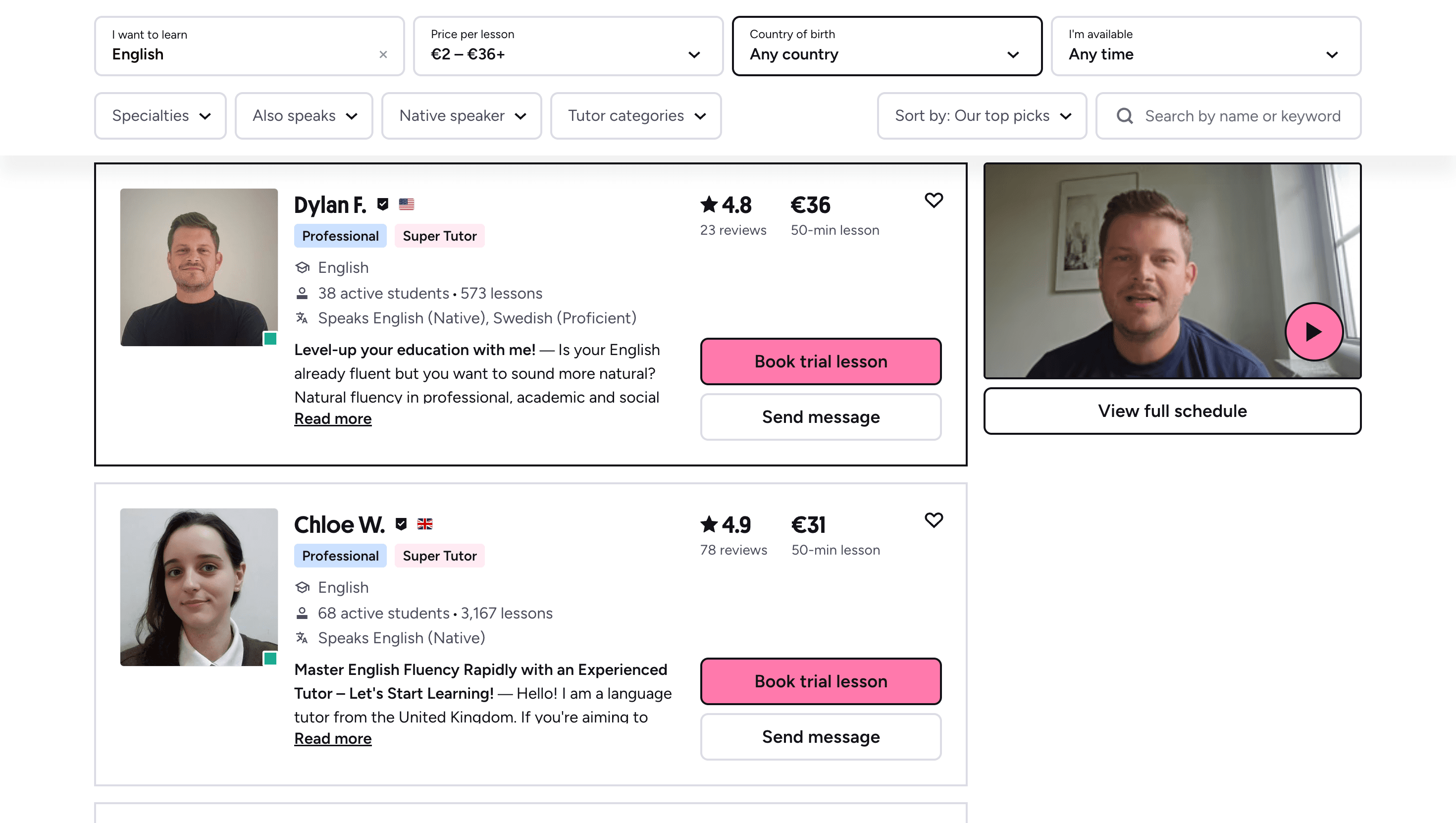
Private language lessons are expensive. Paying between 15 and 50 euros per lesson isn’t realistic for most people—especially when dozens of sessions are needed to see real progress.
Many learners give up on language learning due to these high costs, missing out on valuable professional and personal opportunities.
That’s why we created Kylian: to make language learning accessible to everyone and help people master a foreign language without breaking the bank.
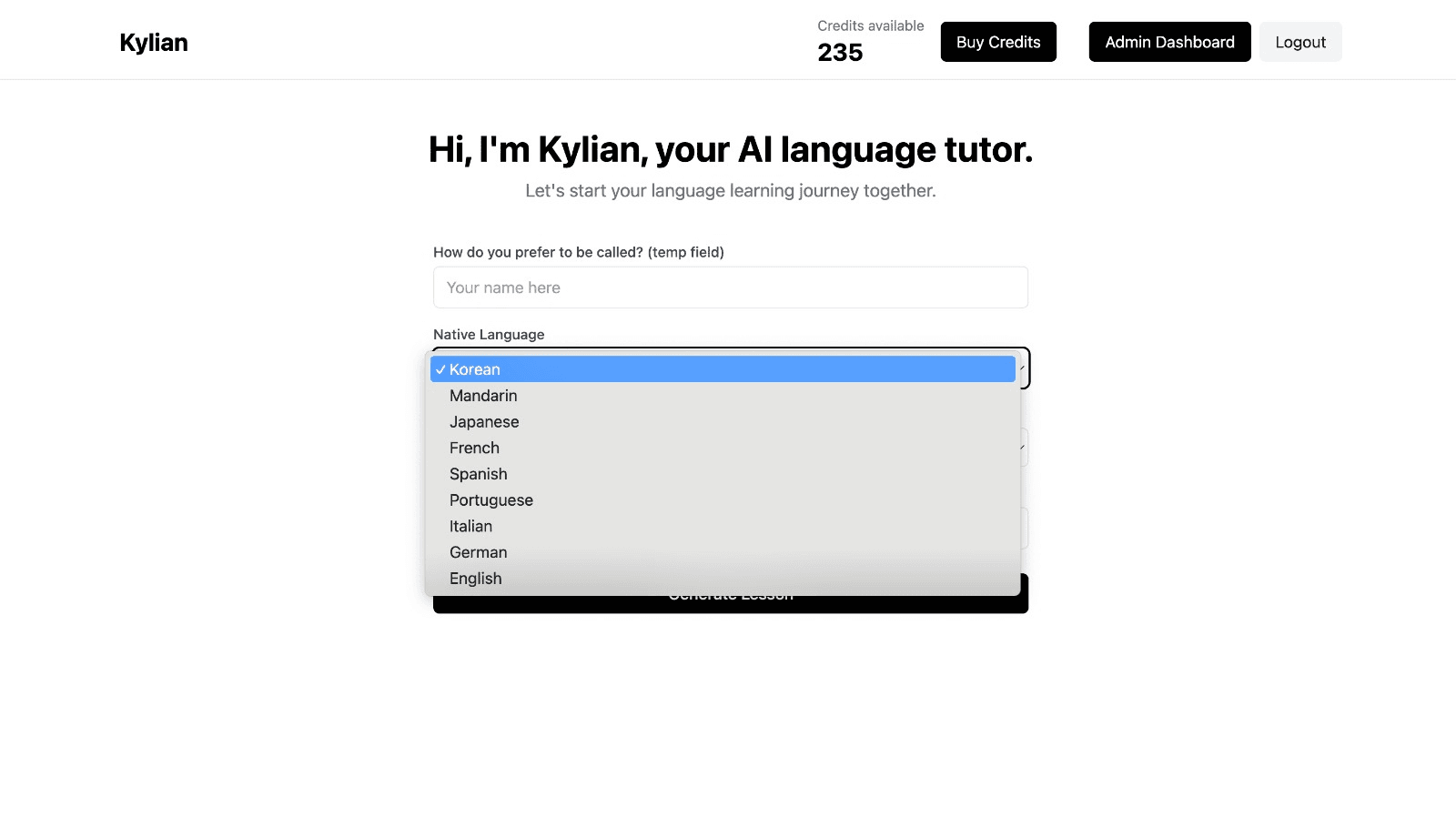
To get started, just tell Kylian which language you want to learn and what your native language is
Tired of teachers who don’t understand your specific struggles as a French speaker? Kylian’s advantage lies in its ability to teach any language using your native tongue as the foundation.
Unlike generic apps that offer the same content to everyone, Kylian explains concepts in your native language (French) and switches to the target language when necessary—perfectly adapting to your level and needs.
This personalization removes the frustration and confusion that are so common in traditional language learning.
Choose a specific topic you want to learn
Frustrated by language lessons that never cover exactly what you need? Kylian can teach you any aspect of a language—from pronunciation to advanced grammar—by focusing on your specific goals.
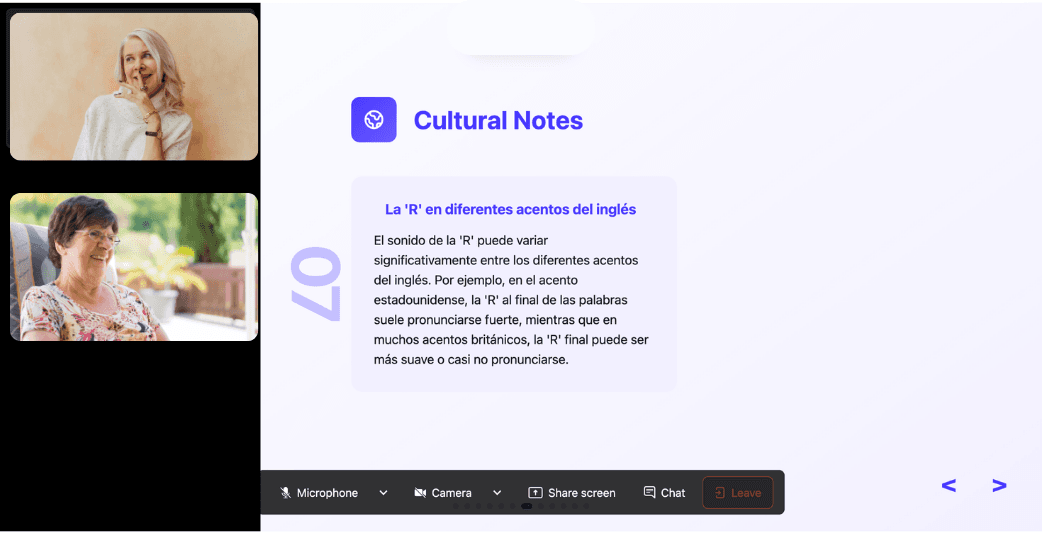
Avoid vague requests like “How can I improve my accent?” and be precise: “How do I pronounce the R like a native English speaker?” or “How do I conjugate the verb ‘to be’ in the present tense?”
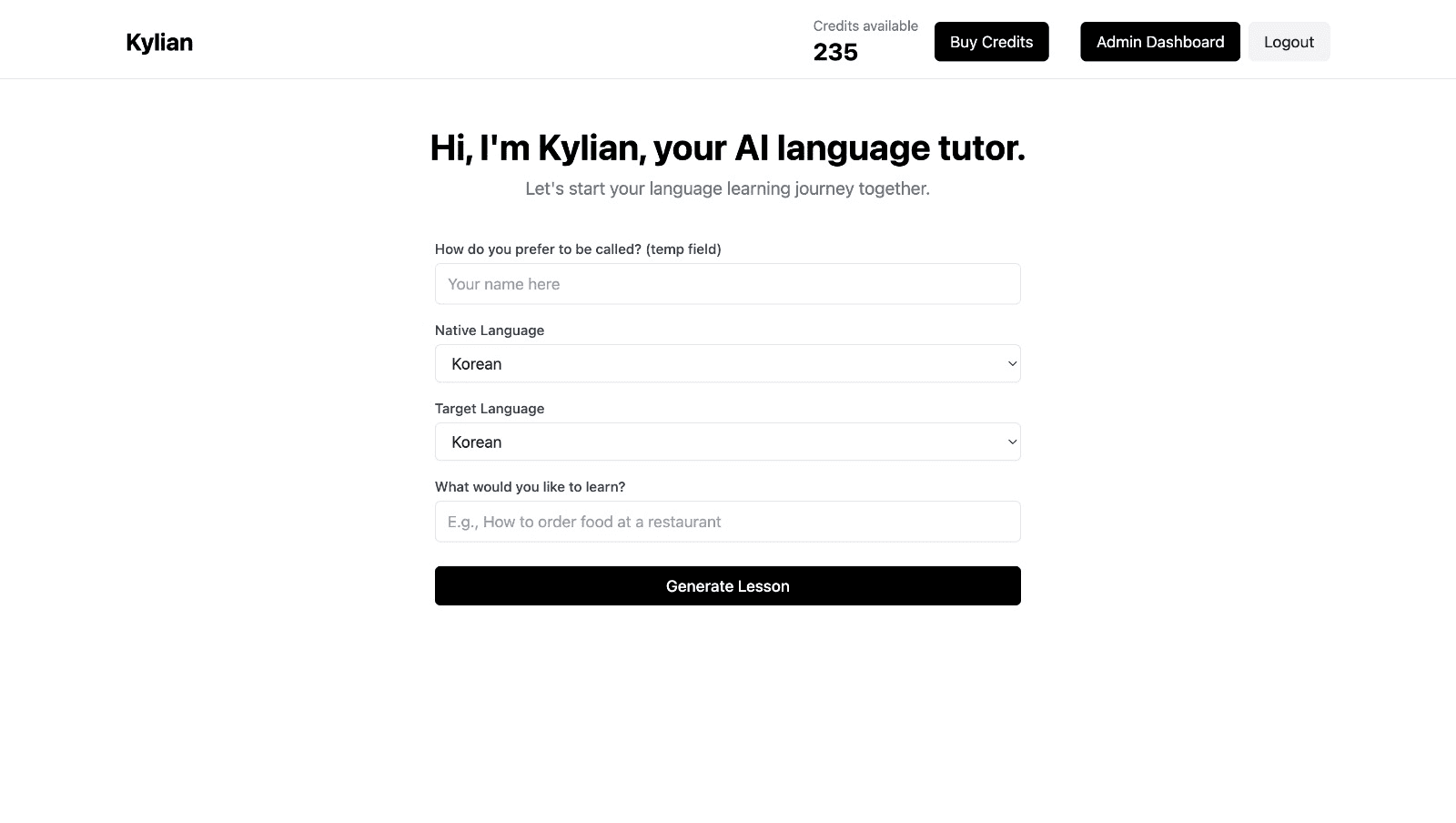
With Kylian, you’ll never again pay for irrelevant content or feel embarrassed asking “too basic” questions to a teacher. Your learning plan is entirely personalized.
Once you’ve chosen your topic, just hit the “Generate a Lesson” button, and within seconds, you’ll get a lesson designed exclusively for you.
Join the room to begin your lesson
The session feels like a one-on-one language class with a human tutor—but without the high price or time constraints.
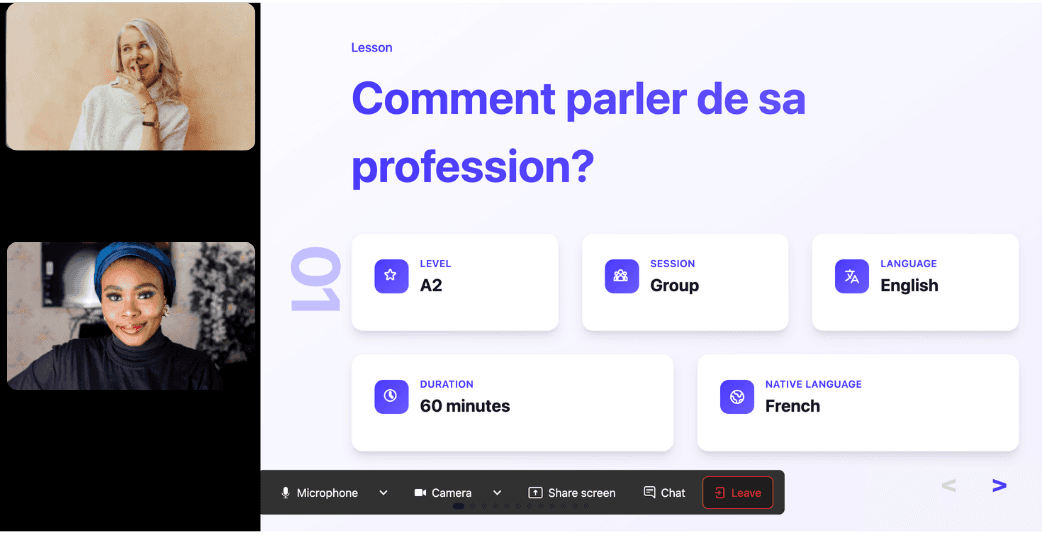
In a 25-minute lesson, Kylian teaches exactly what you need to know about your chosen topic: the nuances that textbooks never explain, key cultural differences between French and your target language, grammar rules, and much more.
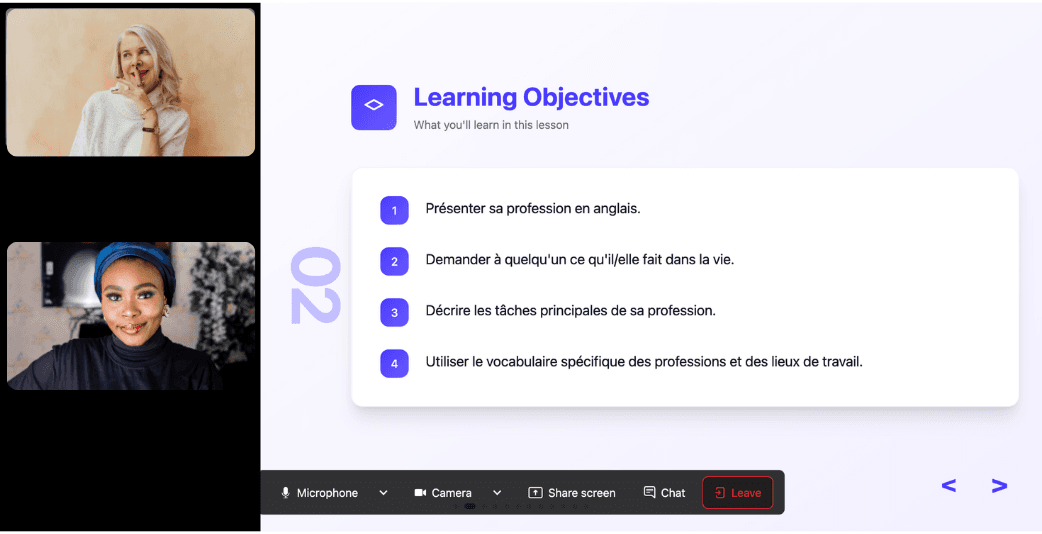
Ever felt frustrated trying to keep up with a native-speaking teacher, or embarrassed to ask for something to be repeated? With Kylian, that problem disappears. It switches intelligently between French and the target language depending on your level, helping you understand every concept at your own pace.
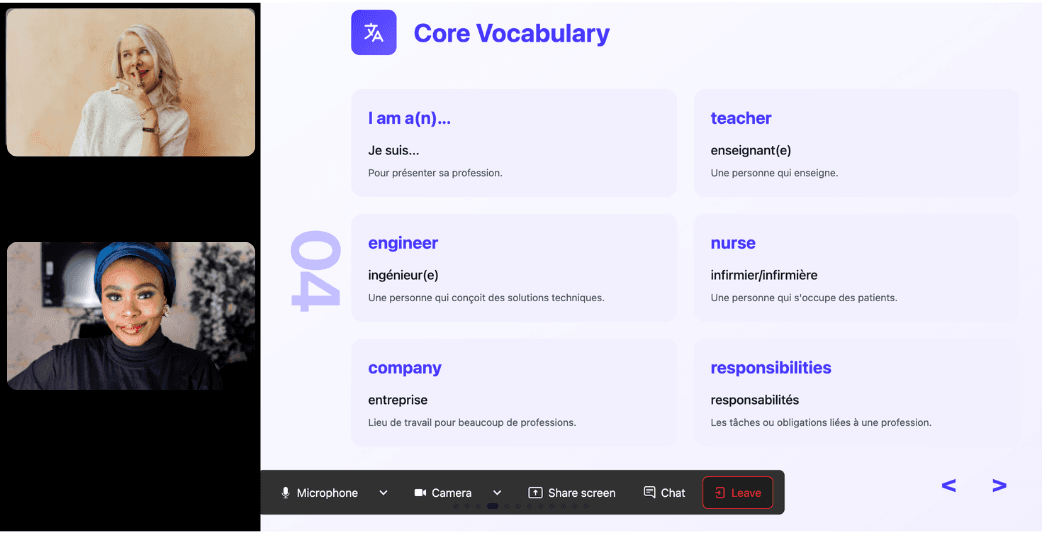
During the lesson, Kylian uses role-plays, real-life examples, and adapts to your learning style. Didn’t understand something? No problem—you can pause Kylian anytime to ask for clarification, without fear of being judged.
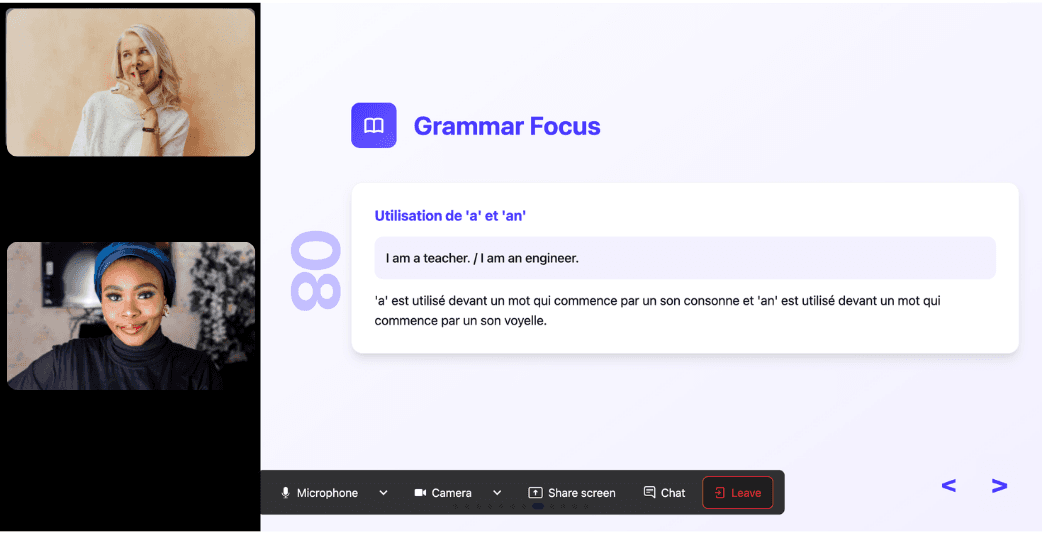
Ask all the questions you want, repeat sections if needed, and customize your learning experience in ways traditional teachers and generic apps simply can’t match.
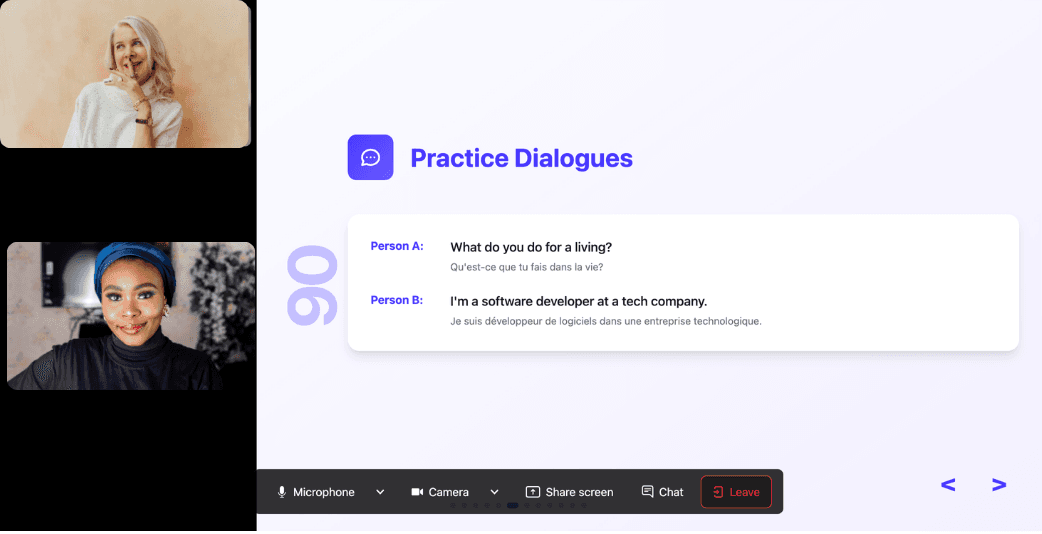
With 24/7 access at a fraction of the cost of private lessons, Kylian removes all the barriers that have kept you from mastering the language you’ve always wanted to learn.